Is Tung Oil Safe for Cutting Boards?
You can safely use 100% pure tung oil on your cutting boards, as it creates a durable, water-resistant, and food-safe barrier once fully cured. Tung oil is an excellent choice for cutting boards because it penetrates deeply into the wood, offering protection against moisture, stains, and wear.
Just make sure it’s free from additives or chemicals to ensure safety and effectiveness.
Apply the oil properly in thin coats, allowing at least 7 days for curing between applications. This slow curing process helps the oil harden into a tough, protective layer that keeps your boards in great shape.
Keep going to discover more about its benefits and best practices.
Key Takeaways
- 100% pure tung oil, free from additives, is food safe once fully cured on cutting boards. Tung oil penetrates wood, creating a durable, water-resistant, and flexible protective barrier. Proper application includes thin coats, drying 24-48 hours between, and curing for 7 days before use.
- Tung oil enhances wood grain while protecting against moisture, stains, scratches, and cracking. Applying tung oil in ventilated areas with patience ensures a safe, long-lasting finish for cutting boards.
What Is Tung Oil?
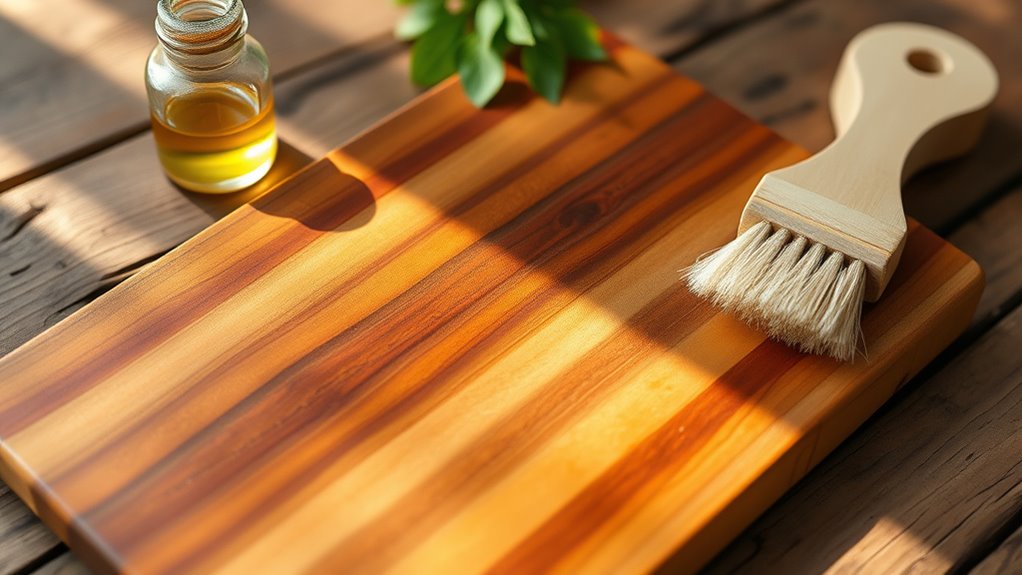
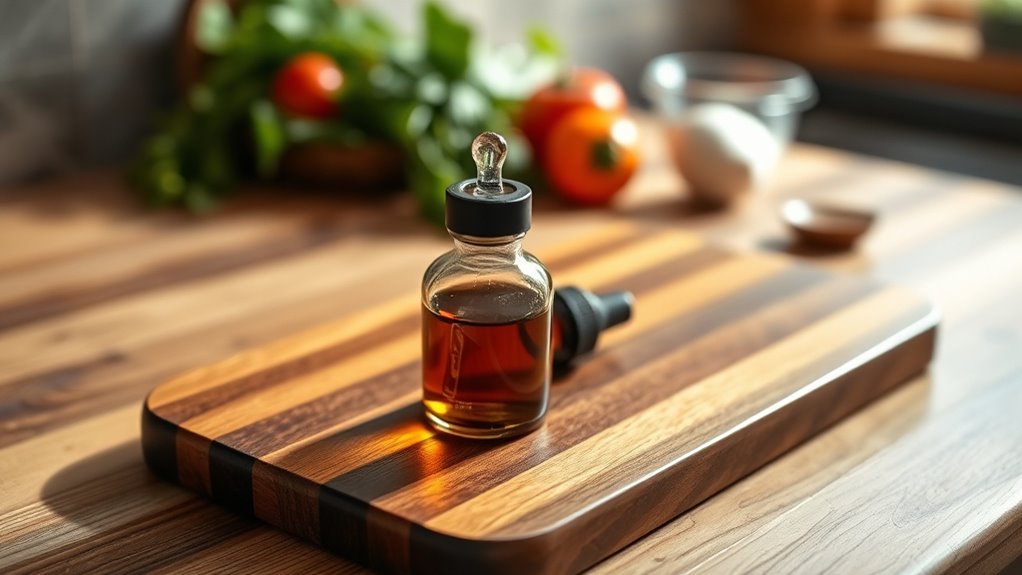
Although you might not hear about it as often as other finishes, tung oil is a natural drying oil derived from the seeds of the tung tree. When you apply tung oil, it penetrates the wood and hardens upon exposure to air, creating a durable, flexible finish. Unlike synthetic oils, tung oil is non-toxic and food-safe once fully cured, making it a popular choice for kitchen items like cutting boards.
You’ll find that tung oil enhances the wood’s natural grain, giving it a warm, rich look without a glossy, plastic-like finish. Because it’s plant-based, you can feel confident using it on surfaces that come into contact with food. Plus, it’s easy to apply and maintain, which suits your busy lifestyle.
How Tung Oil Protects Wood From Water and Wear
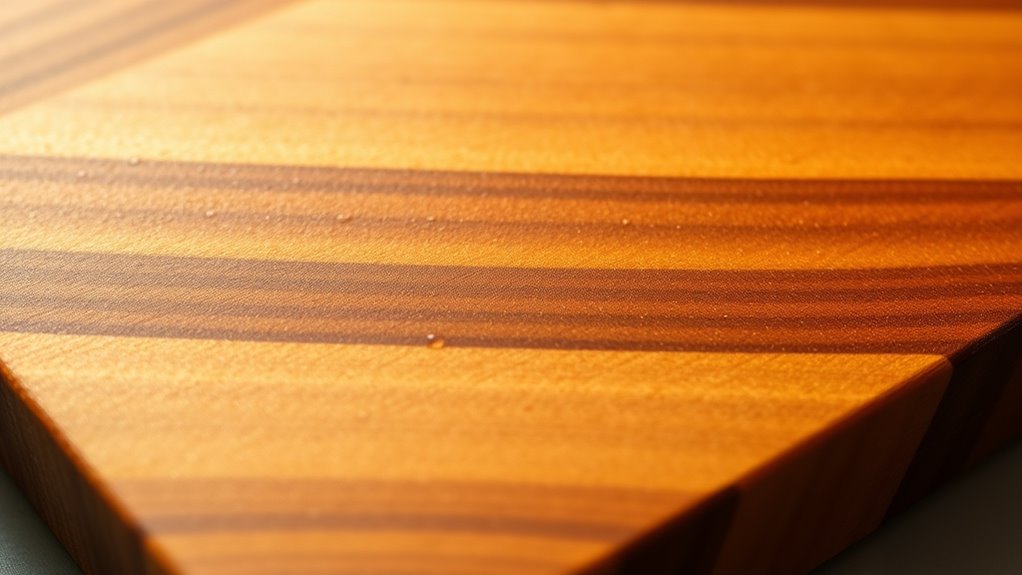
Tung oil’s ability to soak into the wood rather than just sitting on the surface makes it an effective barrier against water and daily wear. When you apply tung oil, it penetrates deep into the wood fibers, creating a flexible, water-resistant layer inside the material. This helps prevent water from seeping in, which can cause warping or cracking over time.
Additionally, the oil hardens as it cures, giving the wood a durable finish that resists scratches and stains. Unlike surface coatings that can peel or chip, tung oil’s bond with the wood maintains protection even with regular use. By sealing the wood’s pores, it also reduces the chance of dirt and moisture buildup, keeping your cutting board looking and performing well longer.
Is Pure Tung Oil Food Safe for Cutting Boards?
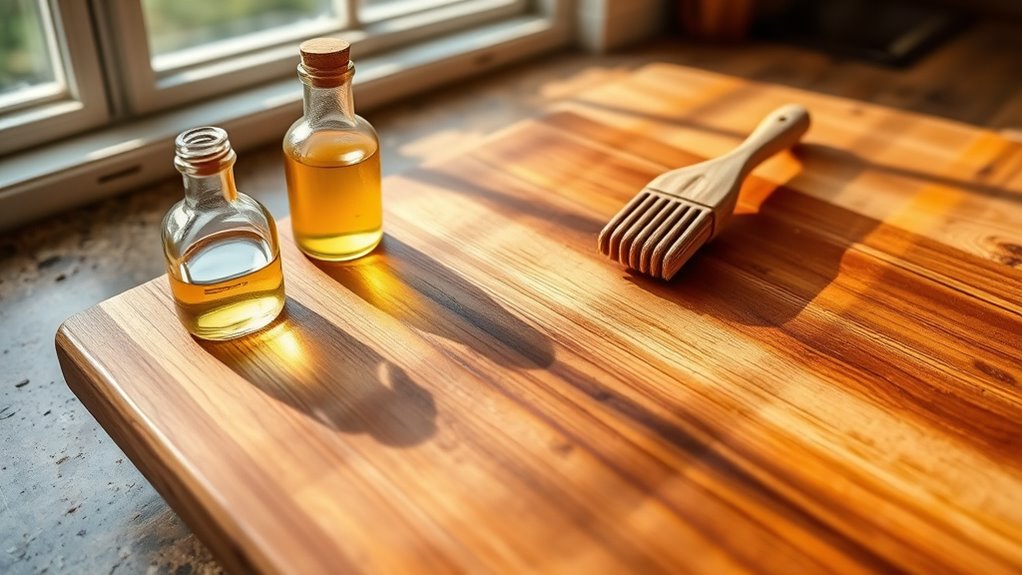
You’ll want to make sure the tung oil you use is pure and free from additives to keep your cutting board safe. Check if it meets FDA food safety standards, which guarantees it’s non-toxic for food contact.
Also, remember that proper application and full drying time are essential to avoid any risks.
Composition and Purity
When you choose pure tung oil for your cutting board, you’re opting for a natural finish that’s generally considered food safe. Pure tung oil is extracted directly from the seeds of the tung tree and contains no additives or chemicals, which is why it’s favored for food-contact surfaces. To confirm safety, you need to verify that the oil is 100% pure and free from solvents, dryers, or other synthetic ingredients that might be harmful.
Some commercial tung oils are blended or modified to speed drying times or improve durability, but these versions may not be safe for cutting boards. Always check the label and opt for food-grade or raw tung oil. By focusing on composition and purity, you minimize risks and protect your health while enjoying a durable, natural finish.
FDA Food Safety Standards
Ensuring the oil on your cutting board meets FDA food safety standards helps guarantee it won’t pose health risks during food preparation. Pure tung oil is generally recognized as safe by the FDA when fully cured, making it a suitable finish for items that come into contact with food. When you choose pure tung oil, you avoid additives or solvents that could be harmful if ingested.
The FDA classifies certain oils as food-grade if they don’t leach toxic substances, and tung oil fits this criterion once properly applied and dried. However, always verify that the product you buy explicitly states it’s 100% pure and food safe. Using FDA-compliant tung oil ensures your cutting board remains safe and durable for everyday kitchen use.
Application and Drying Time
Although pure tung oil is food safe once fully cured, proper application and drying time are essential to achieve that safety. When applying tung oil to your cutting board, you should use thin, even coats to ensure it penetrates the wood without leaving a sticky surface. After each coat, allow the oil to dry completely—this usually takes 24 to 48 hours, depending on humidity and temperature.
You may need to apply multiple coats, sanding lightly between them for a smooth finish. Rushing this process risks trapping wet oil, which isn’t safe to touch or ingest. Once fully cured—typically after 7 days—the oil forms a durable, food-safe barrier that protects your cutting board without harmful chemicals.
How to Identify Pure vs. Blended Tung Oil Products
| Feature | Pure Tung Oil |
|---|---|
| Label Claims | 100% pure, food safe |
| Ingredients | Pure tung nut extract only |
| Drying Time | Longer, natural curing |
Knowing these differences helps you choose the safest option for your cutting board.
Are There Any Health Risks With Tung Oil?
While tung oil is often praised for its natural origins and food-safe properties, you might wonder if it poses any health risks when used on cutting boards. Pure tung oil is non-toxic once fully cured, creating a safe, durable finish that resists water and bacteria.
However, you should be cautious with uncured or partially cured oil, as it may cause skin irritation or allergic reactions in sensitive individuals. Also, avoid inhaling oil fumes during application, especially in poorly ventilated spaces.
Make sure you use 100% pure tung oil without additives or solvents, which could introduce harmful chemicals. When properly applied and fully dried, tung oil provides a safe surface for food contact, making it a solid choice for your cutting board’s finish.
Comparing Tung Oil to Other Cutting Board Finishes
Now that you know tung oil is safe when properly cured, it’s helpful to see how it stacks up against other popular finishes for cutting boards. Each finish offers unique benefits and drawbacks depending on durability, food safety, and ease of application.
Here’s a quick comparison to help you decide:
| Finish | Key Feature |
|---|---|
| Tung Oil | Food-safe, water-resistant |
| Mineral Oil | Easily applied, non-toxic |
| Beeswax | Natural barrier, needs frequent reapplication |
| Linseed Oil | Dries hard but may yellow wood |
| Walnut Oil | Food-safe, potential allergen |
Tung oil provides excellent protection and longevity, especially compared to mineral oil, which requires more frequent upkeep. Beeswax offers a good natural seal but lacks durability, while linseed and walnut oils have specific considerations you should keep in mind.
How Long Does Tung Oil Take to Cure on Cutting Boards?
Because curing time affects both safety and durability, you’ll want to know how long tung oil takes to fully harden on your cutting board. Typically, tung oil requires about 24 to 48 hours to dry to the touch, but full curing can take up to 7 days. During this time, the oil polymerizes, creating a hard, water-resistant surface.
You should avoid using the board or exposing it to moisture until the cure completes to guarantee maximum protection and food safety. Temperature and humidity impact curing speed; warmer, drier conditions help tung oil harden faster, while cooler or more humid environments slow the process. Patience here pays off, as a well-cured tung oil finish markedly enhances your cutting board’s lifespan and safety.
How to Properly Apply Tung Oil to a Cutting Board
Before applying tung oil, make certain your cutting board’s surface is clean and sanded smooth. You’ll want to use a cloth or brush to evenly spread the oil, working it into the wood grain.
After application, let it dry thoroughly between coats to ensure proper curing and durability.
Surface Preparation Steps
Although applying tung oil may seem straightforward, preparing your cutting board’s surface properly guarantees the finish adheres well and lasts longer. Start by sanding the board with fine-grit sandpaper (220 grit) to smooth out any rough spots.
Clean the surface thoroughly to remove dust and oils. Let it dry completely before applying oil.
| Step | Action | Tip |
|---|---|---|
| 1 | Sand board | Use 220 grit sandpaper |
| 2 | Remove dust | Wipe with a damp cloth |
| 3 | Check for damage | Repair cracks if needed |
| 4 | Dry surface | Ensure no moisture left |
| 5 | Ready for oiling | Work in a well-ventilated area |
Following these steps guarantees a smooth, durable finish.
Application Techniques Explained
When you’re ready to apply tung oil to your cutting board, start by pouring a small amount onto a clean, lint-free cloth or directly onto the wood surface. Rub the oil in using circular motions, guaranteeing even coverage. Focus on one section at a time to avoid missing spots.
Don’t pour too much oil; a little goes a long way. After rubbing it in, wipe off any excess oil with a fresh cloth to prevent sticky buildup. Repeat this process for each coat, allowing the wood to absorb the oil properly.
Applying thin, even layers helps the tung oil penetrate deeply and enhances the board’s durability and water resistance. Proper application ensures your cutting board stays both safe and beautiful.
Drying And Curing Tips
After applying each coat of tung oil evenly, you’ll need to give the wood enough time to dry and cure properly. This step assures the oil fully penetrates and hardens, creating a safe, durable finish. Typically, drying takes 24 hours in a well-ventilated area.
For best results, apply multiple thin coats rather than one thick coat, allowing each to cure before the next.
| Step | Tip |
|---|---|
| Drying Time | Wait 24 hours minimum |
| Ventilation | Use a well-ventilated space |
| Number of Coats | Apply 3-5 thin coats |
| Final Cure | Let cure 7 days before heavy use |
Patience during drying and curing guarantees a food-safe, long-lasting cutting board finish.
How Often Should You Reapply Tung Oil for Best Protection?
To keep your cutting board well-protected, you should reapply tung oil regularly based on how often you use and wash it. If you use your board daily, reapplying every 4 to 6 weeks keeps the wood nourished and resilient. For less frequent use, every 2 to 3 months is usually enough.
Each time you notice the wood looking dry, dull, or absorbing water more quickly, it’s a sign to add another coat. Before reapplying, make sure the surface is clean and dry. Apply a thin, even layer, let it soak for about 20 minutes, then wipe off the excess.
This routine maintains your cutting board’s natural beauty and durability without overbuilding a sticky finish.
Can Tung Oil Prevent Water and Bacteria Damage on Cutting Boards?
Although tung oil creates a durable, water-resistant surface on cutting boards, it doesn’t make them completely waterproof or bacteria-proof. When you apply tung oil, it soaks into the wood fibers, sealing tiny pores and reducing water absorption. This helps prevent warping and cracking caused by moisture.
However, water can still penetrate over time, especially if the finish wears down. As for bacteria, tung oil doesn’t kill germs, but by minimizing moisture retention, it discourages bacterial growth. To keep your cutting board safe, you still need to clean and dry it thoroughly after each use.
Relying solely on tung oil for protection won’t stop bacteria from settling in cracks or crevices. So, while tung oil enhances resistance, you should maintain good hygiene practices alongside it.
Tips for Safely Using Tung Oil on Food Contact Surfaces
You’ll want to choose 100% pure, food-safe tung oil to protect your cutting board without harmful chemicals. Apply thin, even coats and let each layer fully cure to guarantee a durable, non-toxic finish.
Remember to allow enough drying time before use to keep your board safe for food prep.
Food-Safe Tung Oil Benefits
When you choose tung oil for your cutting board, you’re opting for a natural, non-toxic finish that protects wood without harmful chemicals. Tung oil penetrates deep, creating a durable, water-resistant barrier that keeps your board safe from moisture and bacteria.
Plus, it enhances the wood’s natural grain, giving your cutting board a beautiful, rich look. It’s also food-safe once fully cured, so you don’t have to worry about toxins leaching into your food.
| Benefit | Why It Matters |
|---|---|
| Non-toxic | Safe for food contact surfaces |
| Water-resistant | Prevents warping and cracking |
| Enhances appearance | Highlights wood grain beautifully |
Using tung oil keeps your cutting board both functional and attractive for years.
Application Techniques For Safety
Tung oil’s natural, food-safe qualities make it an excellent choice for finishing cutting boards, but applying it correctly guarantees the safest results. First, work in a well-ventilated area to avoid inhaling fumes. Use a clean, lint-free cloth or brush to apply a thin, even coat.
Avoid soaking the wood; excess oil can create a sticky surface that traps bacteria. After application, wipe off any excess oil to prevent uneven curing. Allow the oil to penetrate fully before adding more coats.
Use multiple thin layers rather than one thick one for prime protection. Always wear gloves to keep your skin safe and prevent contamination. Following these steps helps you create a durable, safe finish that protects your cutting board and food.
Curing Time And Precautions
Although applying tung oil properly is essential, allowing sufficient curing time is just as important to guarantee a safe, durable finish on your cutting board. You should let the oil cure for at least 7 days in a well-ventilated area to *assure* it fully hardens.
Avoid using the board during this period to prevent contamination. Also, keep the board away from direct sunlight and moisture to promote even curing.
| Step | Tip |
|---|---|
| 1. Apply Oil | Thin, even coats |
| 2. Dry Time | 24 hours between coats |
| 3. Curing Period | Minimum 7 days before use |
| 4. Storage | Cool, dry, ventilated space |
Following these precautions will help you enjoy a safe, long-lasting cutting board finish.
Why Use Tung Oil on Cutting Boards?
Because cutting boards endure constant moisture and knife cuts, you need a finish that protects without harming your health. Tung oil is an excellent choice because it penetrates deeply, creating a durable, water-resistant barrier. When you use tung oil, you safeguard your cutting board from cracking and warping while keeping it food-safe.
Here’s why you should consider tung oil:
- Non-toxic and food-safe once fully cured, making it safe for food preparation.
- Water-resistant, preventing moisture absorption that leads to damage.
- Enhances the wood’s natural grain, giving your board a beautiful, rich finish.
- Easy to apply and maintain, allowing you to refresh your board’s protection regularly.
Using tung oil keeps your cutting board safe, functional, and looking great.
Frequently Asked Questions
Can Tung Oil Be Used on Wooden Utensils Besides Cutting Boards?
Yes, you can use tung oil on wooden utensils. It penetrates the wood, providing a durable, water-resistant finish that’s food-safe once cured.
Just make sure to apply multiple coats and let it fully dry before use.
Does Tung Oil Alter the Taste of Food Prepared on Treated Boards?
Tung oil typically treats timber without tainting taste. You won’t notice nasty nuances or off-flavors on food prepared.
Since it soaks in and seals surfaces, your meals maintain natural, marvelous, mouthwatering flavors every time you cook.
How Should Tung Oil Be Stored to Maintain Its Quality?
You should store tung oil in a cool, dark place with the cap tightly sealed to prevent oxidation. Keep it away from heat and direct sunlight, and avoid exposure to air to maintain its quality and shelf life.
Can Tung Oil Be Combined With Other Oils for Wood Finishing?
Yes, you can combine tung oil with other oils like linseed or mineral oil to enhance wood finishing. Just make sure they’re compatible and test a small area first to achieve the finish and durability you want.
What Are Common Signs That Tung Oil Finish Needs Replacing?
You’ll spot a dull, dry surface instead of that rich, glossy sheen you love. When water stops beading and wood feels rough or stained, it’s time to refresh your tung oil finish to protect and beautify.
Conclusion
Using pure tung oil on your cutting board is like giving your kitchen a timeless shield—think of it as the armor that knights once wore, protecting what’s precious. It’s food safe, water-resistant, and helps keep bacteria at bay.
Just remember to reapply it regularly to maintain that strong defense. With proper care, your cutting board can stay as durable and beautiful as a classic tale, ready for all your culinary adventures.
In conclusion, tung oil is a safe and effective finish for cutting boards. Its natural properties make it ideal for maintaining hygiene and durability in kitchen tools. Choosing tung oil ensures your cutting board remains protected, food safe, and long-lasting.