
Do Slow Cookers Use a Lot of Electricity?
Slow cookers are known for their energy efficiency and don’t use a lot of electricity compared to ovens or stovetops. They typically draw about 70 to 250 watts, operating at a low, steady heat for long periods.
This consistent, gentle cooking method keeps overall energy consumption low.
You’ll usually spend just a few cents per hour on electricity when using a slow cooker. Choosing the right size and cooking setting can help save even more power.
It’s a cost-effective way to prepare meals without high energy bills.
If you want to understand how to balance cooking time, temperature, and cost for the most efficient use of your slow cooker, there’s more to explore.
Learning these factors can help you optimize your cooking and energy savings.
Key Takeaways
- Slow cookers typically use 70 to 250 watts, consuming less electricity than ovens or stovetops. They maintain low, steady heat over long periods, optimizing energy efficiency. Energy consumption is about 0.2 to 0.3 kWh per hour, costing roughly 2.6 to 4 cents per hour.
- Longer cooking times increase total energy use, but slow cookers still use less power overall. Proper size selection and usage habits greatly influence electricity consumption and energy savings.
Do Slow Cookers Use a Lot of Electricity?
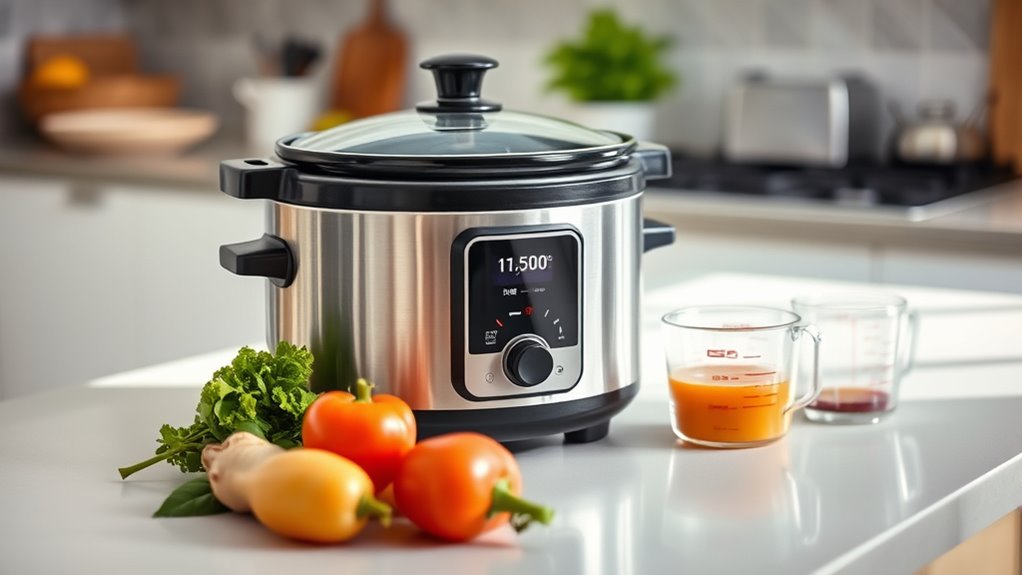
Although slow cookers run for several hours, they don’t use a lot of electricity compared to other kitchen appliances. When you plug one in, it typically draws between 70 to 250 watts, depending on the heat setting. You might think that running for hours means high energy use, but slow cookers maintain a low, steady temperature, so they consume less power overall.
In comparison, ovens and electric stovetops often use 1,000 watts or more while operating. You’ll find that a slow cooker’s energy consumption over a long cooking period is usually less than that of shorter, high-power cooking methods. So, when you consider electricity usage alone, slow cookers won’t considerably raise your energy bill.
Why Are Slow Cookers Energy-Efficient?
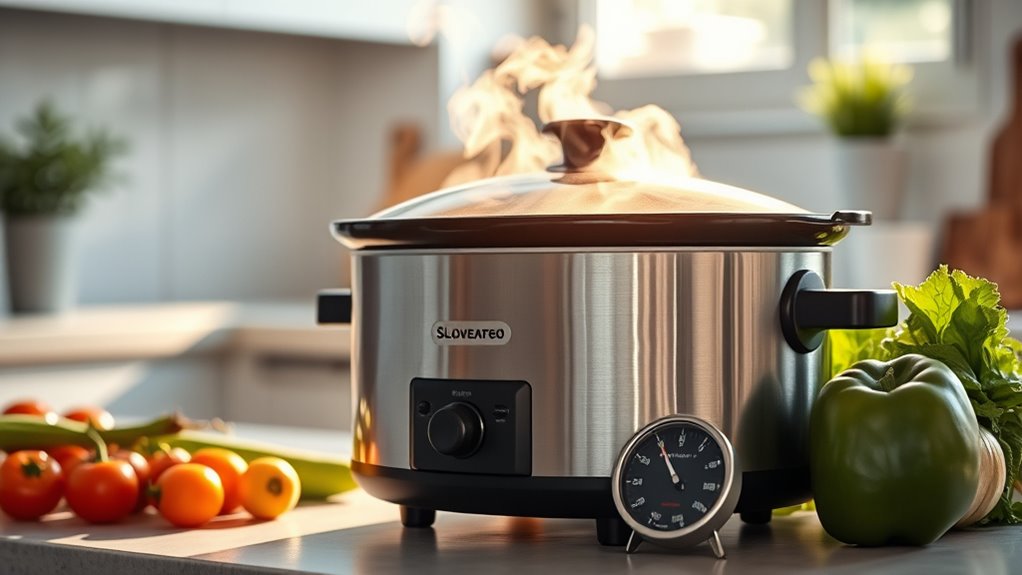
You might wonder how slow cookers use so little electricity despite cooking for hours. The secret is their low power consumption combined with long cooking times at steady, low heat.
This balance makes them surprisingly energy-efficient compared to other kitchen appliances.
Low Power Consumption
How do slow cookers manage to use so little electricity while preparing meals? It’s all about their low wattage design. Unlike ovens or stovetops that demand high power to heat quickly, slow cookers use a steady, gentle heat that requires far less energy.
Most models operate between 70 to 250 watts, which is considerably lower than other kitchen appliances. This means when you plug in your slow cooker, it draws a small, consistent amount of electricity rather than large spikes. The appliance’s insulated walls also help trap heat, so it doesn’t need to work harder to maintain temperature.
Long Cooking Times
Because slow cookers operate over several hours, they use energy more efficiently than appliances that heat food quickly with high power bursts. When you cook food slowly at a low temperature, the appliance maintains a steady, low energy draw instead of cycling on and off at full power. This steady, gentle heating reduces overall electricity use while still thoroughly cooking your meal.
Since slow cookers don’t need to reach extremely high temperatures fast, they avoid energy waste common in ovens or stovetops. Plus, their insulated design helps keep heat contained, so you don’t lose energy to the environment. When you use a slow cooker, you’re choosing a method that balances time and energy, making it a smart, efficient option for preparing meals.
How Much Electricity Does a Slow Cooker Use Per Hour?
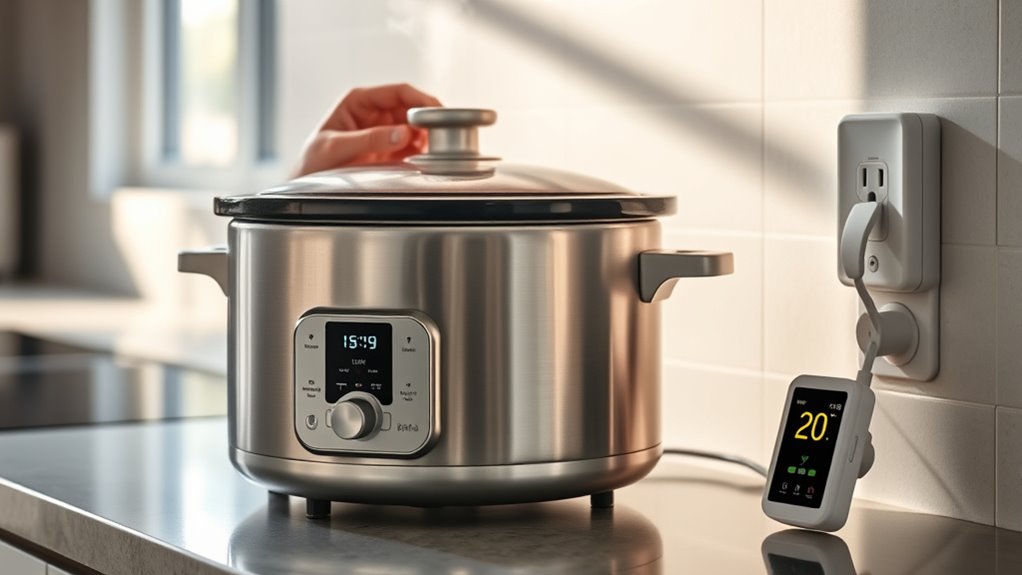
You might wonder how much electricity your slow cooker uses each hour and how that compares to other kitchen appliances. On average, slow cookers consume between 70 and 250 watts, depending on the setting.
Understanding this can help you estimate the hourly cost and manage your energy bills better.
Average Wattage Consumption
Although slow cookers are known for their convenience, understanding their average wattage consumption can help you manage your electricity bills more effectively. On average, slow cookers use between 70 to 250 watts per hour, depending on the heat setting. Low settings typically consume around 70-150 watts, while high settings can reach up to 250 watts.
This relatively low power use makes slow cookers energy-efficient for long cooking times.
Knowing this helps you:
- Feel confident that you’re not wasting energy
- Avoid unexpected spikes in your electricity bill
- Enjoy meal prep without guilt over power use
- Make informed choices about cooking appliances
- Appreciate the balance of convenience and efficiency
Energy Usage Comparison
How much electricity does a slow cooker actually use per hour compared to other common kitchen appliances? On average, a slow cooker consumes about 200 watts per hour on a high setting, which is relatively low.
When you compare that to some other appliances, you’ll see slow cookers are quite energy-efficient.
| Appliance | Average Wattage per Hour |
|---|---|
| Slow Cooker | 200 W |
| Microwave Oven | 1000 W |
| Electric Oven | 2500 W |
Hourly Cost Estimates
Wondering what it costs to run a slow cooker each hour? On average, slow cookers use about 0.2 to 0.3 kWh per hour depending on the setting. At an electricity rate of 13 cents per kWh, that means you’re spending roughly 2.6 to 4 cents hourly — pretty affordable!
Here’s why you’ll appreciate that: You can leave it on all day without worrying about a high electric bill. It’s perfect for busy days when you want to come home to a hot meal.
Slow cookers use less energy than many kitchen appliances. They help you save money compared to takeout or fast meals. You get delicious, home-cooked food with minimal effort or cost.
Comparing Slow Cooker Energy Use to Ovens and Stovetops
When you compare slow cookers to ovens and stovetops, you’ll find that slow cookers generally use less electricity over extended cooking periods. Slow cookers operate at low wattage, maintaining steady heat without the spikes ovens and stovetops require. This makes them more energy-efficient for long, slow cooking.
| Appliance | Average Power Use (Watts) |
|---|---|
| Slow Cooker | 200 to 300 |
| Oven | 2000 to 5000 |
| Stovetop | 1200 to 3000 |
Since slow cookers cook at a lower temperature for hours, they consume less energy overall. Ovens and stovetops burn more electricity quickly, especially during preheating and high-heat cooking. So, if you’re aiming to save electricity, slow cookers are a smart choice.
How Cooking Time Changes Your Slow Cooker’s Energy Use
Since slow cookers use lower wattage over longer periods, the total cooking time directly affects their energy consumption. The longer you cook, the more electricity your slow cooker uses, even if it’s running at a low setting. But don’t let that worry you—slow cookers are designed to be energy-efficient compared to other appliances.
Here’s what you should keep in mind about cooking time and energy use:
- Longer cooking means steady, low energy use, which adds up.
- Shorter cooking times save electricity but might not soften tougher ingredients.
- Overcooking wastes electricity and can ruin your meal.
- Choosing the right cooking duration balances energy use and food quality.
- Planning ahead helps you avoid unnecessary energy costs while enjoying delicious meals.
Which Slow Cooker Settings Use the Most Electricity?
Although slow cookers generally use low wattage, the setting you choose directly impacts how much electricity your appliance consumes. Higher settings heat the food faster, increasing power use briefly, while lower settings use less power but cook longer.
Here’s a quick comparison:
| Setting | Electricity Use |
|---|---|
| High | Uses more power, shorter cooking time |
| Low | Uses less power, longer cooking time |
| Warm | Minimal power, maintains temperature |
When you pick High, your slow cooker ramps up energy use but finishes quicker. Low spreads out energy consumption over several hours, resulting in similar overall use.
Warm setting uses the least electricity since it just keeps the food hot without cooking further. Choose settings based on your timing needs without worrying too much about energy spikes.
Does Slow Cooker Size Affect Energy Use?
You might wonder if a small slow cooker uses less electricity than a large one. Wattage differences and cooking times both play a role in energy use.
Let’s explore how size impacts your slow cooker’s power consumption.
Small Vs. Large Models
How much energy does the size of your slow cooker really use? When choosing between small and large models, size does influence energy consumption, but not as much as you might think.
Larger slow cookers hold more food and can take longer to heat, which can slightly increase electricity use. However, small models might run longer or at higher settings for the same result.
Consider these emotional aspects when picking your slow cooker size:
- Saving money on your electricity bill
- Cooking just the right amount of food
- Avoiding wasted leftovers
- Feeling confident you chose an efficient appliance
- Enjoying the convenience without guilt
Ultimately, your cooking habits impact energy use more than the size itself.
Wattage Differences Impact
When comparing slow cookers, wattage differences play a key role in energy consumption, but size isn’t the only factor at play. A larger slow cooker generally uses more watts, but efficiency varies by model. For example, a 7-quart slow cooker might draw 250 watts, while a smaller 3-quart model uses around 150 watts.
However, some newer models use advanced heating technology that allows them to use less power regardless of size. When you choose a slow cooker, look at its wattage rating to estimate energy use rather than just its capacity. This helps you pick a model that fits your cooking needs without wasting electricity.
Cooking Time Variations
Although larger slow cookers typically use more watts, the amount of time you keep your food cooking can considerably affect overall energy consumption. If you use a big slow cooker for a long time, it might end up using more electricity than a smaller one cooking for a shorter period. You can manage energy use by adjusting cooking times based on the recipe and slow cooker size.
Consider these feelings when thinking about cooking time variations:
- Relief when your meal is ready without wasting electricity
- Satisfaction knowing you saved energy and money
- Confidence in using your slow cooker efficiently
- Frustration if cooking times are too long and waste power
- Joy from perfectly cooked meals with minimal energy use
Balancing size and time helps you cook smart and save energy.
Slow Cookers vs. Instant Pots: Which Saves More Energy?
Because both slow cookers and Instant Pots are popular for convenient cooking, you might wonder which one uses less electricity. Instant Pots cook meals much faster by using pressure, so they’re on for a shorter time, which generally means they consume less power overall.
Slow cookers, on the other hand, run for hours at low temperatures, slowly breaking down ingredients. While they use less electricity per hour, the longer cooking time can add up. If you’re aiming to save energy, an Instant Pot usually wins because it finishes meals quickly and efficiently.
However, if you prefer hands-off, low-temperature cooking, slow cookers are still energy-friendly. Ultimately, your choice depends on your cooking style and how much time you want to spend in the kitchen.
Calculating Your Slow Cooker’s Electric Cost
If you want to understand how much your slow cooker adds to your electric bill, you need to calculate its energy consumption based on wattage and usage time.
First, find the wattage on the label or manual. Then, multiply the wattage by the number of hours you use it. Divide that number by 1,000 to get kilowatt-hours (kWh), which your electric company charges for.
Consider:
- How many hours you typically cook meals
- Your slow cooker’s wattage (usually 200-300 watts)
- Your local electricity rate per kWh
- The convenience versus cost trade-off
- How small savings can add up over time
This simple calculation helps you see the real cost behind that comforting, slow-cooked meal.
Tips to Cut Your Slow Cooker’s Electricity Use
While slow cookers are already energy-efficient compared to many kitchen appliances, you can still take simple steps to reduce their electricity use even further. By using your slow cooker wisely, you’ll save energy and keep your bills low. Avoid lifting the lid unnecessarily, as it releases heat and forces the cooker to work harder.
Use the right size slow cooker for your meal to avoid wasting energy. Also, consider cooking multiple dishes back-to-back to maximize usage per hour. Finally, unplug your slow cooker when not in use to prevent standby power drain.
| Tip | Why It Helps |
|---|---|
| Keep lid closed | Retains heat, saves energy |
| Use appropriately sized cooker | Prevents excess energy use |
| Cook consecutive meals | Maximizes energy efficiency |
| Unplug when idle | Avoids standby power consumption |
Frequently Asked Questions
Can Slow Cookers Be Used for Canning or Preserving Food?
You shouldn’t use slow cookers for canning or preserving food because they don’t reach the high temperatures needed to kill bacteria safely.
Stick to pressure canners or boiling water baths for safe preserving instead.
Are Slow Cookers Safe to Leave on Overnight?
Leaving your slow cooker on overnight can be safe if you trust your appliance and follow the manufacturer’s instructions.
Just don’t forget to check for damage or faulty cords to avoid any unexpected kitchen surprises.
What Materials Are Slow Cooker Inserts Typically Made From?
Slow cooker inserts are typically made from ceramic or stoneware, which distribute heat evenly and retain warmth. Some models use metal or non-stick coated inserts, but ceramic remains the most popular for its durability and easy cleaning.
Can Slow Cookers Be Used for Baking Desserts?
Yes, you can use slow cookers for baking desserts like cakes and puddings. They cook evenly and keep moisture in, so your treats come out soft and delicious without needing an oven.
Give it a try!
How Do Slow Cookers Affect Food Nutrition Compared to Other Methods?
You’ll retain up to 70% more nutrients using a slow cooker compared to boiling. Slow cooking preserves vitamins by using lower temperatures and longer cooking times, so your meals stay flavorful and packed with nutrition.
Conclusion
Slow cookers save significant energy, silently simmering your meals with smart, steady heat. Compared to ovens and stovetops, they use substantially less electricity, especially during long cooking times.
Size and settings subtly shift your slow cooker’s energy use, but overall, slow cookers are a savvy, sustainable solution. By choosing slow cookers, you’re cutting costs and conserving energy—making mealtime more mindful, manageable, and money-wise.
So, stick with slow cookers for simple, smart savings! Slow cookers use less electricity, making them an energy-efficient choice that benefits both your wallet and the environment.