What Is the Best Wood for Cutting Boards
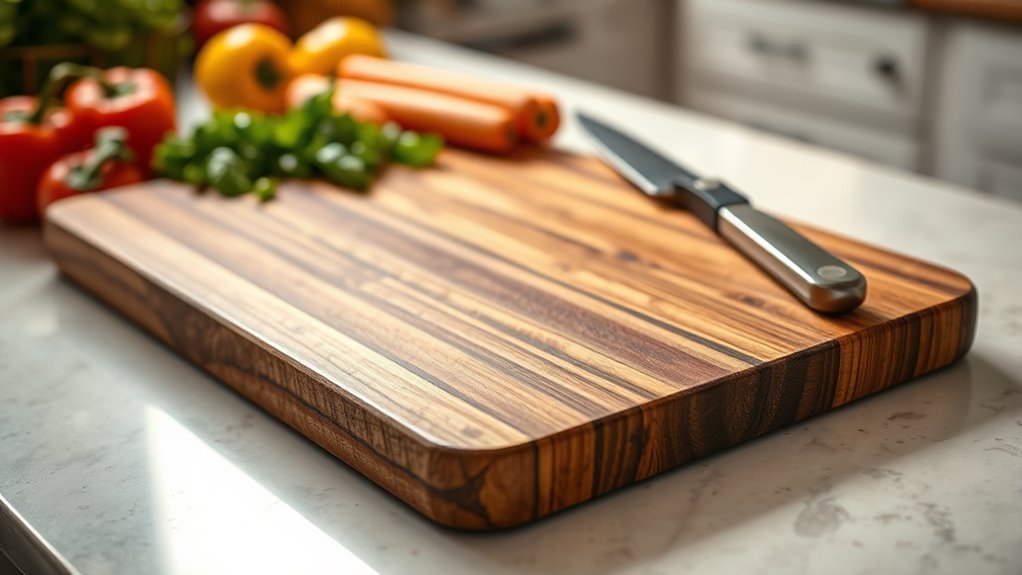
You’ll want a hardwood cutting board made from dense, tight-grain wood like maple, walnut, cherry, or teak. These woods are considered the best wood for cutting boards because they resist knife marks, repel moisture, and help keep your blades sharp. Choosing the right wood ensures your cutting board is durable and safe for food preparation.
Avoid softwoods like pine or cedar since they soak up water and trap bacteria, making them less hygienic.
End-grain boards are especially durable and gentle on knives but need regular care. Selecting the right wood and style can make food prep safer and easier while extending your board’s life.
More details can guide your perfect pick.
Key Takeaways
- Hardwoods like maple, walnut, cherry, and teak are best for cutting boards due to durability, moisture resistance, and knife safety.
- Closed-grain woods minimize water absorption, preventing bacteria growth and maintaining hygiene.
- End-grain boards offer superior durability and knife-friendliness but require regular oiling and maintenance.
- Avoid softwoods like pine and cedar, as they are porous, trap bacteria, and wear quickly.
- Choose wood based on cooking style and moisture exposure to maximize board longevity and efficiency.
Key Wood Qualities for Cutting Boards
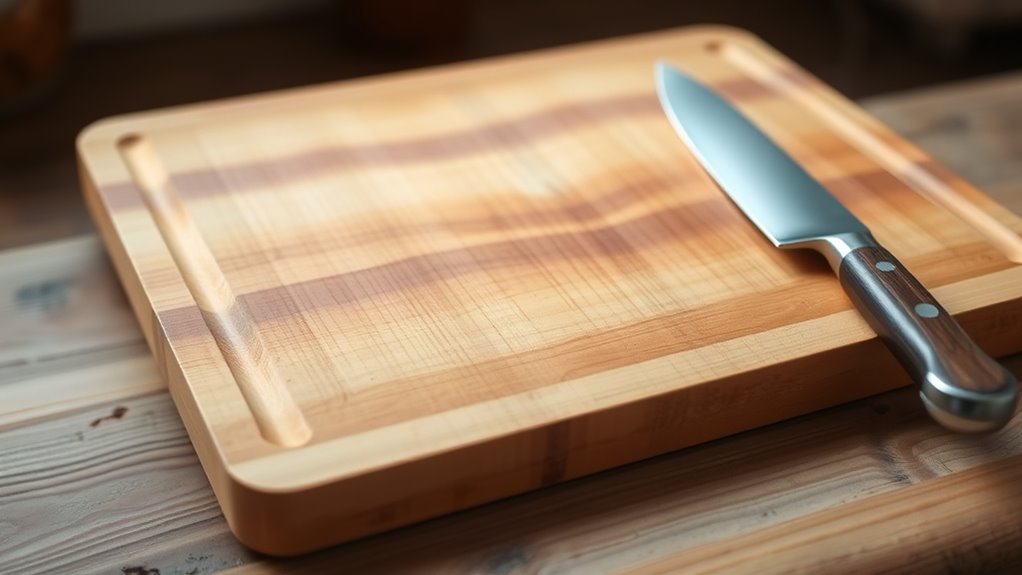
When choosing wood for your cutting board, you need to focus on durability, hardness, and resistance to moisture. These qualities guarantee your board lasts longer and stays hygienic. Durable wood withstands daily use without easily cracking or warping.
You’ll want wood that can handle moisture because cutting boards often come into contact with water and food juices. If the wood absorbs too much moisture, it can swell or develop bacteria. Also, select wood with a closed grain to minimize water absorption.
Avoid woods that are too soft since they’ll scar quickly, but you don’t want extremely hard wood either, as it can dull your knives. Choosing wood with the right balance of these qualities will give you a cutting board that performs well and stays safe over time.
How Wood Hardness Affects Cutting Board Durability
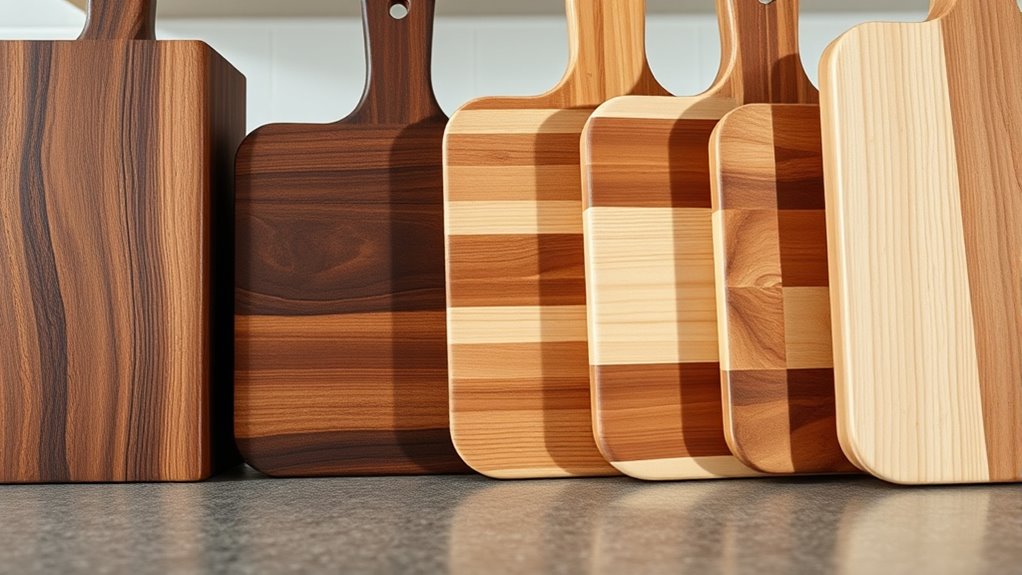
Because wood hardness directly influences how well your cutting board withstands daily use, understanding this factor is essential. Harder woods resist knife marks and dents better, keeping your board looking new longer. When you use a softer wood, your board may develop deep grooves quickly, which can trap bacteria and reduce its lifespan.
However, extremely hard woods might dull your knives faster, so you’ll want a balance. Woods like maple and walnut offer that sweet spot of durability without being overly harsh on your blades. Choosing the right hardness means your cutting board stays functional and safe over time, saving you from frequent replacements.
Understanding End-Grain vs. Edge-Grain Wood
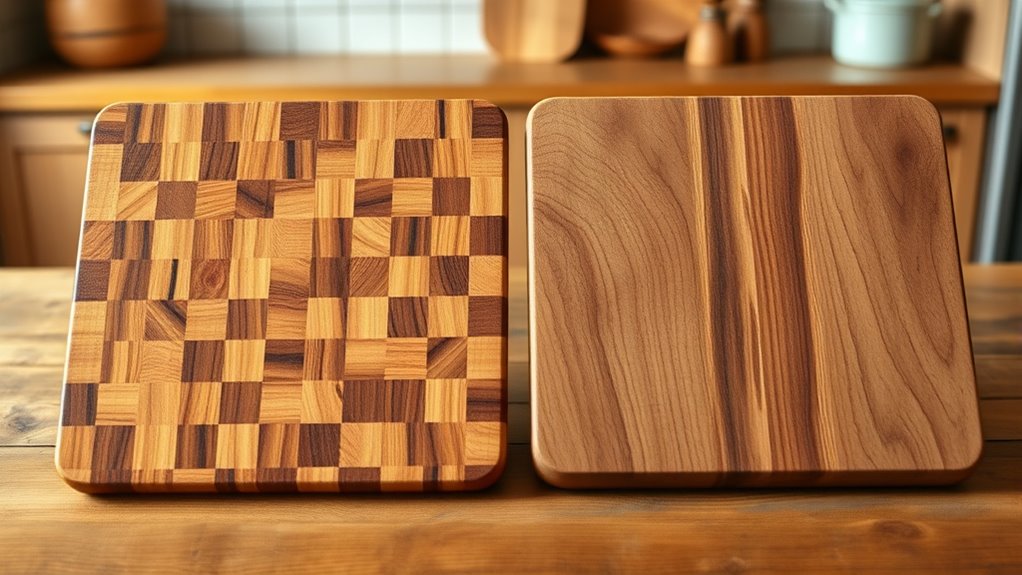
You’ll notice that end-grain and edge-grain wood offer different benefits for cutting boards. End-grain boards are known for durability and self-healing properties, while edge-grain boards tend to be easier to maintain.
Understanding these differences helps you choose the right style for your kitchen needs.
End-Grain Wood Benefits
Although edge-grain cutting boards are common, end-grain boards offer unique benefits that many cooks prefer. When you use an end-grain board, you’re working with wood fibers oriented vertically, which means your knife cuts between the fibers rather than across them. This design helps keep your knife sharper longer because it experiences less resistance and dulling.
Plus, end-grain boards are more forgiving on your blades, reducing wear over time. The wood fibers also naturally “heal” as they close up after each cut, which makes the board more durable and less prone to deep grooves or damage. If you want a cutting board that combines longevity with knife preservation, end-grain wood is a smart choice that stands up well to heavy use.
Edge-Grain Wood Characteristics
When you choose an edge-grain cutting board, you’re working with wood fibers that run parallel to the surface, giving the board a smoother and more uniform appearance. This orientation highlights the natural grain patterns, making the board visually appealing and often lighter than end-grain options. Edge-grain boards are typically easier to sand and finish, allowing you to maintain a polished look.
Because the fibers lie flat, cuts tend to leave straighter marks, which can be less forgiving on your knives but easier to clean. You’ll find that edge-grain boards often come in simpler, rectangular shapes, making them versatile for everyday kitchen tasks. Understanding these characteristics helps you decide if edge-grain suits your style and needs before considering durability and upkeep.
Durability And Maintenance Differences
While both end-grain and edge-grain cutting boards serve well in the kitchen, their durability and maintenance needs differ considerably. End-grain boards resist knife marks better, lasting longer but require more upkeep to prevent drying and cracking.
Edge-grain boards are easier to maintain but show wear faster. Choosing between them means balancing your patience for care with your desire for lasting quality.
| Aspect | End-Grain | Edge-Grain |
|---|---|---|
| Durability | Highly resistant to cuts | Wears down quicker |
| Maintenance | Needs regular oiling | Easier, less frequent |
| Emotional Feel | Feels premium, lasting | Practical, straightforward |
Top Hardwood Choices for Durable Cutting Boards
Since your cutting board needs to withstand daily use, choosing the right hardwood is essential for durability and safety. Here are four top hardwood choices that combine strength and food safety:
Choosing the right hardwood is key for a durable, safe cutting board that withstands daily use.
- Maple – Dense, fine-grained, and resistant to knife marks, it’s a classic choice.
- Walnut – Offers a rich color and hardness that resists deep cuts and bacteria.
- Cherry – Smooth texture and moderate hardness make it gentle on knives yet durable.
- Teak – Naturally oily, it repels moisture and resists warping over time.
These woods provide a solid surface that protects your knives while standing up to moisture and daily wear.
Opting for any of these hardwoods ensures your cutting board lasts longer and stays safer in your kitchen.
Softwoods to Avoid for Cutting Boards
You’ll want to steer clear of softwoods when choosing a cutting board because their high porosity can trap bacteria and moisture. These woods also tend to wear down quickly, making them less durable for daily use.
Knowing which softwoods to avoid helps you pick a safer, longer-lasting board.
Softwood Porosity Issues
Why should you think twice before choosing softwoods for cutting boards? Softwoods tend to have higher porosity, which means they absorb moisture and bacteria more easily. This can lead to hygiene issues and unpleasant odors over time.
Here are four key porosity problems to consider:
- Deep pores trap food particles, making thorough cleaning difficult.
- Moisture absorption causes the wood to swell and warp.
- Bacterial growth thrives in the porous surface, increasing contamination risk.
- Staining happens quickly as juices and oils soak into the wood.
Because of these porosity issues, softwoods like pine and fir are less ideal for cutting boards compared to denser hardwoods that resist moisture and bacteria better. You want a safe, easy-to-clean surface, and softwoods just don’t deliver that.
Durability Concerns
While porosity issues already make softwoods less suitable for cutting boards, their durability problems add another reason to steer clear. Softwoods like pine, fir, and cedar are generally softer and more prone to scratches, dents, and deep grooves. These damages can harbor bacteria, making your board less hygienic over time.
When you use softwood boards, you’ll notice they wear out quickly, forcing you to replace them sooner. Plus, softwoods often absorb moisture more readily, which can cause warping and cracking. If you want a cutting board that stands up to daily use, avoid softwoods.
Opt instead for harder, tighter-grained woods that resist damage and maintain their surface integrity, keeping your kitchen safe and your board lasting longer.
How Wood Porosity Impacts Food Safety and Hygiene
Because wood porosity affects how liquids and bacteria penetrate the surface, it plays an essential role in food safety and hygiene. When you choose a cutting board, you want wood with low porosity to minimize absorption of juices and reduce bacterial growth.
Here’s how porosity impacts your cutting board:
- Liquids soak in faster on porous wood, creating breeding grounds for bacteria.
- Stains and odors linger longer in open pores, making cleaning tough.
- High porosity wood can harbor harmful pathogens, risking cross-contamination.
- Low porosity wood resists moisture, helping maintain a sanitary surface.
Which Woods Are Most Knife-Friendly for Cutting Boards
You want a cutting board that’s gentle on your knives while still durable enough to last. Hardwoods with tight grains usually strike the best balance, preventing quick dulling and resisting deep cuts.
Choosing the right texture helps protect your knife edges and keeps your board in great shape.
Hardwood Versus Softwood
Choosing the right wood for your cutting board means understanding how hardwood and softwood affect your knives. Hardwood, like maple or walnut, offers durability and resists deep cuts, which protects your blades longer. Softwood, such as pine or cedar, is gentler on knives but wears out quickly, leading to grooves that can harbor bacteria.
Here’s what you should consider:
- Hardwood’s density absorbs knife impact, preserving blade sharpness.
- Softwood’s softness makes cutting easier but damages faster.
- Hardwoods have tighter grain, reducing bacteria buildup.
- Softwoods scratch easily, requiring more frequent replacement.
For knife-friendly cutting boards, hardwoods typically provide the best balance between durability and blade care.
Grain Tightness And Texture
While wood density plays a crucial role, the tightness of a wood’s grain and its texture directly impact how knife-friendly a cutting board will be. You’ll want wood with a fine, tight grain because it resists knife marks better and keeps your blades from snagging or dulling quickly. Woods like maple and cherry have tight, closed grains, making them ideal for cutting boards.
Their smooth texture provides a consistent cutting surface, reducing wear on your knives. On the other hand, open-grain woods like oak can trap food particles and be rougher on blades. When choosing your cutting board, focus on woods with tight grain patterns and a smooth texture to guarantee durability and protect your knives during everyday use.
Impact On Knife Edges
The tightness of a wood’s grain and its texture don’t just affect durability—they also play a big role in how gentle the surface is on your knife edges. When choosing a cutting board, you want wood that won’t dull your blades quickly. Here’s what to keep in mind:
- Tight Grain Woods: Maple and cherry have close grains that cushion your knife, reducing wear.
- Soft Hardwoods: Walnut’s moderate hardness offers balance—protecting edges while staying durable.
- Avoid Hard Woods: Bamboo and oak can be too tough, causing faster blade dulling.
- Smooth Finish: A finely sanded surface prevents rough spots that chip knives.
Picking the right wood means your knives stay sharper longer, saving you time and money on sharpening.
Picking Wood for Your Cooking Style
Since your cooking habits influence how you use a cutting board, selecting the right wood depends on your typical meal prep. If you often work with meats, hardwoods like maple or walnut offer durability and resist deep cuts, helping prevent bacteria buildup.
For frequent vegetable chopping, softer woods such as cherry provide a gentler surface that’s easier on your knives. If you prepare a variety of foods, a wood with tight grain and moderate hardness, like beech, strikes a good balance.
Also, consider moisture exposure—if you handle wet or acidic ingredients regularly, choose woods less prone to warping or staining. By matching your cutting board wood to your cooking style, you’ll improve both the board’s lifespan and your kitchen efficiency.
Maintaining and Cleaning Wood Cutting Boards
Properly maintaining and cleaning your wood cutting board keeps it safe and extends its life. You’ll want to follow a simple routine to keep it in top shape.
- After each use, wash your board with warm, soapy water and a sponge. Avoid soaking it to prevent warping.
- Rinse thoroughly and dry it immediately with a clean towel.
- Once a week, apply food-grade mineral oil to nourish the wood and prevent cracking.
- Occasionally, sprinkle coarse salt on the board and scrub with a lemon half to deodorize and remove stains.
Where to Buy Quality Wood for Cutting Boards
Keeping your wood cutting board well-maintained helps preserve its quality, but starting with the right wood is just as important. When looking to buy quality wood, check out local hardwood suppliers or lumber yards—they often carry the best selection of durable, food-safe woods like maple, walnut, and cherry.
You can also explore specialty woodworking stores or online retailers that focus on cutting board-grade wood. Make sure the wood is untreated and free from harmful chemicals. If you want sustainable options, look for FSC-certified wood to support responsible forestry.
Avoid softwoods, as they’re less durable and can harbor bacteria. By choosing your wood carefully and from trusted sources, you’ll set yourself up for a cutting board that lasts and performs beautifully in your kitchen.
Frequently Asked Questions
Can I Use Reclaimed Wood for Making Cutting Boards?
You can use reclaimed wood for cutting boards, but make sure it’s food-safe, free from chemicals, and properly cleaned. Hardwoods like maple or walnut work best. Avoid soft or treated woods to keep your board safe and durable.
How Does Wood Color Affect Food Presentation on Cutting Boards?
Imagine serving bright veggies on a dark wood board—the colors pop, making food more inviting. You’ll notice that lighter woods can mute vibrant foods, so choose wood color to enhance your dish’s visual appeal and wow your guests.
Are There Any Eco-Friendly Certifications for Cutting Board Wood?
Yes, you can look for FSC or PEFC certifications on cutting board wood, ensuring it’s sourced sustainably. These labels guarantee eco-friendly harvesting practices, so you’re supporting responsible forestry while choosing your cutting board.
Can Wooden Cutting Boards Be Used for Both Meat and Vegetables?
You can use wooden cutting boards for both meat and vegetables, but you should avoid cross-contamination by using separate boards or thoroughly cleaning them between uses.
This keeps your food safe and your board in good shape.
What Are the Environmental Impacts of Harvesting Cutting Board Wood?
You’ll find harvesting cutting board wood impacts forests through deforestation and habitat loss. Choosing sustainably sourced wood helps reduce this.
Look for certifications like FSC to guarantee responsible harvesting and protect ecosystems while enjoying your cutting board.
Conclusion
So, you want the “best” wood for your cutting board? Just grab the hardest, most knife-friendly wood and pretend you’re a pro chef slicing through life. But hey, if you enjoy dull knives and warped boards, by all means, pick softwoods and skip maintenance.
Otherwise, treat your board right—clean, oil, and choose wisely. Your veggies (and knives) will thank you, even if your cooking skills don’t quite make the cut. For the best wood for cutting boards, hardwoods like maple, walnut, and cherry are top choices.