
What Is a Box Grater and How Do You Use It?
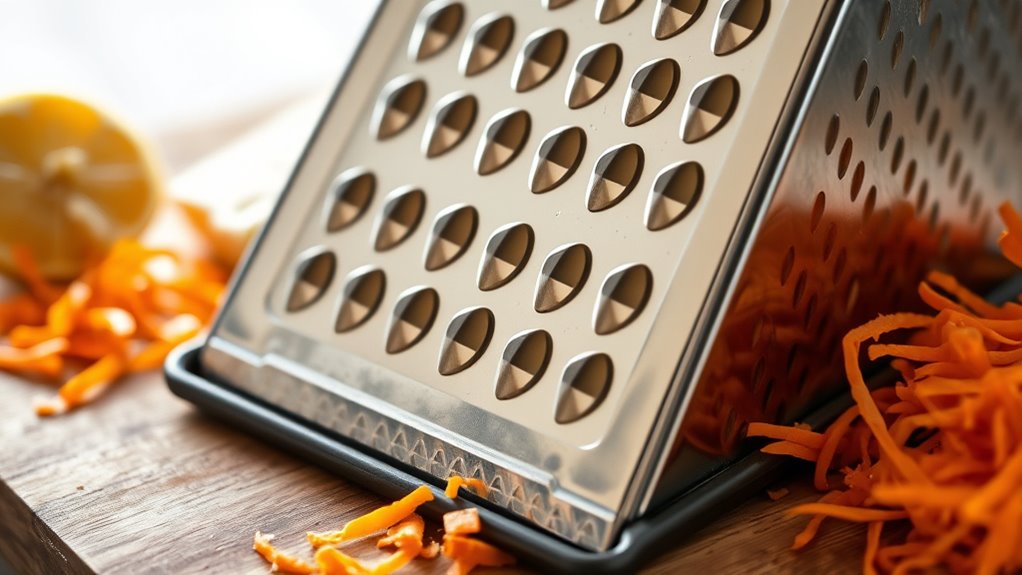
A box grater is a versatile four-sided kitchen tool designed for shredding, zesting, and slicing a variety of ingredients like cheese, vegetables, and fruits. This essential kitchen gadget makes food preparation easier and more efficient.
Whether you need finely grated zest or evenly sliced vegetables, a box grater is the perfect tool to have on hand.
To use it, hold the box grater steady on a flat surface and select the appropriate side—large holes for shredding, small holes for zesting, or a slicing side for uniform cuts.
Applying gentle, even pressure while grating helps ensure safety and precision.
After use, keep your box grater clean and dry to maintain its sharpness over time.
Explore the tips ahead to master your grater and get creative with meals.
Key Takeaways
- A box grater is a four-sided kitchen tool with different surfaces for shredding, grating, and slicing various foods like cheese and vegetables.
- Place the box grater securely on a stable surface or cutting board for safe and effective use.
- Choose the appropriate side based on the ingredient and desired texture, such as large holes for shredding or small holes for zesting.
- Apply steady, even pressure while grating, keeping fingers away from sharp edges to avoid injury.
- Clean the grater immediately after use, drying thoroughly to maintain sharpness and prevent rust.
What Is a Box Grater: And How Do You Use It?
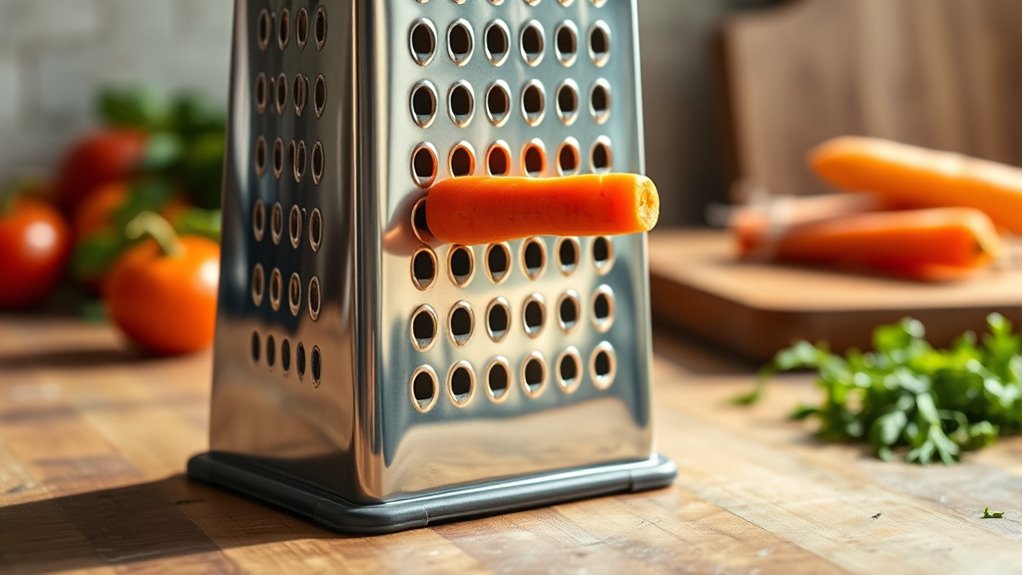
What exactly is a box grater, and how can you use it effectively? A box grater is a four-sided kitchen tool with different grating surfaces on each side. It’s designed to shred, grate, and slice food items like cheese, vegetables, and fruits.
To use it properly, place the grater on a stable surface or cutting board. Hold it firmly with one hand while moving your food up and down against the grating surface with the other. Be mindful of your fingers as you get closer to the end of the piece.
Using a box grater lets you quickly prepare ingredients for cooking or garnishing, making it a handy tool for any kitchen. Keep it clean and dry after use to maintain its sharpness.
What Are the Four Sides of a Box Grater Used For
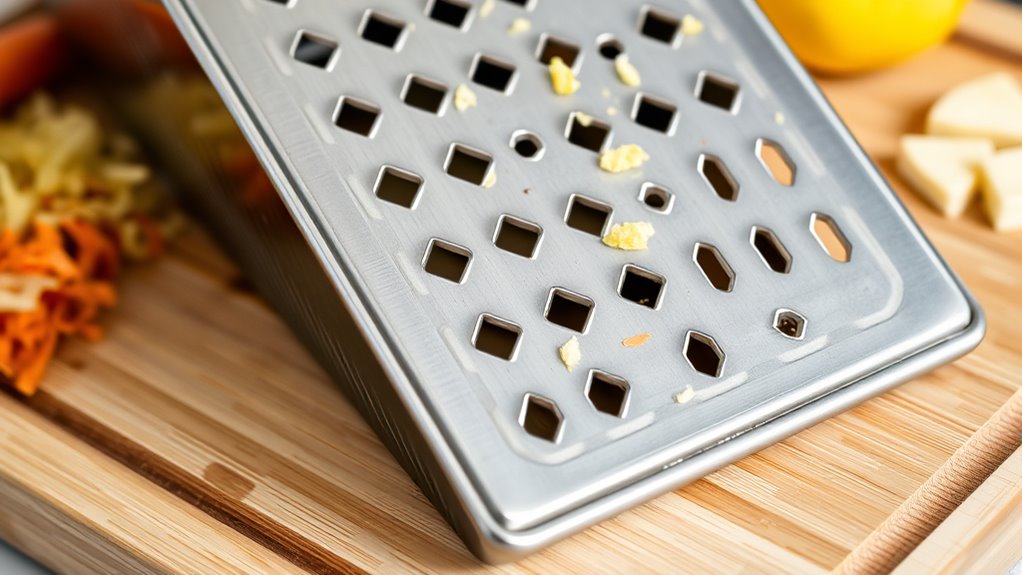
Each side of a box grater offers a unique grating surface designed for specific tasks in the kitchen. The largest holes are perfect for shredding cheese, vegetables, or fruits quickly. The medium-sized holes work well when you want finer shreds, ideal for softer ingredients like zucchini or carrots.
The smallest grating surface is great for zesting citrus fruits or grating hard cheeses like Parmesan into fine pieces. Finally, the slicing side creates thin, even slices of vegetables such as cucumbers or potatoes. Knowing what each side does helps you choose the right texture and cut for your recipe, making your prep work easier and more efficient.
You’ll get better results and enjoy cooking more when you use each side properly.
Step-by-Step Guide to Using a Box Grater Safely
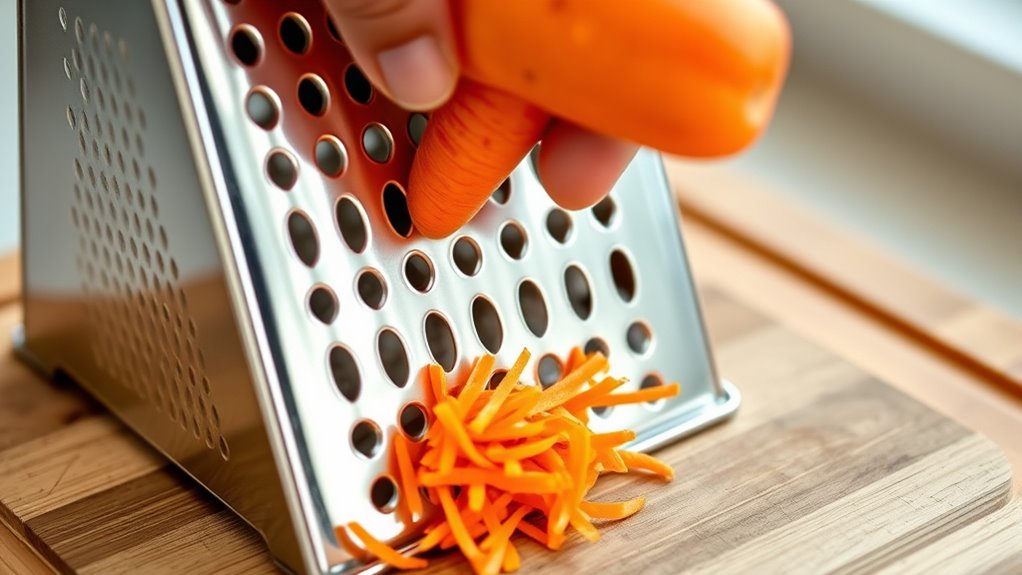
Before you start grating, make sure your box grater is clean and dry to prevent slipping. Hold the grater firmly on a stable surface or over a bowl. Use steady, even pressure as you move your ingredient up and down.
Keep your fingers away from the sharp edges to avoid cuts. When you get close to the end, slow down and consider using a protective glove or grating guard if you have one. Clean the grater immediately after use to keep it sharp and sanitary.
| Step | Safety Tip |
|---|---|
| Hold Securely | Prevents slipping |
| Use Even Pressure | Avoids sudden slips |
| Protect Fingers | Prevents cuts and injuries |
Choosing the Right Box Grater Side for Different Ingredients
Although a box grater looks simple, its different sides serve distinct purposes that can affect the texture and flavor of your dishes. Use the large holes for shredding softer ingredients like cheese, zucchini, or carrots when you want noticeable texture.
The medium holes work well for firmer vegetables or cheese, producing finer shreds that blend smoothly into recipes. The smallest holes, or zesting side, are perfect for zesting citrus or grating garlic and ginger, giving you fine, flavorful bits without overpowering your dish.
Finally, the slicing side helps you create thin, uniform slices of cucumbers, potatoes, or other veggies for salads or gratins. Picking the right side ensures your ingredients complement your dish perfectly.
How to Grate Hard Cheeses Like Parmesan With a Box Grater
Wondering how to get the perfect texture when grating hard cheeses like Parmesan? First, choose the smallest holes on your box grater for fine, fluffy shreds. Hold the cheese firmly and grate in a downward motion, applying steady pressure.
To avoid injury, keep your fingers clear of the grater’s surface. Hard cheeses can be tough, so work slowly and rotate the cheese as it shrinks.
Here’s a quick guide to grating Parmesan with a box grater:
| Cheese Texture | Grater Side | Best Use |
|---|---|---|
| Fine | Smallest holes | Garnishing pasta or salads |
| Medium | Medium holes | Melting in sauces |
| Coarse | Largest holes | Adding texture to dishes |
This table helps you decide how to grate based on your recipe’s needs.
Tips for Grating Soft Cheeses With a Box Grater Without Mess
When grating soft cheeses with a box grater, you’ll want to work quickly and keep the cheese cold to prevent it from sticking and becoming mushy. Start by chilling the cheese in the freezer for about 15 minutes; this firms it up, making grating easier. Use the side with larger holes to create fluffier shreds that won’t clump together.
Lightly oil the grater with a neutral oil or spray to reduce sticking. Hold the grater steady on a cutting board and grate in short, controlled strokes. Clean the grater promptly to avoid buildup—rinsing under cold water helps remove cheese residue.
How to Prep Vegetables Quickly With a Box Grater
Grating soft cheeses smoothly sets the stage for handling other ingredients like vegetables with a box grater. To prep vegetables quickly, choose the right grating side—use the larger holes for shredding carrots, zucchini, or cabbage. Hold the grater steady on a cutting board or bowl, then press the vegetable firmly against the grater.
Move it in a downward motion, applying even pressure to speed up the process. Rotate the vegetable as it gets smaller to avoid injury and make the most of your produce. For finer textures, switch to the smaller grating side to prepare ingredients like garlic or ginger.
Cleaning up is easier when you rinse the grater immediately after use, preventing bits from sticking and saving you time.
How to Zest Citrus With a Box Grater for Maximum Flavor
To zest citrus with your box grater, start by picking the side with the smallest holes to get fine, flavorful zest. Make sure to wash and dry your fruit well before grating to avoid slipping. Keep a close eye to grate only the colorful peel and steer clear of the bitter white pith underneath.
Choosing The Right Side
Which side of your box grater should you use to get the most flavorful citrus zest? To maximize zest flavor, you want the side with the smallest, sharpest holes. This side finely shreds the peel without digging into the bitter pith underneath.
Here’s how to choose:
- Use the fine grating side—tiny holes create delicate zest.
- Avoid the large holes—they produce thick strips that are less flavorful.
- Skip the slicing side; it removes too much peel and includes pith.
- Test by lightly grating on each side to see which yields the brightest zest.
Preparing Citrus Properly
How do you make sure your citrus zest bursts with flavor every time? Start by washing your citrus thoroughly to remove any wax or pesticides. Dry it completely, so the zest grates cleanly without slipping.
Use the fine grating side of your box grater for delicate, flavorful zest. Hold the citrus firmly and grate with gentle pressure, moving the fruit in one direction to capture only the outer colored layer. Avoid pressing too hard to keep the zest fresh and fragrant.
Rotate the fruit as you work to evenly zest all around. Once you’ve collected enough, sprinkle it immediately over your dish or into your recipe to maximize its bright, aromatic punch. Proper prep makes all the difference in zesting success.
Avoiding The Bitter Pith
Although zesting citrus is simple, you need to be careful not to grate into the bitter white pith beneath the colorful skin. The pith can ruin your dish by adding an unpleasant bitterness.
To avoid this, follow these tips when using your box grater:
- Hold the citrus fruit firmly and grate only the outermost layer.
- Use the smallest holes on your box grater to get fine zest without digging too deep.
- Rotate the fruit frequently to avoid reaching the pith.
- Stop zesting as soon as the skin looks pale or white.
Common Box Grater Mistakes to Avoid
When you use a box grater, it’s easy to make mistakes that can slow you down or even cause injury. For example, applying too much force can cause slips, while neglecting to stabilize the grater makes it wobbly and unsafe.
Also, grating too close to your fingers increases the risk of cuts.
Here’s a quick guide to avoid common mistakes:
| Mistake | How to Avoid It |
|---|---|
| Applying too much force | Use steady, gentle pressure |
| Unstable grater | Place on a non-slip surface |
| Grating near fingers | Use a protective glove or guard |
Cleaning and Maintaining Your Box Grater for Longevity
Since your box grater comes into contact with sticky and fibrous foods, cleaning it promptly after use prevents residue buildup that can dull the blades and harbor bacteria. To keep your grater in top shape, follow these simple steps:
Clean your box grater promptly to prevent residue buildup, dull blades, and bacteria growth.
- Rinse immediately under hot water to remove loose bits.
- Use a soft brush or sponge with dish soap to clean each side thoroughly.
- Dry completely with a towel or let air dry to avoid rust.
- Store in a dry place, preferably upright, to protect the blades.
When to Replace Your Box Grater (And How to Know It’s Time)
How do you know it’s time to replace your box grater? Start by checking the sharpness of the blades. If you notice struggling to grate even soft foods, the edges may have dulled beyond repair.
Also, inspect for any rust spots or corrosion that can contaminate your food or weaken the metal. Cracks or bent panels are another clear sign—these compromise safety and effectiveness. If your grater feels unstable or wobbly during use, it’s likely worn out.
While regular cleaning and maintenance extend its life, don’t hesitate to invest in a new one when performance drops. Using a sharp, sturdy grater guarantees efficiency and safety in your kitchen tasks every time.
Creative Recipes Featuring Ingredients Grated With a Box Grater
Although a box grater may seem like a simple tool, it opens up a world of culinary possibilities by letting you easily prepare ingredients that add texture and flavor to your dishes. Using your box grater, you can transform everyday ingredients into creative, delicious meals.
A box grater unlocks endless culinary creativity by adding texture and flavor to everyday ingredients.
Here are four recipes to try:
- Zucchini Fritters – Grate zucchini, mix with egg and flour, then pan-fry for crispy, savory bites.
- Homemade Coleslaw – Shred cabbage and carrots finely to create a fresh, crunchy salad.
- Cheesy Cauliflower Rice – Grate cauliflower for a low-carb rice substitute topped with melted cheese.
- Apple Cinnamon Muffins – Grate apples into your batter for moist, flavorful muffins with natural sweetness.
Grab your box grater and start experimenting—you’ll be amazed at the tasty results!
Frequently Asked Questions
Can a Box Grater Be Used for Grating Chocolate?
Yes, you can grate chocolate with a box grater. Just make sure the chocolate is firm and cold to avoid melting.
Grate gently to get fine shavings perfect for baking or decorating your desserts.
Is It Safe to Use a Box Grater for Nuts?
Using a box grater for nuts is like riding a bike with care—you can do it safely if you watch your fingers closely. Keep your grip firm, go slow, and avoid pressing too hard to prevent injury.
How Do You Store a Box Grater Safely?
You store a box grater safely by drying it thoroughly, then placing it in a protective sleeve or drawer. Keep it away from kids and sharp edges to avoid injuries. Don’t stack heavy items on top.
Can a Box Grater Damage Your Knife Blades?
No, a box grater won’t damage your knife blades since you don’t use knives on it. If you do, you risk dulling both the knife and grater.
Stick to using the grater as intended for best results.
Are There Electric Versions of Box Graters?
Electric versions of box graters do exist, and they can save you time and effort. They’re like having an extra pair of hands in the kitchen, effortlessly shredding cheese or veggies with just a push of a button.
Conclusion
So, now you’re basically a box grater guru—master of shredding, slicing, and zesting! Remember, it’s not just a kitchen tool; it’s your ticket to culinary greatness (or at least to impressing your cat with finely grated cheese).
Just don’t lose a finger in the process—your digits deserve a break. Keep it sharp, clean, and ready for action, because when life gives you cheese, you grate like a pro!
By mastering how to use a box grater, you unlock endless possibilities in the kitchen. Whether shredding, slicing, or zesting, this versatile tool elevates your cooking game every time. Embrace your box grater and enjoy the culinary benefits it brings!