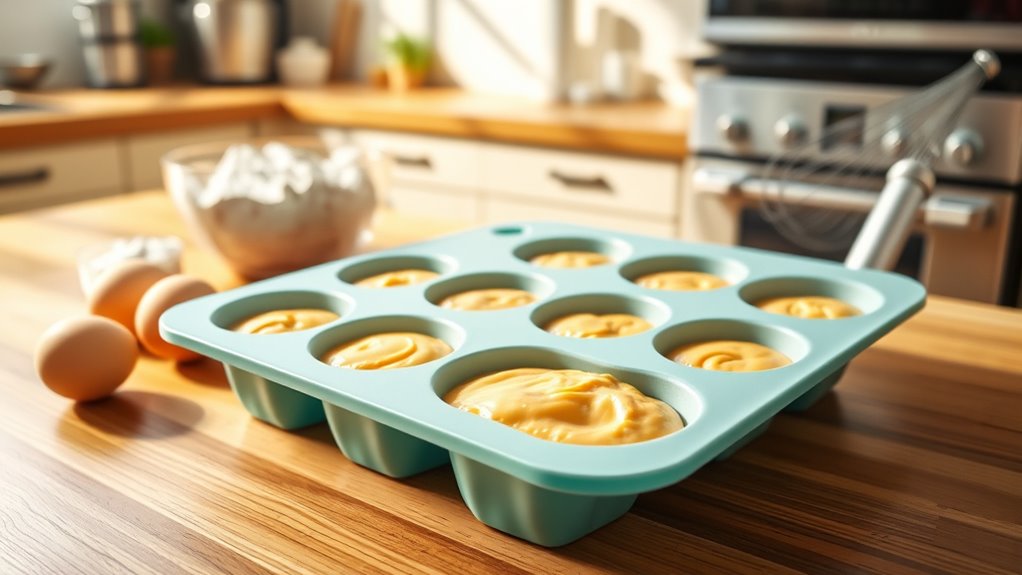
How to Use Silicone Cookware in 7 Easy Steps
Start by washing your silicone cookware with warm, soapy water and drying it completely. Silicone cookware is popular for its non-stick properties and heat resistance, making it ideal for baking and cooking.
Lightly oil molds to prevent sticking and preheat your oven within the recommended temperature range (-40°F to 450°F).
Avoid direct flames to protect your silicone cookware. Use silicone or wooden utensils to prevent damage, and place cookware on baking trays for added stability.
After cooking, let it cool slightly before removing food.
Clean gently with a mixture of vinegar and water to prevent stains and maintain durability. Handle your silicone cookware with care to keep it safe and long-lasting.
There’s plenty more useful info ahead to help you get the best results.
Key Takeaways
- Wash and dry silicone cookware thoroughly before first use to remove residues and inspect for defects.
- Preheat the oven and place silicone bakeware on a baking tray to ensure even heat distribution.
- Use silicone or wooden utensils to avoid damaging the cookware surface during cooking or stirring.
- Lightly oil the molds to prevent food from sticking and allow cookware to cool before removing food.
- Clean with warm, soapy water or a vinegar solution regularly, avoiding harsh chemicals and abrasive tools.
How to Prepare Silicone Cookware Before First Use
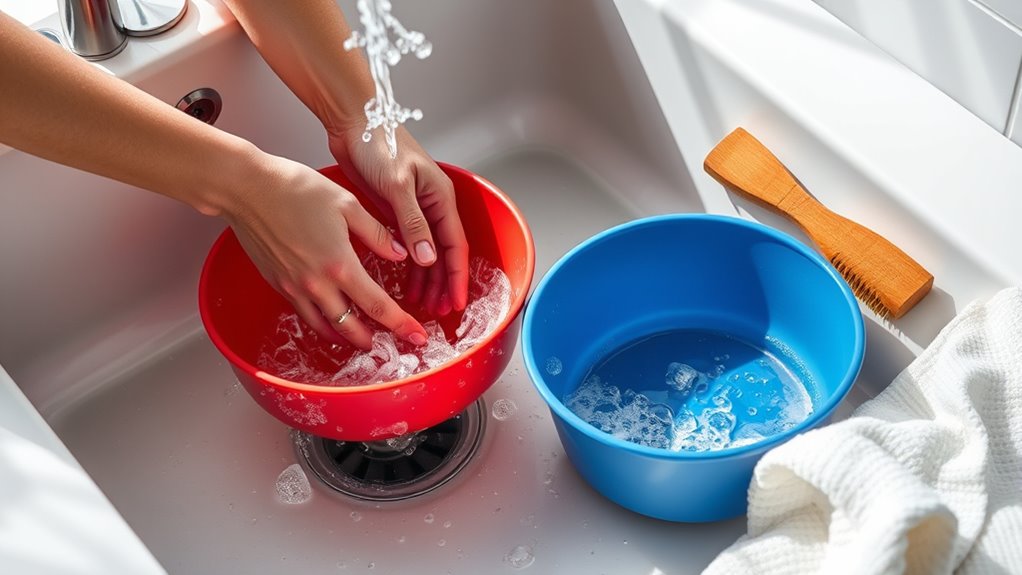
Before using your silicone cookware for the first time, you should give it a thorough wash with warm, soapy water to remove any manufacturing residues. Rinse it well to make sure no soap remains. After washing, dry your silicone cookware completely with a soft cloth or let it air dry.
This prevents water spots and guarantees better cooking results later. Inspect the cookware for any defects like tears or holes, as these can affect performance and safety. If your silicone cookware came with any protective coatings or packaging inserts, remove those carefully.
Finally, you might want to season the cookware by lightly greasing it with a bit of oil before cooking, but this depends on your specific recipe and preferences. Preparing your silicone cookware correctly sets you up for success.
How to Use Silicone Cookware for Best Baking and Cooking Results
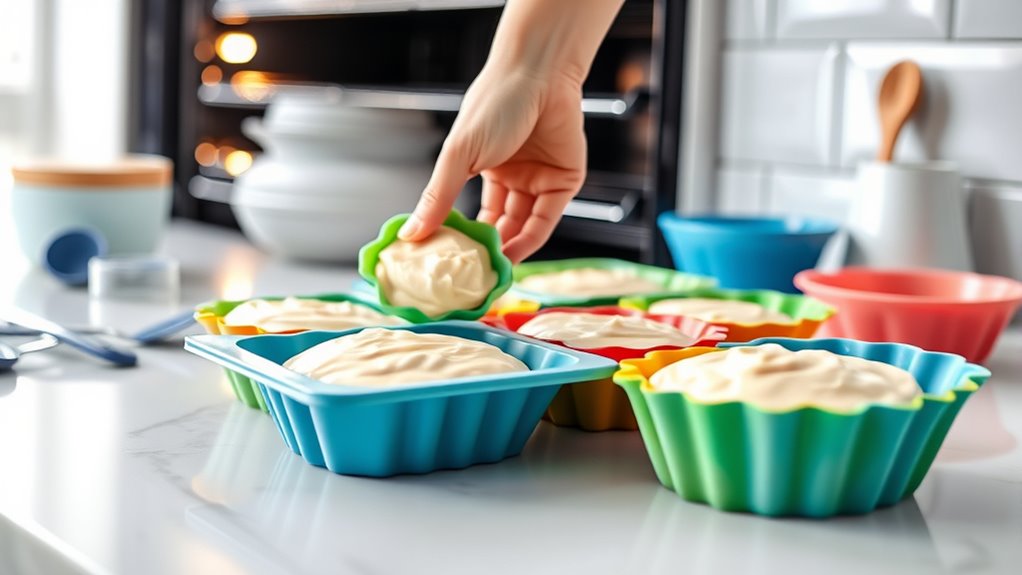
To get the best baking and cooking results with silicone cookware, you’ll want to prepare it properly and pay attention to temperature settings. Using the right heat levels guarantees your food cooks evenly without damaging the silicone.
Plus, following simple cleaning and maintenance tips will keep your cookware in great shape for many uses.
Preparing Silicone Cookware
How do you get the best results when using silicone cookware? Start by properly preparing your silicone pieces to ensure even cooking and easy release. Always wash the cookware with warm, soapy water before the first use.
Avoid using sharp utensils to prevent damage. Lightly oil the mold or pan if you’re baking sticky foods, even though silicone is naturally non-stick.
Here’s a quick guide:
| Step | Action | Tip |
|---|---|---|
| 1 | Wash with soap & water | Use mild detergent |
| 2 | Dry thoroughly | Air dry or towel dry |
| 3 | Lightly oil | Use a brush or paper towel |
| 4 | Avoid sharp tools | Use silicone or wooden tools |
| 5 | Preheat oven | Place cookware on baking tray |
Optimal Temperature Settings
Although silicone cookware can withstand a wide range of temperatures, you’ll get the best results by using it within the recommended heat limits—typically between -40°F and 450°F (-40°C to 232°C). Staying within this range guarantees your silicone maintains its shape and non-stick properties without degrading. Avoid exposing it to direct flames or broiler heat, which can exceed these limits and damage the material.
When baking, preheat your oven as usual, then place your silicone bakeware inside; it handles even heat well, promoting even cooking. For freezing, silicone’s flexibility makes it perfect for cold storage too. Just remember, sudden extreme temperature changes can stress the silicone, so let it cool before moving from oven to freezer or vice versa to keep it lasting longer.
Cleaning and Maintenance Tips
Maintaining your silicone cookware properly guarantees it stays in great shape and performs well over time. To keep your silicone tools clean and durable, follow these simple tips. First, wash them with warm soapy water after each use to remove oils and residue.
Avoid abrasive scrubbers, which can damage the surface. You can also place silicone cookware in the dishwasher for convenient cleaning. If stubborn stains or odors linger, soak the items in a vinegar and water solution or baking soda paste.
Remember these key points:
- Use mild detergents and soft sponges
- Avoid sharp tools that can puncture the silicone
- Dry thoroughly before storing to prevent mold
- Store in a cool, dry place away from direct sunlight
These steps guarantee your silicone cookware stays safe and effective for all your baking and cooking needs.
How to Cook With Silicone Cookware on the Stove Safely
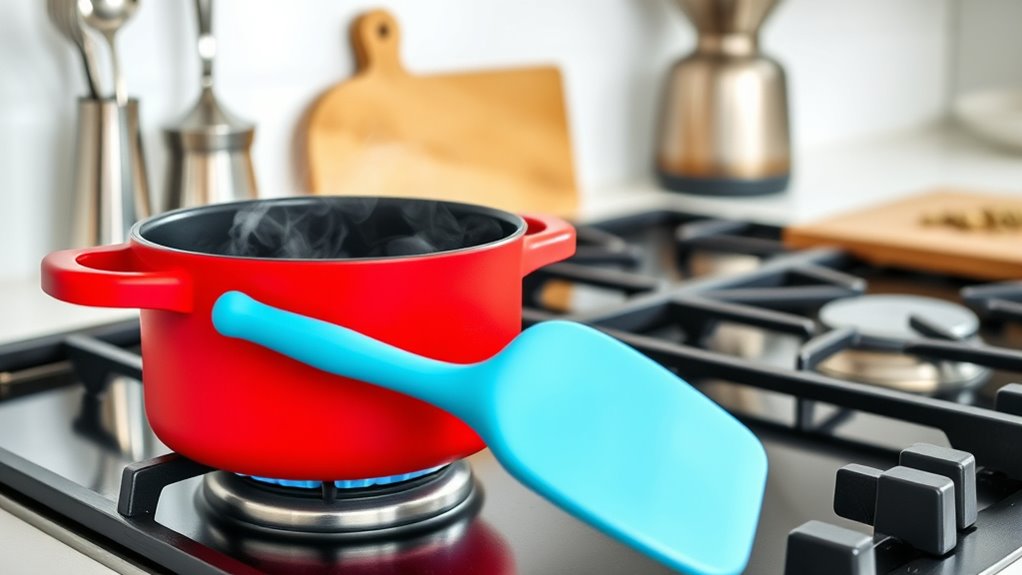
When you cook with silicone cookware on the stove, you need to be mindful of its heat limits to prevent damage and guarantee safety. Always check the manufacturer’s guidelines for the maximum temperature—most silicone cookware is safe up to about 428°F (220°C). Use medium to low heat settings to avoid overheating.
Place a heat diffuser between the burner and your silicone cookware to distribute heat evenly and protect the material. Avoid direct contact with open flames or broilers. When stirring or flipping, use silicone-friendly utensils to prevent scratching or puncturing.
Keep an eye on your cookware during cooking; overheating can cause warping or release unpleasant odors. Following these tips guarantees you cook safely while extending your silicone cookware’s lifespan.
Common Mistakes to Avoid When Using Silicone Cookware
When using silicone cookware, don’t overheat it or you risk damage. Avoid sharp utensils that can cut or tear the material. Also, follow proper cleaning guidelines to keep your silicone in good shape.
Overheating Silicone Bakeware
How hot is too hot for your silicone bakeware? Most silicone bakeware can safely withstand temperatures up to 428°F (220°C). Going beyond this limit risks damaging the material, causing it to warp, melt, or emit unpleasant odors.
To keep your silicone bakeware in good shape, avoid overheating by:
- Never exceeding the manufacturer’s recommended temperature.
- Preheating the oven before placing silicone bakeware inside.
- Avoiding direct contact with heating elements or open flames.
- Not using broiler or grill settings with silicone bakeware.
Using Sharp Utensils
Why should you steer clear of sharp utensils with your silicone cookware? Because sharp tools can easily nick or cut the silicone surface, damaging its integrity. When you use knives, forks, or metal spatulas, you risk creating tears or holes that compromise the non-stick properties and heat resistance.
Instead, opt for wooden, silicone, or plastic utensils designed to protect your cookware. These gentler options help maintain the cookware’s flexibility and prolong its lifespan. Also, damaged silicone can trap food particles, making it harder to clean and potentially affecting food safety.
Ignoring Cleaning Guidelines
Protecting your silicone cookware from sharp utensils is just one step in keeping it in great condition. Ignoring proper cleaning guidelines can damage its surface and reduce its lifespan. To maintain your silicone cookware’s flexibility and non-stick properties, always follow these cleaning tips:
- Use mild dish soap and warm water instead of harsh chemicals.
- Avoid abrasive scrubbers; opt for soft sponges or cloths.
- Hand wash whenever possible, even if it’s dishwasher safe.
- Remove stubborn stains by soaking in a baking soda paste or vinegar solution.
How to Clean and Maintain Silicone Cookware Effectively
Although silicone cookware is known for its durability and non-stick properties, you’ll still need to clean it properly to keep it in top shape. Start by rinsing your silicone pieces with warm soapy water immediately after use to prevent residue buildup. For stubborn stains or odors, soak the cookware in a mixture of baking soda and warm water for about an hour.
Avoid abrasive scrubbers that can damage the surface; instead, use a soft sponge or cloth. If grease lingers, a little white vinegar can help break it down. Make sure to dry your silicone cookware thoroughly before storing to prevent mold or mildew.
How to Store Silicone Cookware to Save Space
Keeping your silicone cookware clean guarantees it’s ready to use, but storing it properly helps save space and prevents damage. Since silicone is flexible, you can take advantage of that to keep your kitchen organized.
Here are some smart storage tips:
- Nest smaller silicone molds inside larger ones to minimize clutter.
- Hang silicone spatulas or brushes on hooks to free up drawer space.
- Roll or fold silicone baking mats gently, avoiding sharp creases.
- Store lids separately in a vertical rack to keep them accessible and tidy.
How to Troubleshoot Common Silicone Cookware Issues
If you notice your silicone cookware isn’t performing as expected, don’t worry—most issues have simple fixes. If your silicone sticks to food, try lightly oiling the mold before use. For lingering odors, soak it in a mixture of baking soda and warm water for a few hours.
If the silicone won’t release food easily, make sure you’ve allowed it to cool slightly before removing items. When you see discoloration or stains, clean with a vinegar and water solution or a gentle scrub with a soft brush. Avoid sharp tools that can damage the surface.
If your cookware seems flimsy or warped, check if it’s rated for your oven’s temperature. Following these tips helps keep your silicone cookware in top shape.
Frequently Asked Questions
Is Silicone Cookware Safe for Use in Microwave Ovens?
Yes, you can safely use silicone cookware in microwave ovens. It’s heat resistant and non-toxic, so it won’t melt or release harmful chemicals.
Just make sure it’s labeled microwave-safe before heating your food.
Can Silicone Cookware Withstand Freezer Temperatures?
Yes, you can safely use silicone cookware in the freezer. It withstands low temperatures without cracking or becoming brittle, so you’re free to store leftovers or prepare meals ahead without worrying about damage.
Does Silicone Cookware Contain Any Harmful Chemicals?
Silicone cookware doesn’t contain harmful chemicals if it’s food-grade; it’s as safe as houses. Just make sure you pick high-quality pieces, and avoid overheating them—then you’ll enjoy safe, flexible cooking without worries.
How Long Does Silicone Cookware Typically Last?
Silicone cookware typically lasts 5 to 10 years if you use and care for it properly.
You’ll want to avoid sharp tools and extreme temperatures to keep it flexible and durable for a long time.
Are Silicone Bakeware and Silicone Cooking Utensils Interchangeable?
You wouldn’t swap a paintbrush for a roller, right? Similarly, silicone bakeware and cooking utensils aren’t interchangeable.
You use bakeware for baking shapes, while utensils handle stirring and flipping—you’ll need both to cook smoothly.
Conclusion
Now that you’ve mastered the gentle art of silicone cookware, you’re set to glide through your kitchen adventures with ease. Just remember to treat your silicone with a little TLC—warming it up, avoiding the usual slip-ups, and keeping it spotless.
With these simple steps, your silicone cookware will continue to be a reliable, flexible friend, ready to bend but never break under your culinary creativity. Proper care and usage ensure your silicone bakeware remains safe, durable, and easy to clean.
Happy cooking with your versatile silicone kitchen tools!