How to Cook Eggs in a Cast Iron Skillet
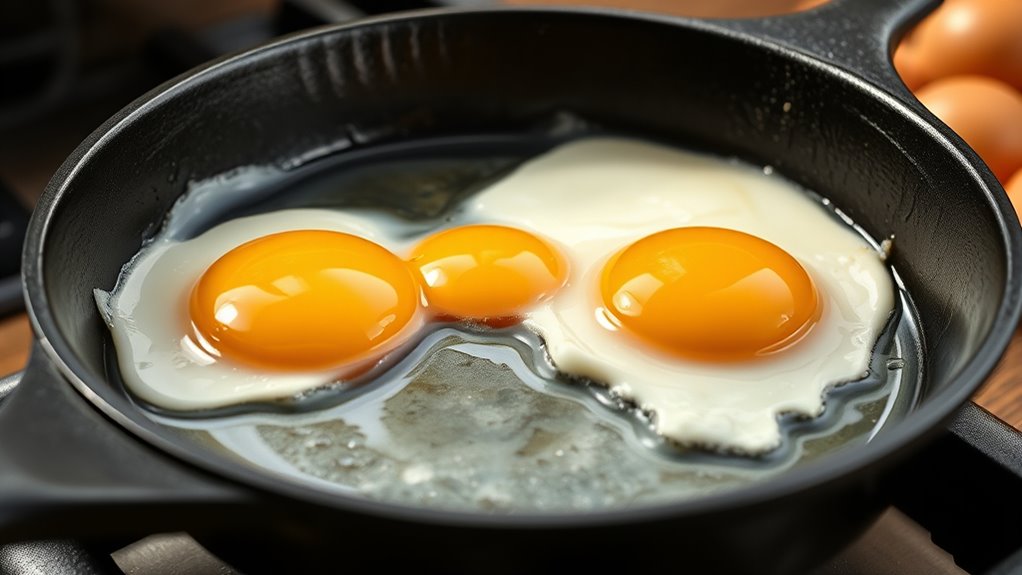
To cook eggs in a cast iron skillet, start by preheating the skillet on medium-low heat. Add enough oil or butter to prevent sticking and ensure a smooth cooking process. Using a well-seasoned and clean cast iron skillet is essential for the best natural non-stick surface.
Cook your eggs gently, avoiding high heat to prevent burning or sticking. Flip or stir carefully to achieve the perfect texture. With the right technique and care, you’ll create consistently delicious eggs every time.
Using a cast iron skillet opens up plenty of creative cooking possibilities. Mastering this method will enhance your breakfast routine and improve your overall cooking skills. Enjoy your perfectly cooked eggs!
Key Takeaways
- Preheat the cast iron skillet on medium-low heat to ensure even cooking and prevent sticking.
- Add a small amount of oil or butter to create a natural non-stick surface before cracking eggs.
- Cook eggs gently with steady, moderate heat, avoiding high temperatures to prevent burning or sticking.
- Use a flexible spatula to flip eggs carefully when making over-easy or similar styles.
- Clean the skillet with hot water and a soft brush after use, dry thoroughly, and apply a thin oil layer to maintain seasoning.
Why Cast Iron Skillets Make the Best Eggs
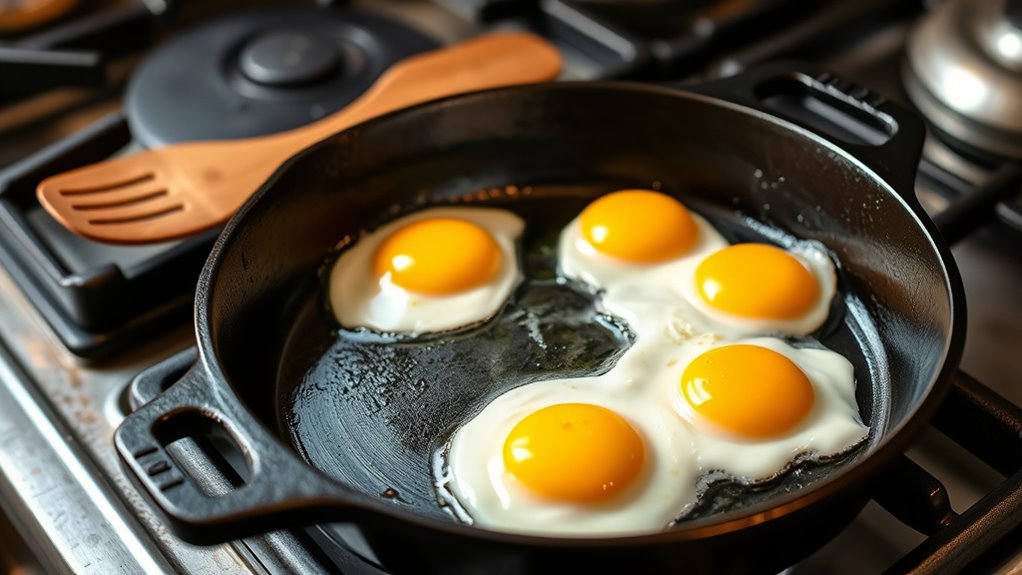
Although you can cook eggs in many types of pans, cast iron skillets give you the best results because they heat evenly and retain heat longer. This means your eggs cook uniformly without hot spots that cause uneven textures. When you use a cast iron skillet, you get consistent heat that helps create a perfect, tender edge while avoiding burnt or undercooked spots.
Plus, cast iron’s natural non-stick qualities improve as you use it, making flipping or sliding eggs easier. You’ll also notice a richer flavor since cast iron retains some seasoning from previous cooking. With proper care, your skillet becomes an excellent tool that turns simple eggs into a delicious experience every time you cook.
How to Season Your Cast Iron Skillet the Right Way
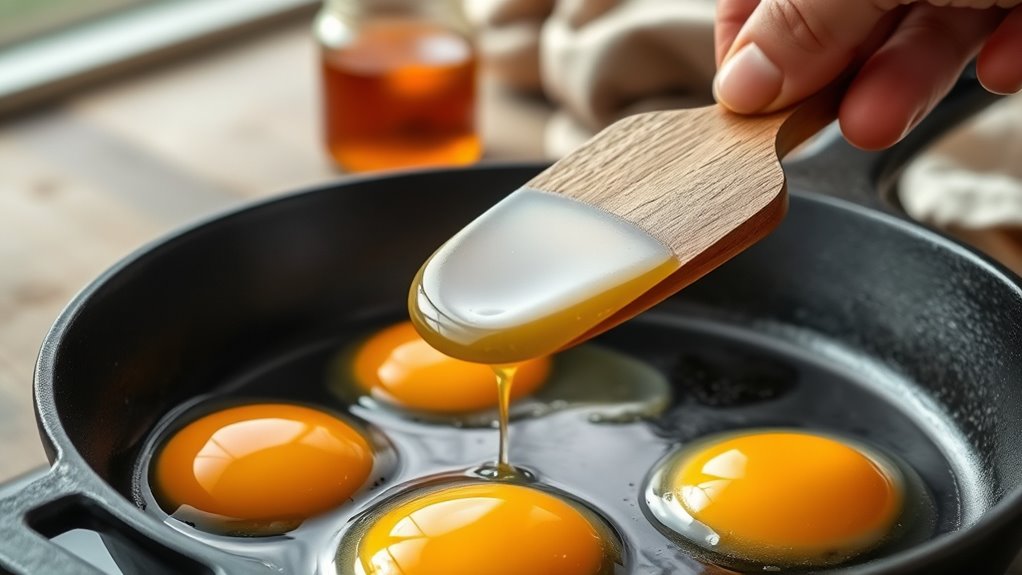
To get your cast iron skillet ready for perfect eggs, you need to prepare it properly by cleaning and drying it thoroughly. Then, apply a thin layer of oil to create a natural, non-stick seasoning.
This process not only protects your skillet but also makes cooking eggs easier and more enjoyable.
Preparing The Skillet
Before you start cooking, you’ll want to properly season your cast iron skillet to create a natural, non-stick surface and protect it from rust. Begin by cleaning the skillet thoroughly with hot water and a stiff brush. Avoid soap, as it can strip existing seasoning.
Dry it completely to prevent moisture buildup.
Next, lightly coat the skillet with oil, readying it for seasoning. Proper preparation sets the stage for a durable, smooth cooking surface, ensuring your eggs won’t stick.
| Step | Action |
|---|---|
| Clean Skillet | Hot water, stiff brush |
| Dry Skillet | Thoroughly with cloth |
| Apply Oil | Light, even coating |
| Ready for Seasoning | Prepare for heat application |
Applying The Seasoning
Once you’ve prepped your skillet with oil, it’s time to apply the seasoning by heating it properly. Place the skillet upside down in a preheated oven at 450°F (230°C) to prevent oil pooling. Let it bake for about an hour, allowing the oil to polymerize and form a durable, non-stick layer.
Afterward, turn off the oven and let the skillet cool inside. This process creates a natural, protective coating that improves with each use. To maintain the seasoning, avoid harsh soap and always dry your skillet thoroughly after cleaning.
Reapply a thin layer of oil after each use to keep it well-seasoned. This care guarantees your cast iron remains reliable for cooking perfect eggs every time.
How to Prep Your Skillet Before Cooking Eggs
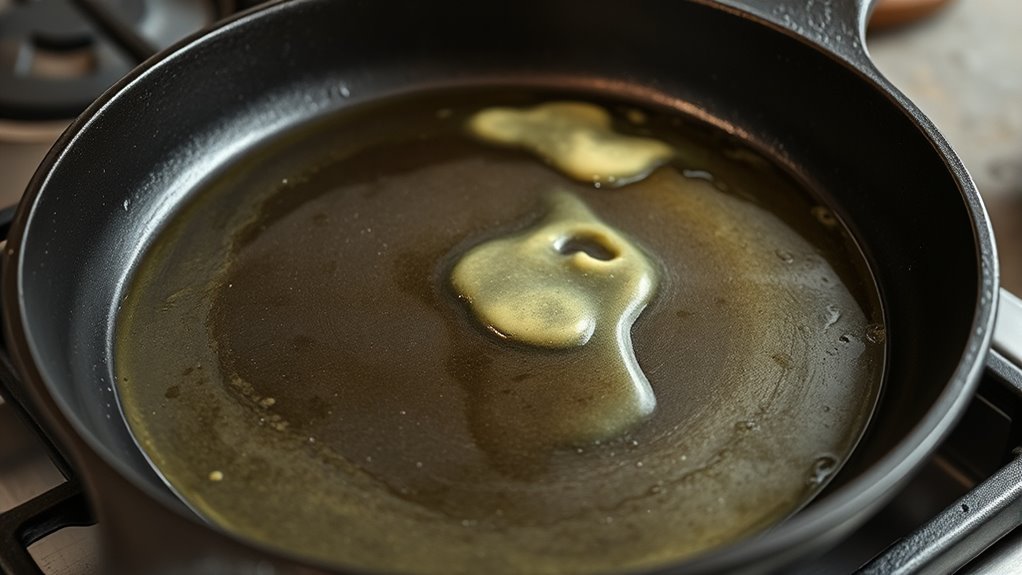
Although cast iron skillets are renowned for their durability and heat retention, you’ll need to prepare yours properly to guarantee your eggs don’t stick. Start by cleaning your skillet with warm water and a soft brush—no soap needed if well-seasoned.
Next, dry it thoroughly to prevent rust. Then, add a small amount of oil or butter and let it melt, coating the surface evenly. This creates a natural non-stick layer essential for cooking eggs.
| Step | Action | Result |
|---|---|---|
| 1 | Clean with warm water | Removes residue |
| 2 | Dry thoroughly | Prevents rust |
| 3 | Add oil or butter | Creates non-stick surface |
| 4 | Heat gently | Even oil distribution |
| 5 | Ready to cook eggs | Perfect egg release |
Picking the Best Heat for Perfect Cast Iron Eggs
When you cook eggs in a cast iron skillet, controlling the heat is essential to avoid sticking and achieve the perfect texture. Start by heating your skillet on medium-low heat; cast iron retains heat well, so medium or high heat can easily overcook or burn your eggs. Give the pan a few minutes to warm evenly before adding any fat or eggs.
If the skillet feels too hot, reduce the heat to prevent crispy edges or rubbery whites. You want a gentle, steady heat that cooks eggs slowly and evenly. This approach helps the eggs set without sticking and allows you to control doneness precisely.
How to Scramble Eggs in a Cast Iron Skillet
If you want fluffy, tender scrambled eggs, start by beating your eggs thoroughly and seasoning them lightly before heating your cast iron skillet. Heat your skillet over medium-low heat and add a small amount of butter or oil, letting it melt and coat the surface evenly.
Pour in the beaten eggs and let them sit undisturbed for a few seconds until they just begin to set at the edges. Then, gently stir with a spatula, pushing the eggs from the edges toward the center. Keep moving the eggs slowly to form soft curds without breaking them up too much.
Remove the skillet from heat just before the eggs are fully cooked, as they’ll continue to cook from residual heat, ensuring creamy, perfectly scrambled eggs every time.
How to Fry Eggs With a Crispy, Golden Edge
To achieve fried eggs with a crispy, golden edge, heat your cast iron skillet over medium heat and add a generous amount of oil or butter to coat the surface thoroughly. Once the fat shimmers or melts completely, carefully crack your eggs into the skillet, spacing them out to avoid overcrowding. Avoid moving the eggs as they cook; this helps the edges crisp up nicely.
Cook until the whites are set and the edges turn golden and slightly lacy—usually about 2 to 3 minutes. If you want extra crispiness, tilt the pan and spoon some hot oil or butter over the edges. Once the edges have reached your desired crunch, carefully slide a spatula underneath and transfer the eggs to a plate.
Enjoy that perfect crispy edge every time!
How to Make Perfect Sunny-Side Up Eggs
Frying eggs with crispy edges gives you a delightful texture, but sometimes you want a tender white with a bright, runny yolk. To make perfect sunny-side up eggs, heat your cast iron skillet on low. Add a bit of butter or oil to prevent sticking.
Crack the eggs gently, keeping yolks intact. Cook slowly to keep the whites tender and fully set without browning the edges. Cover the skillet briefly to steam the tops if needed.
| Step | Action | Tip |
|---|---|---|
| 1 | Heat skillet on low | Use butter for flavor |
| 2 | Crack eggs carefully | Avoid yolk breakage |
| 3 | Cover to steam tops | Ensures whites cook fully |
How to Flip Over-Easy Eggs Without Sticking
Wondering how to flip over-easy eggs without them sticking to your cast iron skillet? Start by ensuring your skillet is properly preheated and well-seasoned. Add enough butter or oil to coat the surface evenly.
Cook the eggs on low to medium heat until the whites are mostly set but the yolks are still runny. Use a thin, flexible spatula to gently loosen the edges first, then carefully slide it under the egg. Lift and flip the egg slowly to avoid breaking the yolk.
Cooking over-easy eggs requires patience—rushing can cause sticking or tearing. After flipping, cook for just 20 to 30 seconds to keep the yolk soft. With these steps, you’ll master flipping without any sticking or mess.
Common Mistakes to Avoid When Cooking Eggs in Cast Iron
Although cast iron skillets are excellent for cooking eggs, you’ll want to avoid some common mistakes that can ruin your dish. One major error is not properly preheating the skillet, which causes eggs to stick. Using too high heat can burn eggs quickly, while too little heat prevents even cooking.
Properly preheat your cast iron skillet to prevent sticking and ensure even, perfectly cooked eggs.
Skipping oil or butter leads to sticking, and overcrowding the pan makes eggs cook unevenly. Also, flipping eggs too soon breaks the yolk or tears the whites.
Avoid these pitfalls:
- Don’t skip preheating the pan.
- Use moderate heat, not high.
- Always add enough oil or butter.
- Cook eggs in batches if needed.
- Wait for edges to set before flipping.
Following these tips will help you master perfect eggs every time.
How to Clean and Care for Your Cast Iron Skillet
Because cast iron skillets develop a natural non-stick surface over time, proper cleaning and care are essential to maintain their performance and longevity. After cooking, let your skillet cool slightly, then wash it with hot water and a soft brush or sponge—skip the soap to preserve seasoning. If food sticks, scrub gently with coarse salt and a little water, then rinse.
Dry your skillet thoroughly to prevent rust, either by towel-drying or heating it on the stove. Once dry, apply a thin layer of cooking oil inside and out to keep the seasoning intact. Store your skillet in a dry place and avoid stacking heavy items on top.
With these steps, your cast iron will stay reliable and ready for perfect eggs every time.
How to Reheat Eggs in Cast Iron Without Overcooking
When reheating eggs in a cast iron skillet, you need to keep the heat low and be patient to avoid overcooking them. Cast iron retains heat well, so using low heat helps gently warm the eggs without turning them rubbery.
Here’s how to reheat eggs effectively:
- Preheat the skillet on low for a minute or two
- Add a small amount of butter or oil to prevent sticking
- Place the eggs in the skillet and cover with a lid to trap steam
- Heat for 2-3 minutes, checking frequently to avoid drying out
- Remove promptly once warmed through to maintain softness
Following these steps ensures your eggs stay tender and delicious, preserving their texture while reheating evenly.
Creative Egg Recipes to Try in Your Cast Iron Skillet
If you want to elevate your breakfast or brunch, trying creative egg recipes in your cast iron skillet is a great way to do it. Start with a classic shakshuka—simmer tomatoes, peppers, and spices, then crack eggs right into the sauce. You’ll get perfectly poached eggs infused with bold flavors.
Another idea is a frittata; whisk eggs with your favorite veggies, cheese, and herbs, then cook slowly until set. For a quick treat, make scrambled eggs with sautéed mushrooms and spinach, cooking everything evenly thanks to your skillet’s heat retention.
You can also try baked eggs in avocado halves—just crack eggs into the fruit and bake. Your cast iron skillet gives you versatility and even cooking, making these recipes easy and delicious.
Frequently Asked Questions
Can I Use Cast Iron Skillets on Induction Cooktops?
Yes, you can use cast iron skillets on induction cooktops because cast iron is magnetic. Just make sure the skillet’s base is flat for proper contact, and be careful with heat adjustments to avoid overheating.
Are Cast Iron Skillets Safe for Dishwasher Cleaning?
Cast iron skillets aren’t safe for dishwasher cleaning; the harsh cycle strips their seasoning, like a storm erasing a carefully painted mural. You’ll want to hand wash and dry them promptly to preserve their strength and beauty.
How Long Does a Cast Iron Skillet Retain Heat?
Your cast iron skillet retains heat for a long time, often 20 to 30 minutes or more after you remove it from the heat.
That’s because cast iron absorbs and holds heat exceptionally well.
Can I Cook Eggs in a Cast Iron Skillet Without Oil?
You can’t cook eggs in a cast iron skillet without oil—it’ll stick and ruin your eggs. To avoid frustration, always add a bit of oil or butter; it creates a perfect non-stick surface every time.
What Types of Eggs Are Best for Cast Iron Cooking?
You’ll want fresh, large eggs for cast iron cooking because they hold together better and cook evenly. Organic or free-range eggs often have richer yolks, enhancing flavor and texture when you cook them in your skillet.
These types of eggs also tend to have firmer whites, which can help prevent sticking. Using high-quality eggs complements the seasoning of your cast iron skillet. This results in a more enjoyable cooking experience and better-tasting eggs.
Conclusion
Cooking crisp, creamy eggs in your cast iron skillet is a satisfying skill that saves you time and transforms taste. By seasoning, setting the right sizzle, and steering clear of common slip-ups, you’ll savor stunning, stick-free servings every time.
Remember to regularly rinse and re-season to retain that reliable, robust skillet shine. So, start sizzling, stay steady, and show off your skillet savvy with scrumptious, savory eggs that make mornings magical!
Mastering how to cook eggs in a cast iron skillet ensures every bite is delicious and perfectly cooked. With proper care and technique, your cast iron skillet becomes your best kitchen companion for breakfast favorites. Embrace these tips to enjoy eggs cooked to perfection in your cast iron skillet every day.