How to Cook Eggs on a Griddle
To cook eggs on a griddle, start by selecting one that offers even heat distribution and a nonstick surface such as cast iron or anodized aluminum. These types help ensure your eggs cook evenly without sticking.
Preheat the griddle to medium-low for the best results.
Add a fat like butter or olive oil to the surface to prevent sticking and enhance flavor.
Crack or pour in your eggs carefully, cooking them gently to avoid burning.
Flip or stir the eggs as needed to achieve your desired texture.
Keep the griddle surface clean and avoid overcrowding the eggs to guarantee even cooking.
Following these steps will help you master cooking eggs on a griddle.
Stick around to discover tips for fluffier eggs and creative recipes.
Key Takeaways
- Preheat the griddle to medium-low and test readiness by flicking water for a sizzling sound before adding eggs.
- Use a nonstick griddle surface with even heat distribution, like cast iron or anodized aluminum, for consistent cooking.
- Add fats with high smoke points, such as butter or avocado oil, to prevent sticking and enhance egg flavor.
- Cook eggs with proper spacing to avoid overcrowding, adjusting heat as needed to prevent burning or uneven cooking.
- Clean the griddle after use by scraping stuck bits, wiping with a damp cloth, and oiling cast iron to maintain performance.
How to Choose the Best Griddle for Cooking Eggs

When choosing the best griddle for cooking eggs, you’ll want to focus on even heat distribution and a nonstick surface to prevent sticking and guarantee easy flipping. Look for a griddle made from materials like cast iron or anodized aluminum, as these provide consistent heat. A flat, smooth surface ensures your eggs cook evenly without hot spots.
Size matters too—choose one that fits your cooking needs, whether you’re making breakfast for one or a crowd. Consider adjustable temperature controls to help you maintain the perfect cooking heat. Finally, make sure the griddle is easy to clean, since eggs can leave residues.
Preparing Your Griddle for Perfect Eggs
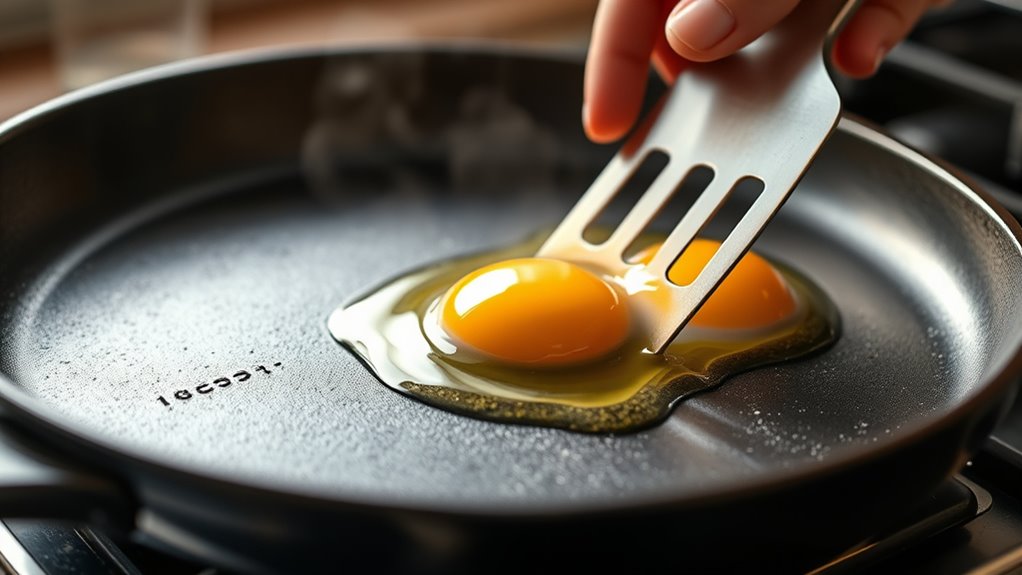
Before you start cooking, make sure your griddle is clean and properly preheated to guarantee even cooking and prevent eggs from sticking. Begin by wiping the surface with a damp cloth to remove any dust or residue. Then, turn on the griddle to medium-low heat, allowing it to warm gradually.
Avoid rushing this step; a well-heated griddle cooks eggs evenly without burning. Test the temperature by flicking a few drops of water onto the surface—if they sizzle and evaporate quickly, you’re ready. Keep the griddle at a consistent temperature throughout cooking, adjusting the heat as needed.
Proper preparation guarantees your eggs will cook smoothly with a desirable texture and appearance, setting you up for a perfect breakfast every time.
Best Cooking Fats for Eggs on a Griddle
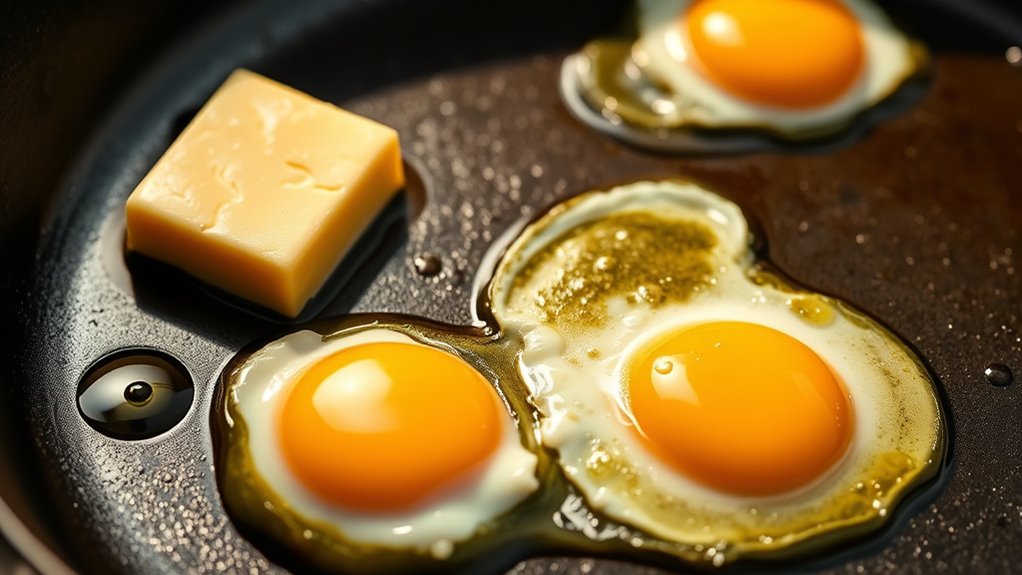
Choosing the right cooking fat can make a big difference in how your eggs turn out on the griddle. You’ll find options like butter, oil, and bacon grease, each adding its own flavor and cooking benefits.
Let’s explore which fats work best and why they’re great for your eggs.
Types Of Cooking Fats
What makes the best cooking fat for eggs on a griddle? It’s about heat tolerance, flavor, and how easily it spreads. You’ll want fats that melt smoothly and don’t burn quickly.
Common choices include butter, oil, and animal fats. Here’s a quick look:
| Fat Type | Smoke Point (°F) | Flavor Profile |
|---|---|---|
| Butter | 350 | Rich, creamy |
| Olive Oil | 375-405 | Fruity, slightly bitter |
| Bacon Fat | 400 | Smoky, savory |
Each fat behaves differently on a griddle, affecting your eggs’ texture and taste. You’ll find that choosing the right one depends on your desired flavor and cooking style. Experiment to see what suits you best.
Benefits Of Each Fat
Although each cooking fat offers unique qualities, understanding their benefits can help you make the best choice for your eggs on a griddle. Butter adds a rich, creamy flavor and browns nicely, perfect if you want a slightly nutty taste.
Olive oil brings a light, fruity note and is great for a healthier option with good fats. Coconut oil offers a subtle sweetness and withstands high heat well, so your eggs won’t stick.
Ghee, clarified butter, provides a higher smoke point and buttery flavor without the milk solids, making it ideal if you want a clean, rich taste. Finally, avocado oil is neutral and heat-stable, letting your eggs cook evenly without overpowering their natural flavor.
Choose the fat that suits your taste and cooking style best.
How to Cook Fried Eggs on a Griddle
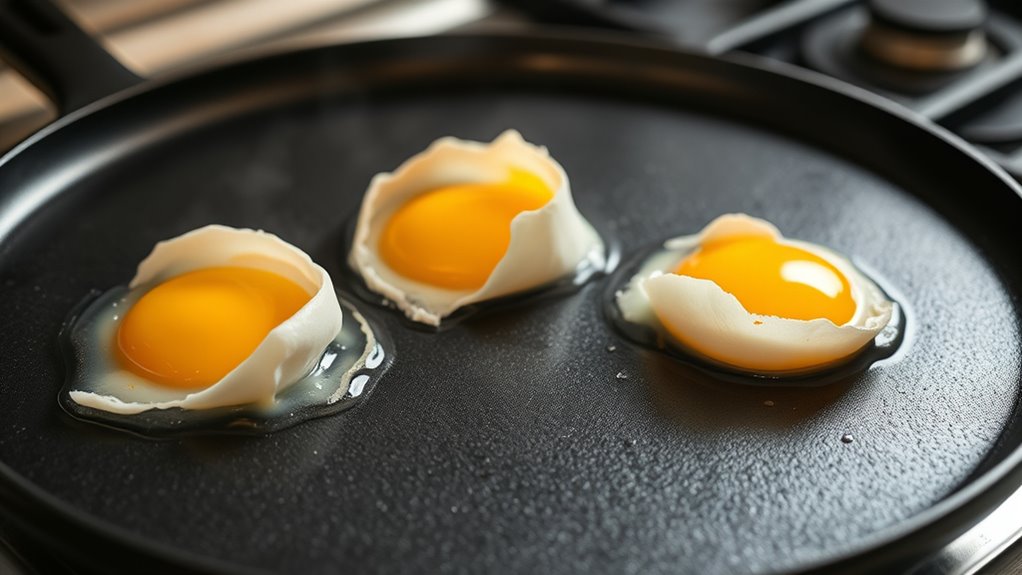
When you cook fried eggs on a griddle, you’ll enjoy even heat that helps achieve crispy edges and a perfectly set white. Start by preheating the griddle to medium-low and adding your choice of fat. Crack the eggs gently onto the surface, spacing them apart.
Let them cook undisturbed until the whites are set but the yolks remain runny, about 2-3 minutes. For over-easy eggs, carefully flip and cook for an additional 30 seconds. Use a thin spatula to avoid breaking the yolks.
| Step | Tip |
|---|---|
| Preheat griddle | Medium-low for even cooking |
| Add fat | Butter or oil for flavor |
| Crack eggs | Space to prevent sticking |
| Cook & flip (optional) | 2-3 min, flip gently for over-easy |
Tips for Making Fluffy Scrambled Eggs on a Griddle
Fried eggs offer a simple way to enjoy eggs on a griddle, but if you want a softer, creamier texture, scrambled eggs are a great next step. Start by whisking your eggs thoroughly to incorporate air, which helps make them fluffy. Add a splash of milk or cream for extra creaminess.
Preheat your griddle on medium-low heat to avoid overcooking. Melt butter evenly across the surface to prevent sticking and add flavor. Pour in the eggs and let them sit for a few seconds before gently stirring with a spatula.
Keep stirring slowly, scraping the eggs from the edges to the center. Remove the eggs just before they’re fully set since they’ll continue cooking off-heat. This technique guarantees soft, fluffy scrambled eggs every time.
How to Make Omelets Easily on a Griddle
To make omelets easily on a griddle, start by heating and lightly greasing the surface to prevent sticking. Pour your beaten eggs evenly, then cook until they begin to set.
Finally, fold the omelet carefully and serve it hot for the best taste.
Preparing The Griddle Surface
Although a hot griddle is essential for cooking eggs, preparing its surface properly guarantees your omelets won’t stick or tear. Start by cleaning your griddle thoroughly to remove any residue or leftover food. Once clean, preheat the griddle to medium heat so it’s hot but not smoking.
Next, apply a thin, even layer of oil or butter using a paper towel or brush. This creates a non-stick barrier and adds flavor. Avoid using too much fat, as excess oil can cause uneven cooking.
Let the oil heat until it shimmers slightly, indicating it’s ready. Proper preparation guarantees your omelets slide easily, giving you perfect, intact results every time without frustration or mess.
Pouring And Cooking Eggs
Once the griddle is properly heated and greased, you can pour your beaten eggs directly onto the surface. Spread the eggs evenly using a spatula, creating a thin, uniform layer. Let them cook undisturbed for about 1 to 2 minutes until the edges begin to set but the center remains slightly runny.
Keep an eye on the heat to prevent browning or sticking. If you want to add fillings, wait until the eggs start to firm up before sprinkling them on. Use a gentle touch when lifting the edges to check the doneness.
The eggs should be mostly set but still moist on top, ensuring a tender texture. This approach gives you perfectly cooked eggs ready for the next steps.
Folding And Serving Omelets
As your eggs begin to set with a slightly moist surface, it’s time to fold them into a classic omelet shape. Use a spatula to gently lift one edge of the omelet, folding it over toward the center. Then, fold the opposite edge over, creating a neat, half-moon shape.
Keep the heat low to prevent overcooking and let the residual heat finish cooking the inside. Once folded, carefully slide the omelet onto a warm plate. If you’ve added cheese or fillings, they’ll be perfectly melted and enclosed.
Serve immediately for the best taste and texture. Remember, practice makes perfect—each fold and flip will get easier, letting you enjoy delicious, restaurant-quality omelets right from your griddle.
How to Cook Multiple Eggs Without Crowding
When you’re cooking multiple eggs on a griddle, giving each egg enough space is key to ensuring they cook evenly and don’t merge together. Start by cracking each egg gently and placing them apart, leaving at least an inch between each one. This spacing prevents the edges from sticking together and allows heat to circulate properly around each egg.
If your griddle is small, cook the eggs in batches rather than overcrowding the surface. Use a spatula to gently separate eggs if any edges start to touch. Keeping eggs spaced also helps you monitor each one’s doneness individually, so you can remove them precisely when they’re ready.
This simple approach guarantees perfectly cooked eggs without any unwanted mess.
Adjusting Heat for Perfect Eggs Every Time
Although cooking eggs on a griddle might seem straightforward, adjusting the heat correctly is vital to achieve the perfect texture and avoid overcooking. Start by preheating your griddle to medium-low heat. If the surface is too hot, your eggs will cook unevenly and risk burning on the edges while staying undercooked inside.
Keep an eye on the eggs as they cook; if you notice rapid bubbling or browning, lower the heat immediately. Conversely, if the eggs take too long to set, slightly increase the temperature. Remember, gentle heat allows the eggs to cook through evenly, resulting in tender whites and creamy yolks.
Modifying the heat throughout the cooking process ensures you get consistent, delicious eggs every time you use your griddle.
Common Egg Cooking Mistakes on a Griddle
If you want consistently great eggs on your griddle, you need to avoid common cooking mistakes that can ruin their texture and flavor. First, don’t overcrowd the griddle; too many eggs at once lower the temperature, causing uneven cooking. Avoid cooking on excessively high heat—it can burn the eggs outside while leaving the inside undercooked.
Also, don’t skip preheating; starting with a cold griddle leads to sticking and uneven cooking. Resist the urge to flip scrambled eggs too often; gentle stirring is better than aggressive flipping. Finally, don’t forget to use enough fat like butter or oil to prevent sticking and improve flavor.
How to Clean and Maintain Your Griddle After Cooking Eggs
Since eggs can leave behind stubborn residue and grease, cleaning your griddle promptly after cooking is essential to keep it in top condition. First, let the griddle cool slightly but remain warm. Use a scraper or spatula to remove any stuck-on bits.
Next, wipe the surface with a damp cloth or paper towel to lift grease and residue. Avoid harsh soaps; instead, use warm water with a mild detergent if necessary. For cast iron griddles, dry thoroughly and apply a thin layer of oil to prevent rust.
Regularly check for buildup and deep clean your griddle monthly by heating it and applying a salt scrub to remove tough spots. This routine keeps your griddle ready for perfectly cooked eggs every time.
Easy Creative Egg Recipes for Your Griddle
You can easily whip up a flavorful veggie egg mix right on your griddle for a fresh, healthy start. Try a cheesy egg breakfast wrap to enjoy melty goodness wrapped in a warm tortilla.
For a bold kick, cook a spicy southwest egg skillet packed with zesty flavors and hearty ingredients.
Flavorful Veggie Egg Mix
How can you take your griddle eggs to the next level? Try a flavorful veggie egg mix! Adding fresh vegetables not only boosts nutrition but also creates a vibrant, tasty dish.
Start by chopping bell peppers, spinach, and tomatoes. Sauté them briefly on the griddle before pouring in your beaten eggs. This method ensures your veggies stay crisp and your eggs cook evenly.
Here’s a simple veggie guide to customize your mix:
| Vegetable | Prep Tip | Flavor Impact |
|---|---|---|
| Bell Peppers | Dice small | Sweet & crunchy |
| Spinach | Rough chop | Earthy & mild |
| Tomatoes | Seed & dice | Juicy & tangy |
| Onions | Finely chopped | Savory & sharp |
Mix and match for a delicious, nutritious breakfast combo!
Cheesy Egg Breakfast Wrap
When your griddle is hot and ready, whip up a cheesy egg breakfast wrap that combines melty cheese with fluffy eggs for a satisfying morning meal. Start by cracking eggs directly onto the griddle and scramble them gently. As the eggs begin to set, sprinkle shredded cheese over the top, letting it melt into gooey perfection.
Meanwhile, warm a large tortilla on the side of the griddle. Once the eggs are cooked and cheese is melted, spoon the mixture onto the tortilla. Add any extras like fresh spinach or sliced avocado if you like.
Fold the wrap tightly and press it on the griddle for a minute to seal and warm through. Serve immediately for a quick, delicious breakfast that’s easy to customize and perfect on the go.
Spicy Southwest Egg Skillet
If you enjoyed the creamy, cheesy wrap, you’ll love adding a bold kick to your griddle eggs with a Spicy Southwest Egg Skillet. Start by heating your griddle over medium heat and sauté diced onions, bell peppers, and jalapeños until they soften. Whisk eggs with a splash of milk, then pour them over the veggies.
Sprinkle in chopped tomatoes, black beans, and a pinch of cumin and chili powder for that authentic Southwest flavor. Cook gently, stirring occasionally, until the eggs are just set. Top with shredded pepper jack cheese and fresh cilantro before serving.
This recipe is quick, vibrant, and packed with spice, perfect for waking up your taste buds and fueling your day with a satisfying, flavorful meal straight off your griddle.
Frequently Asked Questions
Can I Cook Eggs on a Griddle Without Non-Stick Coating?
Yes, you can cook eggs on a griddle without non-stick coating, but you’ll need plenty of oil or butter to prevent sticking. Keep the heat moderate and be patient when flipping or removing the eggs to avoid tearing.
Using a well-seasoned cast iron griddle can also help reduce sticking. If your griddle is new or unseasoned, applying extra fat and cooking at lower temperatures is key.
Avoid high heat as it can cause eggs to stick and burn quickly. With practice, you’ll be able to cook eggs smoothly even without non-stick surfaces.
What Is the Best Way to Store Leftover Cooked Eggs?
You should store leftover cooked eggs in an airtight container and refrigerate them within two hours. They’ll stay fresh for up to four days.
When reheating, use low heat to avoid rubbery texture and maintain flavor.
How Long Do Eggs Stay Fresh Before Cooking on a Griddle?
Imagine you bought eggs last week—you should use them within 3-5 weeks from the pack date. You’ll want to check the sell-by date and keep them refrigerated to guarantee they stay fresh before cooking on a griddle.
Are There Any Health Benefits to Cooking Eggs on a Griddle?
Yes, cooking eggs on a griddle can preserve nutrients since it uses less oil. You’ll get a tasty, protein-rich meal that supports muscle repair and brain health, all while enjoying a quick, easy cooking process.
Can I Use a Griddle for Egg Substitutes or Vegan Eggs?
Yes, you can use a griddle for egg substitutes or vegan eggs. Just preheat it, use a non-stick spray or oil, and cook gently to avoid sticking or burning.
You’ll get a tasty, plant-based breakfast!
Conclusion
Cooking eggs on a griddle might seem simple, yet mastering it transforms your breakfast game completely. While a smooth, even heat promises fluffy, golden eggs, rushing or ignoring prep can leave them uneven and stuck.
You’ve got the tips to choose the best griddle, adjust heat, and clean up effortlessly. So, don’t settle for ordinary—embrace the art of griddle eggs and turn every meal into a delicious success.
By following these expert steps, you can enjoy perfectly cooked eggs on your griddle every time. Whether you prefer scrambled, fried, or sunny-side up, cooking eggs on a griddle ensures consistent heat and easy cleanup. Elevate your breakfast routine with these griddle cooking tips for eggs today!