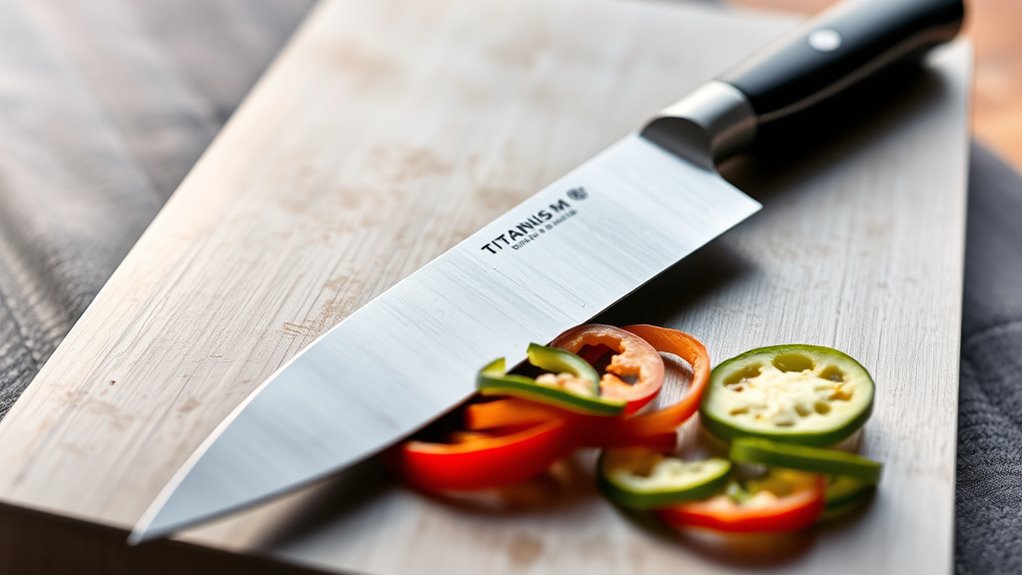
Do Titanium Cutting Boards Dull Knives
Yes, titanium cutting boards do dull your knives faster than wood or plastic because titanium’s extreme hardness offers no forgiveness, causing more wear on your blade edges.
Titanium cutting boards are known for their durability and resistance to damage, but this same hardness can negatively impact knife sharpness over time. Softer boards like wood or plastic cushion your knives, preserving their sharpness longer.
Titanium transfers more force directly to the blade, which dulls especially thinner blades quickly. Heavier knives handle titanium boards better, but all knives dull quicker with frequent use.
If you want to learn how to protect your knives and when titanium boards are the best choice, keep exploring.
Key Takeaways
- Titanium cutting boards are very hard, causing knives to dull faster compared to softer surfaces like wood or plastic. The high hardness of titanium transfers more force to knife edges, accelerating dulling, especially on thin or soft blades.
- Titanium’s durability resists surface damage but requires more frequent knife sharpening due to increased edge wear. Proper cutting practices, such as avoiding bones and hard items, help reduce knife dulling on titanium boards.
- Titanium boards offer hygiene and durability benefits but may not be ideal if preserving knife sharpness is a priority.
What Makes Titanium Cutting Boards Different From Wood and Plastic

While wood and plastic cutting boards have been kitchen staples for years, titanium cutting boards stand out because of their unique material properties. When you choose titanium, you’re opting for a board that’s incredibly strong yet surprisingly lightweight. Unlike wood, titanium doesn’t absorb moisture, so it won’t harbor bacteria or warp over time.
It resists stains and won’t crack or split like plastic can after extended use. Plus, titanium’s surface is naturally non-porous, making it easy to clean and maintain. You’ll also appreciate how durable titanium is—it holds up against heavy chopping without denting or scratching easily.
How Titanium Cutting Boards’ Hardness Affects Your Knives
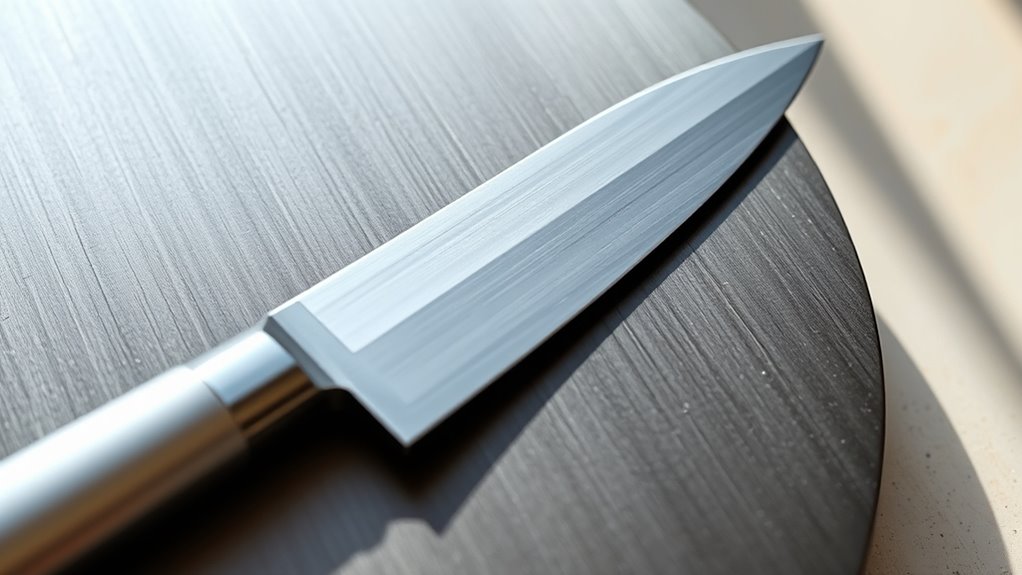
Because titanium is much harder than wood or plastic, its cutting boards can have a notable impact on your knives. When you cut on a titanium board, the hardness means your knife’s edge meets a tough surface every time. Unlike softer materials that give slightly under pressure, titanium offers no forgiveness.
This can cause your blades to dull faster since the edge experiences more wear. You might notice that your knives lose sharpness quicker, requiring more frequent honing or sharpening. However, titanium boards won’t chip or crack like wood or plastic, offering durability.
Still, if you want to keep your knives sharp longer, it’s important to deliberate on how this hardness affects your blade’s longevity before choosing a titanium cutting board.
Which Knives Are Most at Risk When Using Titanium Boards?

Knives with softer steel or thinner edges tend to dull more quickly when used on titanium cutting boards. You’ll notice this especially with delicate kitchen knives that rely on sharp, fine edges rather than toughness.
Heavier, thicker blades usually handle titanium surfaces better but aren’t completely immune. Understanding which knives are most vulnerable helps you protect your tools.
| Knife Type | Steel Hardness (HRC) | Edge Thickness | Risk Level on Titanium | Typical Use |
|---|---|---|---|---|
| Paring Knife | 52-56 | Thin | High | Precision cutting |
| Chef’s Knife | 56-60 | Medium | Medium | General cutting |
| Santoku | 58-62 | Medium | Medium | Versatile slicing |
| Utility Knife | 54-58 | Thin | High | Small tasks |
| Cleaver | 48-52 | Thick | Low | Heavy chopping |
You should take extra care with high-risk knives on titanium boards.
Does Titanium Wear Your Knives Faster Than Wood or Plastic?
You might wonder if titanium cutting boards wear your knives faster than wood or plastic. Since titanium is much harder, it can affect your knife’s edge durability more quickly.
Let’s compare how these materials impact your knives over time.
Knife Edge Durability
Although titanium cutting boards offer impressive durability, they can impact your knife’s edge differently than wood or plastic. When you cut on titanium, your blade meets a firmer surface that can cause faster edge wear. Unlike wood, which has a slight give and can absorb some pressure, titanium transfers more force directly to the knife’s edge.
Plastic boards provide a softer cutting surface, reducing the risk of chipping or dulling. If you want to keep your knives sharp longer, you’ll notice that titanium demands more frequent sharpening. However, titanium boards resist deep cuts and grooves better, which can harbor bacteria.
Ultimately, the trade-off is between the board’s durability and how quickly your knife edge wears down when you use it regularly.
Material Hardness Comparison
When comparing material hardness, titanium cutting boards rank considerably higher than wood or plastic, which directly affects how quickly your knives dull. Titanium’s hardness means it resists scratches well but can accelerate blade wear.
Wood and plastic, being softer, are gentler on your knives, preserving their sharpness longer.
| Material | Hardness (Mohs Scale) | Effect on Knife Edge |
|---|---|---|
| Titanium | 6 | Faster dulling due to hardness |
| Wood | 2-3 | Gentle, preserves sharpness |
| Plastic | 2-3 | Gentle, preserves sharpness |
If you want to keep your knives sharp, wood or plastic cutting boards are better choices than titanium, despite its durability.
How to Test If a Titanium Cutting Board Dulls Your Knives
You can start by visually inspecting your knife’s edge for any visible dulling or damage after use. Next, try standardized cutting tests to compare how the knife performs on the titanium board versus other surfaces.
Using edge sharpness measurement tools will give you precise data on whether your knife’s sharpness has declined.
Visual Knife Edge Inspection
Since the sharpness of your knife directly impacts your cutting efficiency, visually inspecting the blade’s edge before and after using a titanium cutting board can reveal signs of dulling. Start by holding the knife under good lighting, angling the blade to catch reflections. A sharp edge won’t reflect light, appearing as a thin, consistent line.
If you notice any shiny spots or chips along the edge, that’s a sign the blade has dulled or sustained damage. Use a magnifying glass if needed to spot tiny nicks or rolling. Comparing images or notes from before and after cutting on the titanium board helps you track any changes.
This straightforward inspection method gives you immediate insight into whether your titanium cutting board affects your knife’s edge.
Standardized Cutting Tests
Although visual inspections provide useful clues, standardized cutting tests offer a more objective way to determine if a titanium cutting board dulls your knives. To perform these tests, you’ll use consistent cutting tasks on both the titanium board and a control surface, like wood or plastic. Cut through the same food type—such as onions or tomatoes—with the same knife, applying equal pressure and strokes.
Track the number of cuts or duration before you notice any loss in cutting efficiency or feel resistance. This method removes guesswork by comparing performance under identical conditions. By repeating these tests multiple times, you can confidently assess if the titanium surface impacts your knife’s sharpness, helping you decide if it’s the right choice for your kitchen.
Edge Sharpness Measurement Tools
Standardized cutting tests give a practical sense of how a titanium cutting board affects your knife’s edge, but measuring sharpness with specific tools provides a clearer, quantifiable picture.
You can use various devices to test edge sharpness before and after using the titanium board, helping you track any dulling accurately.
Here’s a quick look at common tools:
| Tool | Purpose |
|---|---|
| Edge Pro Meter | Measures edge sharpness numerically |
| BESS Tester | Tests cutting edge durability |
| Paper Test | Simple slicing performance check |
| Magnifying Glass | Visual inspection of edge wear |
Using these tools, you’ll see exactly how your knife performs, giving you confidence in whether the titanium board impacts sharpness.
Tips to Protect Your Knives When Using Titanium Boards
When you use titanium cutting boards, you’ll want to take specific steps to keep your knives sharp and effective. First, always slice with a smooth, controlled motion instead of chopping aggressively to reduce edge impact. Avoid twisting or prying with your knife on the board, as this can cause chips.
Make sure your knives are sharp to begin with—dull blades require more force and wear faster. Use the titanium board for softer foods and switch to a wood or plastic board when cutting harder items like bones. Store your knives properly, using a magnetic strip or knife block to prevent dulling from contact.
Following these tips helps maintain your knife’s edge longer, ensuring they stay reliable when you need them most.
Cleaning and Caring for Your Titanium Cutting Board
Protecting your knives goes hand in hand with keeping your titanium cutting board in top shape. Proper cleaning and care guarantee your board stays hygienic and maintains its surface quality, which helps reduce knife wear over time.
Here’s how you can care for your titanium cutting board:
- Wash promptly: Use warm, soapy water after each use to prevent stains and residue buildup. Avoid harsh abrasives that can scratch the surface.
- Dry thoroughly: Wipe the board dry immediately to prevent water spots and potential corrosion, even though titanium resists rust.
- Avoid extreme heat: Don’t place the board in the dishwasher or expose it to direct flames, as high temperatures might warp or damage its finish.
When Are Titanium Cutting Boards the Right Choice for You?
Although titanium cutting boards might not be the most common choice, you’ll find they excel in specific situations where durability, hygiene, and knife care matter most. If you need a cutting surface that resists bacteria and is easy to sanitize, titanium’s non-porous nature makes it ideal. You’ll appreciate its toughness if your kitchen demands a board that won’t warp, crack, or chip over time.
Additionally, if you’re concerned about maintaining knife sharpness, titanium’s smooth surface reduces wear compared to harder materials like glass or stone. However, if you prioritize a softer cutting experience or quieter chopping, titanium might not suit you. Ultimately, choose titanium cutting boards when you want a long-lasting, hygienic, and knife-friendly option that stands up to heavy use without compromising cleanliness.
Best Alternatives to Titanium Cutting Boards for Knife Safety
If you’re looking for a cutting board that’s even gentler on your knives than titanium, several excellent options can help maintain blade sharpness. Choosing the right material can reduce wear and extend your knife’s life. Here are three of the best alternatives:
- Wooden Cutting Boards – Soft and self-healing, wood is gentle on blades and naturally antibacterial.
- Bamboo Cutting Boards – Harder than wood but still knife-friendly, bamboo is eco-friendly and durable.
- Plastic Cutting Boards – Affordable and easy to clean, plastic boards are soft enough to protect edges, especially those made from high-density polyethylene.
Each of these options balances durability with knife safety, making them smart choices if you want to keep your blades sharp longer.
Frequently Asked Questions
Are Titanium Cutting Boards Safe for Food Contact and Hygiene?
Yes, titanium cutting boards are safe for food contact and hygiene. You’ll find they resist bacteria buildup, are non-porous, and easy to clean, keeping your food safe while maintaining durability and a hygienic surface for cutting.
How Heavy Are Titanium Cutting Boards Compared to Other Materials?
You’ll find titanium cutting boards heavier than plastic or bamboo but lighter than thick glass or stone. They balance durability and weight well, so you won’t struggle moving them around while prepping your meals.
Can Titanium Cutting Boards Withstand High Temperatures Without Damage?
You’ll be glad to know titanium cutting boards can withstand temperatures up to 1,668°F without damage.
This means you can confidently place hot pots or pans on them without worrying about warping or melting.
Are Titanium Cutting Boards Environmentally Friendly or Recyclable?
You’ll find titanium cutting boards are environmentally friendly since titanium is recyclable and long-lasting.
Do Titanium Cutting Boards Have Any Antibacterial Properties?
Titanium cutting boards don’t just sit pretty—they fight germs like a silent warrior. You’ll find they naturally resist bacteria, keeping your kitchen cleaner and safer without harsh chemicals.
This makes your prep work healthier and hassle-free.
Conclusion
Choosing a cutting board is like picking the right stage for your knife’s performance. Titanium boards, tough and unyielding, can dull your blades faster than softer wood or plastic surfaces. But with careful care and the right knives, you can keep your edges sharp as a hawk’s eye.
Treat your knives gently, and they’ll dance through your kitchen tasks with grace. So, weigh your needs and protect your tools wisely! When considering if titanium cutting boards dull knives, remember that proper maintenance and selecting compatible knives are key to preserving sharpness.