Are Silicone Cutting Boards Safe to Use Properly?
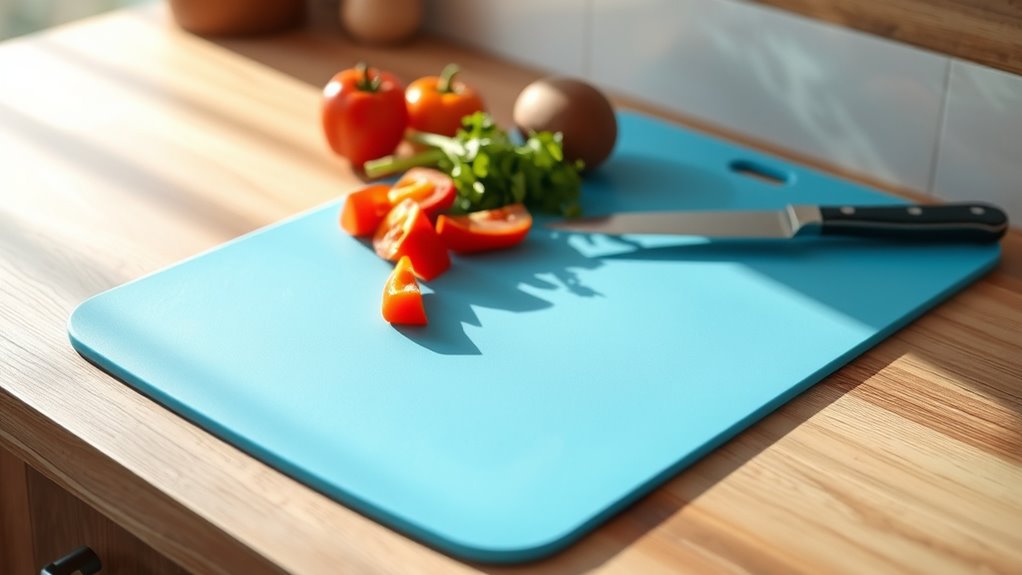
You can safely use silicone cutting boards in your kitchen when handled with proper care and maintenance. Silicone cutting boards are popular for their non-porous, BPA-free surface that helps prevent bacteria growth. They are also gentle on knives and won’t dull them like harder cutting boards.
To keep your silicone board hygienic and durable, avoid exposing it to extreme heat. Regularly inspect it for deep cuts or warping, which can harbor bacteria.
Using separate boards for meats and vegetables is important to prevent cross-contamination.
By following these basic tips, you’ll maximize the benefits of your silicone cutting board. Proper cleaning and maintenance ensure safety and longevity in your kitchen tools.
Key Takeaways
- Silicone cutting boards are FDA-approved, non-toxic, BPA-free, and hypoallergenic, making them safe for food preparation. Their non-porous surface prevents bacteria absorption, reducing contamination risk when cleaned properly. They withstand heat up to 450°F without melting or releasing toxins, ensuring safe use with hot cookware.
- Silicone’s soft, flexible surface protects knife edges, reducing dulling and damage compared to harder boards. Regular cleaning, drying, and inspection for damage maintain hygiene and prevent bacterial growth on silicone boards.
What Are Silicone Cutting Boards Made Of?
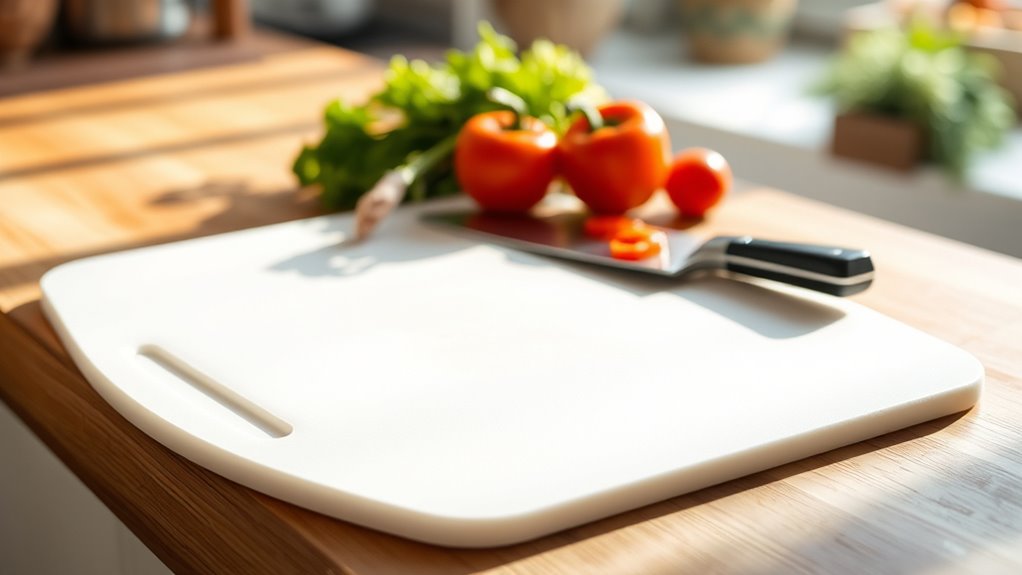
Although you might not realize it, silicone cutting boards are made from a unique material that blends flexibility with durability. Silicone is a synthetic polymer composed of silicon, oxygen, carbon, and hydrogen atoms. This structure gives it remarkable heat resistance and makes it non-porous, so it won’t absorb liquids or harbor bacteria like some other materials.
When you use a silicone cutting board, you benefit from a surface that’s gentle on your knives, reducing dulling. Unlike wood or plastic, silicone doesn’t crack or warp over time. It’s also easy to clean since it resists stains and odors.
Understanding what these boards are made of helps you appreciate why they perform well in the kitchen and maintain safety when used properly.
Why Are Silicone Cutting Boards Popular?
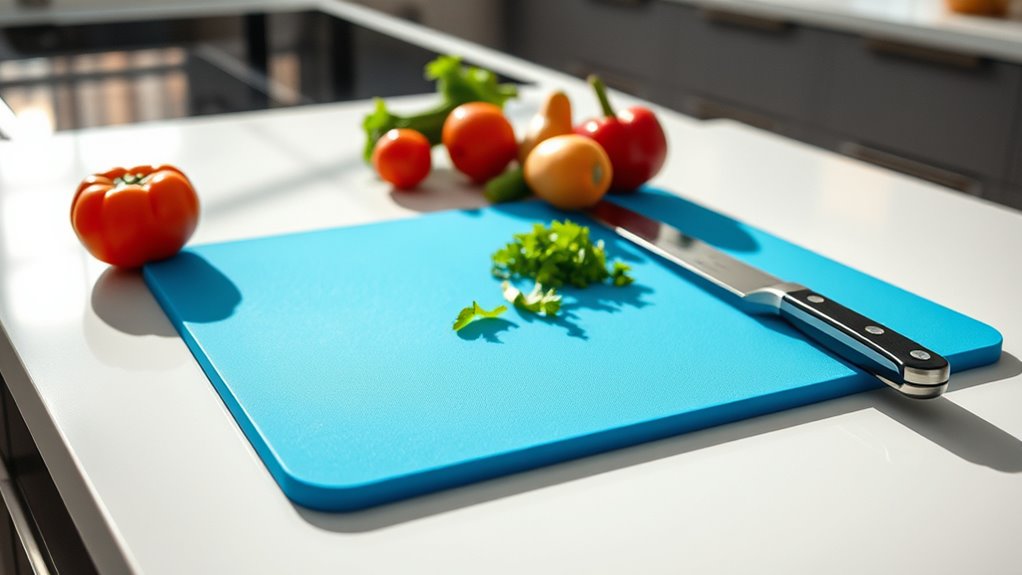
Why do so many home cooks and professional chefs prefer silicone cutting boards? You’ll find they combine durability, ease of cleaning, and versatility in one tool. Silicone’s non-porous surface resists stains and odors, keeping your kitchen hygienic.
Plus, they’re gentle on your knives, reducing dulling. Flexibility makes transferring chopped items simple, and their heat resistance adds convenience. Here’s a quick comparison:
| Feature | Silicone Boards | Traditional Wood |
|---|---|---|
| Durability | High | Moderate |
| Maintenance | Easy to clean | Requires oiling |
| Knife Friendly | Yes | Yes |
With these benefits, silicone cutting boards fit perfectly into your culinary routine, making prep work smoother and more efficient.
Are Silicone Cutting Boards Safe to Use?
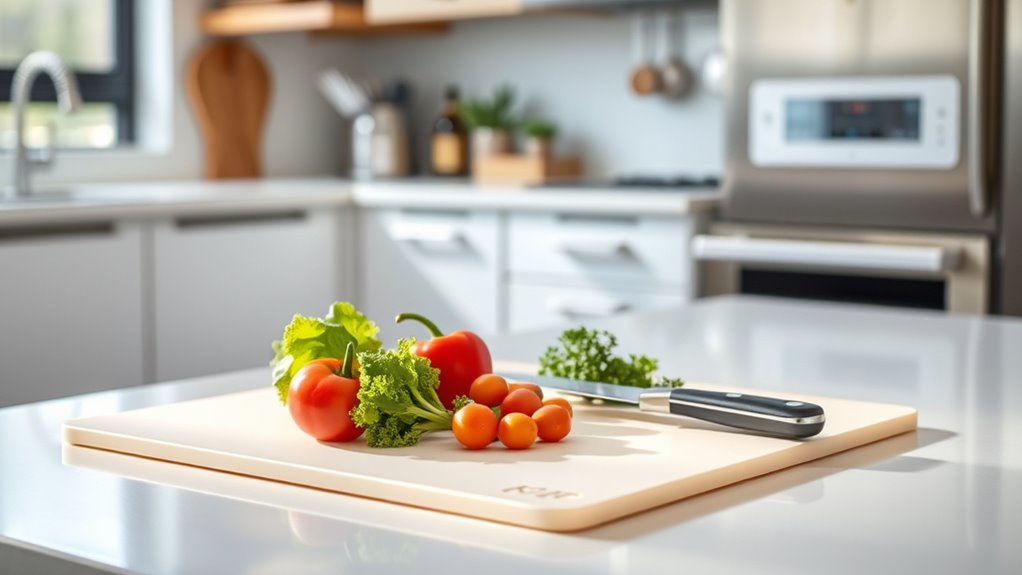
You might wonder if silicone cutting boards are truly safe for your kitchen. Let’s look at their material safety, how they handle heat, and what it takes to keep them hygienic.
Understanding these factors will help you make the best choice for your cooking needs.
Material Safety Overview
Since silicone cutting boards have gained popularity for their durability and flexibility, many people wonder if they’re truly safe to use in the kitchen. The good news is silicone is generally considered safe, but here’s what you should know about its material safety:
- Non-toxic composition – Silicone is made from silicon, oxygen, and other elements, and is free from harmful chemicals like BPA.
- FDA approval – Most silicone cutting boards meet FDA standards for food contact materials, ensuring they won’t leach toxins.
- Non-porous surface – Silicone doesn’t absorb liquids, reducing bacterial growth compared to porous materials.
- Hypoallergenic – Silicone is unlikely to cause allergic reactions, making it safe for most users.
Heat Resistance Properties
Although silicone cutting boards are praised for their flexibility and durability, their heat resistance often raises questions about safety during kitchen use. You’ll be glad to know that silicone is highly heat resistant, typically withstanding temperatures up to 450°F (232°C) without melting or releasing harmful chemicals. This means you can safely place hot pots or pans on the board temporarily without worrying about damage or toxic fumes.
However, it’s important not to expose the board to direct flame or prolonged high heat, as extreme conditions can degrade the silicone over time. Overall, silicone cutting boards offer excellent heat resistance for everyday kitchen tasks, making them a safe choice when used properly and within recommended temperature limits.
Hygiene and Maintenance
Silicone cutting boards handle heat well, but keeping them clean is just as important for safe kitchen use. To maintain hygiene and extend your board’s life, follow these tips:
- Wash your board with hot, soapy water immediately after use to remove food particles and bacteria. Avoid harsh scrubbers that could damage the surface; use a soft sponge or cloth instead.
- Sanitize regularly by soaking the board in a vinegar solution or running it through your dishwasher if it’s dishwasher-safe. Store your silicone cutting board in a dry place to prevent mold and unpleasant odors.
Can Silicone Cutting Boards Harbor Bacteria or Germs?
You might wonder if silicone cutting boards can trap bacteria or germs during use. It’s important to take into account how bacteria grow on silicone and how well you can clean the board to maintain hygiene.
Let’s explore what affects bacterial buildup and how to keep your silicone board safe.
Bacteria Growth On Silicone
When you use a cutting board, it naturally comes into contact with various food particles and moisture, creating an environment where bacteria could potentially grow. Silicone, being non-porous, resists absorbing liquids, which helps limit bacterial growth. However, bacteria can still linger on its surface if not handled properly.
Here’s what you need to know about bacteria growth on silicone cutting boards:
- Silicone’s smooth surface prevents bacteria from embedding deep.
- Cuts or grooves on the board can trap food debris, encouraging bacteria.
- Bacteria thrive in moist environments, so drying is essential.
- Proper storage away from contaminants reduces bacterial exposure.
Understanding these points helps you keep your silicone cutting board safer for everyday use.
Cleaning Effectiveness And Hygiene
Although silicone cutting boards resist absorbing liquids, they can still harbor bacteria if not cleaned thoroughly. You need to wash them properly after every use, especially when handling raw meat or seafood. Silicone’s non-porous surface makes it easier to clean than wood, but food particles and germs can cling to scratches or crevices.
Use hot, soapy water and a scrub brush or sponge to remove residue effectively. You can also run silicone boards through the dishwasher for a deeper clean. Avoid letting them sit wet or dirty, as moisture encourages bacterial growth.
Do Silicone Cutting Boards Release Harmful Chemicals?
Since silicone is widely used in kitchenware, many wonder if silicone cutting boards release harmful chemicals during food preparation. You’ll be glad to know that high-quality silicone is food-grade and generally non-toxic. Here’s what you should consider:
- Food-grade silicone is stable and doesn’t leach chemicals, even when in contact with acidic or oily foods.
- Avoid low-quality or counterfeit silicone boards, which might contain fillers that can release harmful substances.
- Silicone cutting boards don’t contain BPA, phthalates, or other common plastic toxins.
- Proper use and cleaning prevent degradation that could potentially release particles.
How Durable Are Silicone Cutting Boards Compared to Wood and Plastic?
You’ll notice silicone cutting boards handle knife marks differently than wood or plastic, often showing less visible wear. They tend to last longer under heavy use without cracking or warping.
Let’s compare how each material holds up over time and what that means for your kitchen.
Resistance to Knife Marks
When you use silicone cutting boards, you’ll notice they resist knife marks better than many traditional materials. Their flexible surface quickly rebounds, preventing deep grooves that can harbor bacteria.
Here’s how silicone stacks up:
- Silicone: Soft yet resilient, it resists cuts and self-heals quickly.
- Wood: Prone to knife marks that can deepen over time, requiring regular maintenance.
- Plastic: Easily scarred, with grooves that can trap food particles.
- Silicone vs. Others: Silicone’s surface durability means fewer knife marks and a cleaner cutting experience.
This resistance not only keeps your board looking new but also promotes safer food prep by minimizing bacteria buildup in cuts. You get a hygienic, low-maintenance option that handles your knives gently without sacrificing performance.
Longevity Under Heavy Use
Silicone’s ability to resist knife marks plays a big role in how well it holds up over time. When you use silicone cutting boards heavily, they tend to maintain their surface integrity better than plastic boards, which can scar and warp.
Wood boards are durable but require regular maintenance to prevent cracking and warping. Silicone boards won’t splinter or absorb moisture, adding to their longevity under heavy use.
| Material | Durability Under Heavy Use |
|---|---|
| Silicone | Resists knife marks; flexible; no warping |
| Wood | Strong but needs upkeep; can crack |
| Plastic | Prone to scratches and warping |
Choosing silicone means you get a durable, low-maintenance board that lasts longer without compromising safety or performance.
Comparison of Material Wear
Although wood and plastic cutting boards each have their strengths, silicone boards offer a unique combination of durability and flexibility that sets them apart. When comparing material wear, consider these points:
- Resistance to Cuts: Silicone resists deep cuts better than plastic, reducing grooves where bacteria hide.
- Flexibility: Silicone bends without cracking, unlike wood, which can splinter over time.
- Stain and Odor Retention: Silicone doesn’t absorb stains or odors like wood often does.
- Maintenance: Silicone is dishwasher safe and easy to clean, whereas wood requires more care to avoid warping.
If you want a cutting board that withstands wear while staying hygienic, silicone is a smart choice, combining the best traits of wood and plastic without their weaknesses.
Will Silicone Cutting Boards Damage Your Knives?
Because silicone is softer than most knife blades, it won’t dull your knives as quickly as harder surfaces like glass or ceramic. When you use a silicone cutting board, your knives maintain their sharp edges longer, which means less frequent sharpening and better performance. Silicone’s flexibility also absorbs some of the impact when you cut, reducing wear on the blade.
However, avoid pressing too hard or using excessively sharp knives in a way that might cause chipping, though this is rare. Overall, silicone cutting boards provide a gentle surface that preserves your knives’ integrity. So, if you want to protect your blades while cooking, silicone boards are a smart choice that balances durability and knife care effectively.
How to Clean and Maintain Silicone Cutting Boards
Protecting your knives goes hand in hand with keeping your silicone cutting board clean and well-maintained. To guarantee your board stays in top shape, follow these simple steps:
Keeping your silicone cutting board clean is key to protecting your knives and ensuring long-lasting use.
- Wash promptly: Rinse the board with warm, soapy water right after use to prevent stains and odors.
- Use a soft sponge: Avoid abrasive scrubbers that can damage the silicone surface.
- Sanitize regularly: Occasionally soak the board in a vinegar-water solution or run it through the dishwasher if it’s dishwasher-safe.
- Dry thoroughly: Let your board air dry completely before storing to prevent mold and mildew.
When Should You Replace Your Silicone Cutting Board?
Even though silicone cutting boards are durable, they don’t last forever. You should replace your board once you notice deep cuts or grooves that are hard to clean properly. These crevices can harbor bacteria, making your board unsafe even after washing.
Also, if your silicone board starts to warp, crack, or lose its non-slip grip, it’s time for a new one. Changes in texture or color might signal material breakdown, which affects safety and performance.
Regularly inspect your board for these signs, especially if you use it frequently. Replacing your silicone cutting board when it shows wear ensures you maintain a hygienic and safe food preparation surface without risking contamination.
Silicone Cutting Boards vs. Other Materials: Safety Comparison
While selecting a cutting board, you’ll want to think about how silicone compares to other common materials like wood, plastic, and bamboo regarding safety. Silicone cutting boards resist bacteria because they don’t absorb liquids, unlike wood or bamboo, which can trap moisture and germs. They’re also dishwasher-safe, making thorough cleaning easier than with plastic boards, which can scar and harbor bacteria over time.
Silicone cutting boards resist bacteria and are dishwasher-safe, offering easier, safer cleaning compared to wood, plastic, or bamboo.
Here’s a quick safety comparison:
- Silicone: Non-porous, heat-resistant, easy to clean.
- Wood: Naturally antimicrobial but absorbs liquids; needs careful maintenance.
- Plastic: Can scar easily, potentially trapping bacteria; dishwasher-safe.
- Bamboo: Hard surface, less porous than wood but may crack, harboring germs.
Knowing these differences helps you choose a cutting board that fits your safety needs best.
How to Use Silicone Cutting Boards Safely
To keep your silicone cutting board safe and in good condition, you should clean it thoroughly after each use and avoid exposing it to extreme heat beyond its tolerance. Wash it with hot, soapy water or place it in the dishwasher if it’s dishwasher-safe. Avoid using abrasive scrubbers that might damage the surface.
Always dry it completely to prevent moisture buildup that can promote bacteria growth. Use separate boards for raw meats and vegetables to prevent cross-contamination. Avoid cutting with excessively sharp knives that could cause deep grooves, making cleaning difficult.
Store your board flat or hanging to maintain its shape. By following these simple steps, you’ll guarantee your silicone cutting board remains hygienic and durable, keeping your food prep safe and efficient.
Are Silicone Cutting Boards a Smart Choice for Your Kitchen?
If you’re looking for a cutting board that’s durable, easy to clean, and gentle on your knives, silicone boards might be the ideal choice for your kitchen. They offer several advantages that make them worth considering:
- Non-porous surface: Silicone resists bacteria and odors better than wood or plastic.
- Knife-friendly: It won’t dull your blades as quickly, preserving your knives longer.
- Heat resistance: You can safely place hot pots on them without damage.
- Easy maintenance: Silicone boards clean easily by hand or in the dishwasher.
With these benefits, silicone cutting boards blend practicality and hygiene, making them a smart addition to your kitchen tools.
Just remember to use them properly to maximize their lifespan and safety.
Frequently Asked Questions
Can Silicone Cutting Boards Be Used for Hot Food Preparation?
Yes, you can use silicone cutting boards for hot food preparation since they resist heat well. Just avoid exposing them to extremely high temperatures to prevent damage, and you’ll find them durable and easy to clean.
Are Silicone Cutting Boards Dishwasher Safe?
Yes, silicone cutting boards are dishwasher safe. You can easily toss them in the dishwasher without worrying about damage.
Just make sure to place them securely to avoid warping or displacement during the wash cycle.
Do Silicone Cutting Boards Have a Non-Slip Surface?
Yes, silicone cutting boards usually have a non-slip surface. You’ll find their flexible material grips your countertop well, preventing slips while you chop.
This helps you work safely and keeps your board steady during use.
Can Silicone Cutting Boards Be Customized With Designs or Logos?
Yes, you can customize silicone cutting boards with designs or logos. They’re flexible and durable, making them ideal for personalization.
Just choose your preferred design, and the silicone surface will showcase it clearly and last long.
Are Silicone Cutting Boards Environmentally Friendly to Dispose Of?
You won’t find silicone cutting boards very eco-friendly to dispose of since they aren’t biodegradable and recycling options are limited.
However, you can extend their life by maintaining them well, reducing waste overall.
Conclusion
So, are silicone cutting boards truly safe? The answer might surprise you. When used properly, they resist bacteria, don’t release harmful chemicals, and can last a long time.
But ignoring care tips? That’s when problems sneak in. Before you toss your old board or buy a new one, remember: your safety depends on how you use it.
Ready to make silicone boards your kitchen’s secret weapon? The choice is yours. Proper care and usage ensure silicone cutting boards are safe and reliable for everyday cooking.