What Are Cutting Boards Made Of and How to Use Them
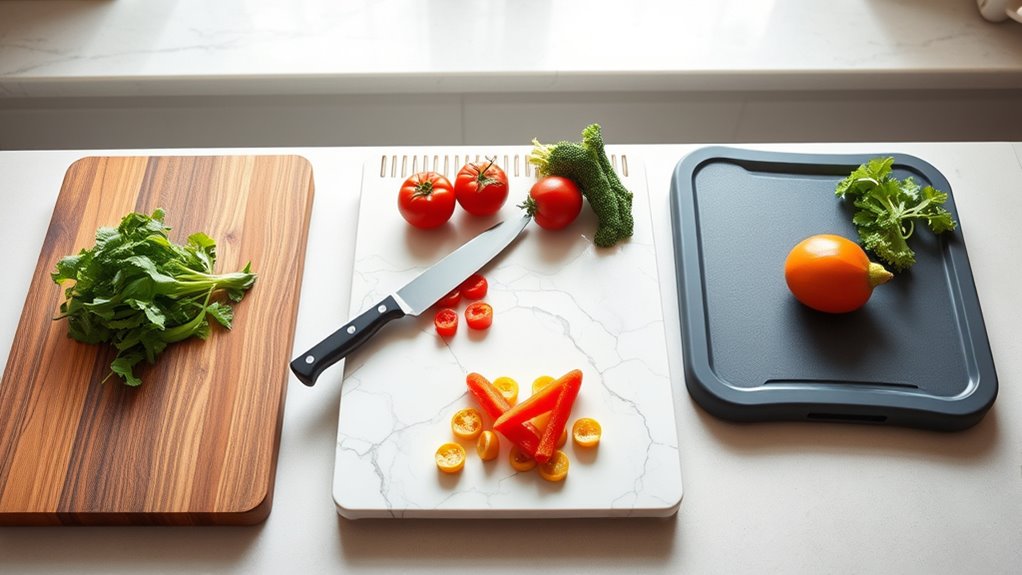
Cutting boards are essential kitchen tools made from various materials such as wood, bamboo, plastic, glass, and composite materials. Each type offers unique benefits depending on the task at hand. Choosing the right cutting board helps protect your knives and maintain food safety.
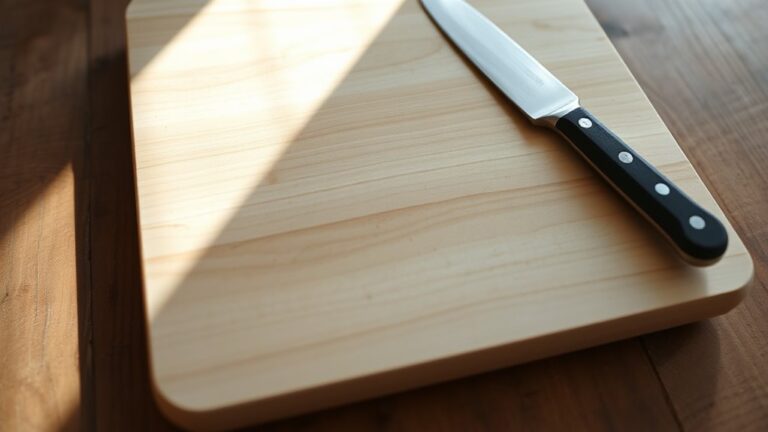
You’ll want wood or bamboo for general prep since they’re gentle on knives but avoid using them for raw meat to prevent juice absorption.
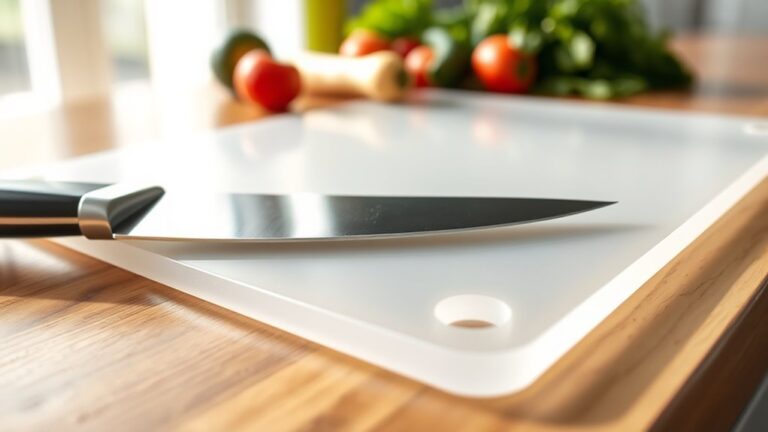
Plastic boards work well for raw meat and are dishwasher-safe but replace them when heavily scored.
Glass boards are perfect for fruits and cheese but dull knives faster.
Keep your boards clean, well-maintained, and separate to prevent contamination. Following these tips will help keep your kitchen safe and efficient.
Key Takeaways
- Common cutting board materials include wood, plastic, bamboo, glass, and composite, each with unique durability and maintenance needs.
- Wood and bamboo boards are gentle on knives and naturally antimicrobial but require regular oiling and careful cleaning.
- Plastic boards are dishwasher-safe and ideal for raw meat but should be replaced when deeply scored to prevent bacteria buildup.
- Glass boards resist stains and odors but dull knives quickly, making them best for light tasks like slicing fruits and cheese.
- Use separate boards for raw and cooked foods, clean thoroughly after use, and replace boards showing deep grooves or warping.
What Are the Most Common Cutting Board Materials?
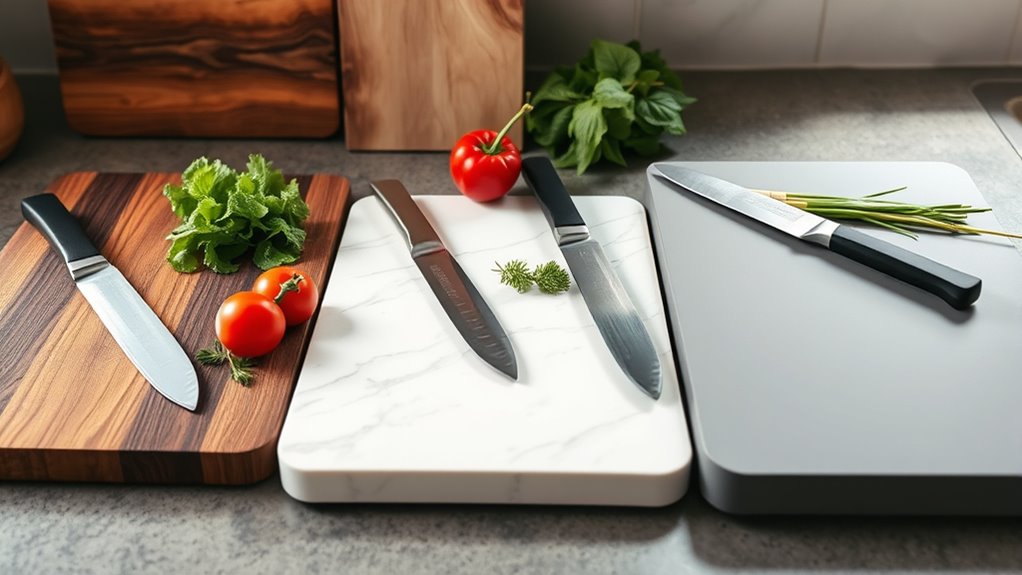
Although cutting boards come in many varieties, the most common materials you’ll encounter are wood, plastic, bamboo, and composite. Wood boards offer a classic option, known for their durability and gentle impact on knives. Plastic boards are lightweight and often dishwasher-safe, making them easy to clean.
Bamboo, a fast-growing grass, provides a sustainable alternative with a harder surface than traditional wood. Composite boards combine resin and wood fibers, delivering a sturdy, low-maintenance surface that resists warping. When choosing a cutting board, consider how you’ll use it—different materials suit various tasks and maintenance preferences.
Pros and Cons of Wooden Cutting Boards
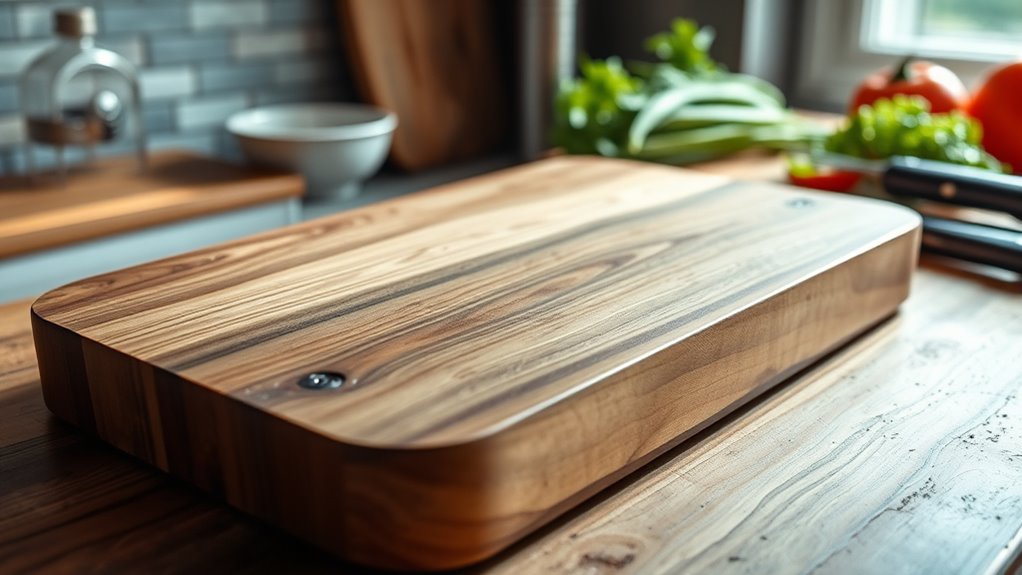
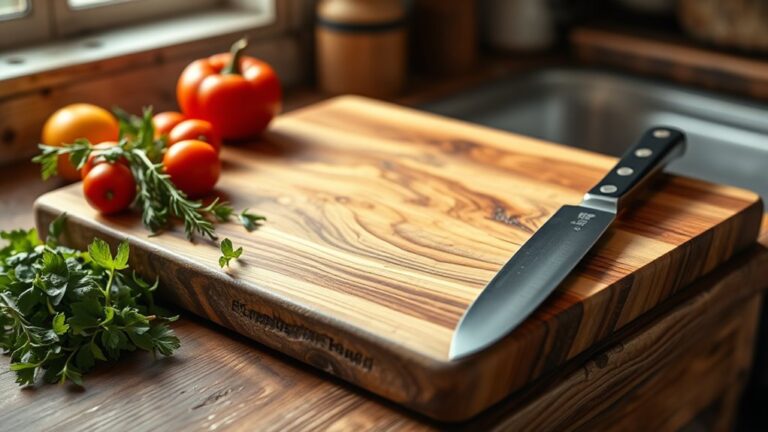
Wooden cutting boards remain a popular choice for many home cooks and professional chefs because of their durability and knife-friendly surface. You’ll find they’re gentle on your knives, helping them stay sharp longer. Plus, wood has natural antimicrobial properties that can reduce bacteria buildup if you maintain it properly.
However, you’ll need to take care of your wooden board by oiling it regularly to prevent cracking and warping. Also, wooden boards aren’t dishwasher safe, so hand washing is a must. They can absorb odors and stains from strong-smelling foods, which might be an issue if you use the same board for different ingredients.
If you’re willing to commit to maintenance, wooden cutting boards can be a reliable and attractive kitchen tool.
Benefits of Bamboo Cutting Boards

When you choose bamboo cutting boards, you get a lightweight and eco-friendly option that’s harder and more durable than many other materials. Bamboo grows quickly, making it a sustainable resource, so you’re helping reduce environmental impact with your choice. Its natural hardness resists knife marks better, keeping your board looking fresh longer.
Plus, bamboo has natural antimicrobial properties, which help reduce bacteria buildup, promoting a safer kitchen. Bamboo boards are also less prone to warping and cracking, so they maintain their shape and functionality through regular use. They’re easy to clean and require minimal upkeep, making them convenient for daily cooking.
Pros and Cons of Plastic Cutting Boards
You’ll find plastic cutting boards are durable and easy to maintain, but they can get deep grooves from knives over time. They’re often praised for being hygienic since you can clean them thoroughly in a dishwasher. However, those knife marks can also trap bacteria, so it’s important to replace them regularly.
Durability and Maintenance
How long your cutting board lasts depends largely on its material, and plastic boards offer a mixed bag in this area. Plastic boards resist cracking and warping better than wood, so they can handle heavy use without falling apart. However, they tend to get deep knife grooves over time, which can make the surface uneven and harder to clean.
You’ll need to replace a plastic board once it becomes excessively scored. Maintenance is straightforward: you can toss plastic boards in the dishwasher, which helps keep them clean and sanitized without extra effort. Just avoid using abrasive scrubbers that may damage the surface.
While plastic boards don’t require oiling like wood, they do demand regular inspection to ensure they remain in good condition for safe food prep.
Hygiene and Safety
Although plastic cutting boards are popular for their convenience, their hygiene and safety features come with both advantages and drawbacks. You’ll appreciate that plastic boards are non-porous, so they don’t absorb liquids or bacteria easily, making them easier to sanitize. However, deep knife grooves can harbor germs, posing a risk if not cleaned properly.
Also, plastic boards can warp with high heat, so avoid putting them in the dishwasher’s drying cycle.
| Pros | Cons | Tips |
|---|---|---|
| Non-porous, easy to clean | Knife grooves trap bacteria | Replace if heavily scored |
| Dishwasher safe | Can warp under heat | Use separate boards for meat and veggies |
| Lightweight and affordable | Less durable than wood | Sanitize regularly |
When Should You Use Glass Cutting Boards?
You’ll find glass cutting boards are great when you need a surface that’s easy to clean and won’t absorb odors or stains. They’re ideal for prepping fruits, vegetables, and serving cheese or charcuterie.
Let’s explore when using a glass board makes the most sense.
Benefits of Glass Boards
When you need a cutting board that’s easy to clean and won’t absorb odors or stains, glass boards are a smart choice. They’re non-porous, so bacteria won’t hide in tiny grooves, making them hygienic for food prep. Plus, glass boards won’t warp or crack over time, maintaining a smooth, flat surface.
You can also toss them in the dishwasher without worry, saving you time and effort. Their sleek design adds a modern touch to your kitchen, and many come with non-slip edges for safety. Just keep in mind that glass boards can dull your knives faster, so use them when hygiene and easy cleanup matter most.
Ideal Usage Situations
Since glass cutting boards resist stains and odors, they’re perfect for prepping foods that might leave strong smells or colors, like citrus fruits, onions, or raw fish. You’ll also appreciate their non-porous surface when working with raw meat, as it’s easy to sanitize.
However, avoid using glass boards for heavy chopping or delicate knives to prevent dulling or breakage.
| Food Type | Ideal Use Reason |
|---|---|
| Citrus Fruits | No staining or odor retention |
| Onions | Odor resistance |
| Raw Fish | Easy cleaning, odor-free |
| Raw Meat | Sanitation-friendly surface |
| Bread & Pastry | Not recommended (hard surface) |
How Cutting Boards Affect Your Knife’s Sharpness
Although it may seem subtle, the type of cutting board you use has a direct impact on your knife’s sharpness over time. Harder surfaces like glass or stone dull your blades quickly, forcing more frequent sharpening. Softer materials such as wood or bamboo help maintain edge integrity by absorbing some of the knife’s impact.
Choosing the right board can extend your knife’s lifespan and improve cutting performance.
Consider these points:
- Wood boards: Gentle on knives, self-healing cuts, but need maintenance.
- Plastic boards: Easier to sanitize but can develop deep grooves.
- Glass/stone boards: Extremely durable but harsh on edges, dulling knives fast.
Selecting a cutting board wisely protects your blade and makes your prep work smoother.
How to Choose the Right Cutting Board for Different Foods
You’ll want to pick cutting boards based on the foods you prepare to keep flavors from mixing and maintain hygiene. Different materials work better for specific foods, so choosing the right one helps protect your knife and prevent contamination.
Let’s look at which boards suit meats, vegetables, and other ingredients, plus how to keep them clean.
Material Suitability for Foods
When selecting a cutting board, you should consider how its material interacts with different types of food to guarantee safety and maintain flavor integrity. Some materials are better suited for certain foods, helping prevent cross-contamination and preserving taste.
Here’s how to choose the right board for your needs:
- Plastic boards: Ideal for raw meats and seafood because they’re non-porous and dishwasher-safe, making them easy to sanitize.
- Wood boards: Perfect for fruits, vegetables, and bread since they’re gentle on knives and resist bacteria if properly cared for.
- Bamboo boards: Great all-rounders that are eco-friendly and durable, but avoid using them for raw meat as they can absorb juices.
Picking the right material assures your food stays safe and flavorful every time you prep.
Maintenance and Hygiene Tips
Choosing the right cutting board material is only part of the equation; proper maintenance and hygiene keep your boards safe and lasting longer. After each use, wash your board with hot, soapy water, then rinse and dry it thoroughly to prevent bacteria buildup.
For wooden boards, regularly oil them with food-safe mineral oil to maintain moisture and prevent cracks. Avoid soaking wooden boards or placing them in the dishwasher, as this causes warping. Plastic boards can go in the dishwasher but should be replaced if deeply scored or stained.
To sanitize, use a solution of one tablespoon of bleach per gallon of water or white vinegar, especially after cutting raw meat. By following these tips, you’ll keep your cutting boards clean, safe, and in great condition for all your cooking needs.
How to Clean and Sanitize Cutting Boards
Because cutting boards come into direct contact with food, cleaning and sanitizing them properly is essential to prevent cross-contamination and foodborne illnesses. After each use, wash your cutting board thoroughly with hot, soapy water, scrubbing all surfaces. Rinse well and dry it with a clean towel or let it air dry.
Properly washing cutting boards with hot, soapy water after each use prevents contamination and keeps food safe.
For deeper sanitizing, especially after handling raw meat, use one of these methods:
- Apply a solution of one tablespoon of bleach per gallon of water, then rinse thoroughly.
- Use white vinegar or hydrogen peroxide to naturally disinfect the board.
- Sprinkle coarse salt and rub it with a lemon half to clean and deodorize wooden boards.
Following these steps helps keep your cutting boards safe and your kitchen healthy.
Tips to Maintain and Extend Your Cutting Board’s Life
To keep your cutting board in top condition, you’ll want to treat it with care and perform regular maintenance. After cleaning, always dry your board thoroughly to prevent warping or cracking. For wooden boards, apply food-safe mineral oil or beeswax once a month to keep the wood hydrated and prevent splitting.
Avoid soaking wooden boards in water or putting them in the dishwasher, as excess moisture damages the wood. Plastic boards can handle more rigorous cleaning but check for deep grooves where bacteria can hide. Sand wooden boards lightly if they become rough or stained.
Store your cutting board upright in a dry place to allow air circulation. Following these tips will help you extend your cutting board’s life and maintain a safe, functional surface.
When Should You Replace Your Cutting Board?
Maintaining your cutting board well can considerably extend its lifespan, but even the best care won’t make it last forever. You should replace your cutting board once it shows deep grooves or cracks that can harbor bacteria and become impossible to clean thoroughly.
If your board develops a persistent odor or discoloration that won’t go away after cleaning, it’s time to think about a new one. Also, if the surface becomes excessively worn or warped, it can affect your cutting accuracy and kitchen safety.
Look for these signs to know when to replace your cutting board:
- Deep cuts or cracks that trap food particles
- Lingering odors or stains that resist cleaning
- Warping or uneven surfaces causing instability
Replacing your board ensures hygiene and safer food preparation.
How to Prevent Cross-Contamination With Cutting Boards
Although cutting boards are essential tools in the kitchen, they can easily become sources of cross-contamination if not handled properly. To prevent this, always use separate boards for raw meat, vegetables, and cooked foods.
Clean boards thoroughly after each use with hot, soapy water and sanitize regularly. Avoid using boards with deep grooves where bacteria can hide.
| Practice | Why It Matters |
|---|---|
| Use color-coded boards | Prevents mixing raw and cooked foods |
| Clean immediately | Stops bacteria from spreading |
| Sanitize after heavy use | Reduces risk of harmful germs |
Best Ways to Store and Handle Cutting Boards
When you store and handle your cutting boards properly, you extend their lifespan and keep your kitchen safer. Always dry your boards thoroughly after washing to prevent warping and bacteria growth. Store them upright or in a rack to allow air circulation, avoiding stacked piles that trap moisture.
Handle your boards by their edges to reduce wear on the surface.
Keep these tips in mind:
- Clean and dry boards immediately after use to prevent staining and odors.
- Use separate boards for raw meats and vegetables to avoid cross-contamination.
- Regularly oil wooden boards with food-safe mineral oil to maintain their condition.
Following these practices helps you maintain hygienic, durable cutting boards that serve you well in every kitchen task.
Frequently Asked Questions
Can Cutting Boards Be Recycled or Repurposed After Use?
You can recycle some plastic cutting boards if your local facility accepts them, but wooden ones are best repurposed as compost or craft projects.
Avoid tossing them in regular recycling bins to prevent contamination.
Do Cutting Boards Affect Food Flavor or Aroma?
Cutting boards can affect flavor if they retain strong odors or stains. But you don’t have to worry—clean them well and use separate boards for meats and veggies to keep your food tasting fresh and safe.
Are There Eco-Friendly Alternatives to Traditional Cutting Boards?
Yes, you can choose eco-friendly cutting boards made from bamboo, recycled plastic, or sustainably sourced wood. These options reduce environmental impact while staying durable and safe for your food prep.
Bamboo cutting boards are particularly popular because bamboo grows quickly and requires fewer resources. Recycled plastic boards help keep waste out of landfills. Sustainably sourced wood ensures forests are managed responsibly.
How Do Cutting Boards Impact Kitchen Aesthetics?
Cutting boards add style and personality to your kitchen; choosing wood or colorful plastic can complement your decor. You’ll create a warm, inviting space or a modern vibe, making your kitchen feel more cohesive and functional.
Can Cutting Boards Be Personalized or Customized?
You absolutely can personalize cutting boards! Imagine adding your name, a special date, or a meaningful design—customizing your board not only makes it unique but also turns it into a cherished kitchen centerpiece.
You’ll love using it every day.
Conclusion
Now that you know the different cutting board materials and how to care for them, which one will you choose for your kitchen?
Remember, using the right board and maintaining it properly not only keeps your food safe but also extends its life. Don’t forget to replace your cutting board when it shows signs of wear to avoid cross-contamination.
With these tips, you’re ready to handle and store your cutting boards like a pro! Choosing the best cutting board material and following proper cleaning and maintenance techniques will ensure durability and food safety in your kitchen.