7 Good Reasons for Choosing Olive Wood Cutting Boards
You’ll love olive wood cutting boards for their unmatched durability and natural antibacterial properties. These boards resist scratches and warping even with frequent use, making them a reliable kitchen tool.
Their dense grain and natural oils help fight bacteria and odors, ensuring a hygienic cooking environment.
Beyond functionality, olive wood cutting boards feature unique, warm patterns that add timeless beauty to any kitchen. They are also eco-friendly, sourced sustainably to support environmental responsibility.
Plus, caring for them is simple with regular cleaning and occasional oiling.
If you want to explore why olive wood stands out among other materials, there’s plenty more to discover about its durability, hygiene, aesthetics, and sustainability. These qualities make olive wood cutting boards a smart and stylish choice for your kitchen.
Key Takeaways
- Olive wood cutting boards are highly durable, resisting scratches, warping, and cracking for long-lasting use. Their dense grain and natural oils provide self-healing properties, minimizing deep cuts and maintaining smooth surfaces.
- Natural antibacterial oils and dense grain reduce moisture absorption, keeping the board hygienic and odor-free. Unique grain patterns and warm tones offer an elegant, timeless aesthetic that enhances any kitchen decor.
- Made sustainably from responsibly harvested olive trees, they support eco-friendly and environmentally conscious choices.
Why Olive Wood Cutting Boards Are More Durable
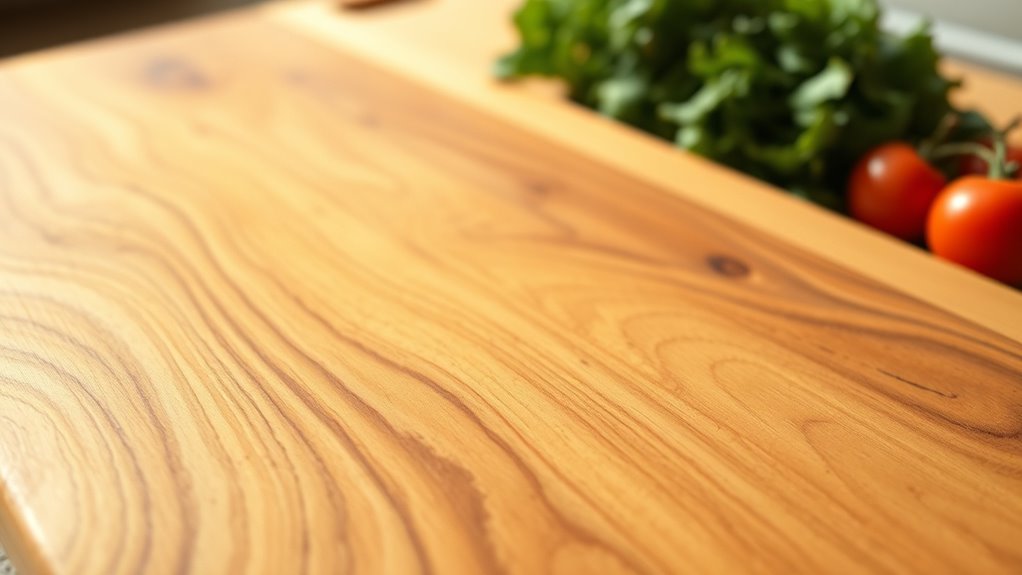
Because olive wood is incredibly dense and hard, your cutting board will resist scratches and dents better than many other woods. You’ll notice it stands up well to heavy use without showing wear quickly. This durability means you won’t have to replace your board as often, saving you money over time.
Olive wood’s tight grain also helps prevent cracks and splits, which can happen with softer woods after repeated exposure to moisture and cutting. When you care for it properly by oiling regularly, you maintain its strength and longevity. This toughness makes olive wood cutting boards ideal for daily kitchen tasks, providing a reliable surface that won’t degrade easily under pressure or frequent washing.
Choosing olive wood means choosing a cutting board built to last.
How Olive Wood Resists Knife Marks
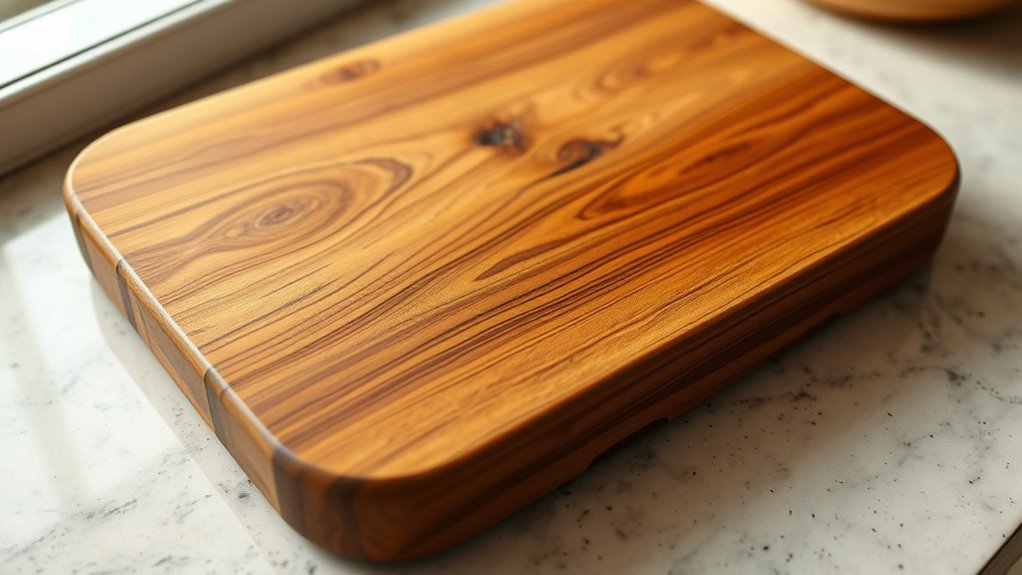
You’ll appreciate how olive wood’s dense grain structure and natural hardness help it resist knife marks better than many other woods.
Plus, its unique self-healing properties mean small cuts can close up over time, keeping your board looking fresh.
Let’s explore how these features protect your cutting surface with every use.
Dense Grain Structure
Olive wood’s dense grain structure makes it incredibly resistant to knife marks, so your cutting board stays smooth and durable over time. This tight grain pattern means cuts don’t easily penetrate the surface, preserving the board’s appearance and function. When you chop or slice, the wood fibers quickly close back up, preventing deep grooves and scratches.
This quality helps maintain a hygienic surface since fewer cuts mean fewer places for bacteria to hide.
| Tight Grain | Smooth Surface | Long-Lasting |
|---|---|---|
| Compact fibers | Minimal grooves | Resists wear |
| Close pattern | Easy cleaning | Maintains shape |
| Dense texture | Knife-friendly | Durable use |
Choosing olive wood means you get a board that handles daily use without showing wear quickly.
Natural Wood Hardness
One key factor that helps your cutting board resist knife marks is the natural hardness of the wood. Olive wood boasts a remarkable hardness level, which means it stands up well against the pressure and impact of your knives. This toughness minimizes deep cuts and grooves, keeping your board looking smooth and intact for longer.
Unlike softer woods, olive wood won’t easily dent or scar, so you won’t have to worry about your board deteriorating quickly. Its hardness also provides a stable cutting surface, giving you better control and safety while prepping food.
When you choose olive wood, you’re picking a durable, resilient material that naturally defends itself against the wear and tear from everyday slicing and chopping.
Self-Healing Properties
Although knife marks are inevitable with regular use, this wood has a unique ability to “heal” itself over time. When you cut on an olive wood board, the fibers compress rather than break, allowing small knife marks to close up naturally. This self-healing happens because olive wood has dense, interlocking grain patterns and natural oils that keep it resilient.
You won’t see deep grooves quickly ruining your board’s surface, which means it stays smooth and hygienic longer. Plus, this reduces the need for frequent sanding or replacement. By choosing an olive wood cutting board, you get a durable surface that maintains its beauty and function despite daily use.
It’s a smart investment that works with you, not against the wear and tear of your kitchen tasks.
Olive Wood’s Natural Antibacterial Properties
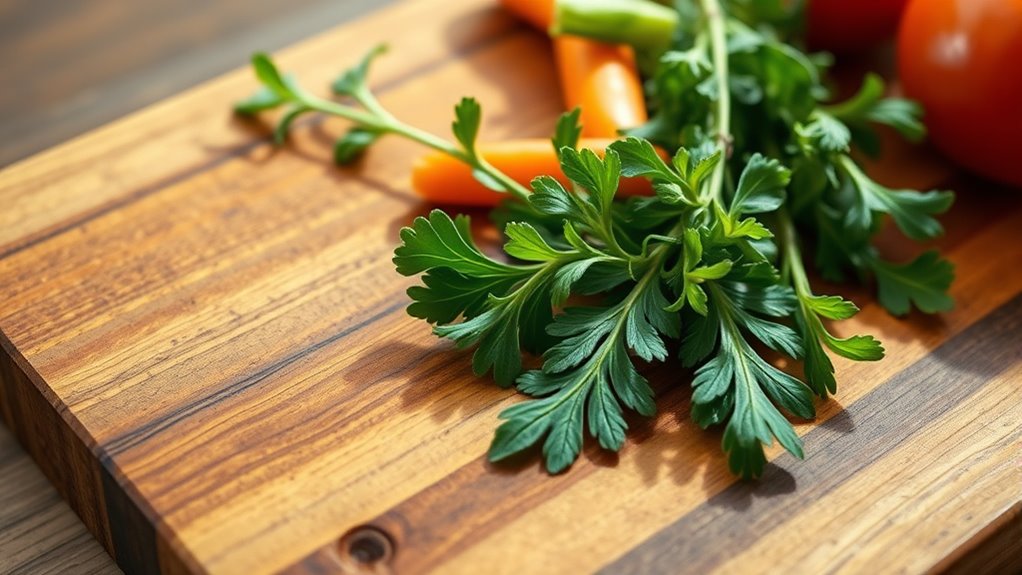
You’ll appreciate that olive wood naturally fights germs, making it a smart choice for your kitchen. Its resistance to bacterial growth helps keep your cutting board cleaner between uses.
This means you get a safer surface for preparing your food every time.
Natural Germ-Fighting Qualities
Because olive wood contains natural oils and compounds, it resists bacteria more effectively than many other types of wood. When you use an olive wood cutting board, those natural elements actively work to reduce germs on its surface. You don’t have to rely solely on cleaning products to keep your board sanitary.
The wood’s dense grain also helps prevent moisture absorption, which creates an environment less friendly to bacteria. This means your cutting board stays cleaner between uses. Choosing olive wood not only gives you a durable kitchen tool but also one that naturally fights germs without extra effort.
You can feel confident preparing food on it, knowing the wood itself helps maintain a hygienic surface every time you cook.
Resistance to Bacterial Growth
When you choose an olive wood cutting board, you benefit from its natural ability to resist bacterial growth. Olive wood contains natural oils and dense grain patterns that create an environment hostile to bacteria. These oils act as a barrier, preventing bacteria from penetrating the surface and multiplying.
Unlike some other woods, olive wood’s tight grain reduces moisture absorption, which further limits bacterial survival. This means you don’t have to worry as much about harmful microbes lingering on your cutting board after use. Olive wood’s antibacterial properties help keep your kitchen cleaner and safer with less effort on your part.
Safe Food Preparation Surface
Though many cutting boards seem similar, olive wood stands out as a safe food preparation surface thanks to its natural antibacterial properties. When you use an olive wood cutting board, you’re reducing the risk of harmful bacteria lingering on the surface. Olive wood contains natural compounds that inhibit bacterial growth, making it a hygienic choice for your kitchen.
Unlike plastic boards, which can develop deep grooves that trap bacteria, olive wood’s dense grain resists cuts and scratches, maintaining a smoother surface. This means you can prepare your food with confidence, knowing your cutting board helps keep harmful germs at bay. Choosing olive wood not only supports safer food prep but also offers durability and beauty, making it a smart and health-conscious addition to your kitchen tools.
How Olive Wood Cutting Boards Stay Stable and Warp-Resistant
If you want a cutting board that stays flat and reliable, olive wood is an excellent choice. Its dense, tight grain structure minimizes moisture absorption, helping the board resist warping and cracking over time. When you cut on olive wood, the natural oils within the wood work to keep it stable, even in humid or dry environments.
Unlike softer woods, olive wood’s hardness allows it to maintain its shape under regular use without bending or twisting. Plus, the wood’s natural resilience means you don’t have to worry about your board losing its form after a few washes. Choosing olive wood means you get a cutting board that remains solid and dependable, giving you peace of mind every time you prepare food.
Why Olive Wood Cutting Boards Are Easy to Maintain
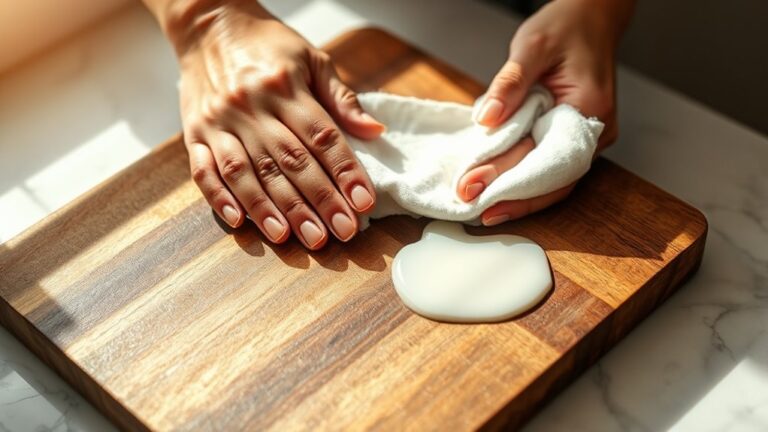
Because olive wood has natural oils that repel water and resist stains, you’ll find it easier to keep your cutting board clean and looking great. You won’t need harsh chemicals or excessive scrubbing to remove food residues. Simply wash your board with mild soap and warm water after use, then dry it thoroughly.
These natural oils also prevent the wood from absorbing odors, so your board won’t retain smells from strong foods like garlic or onions. When you notice the surface drying out, just apply a food-safe mineral oil to restore moisture and maintain its durability.
Why Olive Wood Cutting Boards Add Beauty to Your Kitchen
Keeping your olive wood cutting board well-maintained not only preserves its function but also highlights its natural beauty. The unique grain patterns and rich, warm tones of olive wood instantly elevate your kitchen’s aesthetic. Each board features distinct swirls and color variations, making yours truly one of a kind.
When you place it on your countertop, it adds a rustic yet elegant charm that complements both modern and traditional kitchens. Olive wood’s smooth, polished surface reflects light beautifully, enhancing the overall ambiance. You’ll find that this cutting board isn’t just a tool—it’s a statement piece that brings natural artistry into your cooking space.
With every use, you’ll appreciate how it combines practicality with timeless style.
Why Olive Wood Is a Sustainable Choice
What makes olive wood a truly sustainable choice? When you pick an olive wood cutting board, you’re choosing a product made from trees that are often pruned or replaced after their fruit-bearing years, reducing waste. Olive trees grow slowly and can live for hundreds of years, so the wood is dense and durable, meaning your cutting board will last a long time, cutting down on the need for frequent replacements.
Plus, many olive wood boards come from regions where harvesting aligns with responsible forestry practices, preserving ecosystems. By choosing olive wood, you support sustainable resource use and reduce reliance on plastic or less eco-friendly materials. You’re making an environmentally conscious choice that combines beauty, durability, and care for the planet.
Frequently Asked Questions
Can Olive Wood Cutting Boards Be Used for Serving as Well as Cutting?
Yes, you can use olive wood cutting boards for serving as well as cutting. They’re durable, attractive, and naturally resistant to bacteria, making them perfect for both prepping food and presenting it stylishly at your table.
Are Olive Wood Cutting Boards Safe for Dishwasher Use?
You absolutely can’t toss olive wood cutting boards in the dishwasher without ruining them! The heat and water will crack and warp the wood.
Instead, hand-wash them gently and dry immediately to keep them safe and beautiful.
How Heavy Are Olive Wood Cutting Boards Compared to Other Woods?
You’ll find olive wood cutting boards heavier than softer woods like pine but lighter than dense hardwoods like maple. They strike a comfortable balance, giving you durability without feeling too bulky during use or cleaning.
Do Olive Wood Cutting Boards Have a Strong Smell or Taste?
You won’t notice a strong smell or taste from olive wood cutting boards. They have a mild, pleasant aroma that fades quickly, so your food’s flavor stays natural without any unwanted woodiness interfering.
Can Olive Wood Cutting Boards Be Customized or Engraved?
Yes, you can customize or engrave olive wood cutting boards. In fact, 72% of buyers prefer personalized kitchen tools.
You’ll love adding names or designs, making your board uniquely yours and perfect for gifts or special occasions.
Conclusion
When you choose an olive wood cutting board, you’re inviting warmth and strength into your kitchen. Imagine slicing on a surface that resists knife marks, stays steady, and naturally fights bacteria. Its rich grain adds a touch of rustic beauty.
The durability means it’ll be by your side for years. Plus, you’re making a sustainable choice that feels as good as it looks. Your kitchen deserves this perfect blend of function and charm.
Choosing an olive wood cutting board ensures you enjoy durability, natural antibacterial properties, and an eco-friendly option that enhances your cooking experience. This cutting board combines beauty and practicality, making it a must-have in any kitchen.