How to Load Utensils in Dishwasher
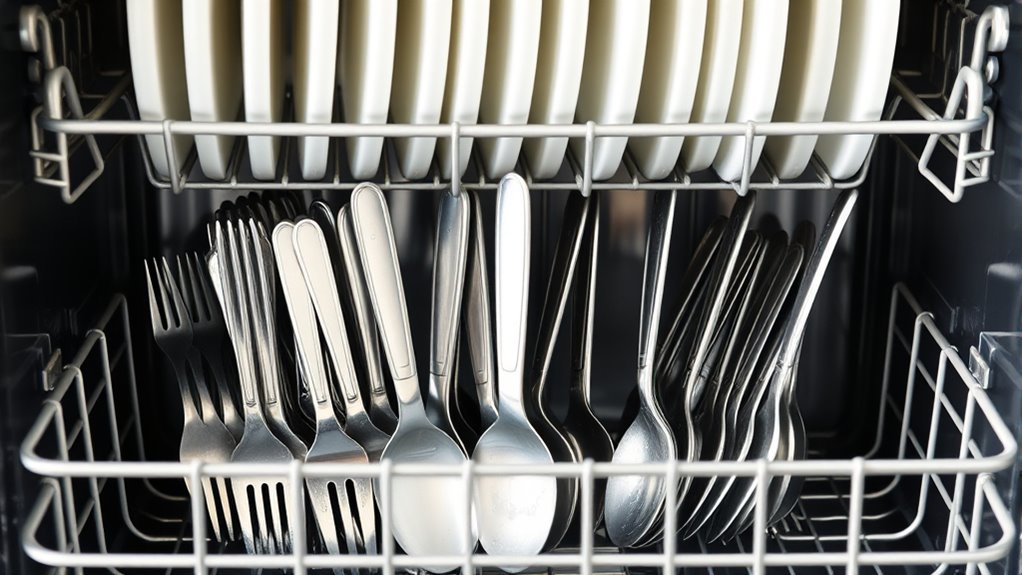
To load utensils in your dishwasher correctly, it’s important to follow proper utensil loading techniques to ensure thorough cleaning and maintain the quality of your cutlery. Separate forks, knives, and spoons to avoid nesting and guarantee good water flow.
Place knives with blades down for safety, and mix utensil types to prevent sticking.
Avoid overcrowding so spray arms spin freely and utensils get fully cleaned. Load heavily soiled items where water pressure is strongest, usually at the bottom.
Following these tips will improve cleaning and protect your cutlery—keep going for helpful loading techniques and care advice.
Key Takeaways
- Separate utensils by type and size to prevent nesting and ensure thorough water flow and cleaning.
- Place knives with blades down and handles up to ensure safety and effective washing.
- Alternate utensil orientations, such as forks tines down and spoons handles down, for better cleaning and water exposure.
- Avoid overcrowding the utensil basket to prevent blocking spray arms and ensure proper water circulation.
- Load heavily soiled utensils where the spray is strongest, usually at the bottom of the dishwasher.
How to Load Utensils Properly in Your Dishwasher
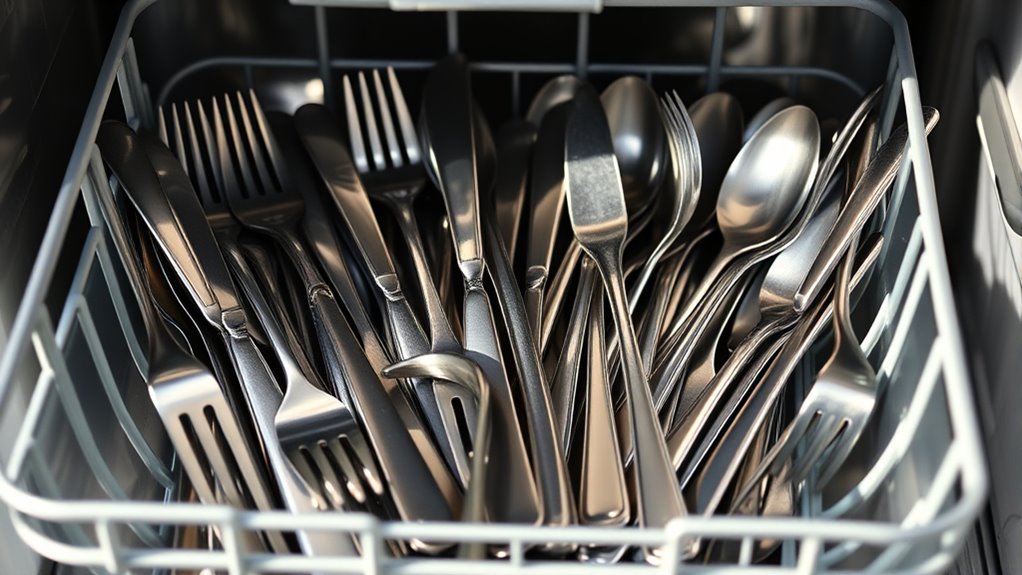
Although loading utensils may seem straightforward, doing it properly guarantees a thorough clean and prevents damage. First, separate forks, knives, and spoons to avoid nesting, which blocks water flow. Place knives with blades down for safety and better cleaning.
Mix up utensil types to prevent them from sticking together, allowing water to reach all surfaces. Avoid overcrowding the utensil basket; give each piece enough space. If your dishwasher has a top rack for utensils, place longer items flat there to avoid blocking the spray arm.
Handle delicate items, like wooden or plastic utensils, by placing them on the top rack or removing them entirely. By following these tips, you’ll guarantee your utensils come out spotless and stay in great condition.
Why Proper Utensil Loading Matters
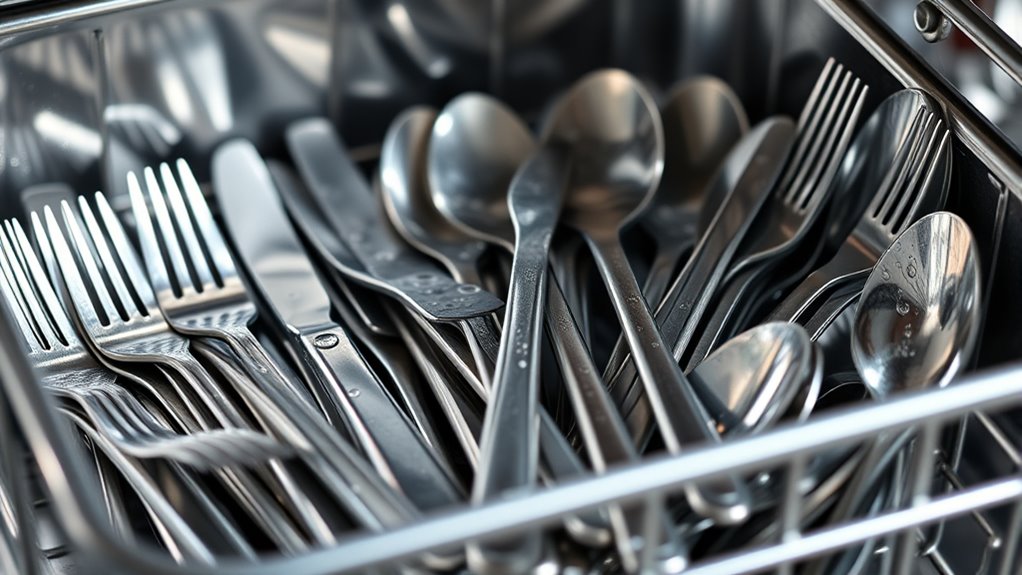
Properly loading your utensils does more than just keep them clean—it safeguards your dishwasher and extends the life of your cutlery. When you place utensils correctly, you prevent them from nesting together, which can block water flow and leave spots or food residue. This careful placement also stops sharp knives and forks from damaging the dishwasher’s interior or other items.
If utensils are piled haphazardly, you risk scratching or dulling their surfaces, reducing their lifespan. Additionally, balanced loading helps your dishwasher run efficiently, saving energy and water. By taking a moment to load utensils properly, you guarantee a thorough clean, protect your investment in kitchen tools, and keep your dishwasher running smoothly for years to come.
How to Sort Utensils for Better Cleaning
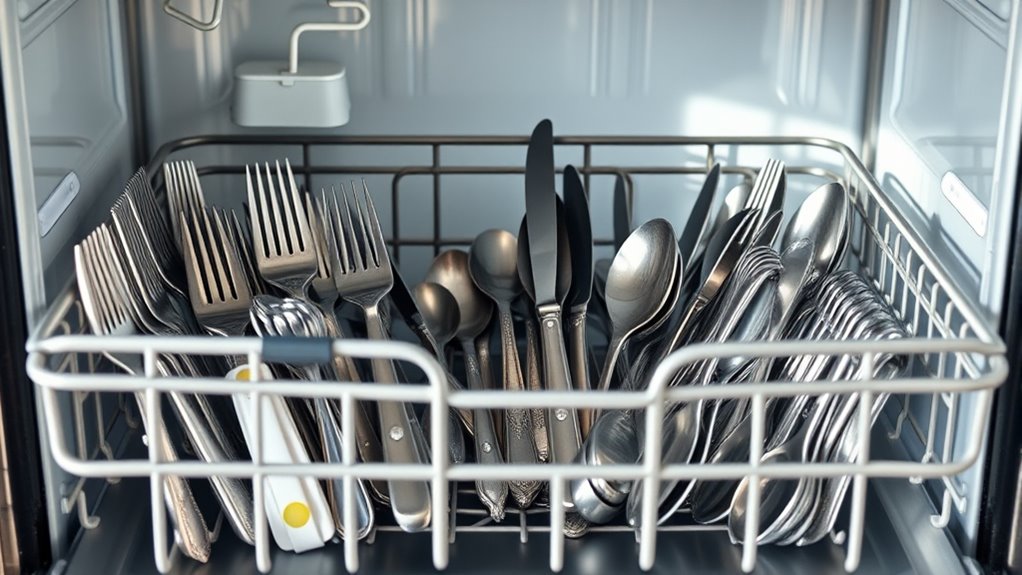
When you sort utensils before loading them, you guarantee each piece gets the attention it needs for a thorough clean. Begin by separating utensils based on their type and size. Group knives, forks, spoons, and other tools separately to avoid nesting, which can block water and detergent.
Place larger utensils apart from smaller ones to ensure water reaches every surface. Sort heavily soiled utensils to load them where the spray is strongest, usually near the bottom. Avoid mixing utensils that might trap food particles against each other.
Also, keep sharp knives separate to prevent dulling and accidents. By sorting utensils properly, you improve water circulation and detergent contact, leading to cleaner results and less re-washing. This simple step makes a big difference in your dishwasher’s efficiency.
Where to Place Forks, Knives, and Spoons
You’ll want to place forks with their tines facing down to guarantee thorough cleaning and safety. Knives should go with blades pointing down to prevent accidents, while spoons are best placed handles down to avoid nesting.
Arranging them this way helps water reach every surface and keeps your utensils secure during the wash.
Fork Placement Tips
Where should you place forks, knives, and spoons to get the best clean? Start by loading forks with their tines facing down in the utensil basket. This exposes all surfaces to water jets, preventing food buildup.
Keep forks separated to avoid nesting, which blocks water flow. For knives, always place blades down for safety and better cleaning. Spoons should go handle down, allowing bowls to face up and receive water directly.
Alternate utensils when possible to reduce crowding and improve circulation. Avoid placing all the same utensils in one section; mixing them helps water reach every piece. By following these simple fork placement tips, you guarantee thorough cleaning and protect your hands when unloading the dishwasher.
Knife and Spoon Arrangement
Forks get plenty of attention, but correctly arranging knives and spoons is just as important for a spotless wash. When loading knives, place them with the blades facing down to prevent injury and guarantee thorough cleaning. Avoid nesting knives together; space them out so water reaches each blade.
For spoons, alternate the handles up and down to stop them from sticking together. This arrangement allows water and detergent to reach every surface. Group similar utensils separately—knives in one section, spoons in another—so they don’t nest inside each other.
How to Load Sharp Knives Safely
When loading sharp knives in the dishwasher, handling them carefully is essential to prevent injuries and protect the blades. Always place knives with the blades facing down into the utensil basket or a designated knife holder. This keeps the sharp edges away from your hands when loading and unloading.
Avoid overcrowding knives together to prevent dulling or chipping. If your dishwasher doesn’t have a knife compartment, consider washing them by hand to maintain their sharpness. Never place knives loosely or with blades pointing up, as this increases the risk of cuts.
How to Keep Spray Arms Clear When Loading Utensils
After safely placing your sharp knives, you’ll want to make certain the dishwasher’s spray arms can spin freely to clean all your utensils effectively. Avoid overcrowding the utensil basket or placing utensils too close to the spray arms. Position forks, spoons, and other small items so they don’t stick out or block the spray arms’ rotation.
If your dishwasher has multiple spray arms, check each one carefully before starting the cycle. Remove or rearrange any utensils that might obstruct their movement. Also, avoid laying long-handled utensils flat across the basket, as they can get stuck and prevent the arms from spinning.
Keeping the spray arms clear ensures every utensil gets properly cleaned without interrupting your dishwasher’s performance.
When to Load Utensils Facing Up vs. Facing Down?
You’ll want to think about safety when deciding if utensils should face up or down to avoid injuries while unloading. How you load utensils also affects how well they get cleaned, since water and detergent need to reach all surfaces.
Plus, some dishwashers have specific designs that work better with certain utensil orientations, so it’s good to know your machine’s preferences.
Safety Considerations For Loading
How should you position your utensils to guarantee safety and ideal cleaning? When loading sharp knives or forks, always place them with the handles up to prevent accidental cuts when reaching into the utensil basket. For spoons and other blunt utensils, facing them down is generally safe and helps avoid nesting.
Avoid mixing sharp and dull utensils in the same compartment to reduce injury risk. Also, don’t overcrowd the utensil basket; this keeps items secure and less likely to shift during the wash cycle. If you have children at home, consider using a dishwasher with a child lock or placing sharp utensils in an area less accessible to little hands.
Prioritizing these safety measures keeps your kitchen accident-free while ensuring your utensils get clean.
Cleaning Efficiency Impact
Although it might seem minor, the direction utensils face in your dishwasher greatly affects how well they get cleaned. When you load forks and spoons facing down, water reaches the dirty surfaces more directly, ensuring grime and food particles are removed efficiently. However, knives should generally face down for safety, but keep in mind this might reduce cleaning on the blade edges.
For ladles and serving spoons, placing them facing up prevents water from pooling inside, avoiding residue buildup. Mixing directions smartly boosts overall cleanliness without compromising safety. Avoid overcrowding the utensil basket to allow water and detergent to circulate freely.
Dishwasher Design Preferences
Because dishwasher models vary in design, knowing when to load utensils facing up or down depends largely on your machine’s layout and spray arm placement. If your dishwasher has a top spray arm that reaches the utensil basket well, place forks and spoons facing up to avoid nesting and guarantee water reaches all surfaces. However, knives and sharp objects should face down for safety.
In dishwashers where the spray arm is below the utensil basket, loading utensils facing down helps water hit the dirty ends more directly, improving cleaning. Always check your dishwasher’s manual for specific recommendations. Adjust your loading technique based on how your dishwasher sprays water to maximize cleaning and avoid damage or injury while unloading.
Common Mistakes to Avoid When Loading Utensils
When you load utensils incorrectly, your dishwasher may not clean them thoroughly, leaving residue or water spots behind. One common mistake is overcrowding the utensil basket, which blocks water flow and reduces cleaning efficiency. Another is mixing sharp knives with other utensils, risking damage and injury.
Also, avoid placing spoons and forks all facing the same way, as this causes nesting and poor cleaning.
Here’s a quick guide to common mistakes and how to fix them:
| Mistake | Solution |
|---|---|
| Overcrowding basket | Space utensils evenly |
| Mixing sharp knives | Load knives separately, blade down |
| Same-direction placement | Alternate handles and tips |
Following these tips helps guarantee your utensils come out spotless every time.
How to Care for Dishwasher Utensils After Washing
Once your utensils come out of the dishwasher, you’ll want to handle them properly to maintain their shine and functionality. Proper care prevents rust, dullness, and damage, ensuring your utensils last longer.
Handling utensils properly after washing preserves their shine, prevents damage, and extends their lifespan.
Here’s how to care for them:
- Dry Immediately: Don’t leave utensils sitting wet. Dry them with a soft towel to prevent water spots and corrosion.
- Store Correctly: Place utensils in a dry, well-ventilated drawer or container. Avoid overcrowding to prevent scratches and bending.
- Inspect Regularly: Check for any signs of wear, rust, or damage. Replace or repair utensils as needed to keep your kitchen safe and efficient.
Frequently Asked Questions
Can I Wash Wooden Utensils in the Dishwasher?
You shouldn’t wash wooden utensils in the dishwasher because the heat and water can cause them to crack, warp, or lose their finish.
Instead, hand wash them gently and dry them immediately to keep them in good shape.
Is It Safe to Wash Plastic Utensils in the Dishwasher?
Yes, you can safely wash plastic utensils in the dishwasher if they’re dishwasher-safe.
Just make sure to place them on the top rack to avoid melting or warping from the heating element at the bottom.
How Often Should I Clean the Utensil Basket?
You should clean the utensil basket about once a month to prevent buildup of food debris and odors. If you notice residue or unpleasant smells sooner, give it a quick rinse to keep everything fresh and sanitary.
Can Dishwasher Detergent Damage My Utensils?
About 30% of dishwasher users notice utensil damage from detergent. Yes, harsh detergents with bleach or phosphates can dull or corrode your utensils.
You should choose gentle, eco-friendly detergents to keep them looking new longer.
What Should I Do if Utensils Come Out Spotted or Dull?
If your utensils come out spotted or dull, you should check your detergent amount, clean your dishwasher’s filter, and avoid overcrowding.
Using a rinse aid can also help prevent spots and restore shine to your utensils.
Conclusion
So, you’ve mastered the art of loading utensils—who knew it was more complicated than a Rubik’s Cube? Yet, proper placement isn’t just about avoiding a dishwasher disaster; it actually makes your cutlery sparkle like new.
Skip these tips, and you might as well hand-wash everything. But hey, if you like soggy forks and dull knives, go ahead—just don’t complain when your dishwasher becomes a utensil graveyard.
Loading utensils correctly saves time and sanity! Follow these dishwasher utensil loading tips to keep your kitchen efficient and your cutlery spotless.