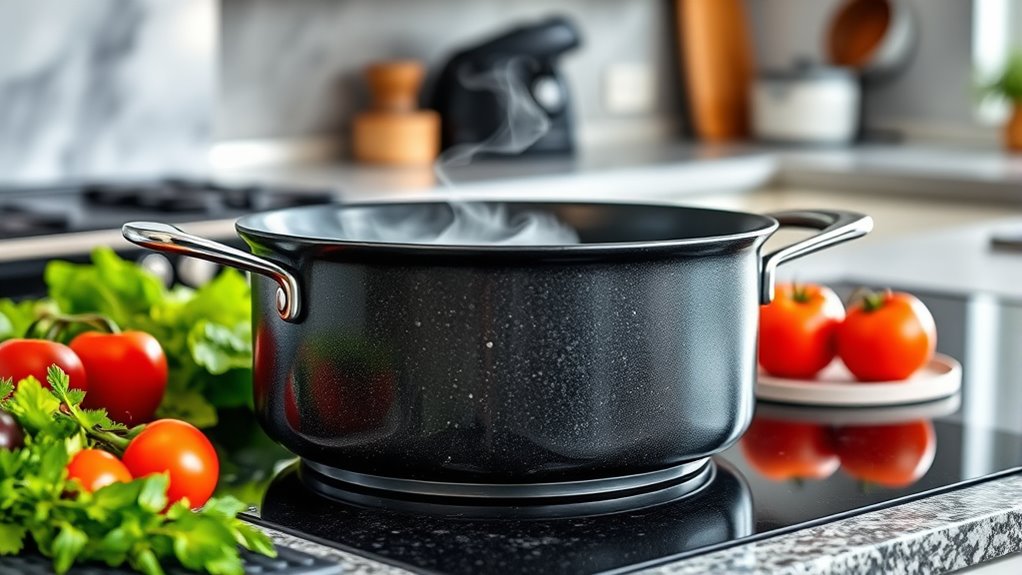
Is Granite Cookware Good
Granite cookware is known for its durability, scratch resistance, and excellent non-stick performance, making it a popular choice for healthy cooking with less oil.
This type of cookware often features a metal core that ensures even heat distribution and retention, allowing food to cook consistently without hot spots. These qualities make granite cookware a reliable option for everyday use in the kitchen.
It handles medium to low heat well, but it’s best to avoid high temperatures to protect the coating.
The cookware is generally safe, easy to maintain, and has a stylish appearance.
However, it tends to be a bit heavier and pricier compared to other types.
If you want to learn more about how granite cookware stacks up and whether it fits your kitchen needs, keep exploring the details.
Key Takeaways
- Granite cookware offers durable, scratch-resistant nonstick surfaces combined with lightweight metal cores for easy handling and attractive aesthetics. It provides even heat distribution and good heat retention, ideal for low to medium heat cooking but unsuitable for high temperatures.
- The nonstick coating is generally free from harmful chemicals like PFOA and PTFE, ensuring safe daily use when from reputable brands. Proper care involves using wooden or silicone utensils, hand washing with mild detergents, and avoiding abrasive materials to maintain coating longevity.
- Granite cookware is more expensive upfront but offers long-term value through durability, ease of cleaning, and consistent cooking performance.
What Is Granite Cookware Made Of and How Is It Made?
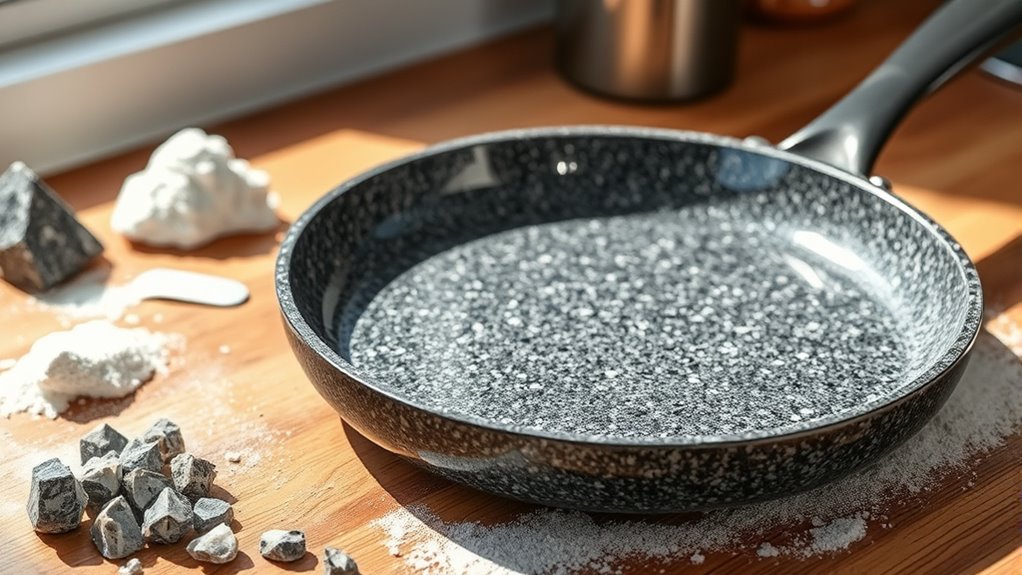
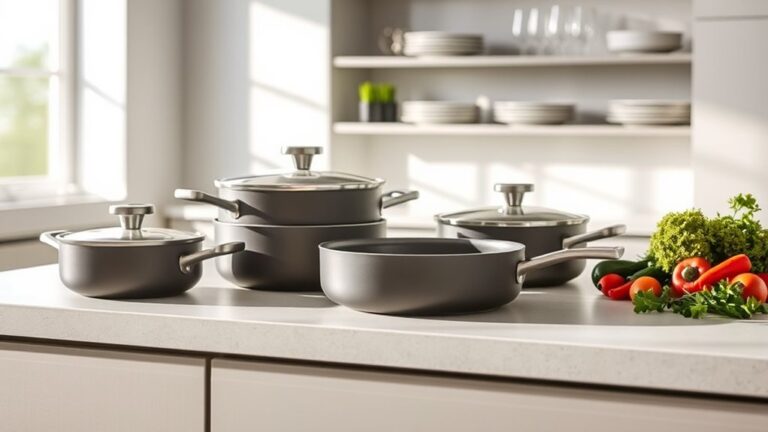
Although granite cookware looks like it’s made entirely of natural stone, it actually consists of a metal base coated with a granite-like nonstick surface. When you use granite cookware, you’re handling an aluminum or stainless steel core that provides excellent heat distribution. This core is then sprayed or rolled with a nonstick coating embedded with tiny stone particles, giving it that distinctive granite appearance.
You’ll find that these stone particles don’t make the cookware heavy like real stone; instead, they reinforce the nonstick layer, making it scratch-resistant and easy to clean. The result is cookware that combines the durability and heat conduction of metal with the easy maintenance and unique look of granite. This manufacturing process guarantees you get both function and style in your kitchen.
Is Granite Cookware Durable Enough for Your Kitchen?
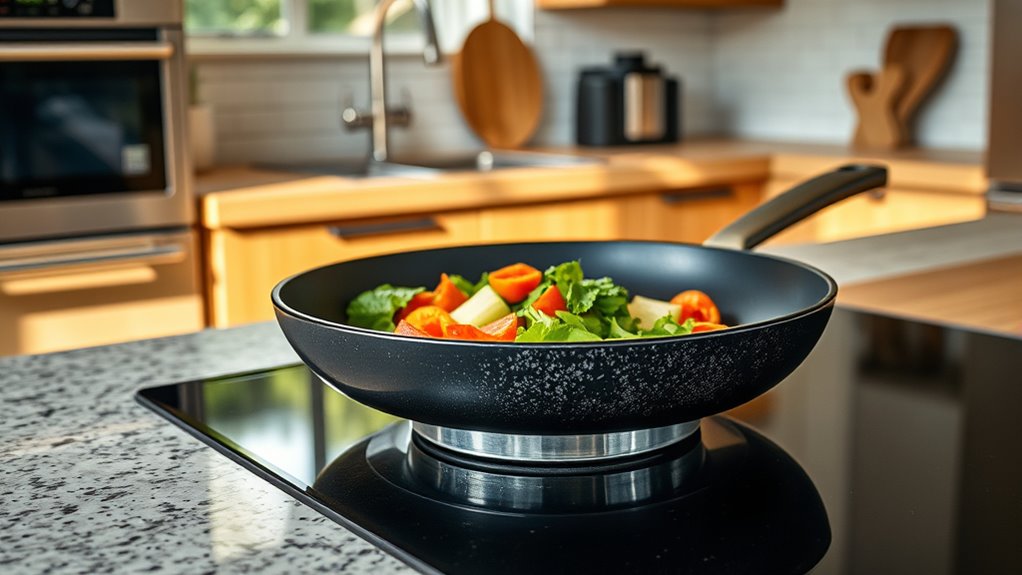
The combination of a metal core and a reinforced nonstick granite surface gives granite cookware a solid foundation, but you might wonder if it holds up under everyday kitchen use.
You’ll be glad to know it’s quite durable when you:
- Avoid using metal utensils that can scratch the surface.
- Hand wash with mild detergents rather than harsh chemicals or abrasive scrubbers.
- Store carefully to prevent chipping or cracking from impacts.
- Use moderate heat to protect the nonstick coating and maintain structural integrity.
Granite cookware resists scratches and stains better than many alternatives, but it’s not indestructible.
Granite cookware offers superior resistance to scratches and stains, though it still requires gentle care to last.
Treat it with some care, and it’ll serve you well for years.
If you follow these simple steps, your granite pots and pans will remain reliable and attractive in your kitchen.
How Well Does Granite Cookware Distribute and Retain Heat?
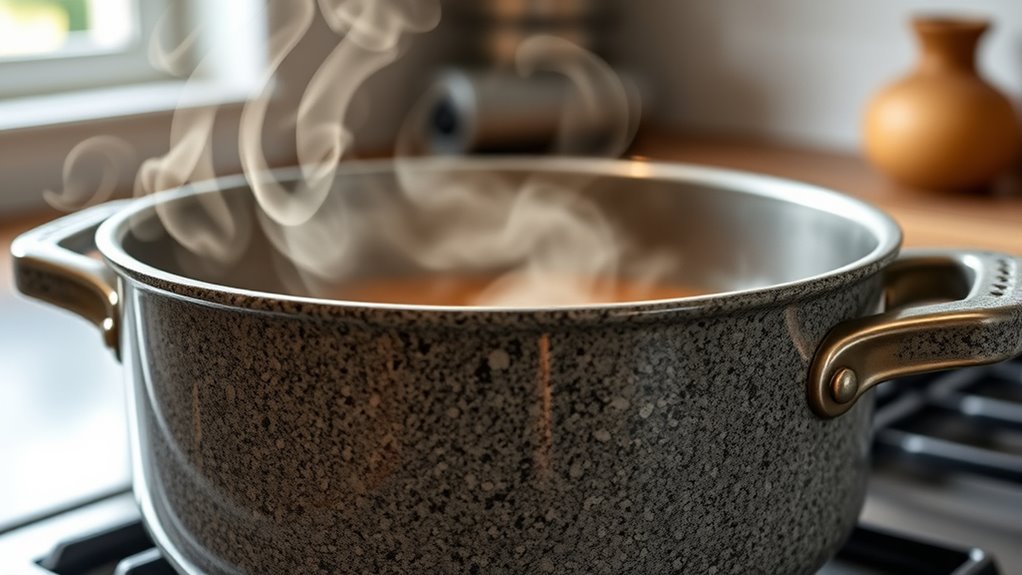
When you cook with granite cookware, you’ll notice it heats evenly thanks to its metal core, which quickly spreads warmth across the surface. This means your food cooks uniformly without hot spots, helping you avoid burning or undercooking. Granite cookware also retains heat well, so once it’s hot, it stays warm longer, allowing for steady cooking even if you reduce the flame.
This heat retention makes it energy-efficient since you don’t need to keep the burner on high constantly. However, granite’s heat retention isn’t as strong as cast iron, but it strikes a good balance between quick heating and maintaining temperature. Overall, you’ll find granite cookware provides reliable, consistent heat distribution and retention that suits everyday cooking needs.
Does Granite Cookware Offer Real Non-Stick Performance?
Granite cookware’s ability to distribute and retain heat sets the stage for how well it performs in other areas, like non-stick cooking. While granite itself isn’t naturally non-stick, many granite cookware pieces feature a non-stick coating that enhances your cooking experience. Here’s what you should know:
- The smooth surface minimizes food sticking, making cooking and cleanup easier.
- You can use less oil or butter, promoting healthier meals.
- Over time, the coating may wear off, so proper care is essential.
- Avoid metal utensils to preserve the non-stick layer longer.
In short, granite cookware offers real non-stick performance, but it depends heavily on the quality of the coating and how you maintain it.
How Safe Is Granite Cookware for Everyday Cooking?
Although cookware safety is a top priority for many home cooks, you might wonder if granite cookware is a reliable choice for everyday use. Granite cookware usually features a non-stick coating reinforced with mineral particles, which makes it durable and less prone to scratching. Most granite pans are free from harmful chemicals like PFOA, PTFE, lead, and cadmium, so you don’t have to worry about toxic fumes or food contamination.
However, it’s important to buy from reputable brands to guarantee the coatings meet safety standards. Also, avoid overheating your pan, as extreme temperatures can degrade the coating and release unwanted substances. Overall, granite cookware is generally safe for daily cooking, offering peace of mind alongside convenience and performance.
How to Care for and Clean Granite Cookware to Make It Last
To keep your granite cookware performing well and looking great, you need to clean and care for it properly. Avoid using harsh abrasives or metal scrubbers, as they can damage the non-stick surface. Instead, wash your cookware with warm soapy water and a soft sponge.
Here’s a quick care guide:
- Let the cookware cool before washing to prevent warping.
- Use mild dish soap and avoid bleach or harsh chemicals.
- Dry thoroughly with a soft cloth to prevent water spots.
- Store your granite cookware carefully, preferably with a protective layer between pieces to avoid scratches.
Following these simple steps will help extend your cookware’s lifespan and keep it looking new for years.
What Cooking Methods Work Best With Granite Cookware?
You’ll want to use medium to low heat settings to protect your granite cookware and guarantee even cooking. It works best with foods that benefit from gentle simmering or sautéing, like vegetables and delicate proteins.
To keep your cookware in top shape, avoid sudden temperature changes and always clean it gently after use.
Ideal Heat Settings
Because granite cookware retains heat evenly, you’ll want to use medium to low heat settings for most cooking tasks. This prevents overheating and prolongs the cookware’s lifespan. High heat can cause food to stick or burn, so it’s best to avoid it.
Here are ideal heat settings to keep in mind:
- Low heat for simmering sauces and melting ingredients gently.
- Medium-low for cooking eggs, pancakes, or sautéing vegetables evenly.
- Medium heat is suitable for most frying and searing tasks without damaging the coating.
- Avoid high heat to preserve the non-stick surface and prevent warping.
Suitable Food Types
Which cooking methods bring out the best in granite cookware? You’ll find that sautéing, pan-frying, and simmering work wonderfully. Granite cookware heats evenly and retains heat well, making it perfect for dishes that need steady, moderate temperatures.
You can easily sear vegetables, cook eggs, or prepare delicate fish without worrying about sticking or burning. Slow simmering soups and sauces also benefits from granite’s heat distribution, ensuring flavors meld smoothly. Avoid using it for high-heat searing or deep frying, since extreme temperatures can wear down the coating faster.
Maintenance Tips
Although granite cookware handles many cooking methods well, proper maintenance is key to preserving its non-stick surface and durability. You’ll want to avoid overheating and harsh scrubbing to keep it in top shape.
Here are four essential maintenance tips for granite cookware:
- Use low to medium heat to prevent damage to the non-stick coating.
- Avoid metal utensils; opt for wooden or silicone tools instead.
- Clean gently with a soft sponge and mild detergent—skip abrasive cleaners.
- Hand wash your cookware and dry it immediately to prevent water spots or rust on rims.
How Does Granite Cookware Compare to Stainless Steel and Cast Iron?
When you’re choosing cookware, it helps to understand how granite compares to stainless steel and cast iron regarding performance and maintenance. Granite cookware offers a nonstick surface without needing much oil, unlike stainless steel, which can stick easily and requires more attention to heat control. Compared to cast iron, granite heats up faster and is lighter, making it easier to handle.
However, granite doesn’t retain heat as long as cast iron, which is better for slow cooking. Maintenance-wise, granite is simpler than cast iron—you don’t need to season it, and it’s usually dishwasher safe, unlike cast iron which demands careful seasoning and drying. Stainless steel is also dishwasher safe but can be tougher to clean if food sticks.
Key Pros and Cons of Granite Cookware for Your Kitchen
Because granite cookware combines durability with ease of use, it’s become a popular choice for many home cooks. You’ll appreciate its non-stick surface, which makes cooking and cleanup simpler. However, it’s important to weigh both pros and cons before deciding.
Here are key points to contemplate:
- Durable and scratch-resistant, so it lasts long with proper care.
- Non-stick coating requires less oil, promoting healthier meals.
- Can be heavier than other cookware, which might affect handling.
- Usually not suitable for high-heat cooking, limiting some recipes.
Is Granite Cookware Worth Buying for Your Budget?
Granite cookware offers several benefits that can enhance your cooking experience, but you’ll want to contemplate whether it fits your budget before making a purchase. If you’re after durability and a non-stick surface without harmful chemicals, granite cookware can be a great investment. It often lasts longer than traditional non-stick pans, saving you money over time.
However, granite sets tend to be pricier upfront compared to other options like aluminum or basic stainless steel. Consider how often you cook and what features matter most to you. If you cook frequently and want even heating with easy cleanup, granite is worth the cost.
But if you only cook occasionally or have a tight budget, more affordable cookware might suit you better.
Frequently Asked Questions
Can Granite Cookware Be Used on Induction Cooktops?
You can use granite cookware on induction cooktops only if it has a magnetic base. Without that, it won’t work since induction needs magnetic materials to generate heat.
Always check the cookware’s specifications before buying.
Is Granite Cookware Dishwasher Safe?
About 70% of granite cookware brands claim their products are dishwasher safe. You can usually toss your granite pans in the dishwasher, but hand washing helps preserve their nonstick coating and extends their lifespan considerably.
Does Granite Cookware React With Acidic Foods?
No, granite cookware doesn’t react with acidic foods, so you can cook tomatoes or citrus without worry. Its non-reactive surface keeps flavors pure and prevents any metallic taste from altering your dishes.
How Heavy Is Granite Cookware Compared to Other Types?
Heavy as it is, granite cookware often weighs more than aluminum but less than cast iron. You’ll find it sturdy but manageable—after all, “a stitch in time saves nine,” so choosing the right weight saves effort later.
Can Granite Cookware Be Used in the Oven?
Yes, you can use granite cookware in the oven, but make sure to check the manufacturer’s temperature limits. Avoid sudden temperature changes to prevent cracking, and always use oven mitts since the handles can get very hot.
Conclusion
So, you’re wondering if granite cookware is worth your kitchen’s real estate? It’s like having a rock star that’s surprisingly gentle—durable but not as heavy as cast iron, heats evenly but won’t burn your dinner like a clumsy chef. It promises non-stick magic, yet sometimes needs a little coaxing.
If you want cookware that’s both tough and tender, granite might just be your kitchen’s unexpected hero—solid, yet not set in stone. Granite cookware offers a balance of durability and performance that makes it a great choice for everyday cooking.
In conclusion, granite cookware is good for those seeking a reliable, non-stick, and easy-to-handle option that combines strength with style. Considering its benefits, granite cookware is definitely worth adding to your kitchen collection.