
What Temperature to Cook French Toast on a Griddle
You should cook French toast on a griddle heated to about 350°F (175°C), which is medium heat. This temperature is ideal for making French toast because it allows your bread to soak up the custard and cook evenly.
Using the right temperature gives you a golden, crispy crust without burning.
Preheat your griddle for 5-10 minutes to keep the heat steady. Test it with a simple water drop to check readiness.
Keeping your slices moving ensures even browning.
By cooking at this temperature, you’ll get tender, delicious French toast every time. Remember, there’s more to perfecting it than just temperature.
Key Takeaways
- Cook French toast on a griddle set to medium heat, around 350°F (175°C), for even cooking and a golden crust.
- Preheat the griddle for 5-10 minutes to achieve consistent heat before placing the bread.
- Use the water drop test or oil shimmer to check if the griddle is at the right temperature without a thermometer.
- Avoid high heat to prevent burning the outside while leaving the inside raw; medium heat ensures thorough cooking.
- Maintain medium-low heat and rotate slices regularly for uniform browning and a tender interior.
What’s the Best Temperature to Cook French Toast on a Griddle?
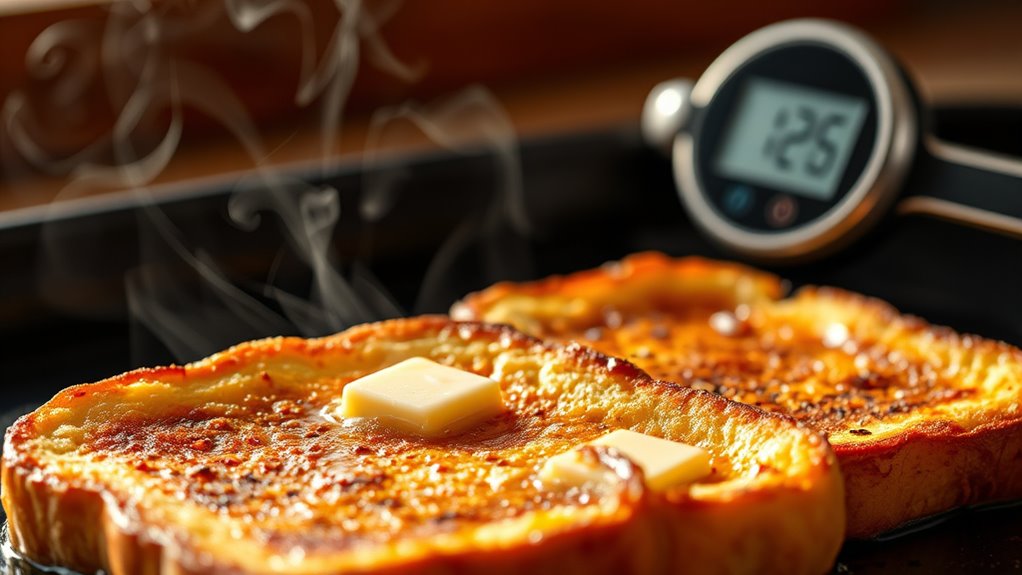
Although it might seem simple, cooking French toast on a griddle requires the right temperature to get that perfect golden-brown crust without burning or undercooking. You want to set your griddle to a medium heat, typically around 350°F (175°C). This temperature lets the custard soak in and cook evenly while creating a crispy exterior.
If the griddle’s too hot, your French toast will burn on the outside and stay raw inside. Too low, and it’ll turn soggy and pale. Keep an eye on the cooking process, flipping when the edges start to firm up and the bottom is golden.
Mastering this temperature guarantees every slice comes out deliciously tender with a slight crunch.
How to Preheat Your Griddle for Perfect French Toast
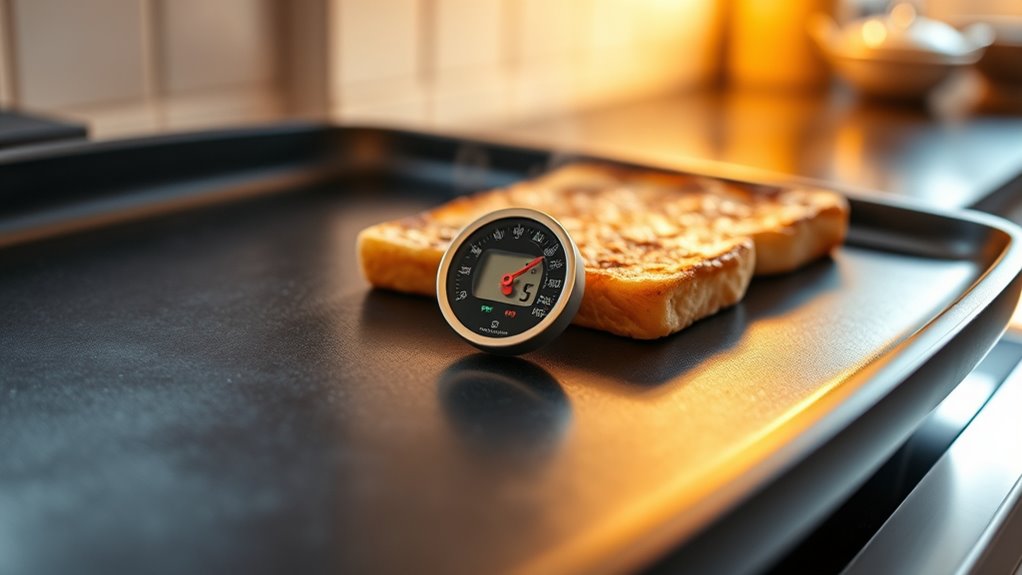
Before you start cooking, you need to preheat your griddle properly to guarantee even heat distribution for your French toast. Begin by turning your griddle on to the desired temperature, allowing it to warm up gradually. Give it about 5 to 10 minutes to reach an even heat across the surface—this helps prevent hot spots that can burn your toast.
To check if it’s ready, sprinkle a few drops of water on the surface; if they dance or sizzle immediately, you’re good to go. Avoid placing your French toast on a cold or unevenly heated griddle, as this causes inconsistent cooking. Proper preheating assures your French toast cooks perfectly with a golden crust and soft inside every time.
Why Should You Use Medium Heat for French Toast?
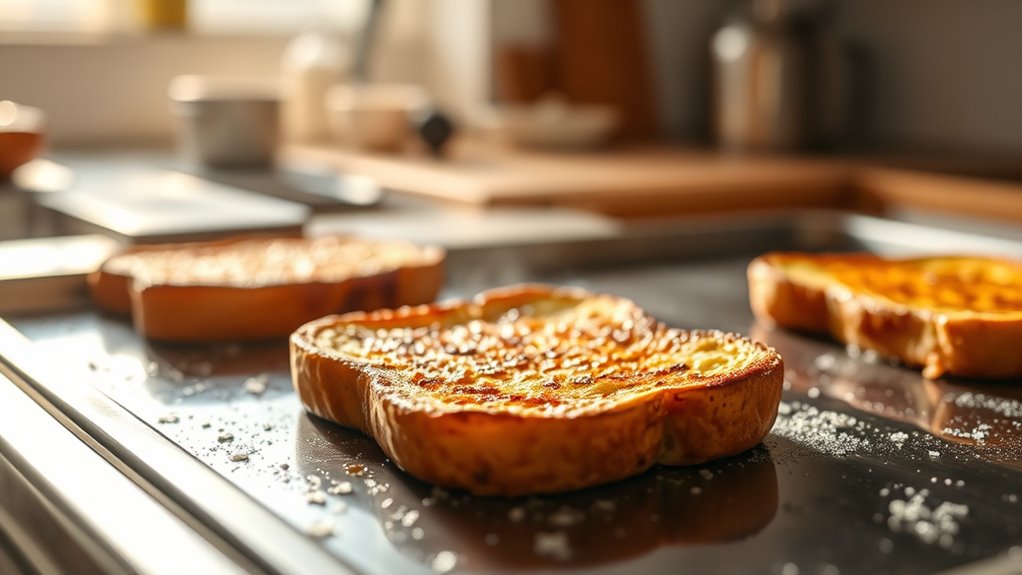
Because medium heat provides the perfect balance, you’ll avoid burning the outside of your French toast while ensuring the inside cooks through evenly. Using medium heat helps you achieve that golden-brown crust without sacrificing the soft, custardy center you crave.
If you crank the heat too high, you risk a burnt exterior and raw interior, ruining the texture. On the other hand, too low heat makes the toast soggy and tough.
Here’s why medium heat is your best friend:
- It gives you control, so every slice cooks perfectly.
- It prevents frustration from repeated burnt batches.
- It lets you savor that satisfying, crispy yet tender bite every time.
Trust medium heat—it’s the secret to French toast bliss.
How to Test Your Griddle’s Temperature Without a Thermometer
When you don’t have a thermometer handy, you can still gauge your griddle’s temperature using simple, hands-on methods. One reliable way is the water drop test. Flick a few drops of water onto the surface and observe how they react.
You can also use a piece of bread to see how quickly it toasts.
| Test Method | What to Look For |
|---|---|
| Water Drop Test | Sizzles and dances = medium heat |
| Bread Test | Toasts golden in about 1 min |
| Hand Hover Test | Hold your hand 3 inches above: 4-5 sec tolerable heat |
| Oil Shimmer Test | Oil should shimmer but not smoke |
These quick checks help you find the perfect cooking temperature for your French toast.
What Happens If the Griddle Is Too Hot or Too Cool?
If your griddle is too hot, your French toast will burn on the outside while staying raw inside. On the other hand, a griddle that’s too cool won’t brown the toast properly, leaving it soggy and undercooked.
You’ll want to find the right heat balance to get that perfect golden crust and fluffy center.
Effects Of Excessive Heat
Although it might seem tempting to crank the heat up for faster cooking, using a griddle that’s too hot can quickly ruin your French toast. When the temperature soars, the outside burns before the inside cooks, leaving you with a charred crust and cold center. You’ll also lose that perfect golden color and tender texture.
Avoid the frustration by keeping your heat moderate.
Here’s what happens if the griddle’s too hot:
- Your French toast burns quickly, making it bitter and unappetizing.
- The inside stays raw or undercooked, ruining the overall taste.
- You lose control, and cooking becomes a stressful rush instead of a relaxing moment.
Keep your griddle at the right temperature for the best results.
Consequences Of Low Temperature
Even at lower temperatures, your French toast won’t turn out as you hope. If the griddle is too cool, the bread won’t brown properly, leaving your toast pale and soggy. The custard won’t set quickly, causing it to absorb too much moisture and become mushy.
You’ll also spend more time cooking each piece, which can dry out the toast or make it tough. On the other hand, if the griddle is too hot, the outside chars before the inside cooks through, resulting in burnt edges and a raw center. Both extremes ruin texture and flavor.
To avoid these issues, you need to find the right temperature so your French toast cooks evenly, developing that golden crust without sacrificing softness inside.
Ideal Griddle Heat Balance
Striking the right balance in griddle temperature is key to perfect French toast. If your griddle’s too hot, the outside burns while the inside stays gooey. Too cool, and your toast turns soggy and pale, missing that golden crisp.
You want a medium heat that cooks evenly, locking in flavor and texture.
Here’s what happens when you don’t hit that ideal heat balance:
- Too Hot: You’ll get a crispy outside but a raw center—frustrating and disappointing.
- Too Cool: The toast soaks up too much batter, becoming mushy and unappetizing.
- Just Right: A beautifully browned crust with a fluffy, fully cooked interior that makes every bite satisfying.
Aim for medium heat, and your French toast will shine every time.
How Cooking Time Changes at Different French Toast Temperatures
When you adjust the griddle temperature, you’ll notice that the cooking time for your French toast changes considerably. At higher temperatures, your toast cooks faster, usually in about 1 to 2 minutes per side. However, if it’s too hot, the outside may brown quickly while the inside stays undercooked.
Lower temperatures extend the cooking time to 3 or more minutes per side, allowing the toast to cook evenly but requiring more patience. Medium heat offers the best balance, usually around 2 to 3 minutes per side, ensuring thorough cooking without burning.
How to Adjust Temperature for Different Breads When Making French Toast
Adjusting the griddle temperature based on the type of bread you use can make a big difference in how your French toast turns out. Different breads absorb the egg mixture differently, so tweaking the heat ensures perfect texture and color.
- Thick or Dense Bread (like brioche or challah): Lower the temperature to medium-low (around 300°F). This lets the custard soak in without burning the outside.
- Thin or Delicate Bread (like sandwich bread): Use medium heat (about 350°F) to cook quickly and avoid sogginess.
- Stale or Dry Bread: Increase the temperature slightly (up to 375°F) to crisp the exterior while warming through.
Should You Use Butter or Oil for French Toast on a Griddle?
How do you choose between butter and oil for cooking French toast on your griddle? Butter adds rich flavor and helps create a golden, crispy crust, but it can burn if your griddle is too hot. Oil, especially neutral oils like canola or vegetable, withstands higher temperatures without burning, making it a safer choice for consistent cooking.
If you want the taste of butter without the risk of burning, try a mix of butter and oil. This blend gives you buttery flavor and a higher smoke point. Ultimately, your choice depends on your flavor preference and how hot you set your griddle.
Just keep an eye on the heat to prevent either fat from smoking or burning during cooking.
Tips for Keeping Your French Toast Golden Brown and Soft
Even if your griddle temperature is just right, maintaining the perfect balance between a golden crust and a soft interior takes careful attention. You want every bite to feel like a warm hug, crispy outside yet tender inside. Here are three tips to help you achieve that:
- Use Thick, Day-Old Bread: It soaks up the custard without falling apart, ensuring softness inside while crisping nicely outside.
- Don’t Over-Soak: Dip the bread quickly to avoid sogginess, which ruins texture.
- Cook on Medium Heat: This allows the bread to cook evenly, creating a golden crust while keeping the center soft and custardy.
Follow these, and your French toast will be irresistibly golden and tender every time.
How to Keep Your Griddle’s Heat Even for Perfect French Toast
Wondering why your French toast sometimes cooks unevenly? Uneven heat on your griddle is often the culprit. To fix this, preheat your griddle gradually over medium-low heat, allowing it to stabilize.
Avoid hotspots by moving slices around and flipping frequently. Also, consider using a griddle with a thick base for better heat distribution.
Here’s a quick guide to keeping your griddle’s heat even:
| Step | Tip |
|---|---|
| Preheat Slowly | Use medium-low heat for 5-10 mins |
| Rotate Slices | Move slices to cooler spots |
| Choose Quality Griddle | Thick base retains heat evenly |
Follow these tips, and you’ll get perfectly cooked French toast every time.
Frequently Asked Questions
Can I Make French Toast on an Electric Griddle Versus a Stovetop Griddle?
Yes, you can make French toast on an electric griddle. Just preheat it to medium heat, around 350°F, and cook your slices evenly.
It’s convenient and gives you consistent results compared to a stovetop griddle.
What Type of Bread Is Best for French Toast?
You’ll want thick, sturdy bread like brioche or challah—because soggy cereal won’t cut it for French toast royalty. These breads soak up custard like champs, giving you rich, fluffy bites that’ll make your mornings legendary.
How Long Should I Soak the Bread in the Egg Mixture?
You should soak the bread in the egg mixture for about 20 to 30 seconds per side.
Don’t soak it too long, or it’ll get soggy and fall apart when cooking.
Can I Prepare French Toast Batter Ahead of Time?
You can absolutely prepare French toast batter ahead of time; it’s like letting flavors mingle and grow closer.
Just keep it refrigerated up to 24 hours, then give it a quick stir before dipping your bread.
What Are Some Common Toppings for French Toast?
You can top your French toast with maple syrup, fresh berries, powdered sugar, or whipped cream. Don’t forget options like honey, cinnamon, nut butter, or sliced bananas to add extra flavor and texture to your breakfast.
Conclusion
Now that you know the ideal griddle temperature is around medium heat—about 325°F to 375°F—you’re set to make perfect French toast every time. Did you know that cooking at this range helps 85% of home cooks avoid burnt or undercooked toast?
So, preheat your griddle, adjust for your bread, and use butter or oil wisely. With these tips, your French toast will be golden, soft, and delicious every single time! Remember, maintaining the correct temperature on your griddle is key to cooking French toast perfectly.