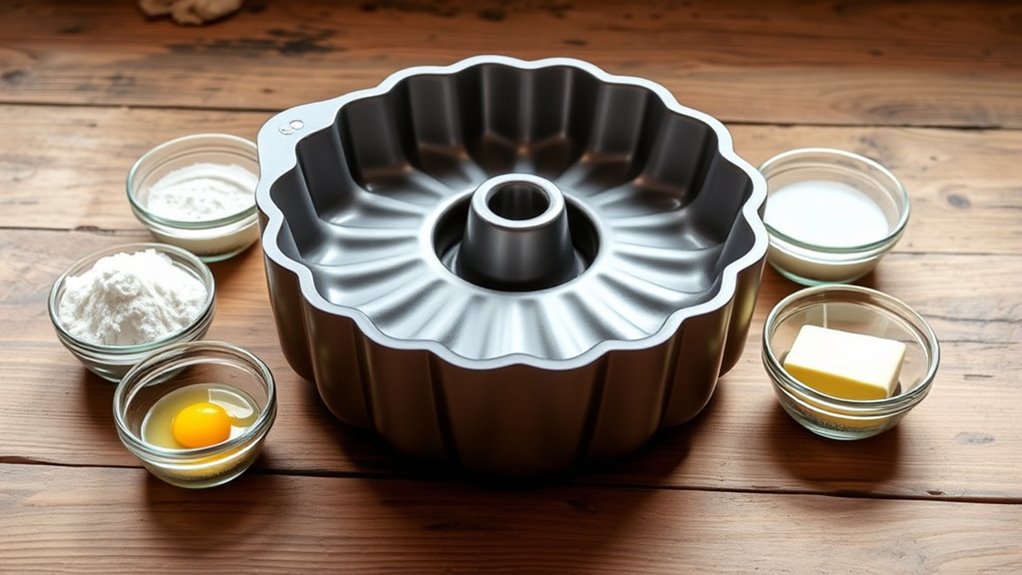
How to Use a Bundt Cake Pan in 7 Easy Steps
Choose a heavy, nonstick bundt pan to ensure even baking and easy release of your cake. Grease it thoroughly with a thin, even layer of butter or oil, then dust with flour to prevent sticking.
Mix your batter gently and pour it evenly into the pan. Tap the pan gently to settle any air bubbles for a smooth texture.
Bake at 325°F to 350°F until the cake is golden and a toothpick comes out clean. Let it cool completely before carefully inverting to release the cake.
For tips on perfect slicing and presentation, keep exploring these simple steps to master your bundt cake baking.
Key Takeaways
- Grease the clean, dry Bundt pan thoroughly, coating all crevices evenly with butter or oil and dust lightly with flour.
- Mix the batter gently until just combined, then pour it slowly and evenly into the pan.
- Tap the filled pan gently to settle the batter and remove air pockets before baking.
- Bake the cake at 325°F–350°F in the oven’s center until a toothpick inserted comes out clean.
- Cool the cake in the pan for 10–15 minutes, then invert onto a wire rack to cool completely before slicing.
Choose the Right Bundt Pan
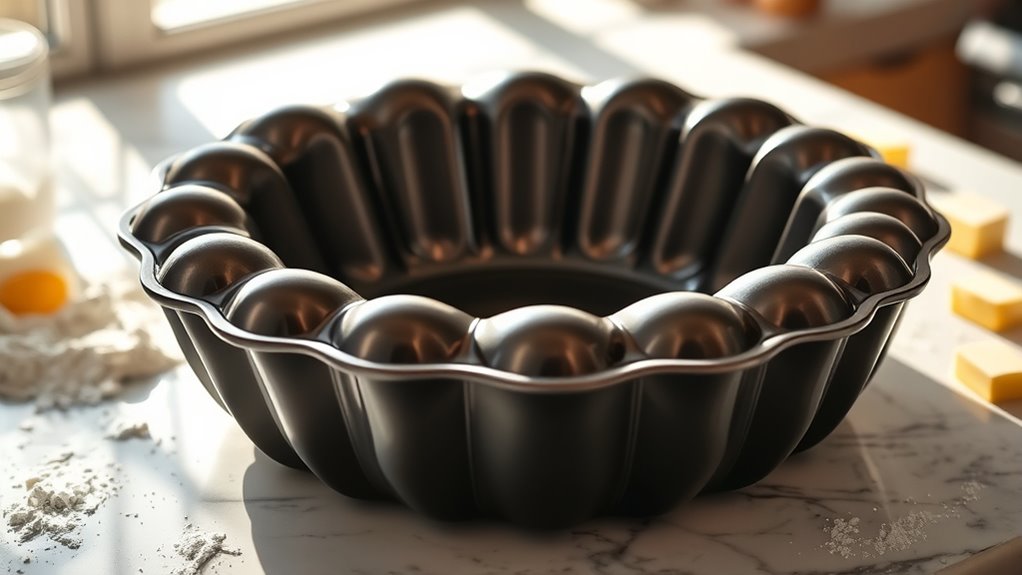
Although any Bundt pan can bake a cake, choosing the right one guarantees your cake turns out perfectly. You want to pick a pan made from heavy, nonstick material to assure even heat distribution and easy release. Aluminum pans heat evenly but might react with acidic ingredients, so consider coated options if you bake lemon or berry cakes often.
The pan’s size matters too—standard Bundt pans hold about 10 to 12 cups of batter; using one too small or large can affect baking time and texture. Also, pay attention to the pan’s design. Intricate patterns look stunning but need careful greasing to prevent sticking.
Simpler designs offer easier cleanup and consistent results. Picking the right pan sets you up for beautiful, delicious Bundt cakes every time.
Prepare and Grease Your Bundt Pan
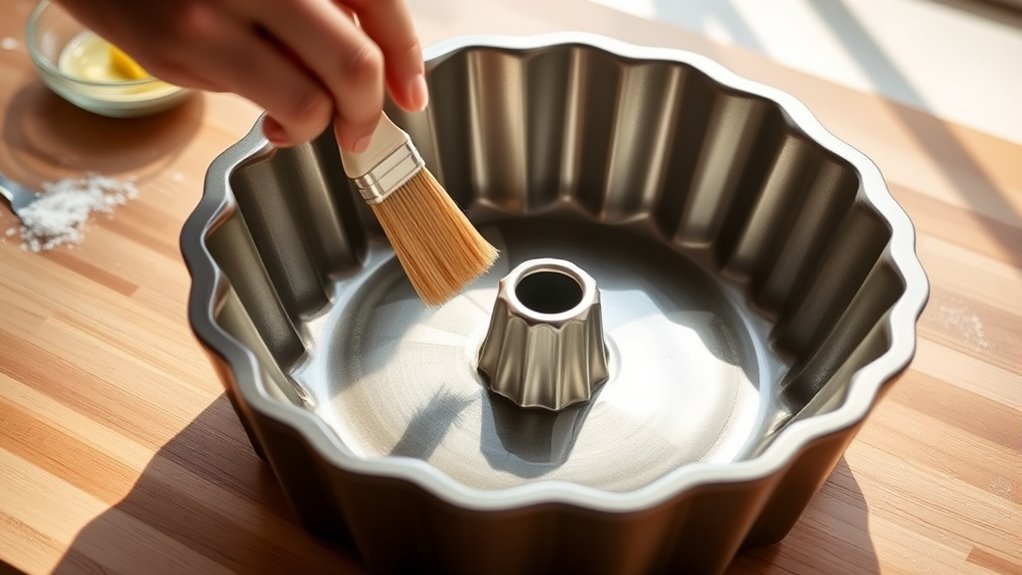
Before you start baking, make sure your Bundt pan is clean and dry. Apply a thin, even layer of grease to every nook and cranny to prevent sticking.
For an extra smooth release, lightly dust the pan with flour after greasing.
Choose The Right Pan
When you choose the right Bundt pan, you set yourself up for a perfect cake release and beautiful presentation. Start by picking a pan made from high-quality materials like heavy-duty aluminum or cast iron, as these distribute heat evenly, helping your cake bake uniformly. Non-stick coatings are helpful but don’t rely solely on them; proper preparation is still key.
Consider the pan’s size—standard Bundt pans hold about 10 to 12 cups of batter. Using a pan that’s too small can cause overflow, while a larger one might lead to a flat cake. Also, look at the design: intricate patterns create stunning cakes but can make release trickier, while simpler shapes are easier to handle.
Choosing wisely guarantees your Bundt cake looks as good as it tastes.
Apply Grease Evenly
Since Bundt pans have intricate designs, you’ll need to grease every nook and cranny thoroughly to prevent sticking. Start by using a pastry brush or a paper towel to spread softened butter or shortening evenly over the entire interior surface. Pay special attention to the grooves and detailed patterns, ensuring no spots are missed.
If you prefer, you can use a non-stick spray designed for baking—just spray evenly and reach into all the crevices. Avoid thick clumps of grease, which can cause uneven baking. Taking your time here will help your cake release cleanly and keep the beautiful shape intact.
Proper greasing is key to a flawless Bundt cake, so don’t rush this step and cover every part of the pan evenly.
Use Flour For Release
Although greasing your Bundt pan is essential, adding a light dusting of flour guarantees your cake releases perfectly without sticking. After you’ve evenly applied the grease, sprinkle about a tablespoon of flour into the pan. Tilt and tap the pan gently, making sure the flour coats every nook and cranny, especially the intricate designs.
Shake out any excess flour to prevent clumps that could affect the cake’s texture. This simple step creates a barrier between the batter and the pan, ensuring a smooth release. If you’re making a chocolate cake, consider using cocoa powder instead of flour to avoid white residue on the surface.
Taking this extra moment will save you frustration and help your Bundt cake come out looking flawless every time.
Mix and Pour Batter for Even Baking
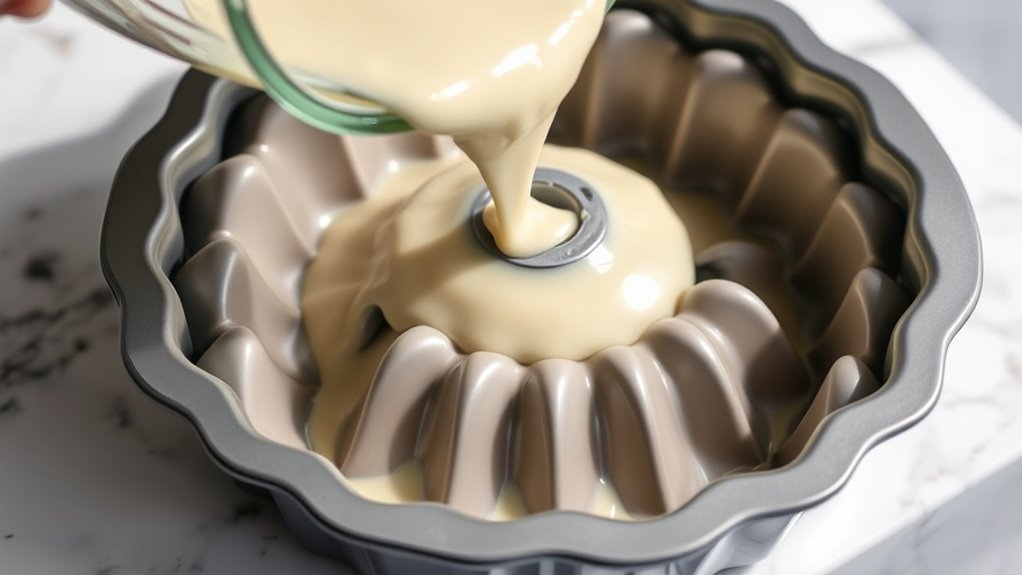
To guarantee your Bundt cake bakes evenly, you’ll want to mix the batter thoroughly but carefully, avoiding overmixing that can toughen the texture. Start by combining your wet and dry ingredients just until everything is incorporated. Use a spatula or wooden spoon to fold the batter gently, preventing air bubbles from deflating.
When pouring the batter into the pan, pour slowly and evenly around the center, allowing it to spread naturally into the grooves. Avoid scraping the sides excessively, which can disturb the batter’s consistency. Once poured, give the pan a gentle tap on the counter to settle the batter and release any trapped air pockets.
This step helps ensure your Bundt cake cooks uniformly and develops a smooth, attractive surface.
Bake Your Bundt Cake: Temperature and Timing Tips
Once your batter is evenly distributed and settled, it’s time to focus on baking your Bundt cake at the right temperature and for the proper duration. Generally, set your oven between 325°F and 350°F, as this range helps the cake bake evenly without burning the edges. Baking too hot risks a crusty outside and raw center, while too low prolongs baking unnecessarily.
Most Bundt cakes take about 50 to 70 minutes, but times vary with batter density and pan material. Position your Bundt pan in the center of the oven to ensure even heat circulation. Avoid opening the oven door frequently, which causes temperature drops and uneven baking.
Stick to these temperature and timing tips, and your Bundt cake will come out beautifully golden and perfectly cooked.
How to Check Bundt Cake Doneness Without Damage
You’ll want to look for visual signs like a golden-brown color and edges pulling away from the pan to know your Bundt cake is almost done.
To be sure without damaging the cake, gently insert a toothpick into the thickest part—if it comes out clean, your cake is ready.
This simple test helps you avoid cutting into the cake too early.
Visual Doneness Indicators
Although inserting a toothpick is a common method to check cake doneness, you can often tell a Bundt cake is ready by its appearance alone. Look for a golden-brown color that’s even across the surface, with no wet or shiny spots. The edges will start to pull away slightly from the pan, signaling the cake has set properly.
Gently press the top—if it springs back quickly, the cake is baked through. Also, watch for a subtle crack on the top; this is normal and indicates the cake has risen well. Avoid cutting into your Bundt cake early; trusting these visual cues helps keep it moist and intact.
With practice, you’ll confidently judge doneness just by looking.
Using A Toothpick Test
How do you check if your Bundt cake is done without damaging its delicate texture? Use the toothpick test. Insert a clean toothpick into the cake’s thickest part, usually the center.
Pull it out gently—if it comes out clean or with just a few moist crumbs, your cake is perfectly baked. Avoid poking the sides, as this can cause the cake to collapse or stick to the pan.
If the toothpick has wet batter, your cake needs more time in the oven. Check every few minutes to avoid overbaking. This simple test guarantees your Bundt cake’s crumb stays moist and intact, helping you achieve that perfect slice every time without ruining its beautiful shape or texture.
Cool and Release Your Bundt Cake Safely
Once your Bundt cake has finished baking, let it cool in the pan for about 10 to 15 minutes to help it firm up and prevent sticking. After this brief cooling, place a wire rack over the top of the pan. Holding the rack and pan firmly, carefully invert them together to release the cake.
If the cake doesn’t come out immediately, gently tap the bottom and sides of the pan or give it a slight shake to loosen it. Avoid forcing the cake out, as this might cause it to break. Once released, allow your Bundt cake to cool completely on the wire rack before handling further.
This process guarantees your cake keeps its beautiful shape and texture intact.
Decorate and Serve Your Bundt Cake With Style
After your Bundt cake has cooled completely, you’re ready to add the finishing touches that make it truly stand out. Start by drizzling a simple glaze or powdered sugar over the top to highlight the cake’s shape. If you want to get creative, try a drizzle of chocolate or caramel sauce for extra flavor and shine.
Fresh fruit, edible flowers, or chopped nuts also add a beautiful, natural touch. When it comes to serving, use a sharp knife to slice cleanly between the ridges for neat pieces. Arrange the slices on a decorative platter or cake stand to impress your guests.
With these simple steps, you’ll make your Bundt cake both visually appealing and delicious, ensuring it’s the star of any table.
Frequently Asked Questions
Can I Use a Bundt Pan for Savory Dishes?
Yes, you can use a Bundt pan for savory dishes like meatloaf or baked pasta. It gives a fun shape and cooks evenly.
Just grease it well and adjust baking times as needed for your recipe.
How Do I Store Leftover Bundt Cake Properly?
Wrap your leftover Bundt cake like a cozy blanket in plastic wrap or foil, then tuck it into an airtight container. This keeps it fresh and moist, letting you savor every sweet bite like a warm hug later.
Are Bundt Pans Dishwasher Safe?
Bundt pans aren’t usually dishwasher safe because harsh detergents and high heat can damage the nonstick coating.
You should hand wash yours gently with warm, soapy water and a soft sponge to keep it in great shape.
What Materials Are Bundt Pans Typically Made From?
Bundt pans are typically made from cast aluminum, nonstick-coated steel, or silicone. You’ll find cast aluminum offers even heat, while silicone’s flexible design makes removing cakes easier.
Choose based on your baking style and care preferences.
Can I Use a Bundt Pan for Gluten-Free Recipes?
Absolutely, you can definitely use a bundt pan for gluten-free recipes. It’s a charming way to present your creations, just be sure to grease it well to prevent sticking and enjoy that beautiful, delicious result!
Conclusion
Now that you know how to use a Bundt cake pan in just seven simple steps, you’re ready to create stunning cakes that wow every time. Some say Bundt pans make cakes cook unevenly, but with proper greasing and batter spreading, you’ll get a perfectly baked treat every time.
So, don’t hesitate—grab your Bundt pan and start baking. You’ll be amazed at how easy and delicious it is to master this classic cake style! Using a Bundt cake pan correctly ensures even cooking, beautiful designs, and moist, flavorful results every bake.