How to Cook Tilapia in Skillet
To cook tilapia in a skillet, start by selecting fresh, firm tilapia fillets and patting them dry. Using fresh fish is key to achieving a tender and flavorful result.
Heat a non-stick or cast-iron skillet over medium-high heat, then add a high smoke point oil like avocado or grapeseed oil.
Once the oil is shimmering, carefully place the seasoned tilapia fillets in the pan without crowding them.
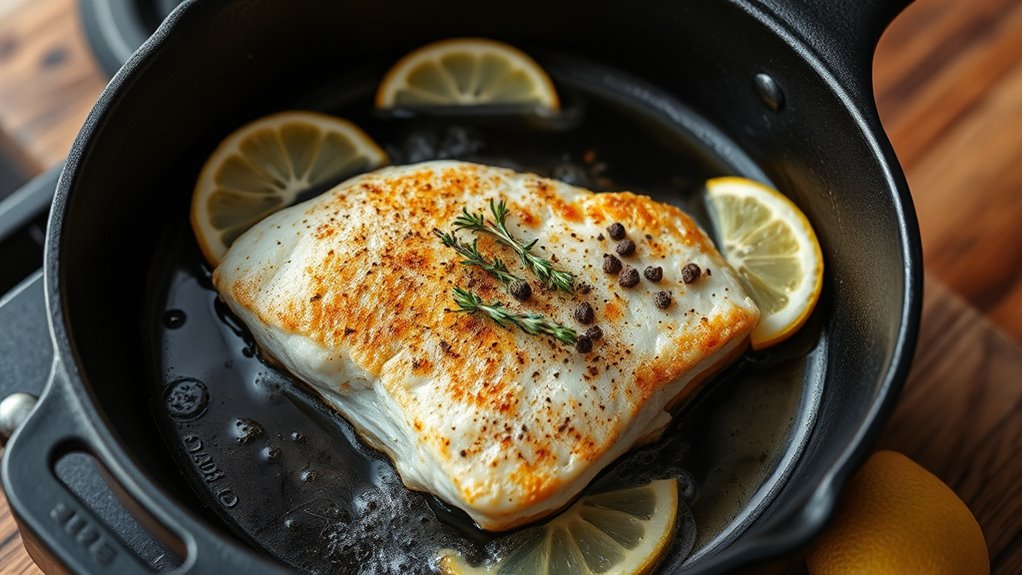
Cook the fillets undisturbed for 3-4 minutes until a golden crust forms on the bottom.
Flip the fillets carefully and continue cooking until the fish is opaque and flakes easily with a fork.
Mastering these simple steps guarantees perfectly cooked tilapia every time.
Follow these tips to enhance your technique and enjoy delicious, skillet-cooked tilapia at home.
Key Takeaways
- Choose fresh or properly frozen, skinless, boneless tilapia fillets, rinsed and patted dry before seasoning evenly.
- Preheat a non-stick or cast iron skillet over medium-high heat with high smoke point oil until shimmering.
- Cook fillets for 3-4 minutes per side without overcrowding or pressing, flipping only when edges are opaque and fish releases easily.
- Ensure tilapia is opaque, flakes easily, and reaches 145°F internal temperature for perfect doneness and texture.
- Serve immediately or cool and store leftovers properly, reheating gently to preserve moisture and flavor.
Choose the Best Tilapia Fillets for Skillet Cooking
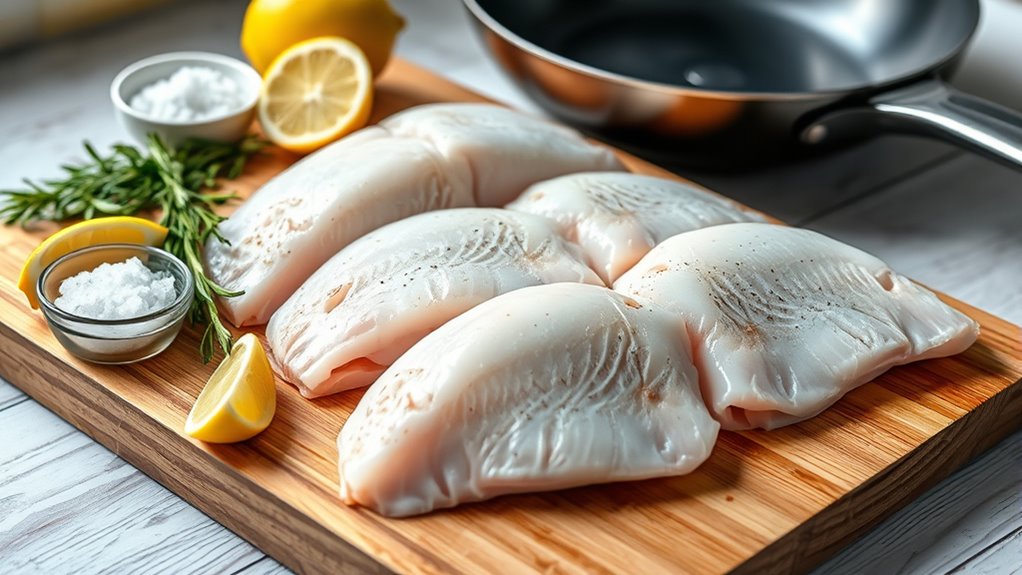
How do you pick the best tilapia fillets for skillet cooking? Start by choosing fillets that are fresh or properly frozen to guarantee exceptional flavor and texture. Look for firm flesh that springs back when pressed—this means the fish is fresh.
Avoid fillets with a strong fishy odor or discoloration, as these indicate lower quality. Opt for skinless, boneless fillets to make cooking easier and prevent any unwanted chewiness. Thicker fillets work best because they hold up well during cooking, giving you a juicy, tender result.
Finally, if you’re buying frozen, check for minimal ice crystals, which show the fish hasn’t been frozen and thawed repeatedly. Selecting the right fillets sets you up for a perfect skillet-cooked tilapia every time.
Select the Right Skillet for Cooking Tilapia
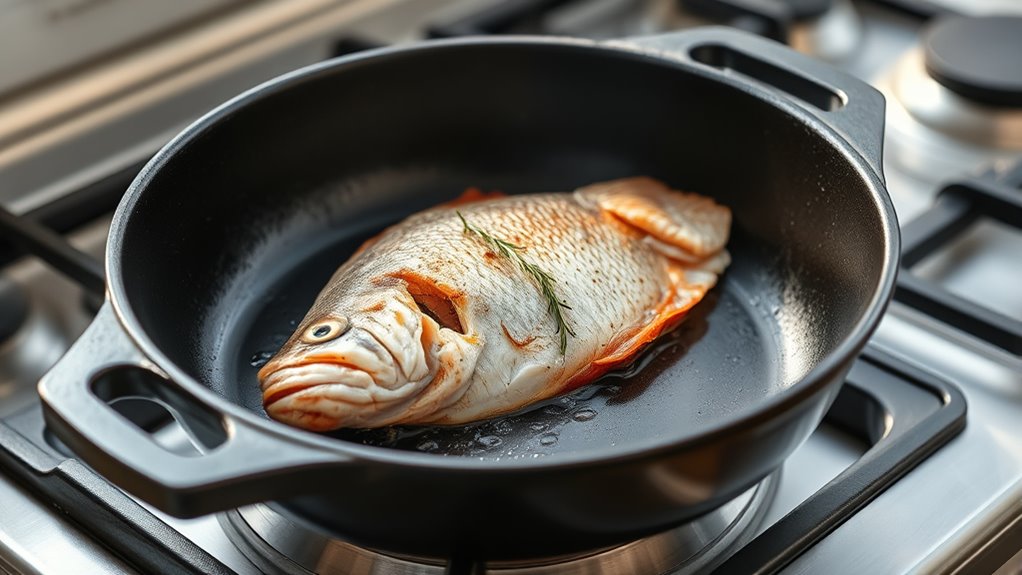
When you choose the right skillet for cooking tilapia, you guarantee even heat distribution and prevent sticking. Opt for a non-stick or well-seasoned cast iron skillet to help your fillets cook evenly without tearing. These materials hold heat well and create a nice sear on the fish.
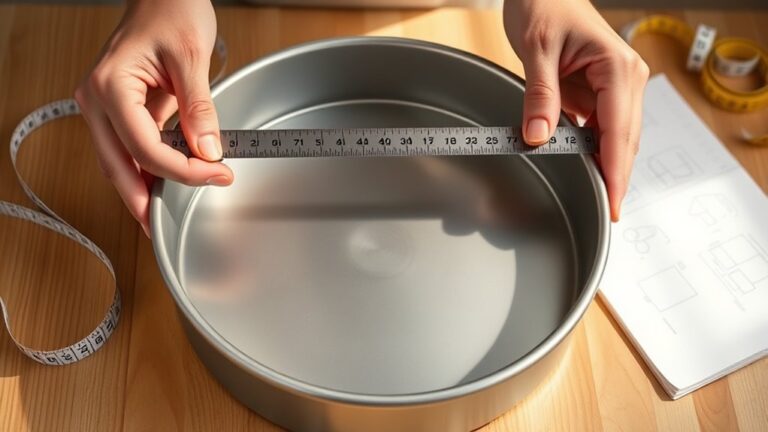
Avoid thin pans that heat unevenly or cause hot spots, which can burn parts of the fillet while leaving others undercooked. A skillet around 10 to 12 inches in diameter gives you enough space to cook multiple fillets without overcrowding. Also, choose a skillet with a sturdy handle for easy maneuvering.
Picking the right skillet sets the foundation for perfectly cooked tilapia every time.
Prepare Your Skillet and Oil for Crispy Tilapia
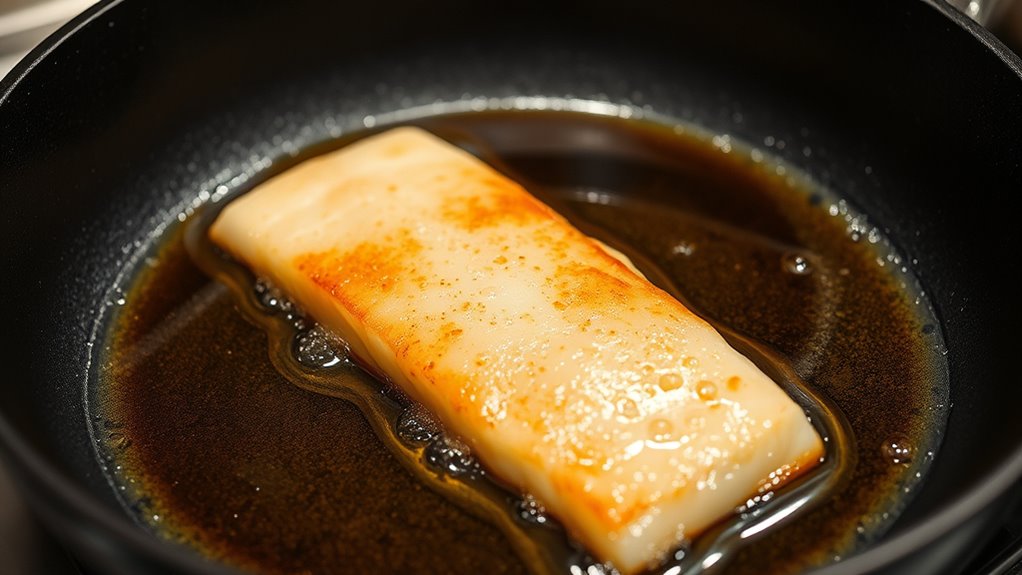
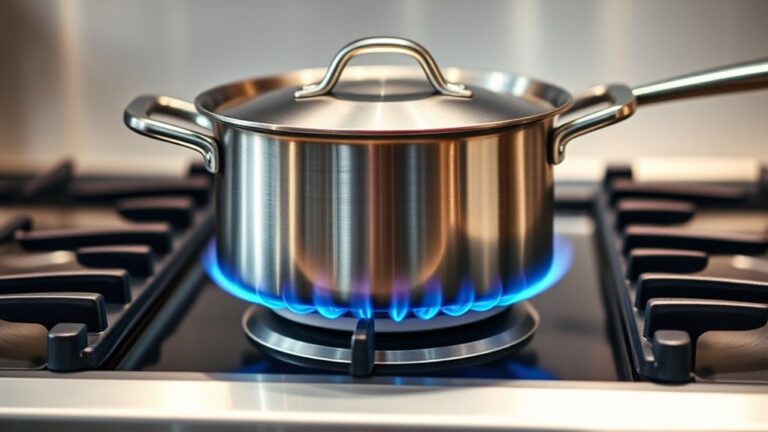
Before you add the tilapia, heat your skillet over medium-high heat until it’s hot enough to sizzle. This ensures that the fish will sear immediately, locking in moisture and creating a crispy crust.
Next, choose the right oil with a high smoke point to avoid burning. Add just enough oil to coat the bottom of the skillet evenly.
| Step | Details |
|---|---|
| Heat Level | Medium-high |
| Oil Type | Canola, avocado, or grapeseed |
| Oil Quantity | Enough to coat skillet bottom |
| Readiness Indicator | Oil shimmers, slight smoke |
Cook Tilapia in a Skillet: Step-by-Step Guide
Now that your skillet is ready, it’s time to prepare the tilapia fillets for cooking. You’ll learn simple techniques to cook the fish evenly and keep it tender.
Follow these tips to get perfectly cooked tilapia every time.
Preparing Tilapia Fillets
Although tilapia is a mild-flavored fish that cooks quickly, properly preparing the fillets guarantees a tender, flavorful result. Start by rinsing the fillets under cold water to remove any residue, then pat them dry with paper towels. This helps the seasoning stick better and prevents steaming during cooking.
To prepare your tilapia fillets effectively:
- Check for any remaining bones and remove them with tweezers.
- Trim off any rough edges or excess skin.
- Season the fillets evenly with salt, pepper, or your preferred spices.
- Let the fillets rest at room temperature for 10-15 minutes before cooking.
These simple steps guarantee your tilapia cooks evenly and tastes delicious.
Cooking Techniques and Tips
When you heat your skillet properly and use the right amount of oil, your tilapia fillets will develop a beautiful, crispy crust without sticking. Start by preheating the pan over medium-high heat, then add enough oil to coat the bottom evenly. Pat your fillets dry before seasoning to guarantee they sear nicely.
Avoid overcrowding the pan; cook in batches if needed, giving each fillet space to crisp. Don’t flip too soon—wait until the edges turn opaque and the fish releases easily. Use a thin spatula to turn the fillets gently.
Once flipped, cook for just a few more minutes until the fish flakes easily with a fork. Let the fillets rest briefly off heat to keep them juicy and tender.
Check When Tilapia Is Cooked Through
You’ll know your tilapia is cooked through when it turns opaque and flakes easily with a fork. Press the fish gently to check for firmness—it should feel springy but not mushy.
For the most accurate check, use a thermometer to guarantee the internal temperature hits 145°F.
Visual Signs Of Doneness
Even if you don’t have a thermometer handy, you can tell when tilapia is cooked by paying attention to its appearance. Visual cues are reliable indicators that your fish is ready to enjoy. Here are four signs to look for:
- Opaque Color: The flesh turns from translucent to a solid white or light pink.
- Flaking: The fish easily separates into flakes when you gently press it with a fork.
- Slight Browning: The edges develop a light golden-brown crust from cooking in the skillet.
- Moisture Release: You’ll notice clear juices instead of milky or cloudy liquid seeping out.
Keep an eye out for these visual signs to avoid undercooking or overcooking your tilapia.
Texture And Firmness Check
Although visual signs provide a good indication, checking the texture and firmness of your tilapia guarantees it’s cooked perfectly through. When you press the fish gently with a fork or your finger, it should feel firm yet slightly springy. If it feels mushy or overly soft, it needs more time to cook.
The flesh should easily flake apart, separating into distinct layers without resistance. Avoid pressing too hard, as this can break the delicate fillet. If the fish resists flaking or feels rubbery, it’s likely undercooked.
Internal Temperature Guidelines
One reliable way to know when your tilapia is perfectly cooked is by checking its internal temperature. Using a food thermometer assures you don’t undercook or overcook the fish, keeping it moist and flavorful. Here’s what you need to know:
- Insert the thermometer into the thickest part of the fillet.
- Look for a temperature of 145°F (63°C) for safe consumption.
- If the temperature is lower, cook the fish a bit longer and check again.
- Once it hits 145°F, remove the tilapia from heat immediately to prevent drying out.
Following these guidelines guarantees your tilapia is cooked through, safe to eat, and delicious every time.
How to Get a Perfect Golden Brown Crust on Tilapia
When you want a perfect golden brown crust on tilapia, controlling the heat and preparing the fish properly are key. Start by patting the fillets dry—moisture prevents browning. Use a heavy skillet and preheat it over medium-high heat before adding oil.
Once the oil shimmers, place the tilapia gently in the pan without crowding. Avoid moving the fish too soon; let it sear undisturbed for 3-4 minutes per side. This creates a crispy, flavorful crust.
| Step | Tip |
|---|---|
| Dry the fish | Pat dry with paper towels |
| Preheat skillet | Medium-high heat, oil shimmering |
| Use the right oil | Choose high smoke point oil |
| Don’t crowd pan | Leave space between fillets |
| Flip carefully | After 3-4 minutes, once crust forms |
Season Tilapia for Maximum Flavor
To bring out the best in your tilapia, you need to season it thoughtfully before cooking. Proper seasoning enhances its mild flavor without overpowering it. Start with a simple base and then build layers of taste.
- Salt and pepper: Always begin with a light sprinkle to enhance natural flavors.
- Lemon zest or juice: Adds brightness and a subtle tang that complements the fish.
- Garlic powder or minced garlic: Introduces a savory depth without being too strong.
- Herbs like parsley, dill, or thyme: Fresh or dried, they bring an aromatic freshness.
Apply the seasoning evenly on both sides, then let the fish rest for a few minutes to absorb the flavors before cooking.
Avoid Common Mistakes When Cooking Tilapia in a Skillet
Although cooking tilapia might seem straightforward, several common mistakes can easily ruin its texture and flavor. First, avoid overcrowding the skillet. When you crowd the pan, the fish steams instead of sears, leading to a soggy texture.
Next, don’t flip the fillets too soon or too often; wait until the edges turn opaque and the fish releases easily from the pan before flipping. Also, make sure your skillet is hot enough before adding the fish—this guarantees a nice crust without sticking.
Avoid overcooking; tilapia cooks quickly, so watch closely to keep it moist and tender. Finally, resist the urge to poke or press the fillets while cooking, as this squeezes out juices and dries the fish out.
Best Side Dishes for Skillet Tilapia
What pairs best with skillet-cooked tilapia to create a balanced, flavorful meal? You want sides that complement the mild fish without overpowering it. Here are four great options to try:
- Lemon Garlic Asparagus – Bright and zesty, it adds a fresh crunch that cuts through the richness.
- Cilantro Lime Rice – This fragrant rice brings a hint of citrus and herb that enhances tilapia’s flavor.
- Roasted Sweet Potatoes – Their natural sweetness balances the savory notes of the fish.
- Steamed Broccoli with Olive Oil – Simple, healthy, and slightly nutty, this veggie side keeps the meal light.
These sides will help you serve a delicious, well-rounded dinner every time you cook tilapia in a skillet.
Store and Reheat Leftover Skillet Tilapia
If you have leftover skillet tilapia, storing it properly is key to keeping it fresh. Make sure to cool it quickly and seal it in an airtight container before refrigerating.
When reheating, use gentle heat to maintain its texture and flavor without drying it out.
Proper Storage Methods
How should you store leftover skillet tilapia to keep it fresh and flavorful? Proper storage ensures your fish stays safe to eat and retains its taste. Here’s how you can do it effectively:
- Cool Quickly: Let the tilapia cool to room temperature within two hours after cooking.
- Use Airtight Containers: Place the fish in airtight containers or wrap tightly with plastic wrap to prevent air exposure.
- Refrigerate Promptly: Store the tilapia in the refrigerator at or below 40°F (4°C).
- Label and Date: Mark the container with the date to track freshness; consume within 2-3 days.
Following these steps keeps your leftover skillet tilapia fresh and ready for your next meal without compromising quality.
Best Reheating Techniques
Although leftover skillet tilapia can lose its texture and flavor if reheated improperly, you can revive it to taste almost as fresh by using the right techniques. To keep it moist and flavorful, avoid microwaving directly without moisture; instead, use gentle heat methods like oven reheating or stovetop warming with a bit of oil or butter.
| Method | Time | Tips |
|---|---|---|
| Oven | 10-12 minutes | Wrap in foil, set 275°F |
| Stovetop | 5-7 minutes | Use low heat, add oil/butter |
| Microwave | 30-45 seconds | Cover with damp paper towel |
Choose your method based on convenience, but always reheat tilapia slowly to preserve its flaky texture and rich taste.
Frequently Asked Questions
Can I Use Frozen Tilapia Fillets for Skillet Cooking?
Yes, you can use frozen tilapia fillets for skillet cooking. Just make sure to thaw them completely first, pat them dry, and season well. This helps you get a nice, even cook and crispy texture.
Is Tilapia Healthy to Eat Regularly?
Tilapia’s a solid choice for regular meals, packed with protein and low in calories. You’ll get heart-healthy omega-3s, but don’t go overboard—balance it with variety to keep your diet singing in harmony.
How Long Can Cooked Tilapia Be Kept in the Fridge?
You can keep cooked tilapia in the fridge for up to 3 to 4 days. Make sure to store it in an airtight container to maintain freshness and avoid any odors mixing with other foods.
Can I Cook Tilapia in a Non-Stick Skillet Without Oil?
Yes, you can cook tilapia in a non-stick skillet without oil, but it might stick slightly or cook unevenly.
Using a small amount of oil or cooking spray helps prevent sticking and enhances flavor and texture.
What Are Some Good Sauces to Pair With Skillet Tilapia?
You’ll love pairing skillet tilapia with lemon butter sauce, garlic cream sauce, mango salsa, or a simple herb vinaigrette. These sauces add flavor and moisture, perfectly complementing the mild, flaky texture of your fish.
Each sauce brings a unique touch, enhancing the overall dish. Lemon butter offers a tangy richness, while garlic cream adds a smooth, savory depth. Mango salsa provides a fresh, fruity contrast that brightens the meal.
Conclusion
Cooking tilapia in a skillet is like painting a masterpiece—each step adds color and texture to your dish. Choose fresh fillets as your canvas, season with care, and let the sizzling skillet be your brush. With a little patience and the right technique, you’ll create a golden, crispy delight that’s as satisfying as a finished painting.
Remember, practice turns every meal into a work of art you’ll want to savor again and again. Mastering how to cook tilapia in skillet ensures you achieve perfectly cooked, flavorful fish every time. Enjoy the process and the delicious results that come from skillet-cooked tilapia.