Is Titanium Cookware Safe
You can trust titanium cookware to be safe for your kitchen because it’s lightweight, non-reactive, and corrosion-resistant, so it won’t leach harmful chemicals into your food. Titanium cookware safety is well-regarded due to these properties, making it an excellent choice for health-conscious cooks.
It often features high-quality, food-safe coatings that enhance durability while preventing damage.
Titanium’s strength holds up against high heat, and it’s hypoallergenic, perfect for sensitive users. With proper care, it lasts a long time without compromising safety or performance.
Explore further to see how it fits your cooking needs.
Key Takeaways
- Titanium cookware is chemically stable, non-reactive, and hypoallergenic, making it safe for cooking without leaching harmful substances. High-purity titanium and certified non-toxic coatings ensure material safety and prevent contamination during use.
- It withstands high temperatures without degradation, suitable for searing and frying without releasing toxins. Proper care, like hand washing and avoiding abrasive tools, preserves the cookware’s safety and nonstick surface.
- Reputable brands with transparent sourcing and certifications (FDA, LFGB) provide reliable, safe titanium cookware options.
What Is Titanium Cookware Made Of?
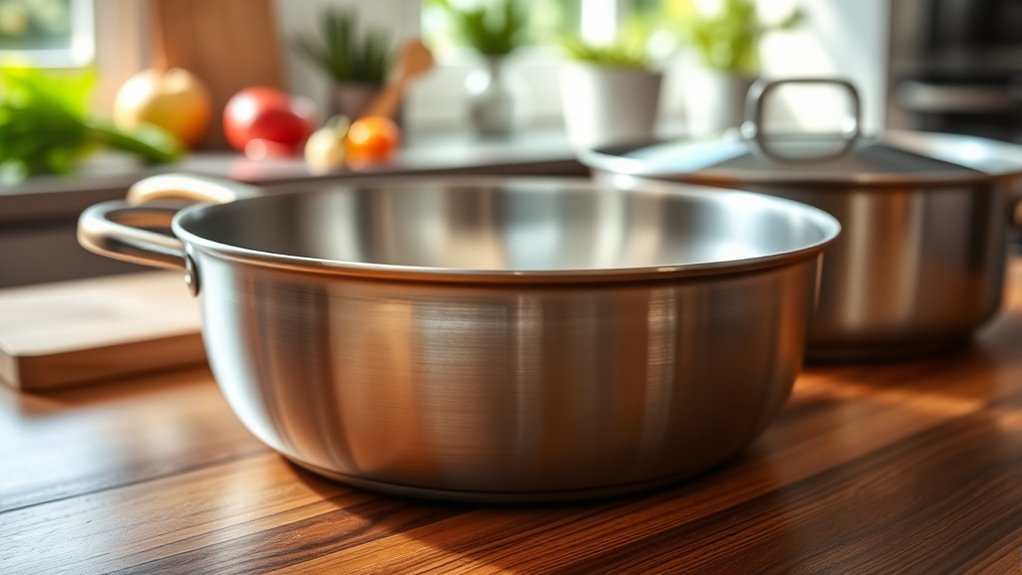
Although titanium cookware might seem simple, its composition is quite unique. When you use titanium cookware, you’re primarily dealing with pure titanium or titanium alloy. Pure titanium is lightweight and resistant to corrosion, making it an excellent base.
However, manufacturers often mix it with small amounts of other metals like aluminum or vanadium to boost strength without adding much weight. The result? A material that’s sturdy yet light enough to handle easily. You’ll also find that titanium cookware often has a nonstick coating or a ceramic layer to improve cooking performance.
This combination guarantees your cookware is not only safe but also efficient, as it conducts heat evenly while resisting wear and tear from daily use.
How Durable Is Titanium Cookware Compared to Other Materials?
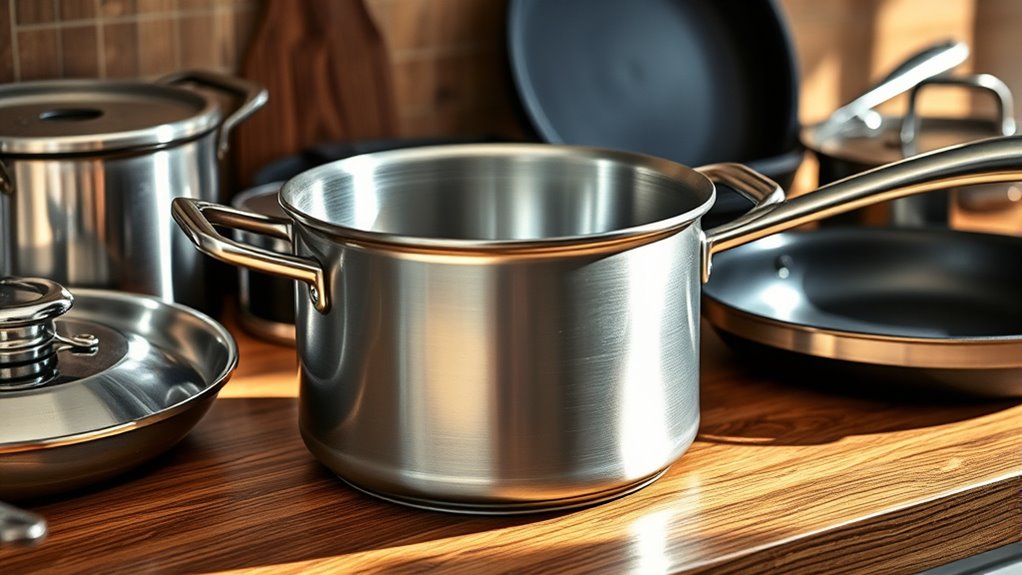
You’ll find titanium cookware stands out for its impressive strength against impact, making it less prone to dents or cracks. Compared to other materials, it also offers excellent wear resistance, so it holds up well over time.
Let’s look closer at how this durability stacks up against common cookware options.
Strength Against Impact
When you handle titanium cookware, you’ll notice it stands up well against everyday bumps and drops. Titanium’s natural strength means it won’t dent or warp easily like aluminum or stainless steel might under impact. If you accidentally drop a titanium pan, it’s far less likely to crack or bend, maintaining its shape and function.
This makes it ideal for busy kitchens or outdoor cooking where rough handling happens. Unlike ceramic or glass cookware, titanium won’t shatter or chip when dropped. You get confidence knowing your cookware can endure accidental knocks without compromising performance.
Wear Resistance Comparison
Because cookware faces constant exposure to heat, moisture, and abrasion, its wear resistance directly impacts how long it lasts in your kitchen. Titanium cookware stands out here—you’ll find it highly resistant to scratches, dents, and corrosion compared to aluminum or stainless steel. While aluminum can warp or scratch easily, and stainless steel may show signs of pitting over time, titanium maintains its integrity even with frequent use.
However, pure titanium cookware is often paired with other metals to improve heat conduction, so the wear resistance might slightly vary depending on the blend. Overall, you can count on titanium to hold up well against daily wear, making it a durable choice if you want cookware that stays reliable and maintains its appearance over years.
Can Titanium Cookware Handle High Cooking Temperatures?
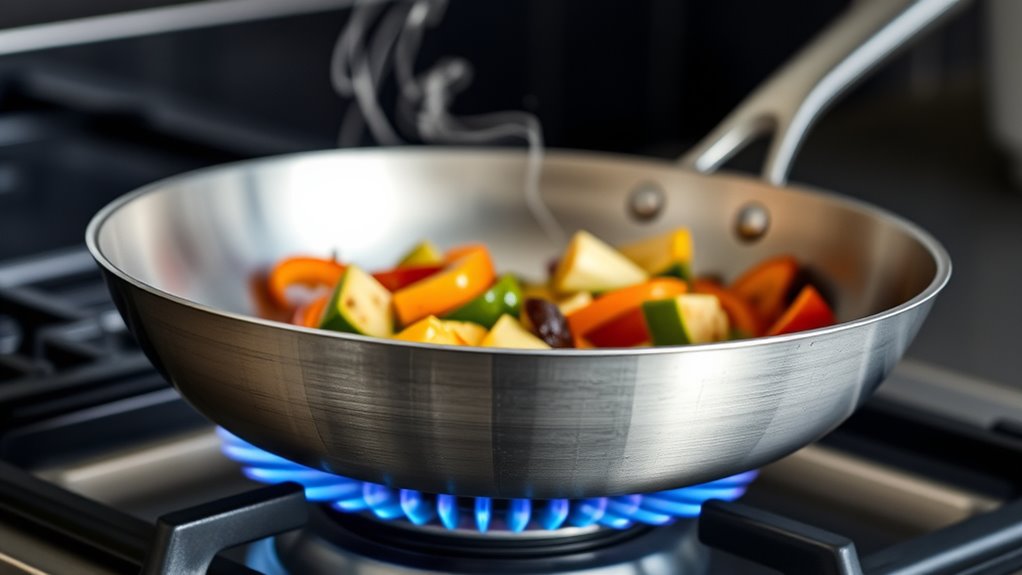
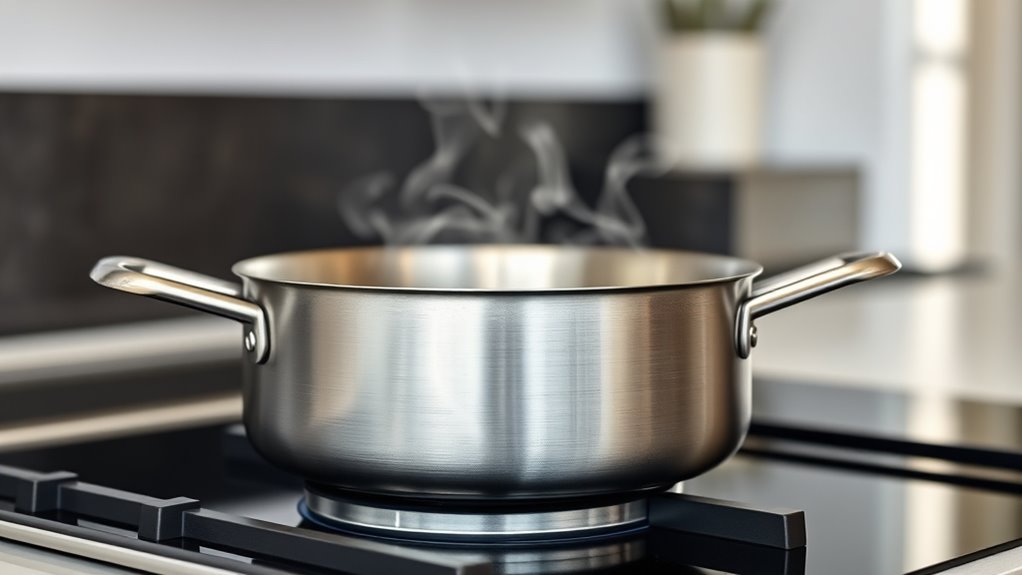
Although titanium cookware is known for its strength and lightweight nature, you might wonder if it can withstand the high temperatures often required in cooking. The good news is titanium has a very high melting point—around 1,668°C (3,034°F)—making it highly resistant to heat damage. This means your titanium pots and pans can handle searing, frying, and boiling without warping or degrading.
However, pure titanium cookware is often combined with other metals to improve heat distribution, so it’s essential to consider these blends when cooking at extreme temperatures.
| Feature | Titanium Cookware |
|---|---|
| Melting Point | 1,668°C (3,034°F) |
| Heat Distribution | Improved with metal alloys |
| Warping Resistance | Excellent |
| Suitable for High Heat | Yes, including searing & frying |
Does Titanium Cookware Release Any Harmful Chemicals?
Since you want cookware that’s safe for your family, you might be wondering if titanium releases any harmful chemicals during cooking. The good news is titanium itself is chemically stable and non-reactive, so it doesn’t leach toxins or metals into your food. Unlike some other metals, titanium resists corrosion and won’t break down, even at high temperatures.
However, many titanium cookware products have non-stick coatings, and safety depends on the coating’s quality. High-quality ceramic or titanium-infused coatings are generally safe, but poor-quality coatings might release harmful substances when overheated. To stay safe, always follow the manufacturer’s guidelines, avoid overheating, and replace any cookware with damaged coatings.
When used properly, titanium cookware won’t expose you or your family to harmful chemicals.
What Health Benefits Does Titanium Cookware Offer?
You’ll appreciate that titanium cookware provides a non-toxic cooking surface, keeping your meals free from harmful chemicals. Since titanium is hypoallergenic, it’s a great choice if you have sensitive skin or allergies.
Plus, its corrosion resistance means your cookware stays safe and durable over time.
Non-Toxic Cooking Surface
How does titanium cookware protect your health during cooking? It offers a truly non-toxic cooking surface that prevents harmful chemicals from leaching into your food. Unlike some non-stick pans coated with synthetic chemicals, titanium cookware is naturally safe and stable at high temperatures.
When you cook with titanium, you benefit from:
- No harmful coatings: Titanium doesn’t require chemical coatings that can break down and release toxins.
- Durability without degradation: The surface won’t chip or peel, ensuring your food never contacts harmful substances.
- Resistance to corrosion and rust: Titanium stays inert, meaning it won’t react with acidic or alkaline foods, keeping your meals pure.
Hypoallergenic Material Benefits
Beyond providing a non-toxic cooking surface, titanium cookware offers health benefits for those with sensitive skin or allergies. Since titanium is naturally hypoallergenic, it won’t cause allergic reactions or skin irritations, unlike some metals that can leach nickel or other allergens into your food. If you suffer from metal sensitivities, using titanium cookware can help you avoid uncomfortable symptoms like rashes or digestive issues.
You’ll also appreciate that titanium doesn’t react with acidic or alkaline foods, so your meals remain pure and free from unwanted metal contamination. Choosing titanium means you’re not only cooking safely but also protecting your body from potential allergens, making it an excellent option for anyone prioritizing health and wellbeing in the kitchen.
Corrosion Resistance Advantages
Because titanium resists corrosion so effectively, it helps keep your cookware safe and durable over time. This resistance means you won’t have to worry about harmful substances leaching into your food, even after years of use. Titanium’s natural barrier protects both the cookware and your health.
Here’s why corrosion resistance matters for you:
- Prevents metal leaching, reducing exposure to toxic metals
- Maintains surface integrity, avoiding cracks where bacteria can grow
- Ensures long-lasting cookware, so you avoid frequent replacements that could introduce impurities
Are There Any Risks or Drawbacks to Using Titanium Cookware?
Although titanium cookware offers many benefits, it’s important to take into account some potential risks and drawbacks before making your purchase. Titanium is often paired with other metals to improve cooking performance, which might introduce allergens or reduce non-stick properties.
Also, pure titanium cookware can have uneven heat distribution, causing hot spots. It’s generally more expensive than other options, which might not fit every budget.
| Drawback | Description |
|---|---|
| Cost | Higher price compared to alternatives |
| Heat Distribution | May cause uneven cooking |
| Surface Coatings | Possible allergens or wear over time |
| Availability | Limited variety and options |
Knowing these factors helps you weigh if titanium cookware suits your kitchen needs.
How Do You Choose Safe Titanium Cookware Products?
When choosing safe titanium cookware, you’ll want to focus on factors like material purity, coating quality, and manufacturer reputation. First, confirm the cookware uses high-purity titanium to avoid contaminants that could leach into your food. Next, look for non-toxic, durable coatings—preferably ceramic or anodized layers—that enhance safety and cooking performance.
Focus on high-purity titanium, non-toxic coatings, and trusted brands for safe, durable cookware.
Finally, select brands known for rigorous testing and transparent ingredient sourcing.
Keep these tips in mind:
- Check for certifications like FDA approval or LFGB compliance.
- Read customer reviews to gauge real-world safety and durability.
- Avoid products with unknown or vague material descriptions.
How Do You Care for Titanium Cookware Safely?
After selecting high-quality titanium cookware, you’ll want to maintain it properly to guarantee safety and longevity. Avoid using metal utensils to prevent scratches, and hand wash your cookware with mild soap and a soft sponge. Steer clear of abrasive cleaners and dishwasher use, as they can damage the surface.
Store your cookware carefully to prevent dents or warping.
| Care Tip | What to Do | What to Avoid |
|---|---|---|
| Cleaning | Hand wash with mild soap | Abrasive scrubbers, dishwashers |
| Cooking | Use wooden or silicone tools | Metal utensils |
| Storage | Stack with soft liners | Stacking without protection |
Following these steps helps keep your titanium cookware safe and durable for years.
Is Titanium Cookware Worth Using Every Day?
If you’re considering cookware that combines durability with lightweight convenience, titanium might be a top contender for everyday use. You’ll find it’s incredibly sturdy, resisting dents and scratches that can happen with daily cooking.
Plus, it heats quickly and evenly, making your meal prep more efficient. However, pure titanium cookware often lacks non-stick properties, so you might need to use a bit more oil or butter.
It heats quickly and evenly, though you may need extra oil since pure titanium isn’t non-stick.
Here’s why titanium cookware can be worth your daily investment:
- It’s hypoallergenic and won’t react with acidic foods.
- Its lightweight nature reduces strain during cooking.
- It’s highly resistant to corrosion and wear over time.
If these benefits align with your cooking style, titanium cookware can definitely enhance your kitchen routine.
Frequently Asked Questions
Can Titanium Cookware Be Used on Induction Cooktops?
You can’t use pure titanium cookware on induction cooktops because it’s not magnetic. However, if your titanium pan has a magnetic stainless steel base, it will work perfectly with induction cooktops.
Check the base before buying.
Is Titanium Cookware Dishwasher Safe?
You can’t throw titanium cookware in the dishwasher like a carefree breeze—it’s best to hand wash it gently.
Dishwashers might dull its shine or damage coatings, so treat it like a treasure to keep it gleaming.
How Does Titanium Cookware Affect Cooking Times?
Titanium cookware heats quickly and evenly, so you’ll often notice shorter cooking times. Since it distributes heat efficiently, you won’t need to cook food as long, helping you save energy and preserve flavors better.
Are Titanium Pots and Pans Compatible With All Types of Utensils?
You can use most utensils on titanium pots and pans, but avoid metal ones to keep their sleek surface intact. Unlike tough metal tools, silicone or wooden utensils protect your cookware while still letting you cook confidently.
Does Titanium Cookware Retain Food Flavors or Odors?
You won’t find titanium cookware retaining food flavors or odors because its non-porous surface resists absorption. This means each meal tastes fresh, and you can switch recipes without worrying about leftover smells affecting your food.
Conclusion
When you choose titanium cookware, you’re picking a kitchen companion as tough as a knight’s armor yet gentle on your health. It handles high heat without releasing harmful chemicals, offering durability and safety that few materials can match.
While it’s not completely flawless, with proper care, it’s a reliable choice for everyday cooking. So, if you want cookware that stands the test of time and keeps your meals pure, titanium is worth the investment.
In conclusion, titanium cookware is safe, durable, and an excellent option for those seeking non-toxic and long-lasting kitchen tools.