How to Make Mayonnaise in a Blender in 10 Simple Steps
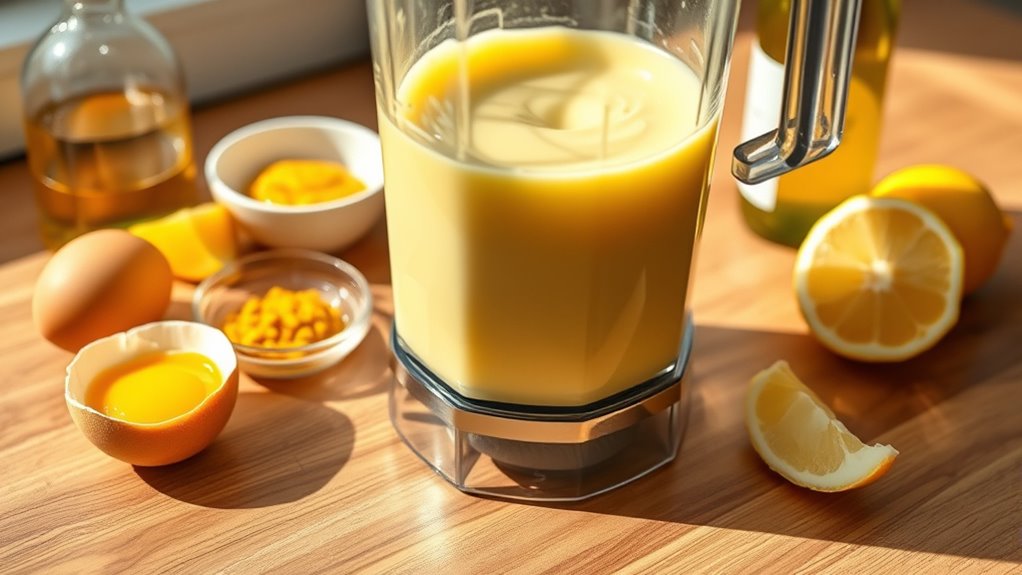
To make mayonnaise in a blender, start by gathering room-temperature egg yolk, Dijon mustard, vinegar or lemon juice, oil, salt, and optional sugar. These simple ingredients will help you create a creamy, homemade mayonnaise with ease. Using a blender ensures a smooth texture and quick preparation.
Add the egg yolks and mustard to the blender. Then, slowly drizzle in the oil while blending on low speed to create a smooth, thick emulsion. This technique helps the mayonnaise thicken properly without separating.
Season the mayonnaise to taste with salt and optional sugar, adjusting the flavor as needed. You can also modify the texture by adding more oil or acid.
Store your homemade mayonnaise refrigerated and use within a week for the best freshness.
Keep going to find tips for perfect flavor, troubleshooting, and safe storage to make your blender mayonnaise successful every time.
Key Takeaways
- Use room-temperature egg yolk, Dijon mustard, and acid (vinegar or lemon juice) for a stable emulsification base in the blender.
- Secure the blender lid and blend on low speed while slowly pouring oil in a thin, steady stream to prevent separation.
- Blend continuously until mayonnaise is thick, smooth, and glossy, coating the back of a spoon.
- Season gradually with salt, lemon juice, and optional spices, tasting to customize flavor without overpowering.
- Store mayonnaise in an airtight container in the refrigerator and use within one week for safety and freshness.
Gather Ingredients for Homemade Mayonnaise

Before you start blending, gather all the ingredients you’ll need for homemade mayonnaise. You’ll want one large egg yolk, a tablespoon of Dijon mustard, and one tablespoon of white vinegar or lemon juice for acidity.
Have one cup of neutral oil ready—like vegetable, canola, or light olive oil. Salt is essential; a pinch or two will enhance the flavor. If you prefer a little sweetness, add a teaspoon of sugar.
Make sure your ingredients are at room temperature to help the emulsion form smoothly. Double-check your supplies now so you don’t stop midway. Once you have everything, you’re set to start the blending process and create fresh, creamy mayonnaise right at home.
Get Your Blender Ready for Emulsifying

With all your ingredients ready and at room temperature, it’s time to set up your blender for emulsifying. First, make sure your blender jar is clean and dry to prevent any unwanted flavors or moisture from interfering. Attach the blade assembly securely to avoid leaks during blending.
Place your blender on a stable surface near an electrical outlet for easy access. Next, adjust the lid firmly to prevent splatters. If your blender has speed settings, keep it on low or pulse mode initially to control the emulsification process.
You might want to have a spatula nearby to scrape down the sides if needed. Preparing your blender carefully guarantees a smooth start to creating that creamy, perfectly emulsified mayonnaise.
Add Egg Yolks and Mustard to the Blender
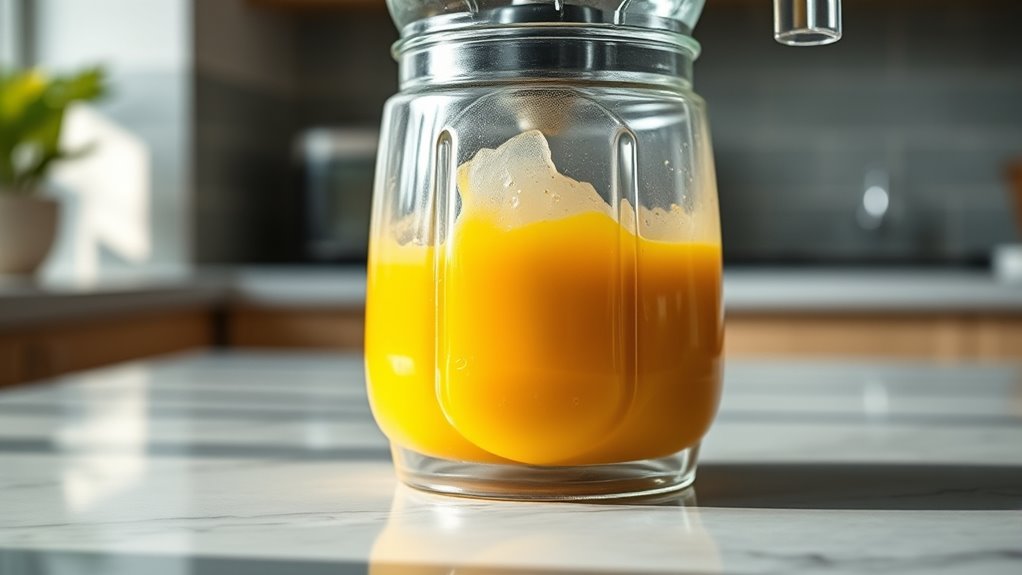
Once you’ve secured your blender, add the egg yolks and mustard directly into the jar. These two ingredients are key to creating the rich, creamy base of your mayonnaise. Here’s what to do next:
- Crack the eggs carefully to avoid any shell fragments in the blender.
- Use fresh, room-temperature egg yolks for better emulsification and texture.
- Add about a teaspoon of mustard; it not only adds flavor but also helps stabilize the emulsion.
Make sure the yolks and mustard are well combined before you start blending. This step sets the foundation for smooth mayonnaise, so don’t rush. By following these points, you’ll prepare your ingredients perfectly for the next stage.
Slowly Pour Oil While Blending to Emulsify
You’ll want to pour the oil slowly while the blender runs to help the ingredients combine smoothly. This gradual process creates a stable emulsion, turning the mixture into that perfect creamy texture. Taking your time here guarantees your mayonnaise won’t separate and stays thick.
Importance Of Gradual Pouring
Although it might be tempting to pour the oil quickly, you need to add it slowly to guarantee proper emulsification. Gradual pouring ensures the oil mixes evenly with the egg yolk and other ingredients, creating that creamy texture you want.
If you rush, the mixture can break, leaving you with oily separation.
Here’s why slow pouring is essential:
- Prevents Separation: Adding oil too fast overwhelms the blend, causing the mixture to split.
- Controls Texture: You get a smooth, thick consistency by letting the emulsion form steadily.
- Improves Flavor Integration: Slow addition helps blend flavors uniformly, enhancing taste.
Emulsion Formation Process
Slowly pouring the oil while blending sets the stage for a stable emulsion. As you add the oil bit by bit, the blender’s blades break it into tiny droplets that disperse evenly throughout the egg yolk and vinegar mixture. This process creates a uniform suspension where oil droplets are surrounded by emulsifiers like lecithin in the yolk, preventing them from clumping together.
If you pour too fast, the oil overwhelms the mixture, causing separation. By controlling the flow, you give the emulsifiers time to coat each droplet, locking them in place. Keep the blender running steadily, and the mixture will thicken and hold together, transforming into smooth, homemade mayonnaise.
This careful technique guarantees your emulsion won’t break.
Achieving Creamy Texture
When you pour the oil gradually while the blender runs, you help the mixture develop a rich, creamy texture. This slow addition allows the oil to properly emulsify with the egg yolks, creating that classic, smooth consistency you want in mayonnaise.
To achieve this creamy texture:
- Start with a steady, thin stream of oil to give the blender time to combine it fully.
- Keep the blender running at medium speed; too fast can break the emulsion, too slow won’t mix well.
- Pause occasionally if the mixture looks too thick, then continue pouring to maintain control.
Blend Until Your Mayonnaise Thickens Perfectly
How do you know when your mayonnaise has reached the perfect thickness? As you blend, keep an eye on the texture. It should transform from a thin, liquid state to a creamy, firm consistency that holds its shape.
Stop blending once the mixture looks smooth and thick enough to coat the back of a spoon without running off quickly. This usually takes about 30 to 60 seconds in a high-speed blender, but times can vary. If it’s still too runny, blend a few more seconds, but be careful not to overblend, as this can cause the emulsion to break.
Trust your eyes and the texture—when it’s glossy and stable, your mayonnaise is ready to move on to the next step.
Season Homemade Mayonnaise With Salt, Lemon, and Pepper
A great way to bring your homemade mayonnaise to life is by seasoning it with salt, lemon juice, and pepper. These simple additions balance the richness and enhance the flavor. Here’s how to do it:
- Salt: Start with a pinch of salt and blend it in. Taste and add more if needed to bring out the creamy base.
- Lemon Juice: Add a teaspoon of fresh lemon juice for brightness. It cuts through the oiliness and adds a subtle tang.
- Pepper: Finish with a small grind of black pepper for a gentle kick that complements the other ingredients without overpowering.
Adjust each seasoning gradually, tasting as you go, so your mayonnaise perfectly suits your palate.
Thin or Thicken Your Mayonnaise to Ideal Texture
Although your homemade mayonnaise might look perfect at first, you may find it too thick or too thin for your liking. If it’s too thick, you can thin it out by slowly blending in a teaspoon of water, lemon juice, or vinegar at a time until you get the texture you want. Add liquids gradually to avoid making it runny.
On the other hand, if your mayonnaise is too thin or hasn’t emulsified properly, try blending in a small amount of oil very slowly while the blender runs. This will help thicken it up and achieve that creamy consistency.
Customize Homemade Mayonnaise With Herbs and Spices
You can easily customize your homemade mayonnaise by adding popular herbs like basil, dill, or chives for a fresh twist. Don’t be afraid to experiment with spices such as smoked paprika, garlic powder, or cayenne to boost flavor.
Keep in mind how these additions pair with your dishes to create the perfect balance.
Popular Herb Choices
Wondering which herbs can elevate your homemade mayonnaise? Adding fresh herbs not only boosts flavor but also gives your mayo a vibrant twist. Here are three popular choices to try:
- Basil – Its sweet, slightly peppery taste pairs perfectly with tomato-based dishes or sandwiches.
- Dill – With a fresh, tangy flavor, dill complements seafood mayo or adds zest to potato salads.
- Chives – Offering a mild onion flavor, chives are great for a subtle kick, enhancing dips and spreads.
Feel free to chop these herbs finely before blending for even distribution. Using fresh herbs keeps your mayo tasting bright and aromatic, turning a simple condiment into something special.
Give these a shot to customize your mayo effortlessly!
Spices To Experiment
After choosing your favorite herbs, spices offer another exciting way to customize your homemade mayonnaise. They add depth and unique flavors, transforming a simple condiment into something extraordinary. Don’t hesitate to experiment with different spices to find your perfect blend.
Whether you prefer smoky, spicy, or aromatic, there’s a spice that suits your taste.
| Spice | Flavor Profile |
|---|---|
| Smoked Paprika | Earthy, smoky |
| Cayenne Pepper | Spicy, hot |
| Cumin | Warm, nutty |
| Turmeric | Mild, bitter, earthy |
| Mustard Powder | Sharp, tangy |
Try adding small amounts first—it’s easier to build flavor than to fix overpowering spice. Enjoy creating your signature mayo!
Flavor Pairing Tips
When crafting your homemade mayonnaise, combining herbs and spices thoughtfully enhances its flavor complexity. You can tailor your mayo to complement various dishes by experimenting with these tips:
- Balance Bold and Subtle: Pair strong herbs like dill or rosemary with gentle spices such as paprika or garlic powder to create a well-rounded taste.
- Match the Dish: Use fresh basil or oregano for Mediterranean-inspired mayo, or add chipotle and cumin for a smoky, southwestern twist.
- Start Small and Adjust: Add herbs and spices gradually, tasting as you go. This way, you avoid overpowering the mayo and achieve your perfect blend.
These simple steps help you customize your mayo, making it an irresistible addition to sandwiches, salads, and dips.
Store Homemade Mayonnaise Safely in the Refrigerator
Although homemade mayonnaise has a rich, fresh flavor, you’ll need to refrigerate it promptly to keep it safe. Transfer your mayonnaise to a clean, airtight container immediately after making it. This prevents contamination and slows bacterial growth.
Store it in the coldest part of your fridge, not the door, to maintain a consistent temperature. Homemade mayonnaise typically lasts about one week refrigerated, so label your container with the date you made it. Avoid leaving it out at room temperature for extended periods; bacteria multiply quickly at warmer temperatures.
Always use a clean spoon when scooping to prevent introducing germs. By following these simple storage tips, you’ll keep your homemade mayonnaise fresh, delicious, and safe to enjoy.
Fix Common Mayonnaise Mistakes Quickly and Easily
If your mayonnaise starts to separate or turns runny, don’t worry—you can fix it quickly with a few simple tricks.
You’ll also learn how to adjust the flavor if it’s too tangy or bland.
Let’s tackle these common issues so your homemade mayo turns out perfect every time.
Preventing Mayonnaise Separation
Since mayonnaise is an emulsion of oil and water-based ingredients, you might notice it separating if the mixture isn’t blended properly or if the ingredients aren’t added in the right order. To prevent this, follow these key steps:
- Add the oil slowly: Pour the oil in a thin, steady stream while the blender runs. This helps the emulsion form steadily without breaking.
- Use room temperature ingredients: Cold ingredients can make the mixture too stiff, causing separation. Let your eggs and vinegar or lemon juice sit out briefly.
- Blend at the right speed: Start blending on low to combine the ingredients, then increase speed once the mixture thickens. Too high a speed too soon can cause separation.
Fixing Runny Texture
When your mayonnaise turns out runny, don’t worry—you can fix it quickly by adjusting the emulsion. Start by adding a teaspoon of cold water or an extra egg yolk to help thicken the mixture. Blend on low speed to encourage the oil and water to combine properly.
If it remains thin, slowly drizzle in more oil while blending to reinforce the emulsion.
Here’s a quick reference table to help you fix runny mayonnaise:
| Issue | Solution | Result |
|---|---|---|
| Too thin/emulsion weak | Add egg yolk or cold water | Thicker, stable texture |
| Oil added too fast | Drizzle oil slowly | Smooth, creamy consistency |
| Overblended | Blend gently on low speed | Prevents breaking |
Use these tips to get your mayonnaise perfectly thick every time.
Correcting Flavor Imbalances
Although mayonnaise is simple to make, balancing its flavors can sometimes be tricky. If your mayo tastes off, don’t worry—you can fix it quickly. Here’s how:
- Too tangy or acidic? Add a small pinch of sugar or a bit more oil to mellow it out.
- Too bland? Boost the flavor with a splash of lemon juice or a teaspoon of mustard for extra zing.
- Too salty? Stir in a little plain yogurt or more oil to dilute the saltiness.
Taste as you go and adjust gradually. These quick tweaks help you perfect your mayonnaise without starting over. With a few simple fixes, your blender-made mayo will be delicious every time!
Frequently Asked Questions
Can I Use a Food Processor Instead of a Blender?
Yes, you can use a food processor instead of a blender. Just add the ingredients slowly while the machine’s running, and it’ll emulsify nicely.
You’ll get smooth, creamy mayo with minimal effort and great control.
Is Homemade Mayonnaise Safe for Pregnant Women?
You can eat homemade mayonnaise safely during pregnancy if you use pasteurized eggs and keep it refrigerated. Avoid raw eggs to reduce the risk of salmonella, and always guarantee your ingredients are fresh and clean.
How Long Does Homemade Mayonnaise Last Unopened?
Unopened, homemade mayonnaise lasts about a week in the fridge, contrasting sharply with store-bought versions that last months. You’ll want to use it quickly since it lacks preservatives, ensuring safety and fresh flavor every time.
Can I Use Olive Oil for a Healthier Mayonnaise?
Yes, you can use olive oil for healthier mayonnaise. It adds a rich flavor and contains heart-healthy fats.
Just use mild or light olive oil to avoid overpowering the taste, and blend thoroughly for smooth texture.
What Are the Best Substitutes for Raw Egg Yolks?
You can use aquafaba, silken tofu, or mashed avocado as substitutes for raw egg yolks. These options help emulsify and thicken your mayo while keeping it safe and vegan-friendly, perfect if you want to avoid eggs.
Conclusion
Now that you know how to make mayonnaise in a blender, you’re just minutes away from creamy, homemade goodness. Did you know that over 70% of mayonnaise sold in the U.S. is homemade or homemade-inspired?
With this simple method, you can customize flavors and skip preservatives. Give it a try—you’ll never want store-bought mayonnaise again! Keep experimenting with herbs and spices to make your mayo truly your own.
Happy blending! Making mayonnaise in a blender is quick, easy, and perfect for creating fresh, flavorful condiments tailored to your taste. Enjoy your homemade mayonnaise today!