
How Do Induction Cooktops Work Step by Step
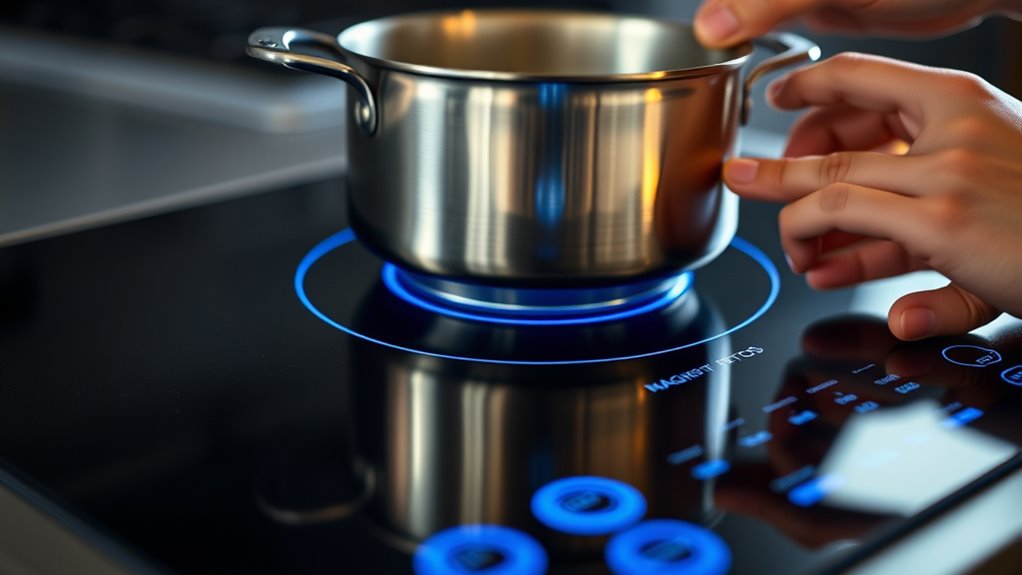
You turn on the induction cooktop, a modern kitchen appliance that uses electromagnetic technology for cooking. It sends an alternating electric current through a copper coil beneath the surface. This creates a fluctuating magnetic field that passes into compatible cookware, inducing eddy currents that heat the pot directly.
The cooktop detects if the cookware is suitable and adjusts power for precise heat control while staying cool itself. This efficient process ensures faster cooking times and better energy use.
Understanding these steps helps you cook efficiently and safely with this advanced technology.
Key Takeaways
- An alternating current in the copper coil generates a fluctuating magnetic field beneath the cooktop surface.
- The magnetic field induces eddy currents in ferromagnetic cookware placed on the cooktop.
- Eddy currents flow through the cookware’s base, creating resistance that heats the cookware directly.
- The cooktop detects compatible cookware by sensing disturbances in the magnetic field before activating.
- Heat levels adjust instantly by changing the coil’s current frequency and strength, allowing precise temperature control.
What Is Induction Cooking and Why It’s Different
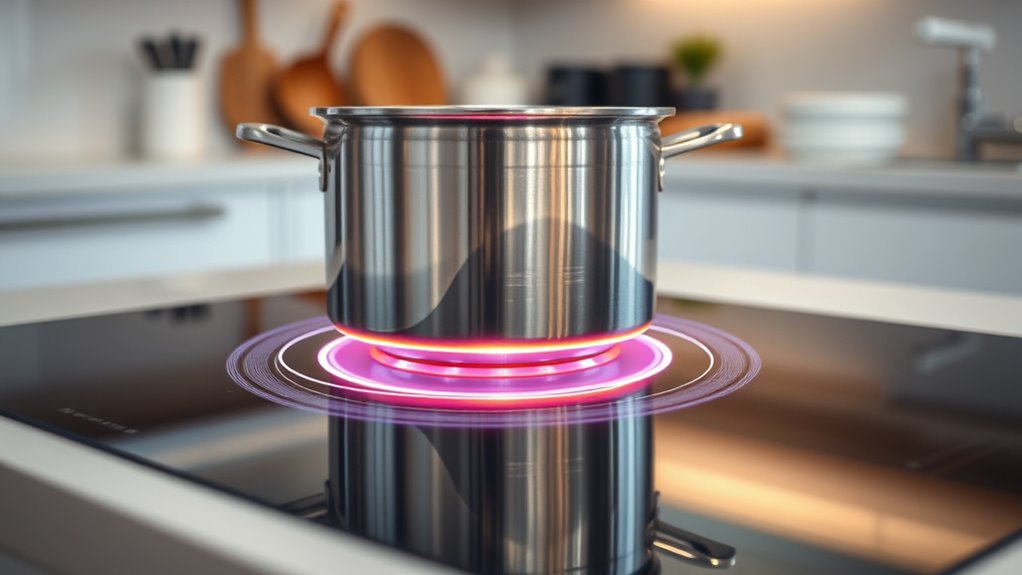
Although it might look like a regular electric cooktop, induction cooking uses a completely different method to heat your pots and pans. Instead of relying on traditional electric coils or gas flames, induction cooktops generate a magnetic field that interacts with your cookware. This method means the cooktop itself doesn’t get hot like conventional stoves do, making it safer and easier to clean.
You’ll notice the surface stays relatively cool because the heat is produced directly in the pot or pan. This difference also means induction cooking is more energy-efficient since less heat escapes into the air. When you use an induction cooktop, you’re experiencing a modern, precise way to cook that speeds up heating and gives you better control over your cooking process.
How Induction Heats Cookware Directly
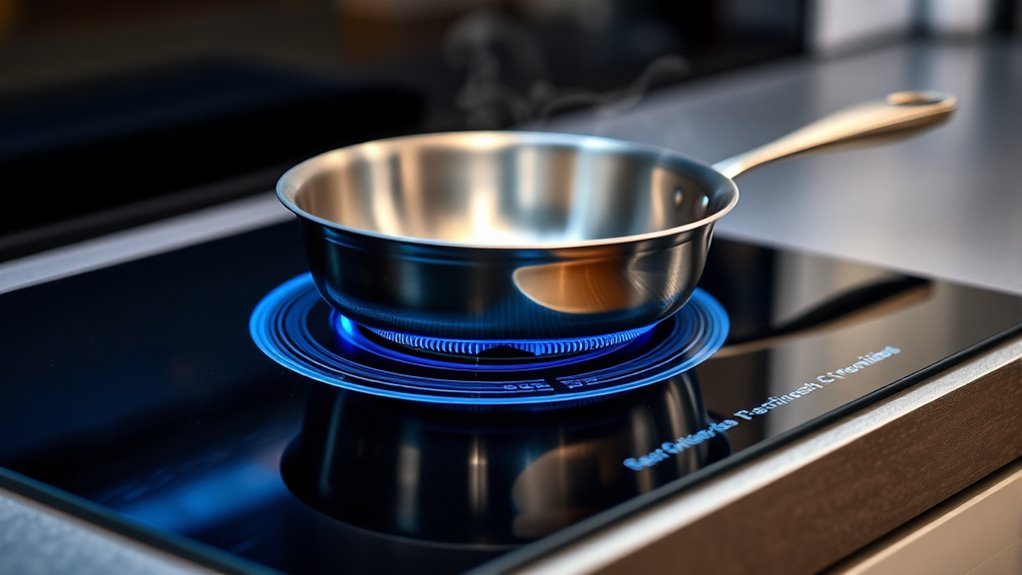
Understanding how induction cooktops generate heat directly in your cookware helps explain why they stay cool and cook efficiently. When you place compatible cookware on the cooktop, an alternating magnetic field induces electric currents, called eddy currents, inside the metal of the cookware itself. These eddy currents flow through the cookware’s base, encountering resistance that converts electrical energy directly into heat.
This process heats the cookware quickly and evenly, without heating the cooktop surface much. Since the heat is produced inside the cookware, you get faster temperature control and less wasted energy. You’ll notice the cooktop remains relatively cool because it’s not the source of heat—your cookware is.
This direct heating method makes induction cooking both safe and energy-efficient.
What the Induction Coil Does
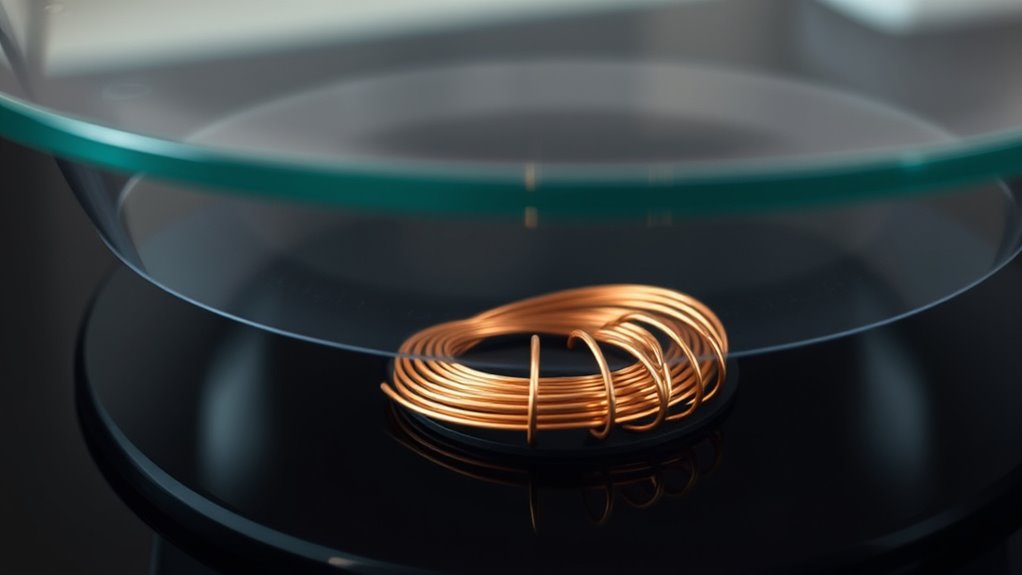
You’ll find that the induction coil generates an electromagnetic field just below the cooktop surface. This field induces electric currents directly in your cookware. Those currents then produce heat, cooking your food efficiently and quickly.
Electromagnetic Field Generation
When you turn on an induction cooktop, the induction coil beneath the surface creates a rapidly changing electromagnetic field. This coil, made of copper wire, carries alternating current that flows back and forth at high frequencies. As the current changes direction, it generates a magnetic field that fluctuates quickly above the cooktop’s glass surface.
This electromagnetic field is invisible but powerful, extending just enough to interact with cookware placed on top. The coil’s design guarantees the magnetic field is concentrated and efficient, minimizing energy loss. By controlling the frequency and strength of the current, the cooktop adjusts the electromagnetic field to match different cooking needs.
This provides precise and responsive heat control without direct contact with the pot or pan.
Inducing Electric Currents
The fluctuating electromagnetic field generated by the induction coil doesn’t just hover above the cooktop—it directly influences the cookware. When you place a compatible pot or pan on the cooktop, this field induces electric currents, called eddy currents, inside the metal. These currents flow in loops within the cookware’s base, which is vital for heating.
Here’s what the induction coil does to induce these currents:
- Creates a rapidly changing magnetic field through alternating current
- Penetrates the ferromagnetic cookware below the cooktop surface
- Forces electrons in the cookware to move, generating eddy currents
- Maintains continuous current flow as long as the coil is energized and cookware is present
You control this process seamlessly by adjusting the cooktop’s power settings.
Heat Transfer Mechanism
How exactly does the induction coil transfer heat to your cookware? When you turn on the cooktop, the coil beneath the glass surface generates an alternating magnetic field. This magnetic field penetrates your ferromagnetic cookware, inducing tiny electric currents called eddy currents inside the metal.
These currents face resistance within the cookware, causing it to heat up directly. Unlike traditional cooktops, the coil itself doesn’t get hot; it’s the cookware that heats due to these induced currents. This method transfers energy efficiently, minimizing heat loss and allowing your food to cook faster.
How the Cooktop Knows When a Pot Is On
Ever wondered how an induction cooktop can tell if you’ve placed a pot on it? It uses smart sensors and electromagnetic feedback to detect the presence of suitable cookware. When you set a pot on the cooktop, these key actions happen:
- The cooktop sends a small electric current through a coil beneath the surface.
- This current generates a magnetic field that can interact only with ferrous materials.
- If a pot with the right metal is present, it disturbs the magnetic field, which the cooktop senses.
- The cooktop then activates and adjusts power based on the pot’s size and position.
This detection prevents energy waste and guarantees safety by only heating when a compatible pot is in place.
Best Cookware for Induction Cooktops
To get the most from your induction cooktop, you need the right cookware material that’s magnetic and has the proper thickness. Not all pots and pans will work, so it’s important to choose those designed for induction.
Let’s explore what makes cookware compatible and how to pick the best options.
Material Compatibility
Because induction cooktops rely on magnetic fields to generate heat, not all cookware will work efficiently with them. You need pots and pans made from ferromagnetic materials that can interact with the cooktop’s magnetic field. If your cookware isn’t compatible, it won’t heat properly or at all.
Look for these materials to guarantee compatibility:
- Cast iron: excellent magnetic properties and heat retention
- Stainless steel: only if it contains enough magnetic alloy
- Carbon steel: lightweight and responsive to induction
- Enameled steel: magnetic base with easy-to-clean surface
Avoid aluminum, copper, glass, or ceramic cookware unless they have a magnetic stainless steel base. By choosing the right materials, you’ll get the most out of your induction cooktop’s efficiency and performance.
Cookware Thickness Importance
Although having compatible cookware is crucial, the thickness of your pots and pans plays an essential role in how well they perform on an induction cooktop. If your cookware is too thin, it may heat unevenly, causing hot spots and inconsistent cooking results. Thicker cookware distributes heat more evenly, helping your food cook uniformly.
Additionally, thicker bases retain heat better, making temperature control smoother and more efficient. However, excessively thick cookware can take longer to respond to temperature changes, reducing the cooktop’s quick-adjustment benefits. Ideally, choose cookware with a moderate thickness—usually around 3 to 5 millimeters—that balances heat distribution and responsiveness.
This ensures you get the best performance from your induction cooktop without sacrificing control or energy efficiency.
Magnetic Properties Needed
When choosing cookware for an induction cooktop, you need to verify it has magnetic properties that allow the cooktop to generate heat effectively. Induction cooktops work by creating a magnetic field that induces electric currents in the cookware, producing heat. Without magnetic material, no heat forms, and cooking won’t start.
To confirm compatibility, look for these magnetic qualities in your cookware:
- Made from ferrous metals like cast iron or magnetic stainless steel
- Has a flat, smooth bottom for proper contact with the cooktop
- Displays an induction-compatible symbol on the base
- Passes the simple magnet test—if a magnet sticks, it works
Selecting the right cookware maximizes efficiency and performance on your induction cooktop.
How Induction Cooktops Adjust Heat
As you turn the dial or tap the controls on an induction cooktop, it quickly adjusts the magnetic field to change the heat output. The cooktop varies the frequency and strength of the alternating current in its coil. This directly affects how much electrical energy is induced in the cookware’s metal base.
When you increase the setting, the magnetic field intensifies, producing stronger eddy currents that generate more heat. Lowering the setting reduces the current, resulting in gentler heat. Because induction heats the cookware itself rather than an element, changes in magnetic field strength translate almost instantly to temperature shifts.
This precise, rapid adjustment lets you control cooking temperatures with great accuracy, making your cooking more efficient and responsive than traditional stovetops.
Why Induction Cooktops Stay Cooler
You’ll notice induction cooktops stay cooler because the magnetic field heats only the cookware, not the cooktop surface. Heat then transfers from the cookware to your food, keeping the cooktop itself relatively cool.
This focused heating makes cooking safer and more energy-efficient.
Magnetic Field Heating
How exactly does an induction cooktop manage to stay cooler than traditional stoves? It all comes down to magnetic field heating. Instead of heating the cooktop surface directly, the induction coil beneath generates an alternating magnetic field.
This field induces electric currents, called eddy currents, directly in the ferromagnetic cookware. These eddy currents produce heat inside the pot or pan itself, not on the cooktop surface.
Here’s why this makes a difference:
- The cooktop stays mostly cool since heat is generated inside the cookware.
- Less energy is wasted heating an entire burner.
- There’s minimal heat transfer to surrounding areas.
- The surface cools down quickly after you remove the pot.
This precise magnetic heating is what keeps your induction cooktop efficient and safer to touch.
Cookware Heat Transfer
The magnetic field heating method directly warms your cookware, which changes how heat moves between the pot and the cooktop surface. Instead of heating the cooktop itself, induction generates heat inside your pan, so the cooktop stays much cooler. You’ll notice that only the area beneath the pot warms slightly due to heat conduction from the cookware.
This reduces energy waste and prevents burns from a hot cooktop surface. Because the induction cooktop doesn’t rely on direct heat transfer, it stays safe to touch and cleans up easily since spills don’t bake onto a hot surface. This efficient heat transfer method makes cooking faster and safer, giving you precise control without the typical risks of traditional electric or gas cooktops.
How Temperature Control Works on Induction Cooktops
Because induction cooktops heat cookware directly through electromagnetic fields, they can adjust temperature quickly and accurately. You control the heat by changing the electrical current frequency, which influences the magnetic field strength and, in turn, the cookware’s temperature. This allows for precise, immediate responses to your adjustments.
Induction cooktops offer rapid, precise temperature control by adjusting electromagnetic fields through electrical current frequency changes.
Here’s how temperature control works on induction cooktops:
- Sensors monitor the cookware’s temperature in real-time.
- The cooktop adjusts the electromagnetic field intensity accordingly.
- Power cycles rapidly to maintain consistent heat without overshooting.
- You get immediate feedback through smooth temperature changes.
This precise control means your food cooks evenly, and you can easily shift from simmering to boiling without delay.
How Safety Features Prevent Accidents With Induction Cooking
Although induction cooktops offer powerful heating control, they also include built-in safety features designed to protect you from burns, fires, and electrical hazards. For example, the cooktop detects when a compatible pot is present and won’t activate unless you place the right cookware on it. This prevents accidental heating of empty surfaces.
If the pot boils dry or overheats, the cooktop automatically shuts off to avoid fire risks. Additionally, the surface remains relatively cool, reducing burn chances when you touch it. Many models also have child lock functions to stop unintended use.
These features work together to give you peace of mind, letting you focus on cooking without worrying about common kitchen accidents linked to traditional stovetops.
How to Maximize Efficiency When Using an Induction Cooktop
Safety features keep induction cooking worry-free, but getting the most out of your cooktop means using it efficiently. To maximize efficiency, start by choosing cookware with flat, magnetic bottoms that match the size of the burner. This ensures energy transfers directly without waste.
Also, keep the cooktop surface clean; residue can reduce heat transfer effectiveness. Adjust power settings appropriately—use high heat for boiling, then lower to maintain simmering. Finally, cover your pots and pans to trap heat and speed up cooking while saving energy.
Here’s a quick efficiency checklist:
- Use compatible, flat-bottom cookware.
- Match pot size to the induction zone.
- Keep the cooktop surface spotless.
- Cover cookware to retain heat and moisture.
These simple practices help you cook faster while saving energy.
Troubleshooting Common Induction Cooking Issues
If your induction cooktop isn’t heating properly or seems unresponsive, you’re not alone—these issues are common but usually easy to fix. First, check that your cookware is induction-compatible; it needs to be magnetic. Use a magnet to test the bottom—if it doesn’t stick, your pot won’t work.
Make sure the pot is centered on the cooking zone and that its size matches the zone’s size. Also, clean the cooktop surface, as dirt or spills can interfere with sensors. If the cooktop shuts off unexpectedly, it might be overheating, so check ventilation and avoid covering vents.
Finally, reset the cooktop by turning it off and unplugging it briefly. If problems persist, consult your manual or contact customer support.
Frequently Asked Questions
Can Induction Cooktops Be Used With Non-Metallic Cookware?
No, you can’t use non-metallic cookware on induction cooktops because they need magnetic materials to generate heat.
Stick with cast iron or stainless steel cookware that’s induction-compatible for your cooking to work properly.
How Energy-Efficient Are Induction Cooktops Compared to Gas Stoves?
You’ll find induction cooktops more energy-efficient than gas stoves, like a lighthouse guiding lost ships—up to 90% energy transfer versus gas’s 40-55%. You’ll save energy, cook faster, and keep your kitchen cooler.
This efficiency means less wasted heat and more precise cooking control. Induction cooktops convert most of the energy directly to the pot, unlike gas stoves that lose a lot of heat to the surrounding air.
As a result, using an induction cooktop can significantly reduce your energy consumption and utility bills over time.
Do Induction Cooktops Emit Any Harmful Electromagnetic Fields?
Induction cooktops do emit electromagnetic fields, but you won’t worry—they’re low and safe for everyday use. They meet strict safety standards, so you can cook confidently without harmful exposure to EMFs in your kitchen.
What Maintenance Is Required to Keep an Induction Cooktop in Good Condition?
You should clean your induction cooktop regularly with a soft cloth and mild cleaner, avoid abrasive materials, wipe spills promptly, and check for cracks or damage.
This keeps it efficient and extends its lifespan.
Are Induction Cooktops Compatible With Professional Kitchen Appliances?
Yes, you’ll find induction cooktops compatible with many professional kitchen appliances, especially those with magnetic cookware.
Just make sure your pots and pans are induction-ready, and you’ll enjoy fast, efficient cooking in any professional setting.
Conclusion
Induction cooking is like magic at your fingertips, turning invisible energy into instant heat. You’re not just cooking—you’re commanding precision and safety with every touch. By understanding how the induction coil dances with your cookware, you reveal a kitchen that’s faster, cleaner, and smarter.
So, embrace this electric symphony and let your meals come to life with unmatched efficiency and control. Cooking has never felt this alive and effortless. Induction cooktops work by creating a magnetic field that directly heats your cookware, making the process both energy-efficient and safe.