How to Make a Breakfast Skillet
To make a breakfast skillet, start by prepping key ingredients like potatoes, proteins such as bacon or sausage, and fresh vegetables. Cutting them into uniform pieces ensures even cooking and a balanced texture. Using starchy potatoes like russets helps achieve a crispy, golden finish.
Brown your proteins slowly over medium heat to develop rich flavor without burning. Begin by layering the potatoes first, followed by the vegetables and cooked meats.
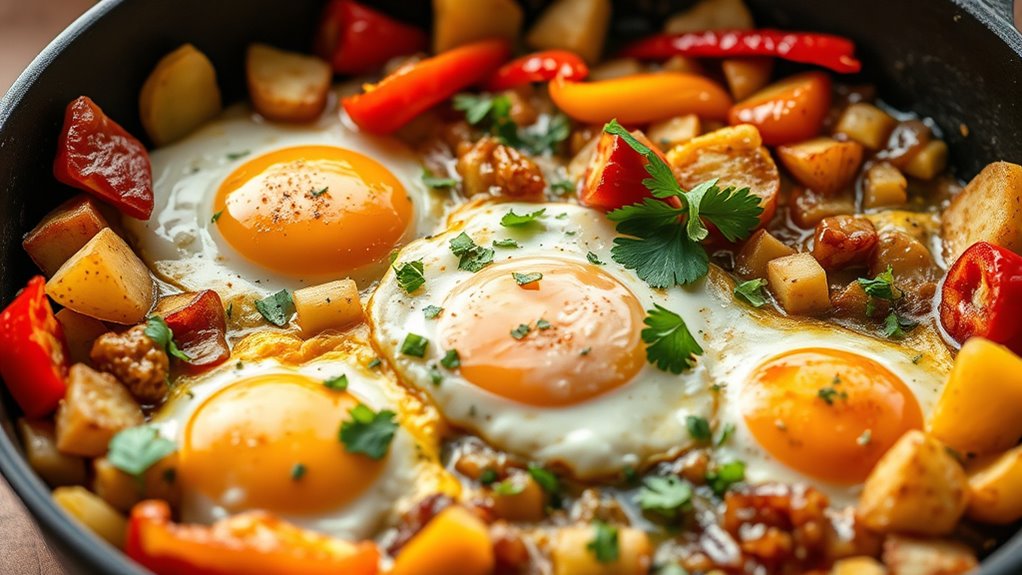
Finish the skillet with eggs and cheese for a satisfying, hearty meal.
Season with your favorite herbs and spices to enhance taste. For more tips on customization, variations, and easy cleanup, keep exploring the full guide to tasty results.
Key Takeaways
- Prepare and dice potatoes, proteins, and vegetables uniformly for even cooking and enhanced flavor.
- Brown proteins on medium heat, drain excess fat, and cook potatoes first for a crispy base.
- Layer potatoes, vegetables, and cooked meats before adding eggs to keep textures balanced.
- Add eggs last, cooking briefly for soft texture, and top with cheese and herbs for flavor.
- Customize ingredients and spices, and clean your skillet promptly using gentle methods for longevity.
Ingredients You’ll Need for Your Breakfast Skillet
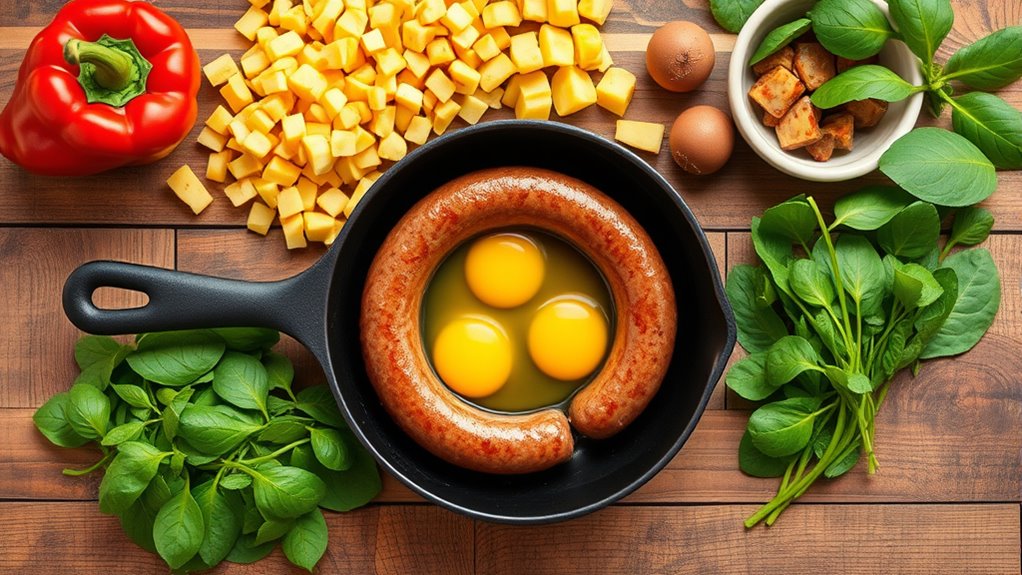
Before you start cooking, gather all the ingredients you’ll need for your breakfast skillet. You’ll want a mix of hearty and flavorful items. Start with potatoes—diced or shredded—as your base.
Grab some eggs, fresh or pre-cracked, since they’re essential for that classic breakfast feel. Include your choice of protein: bacon, sausage, or ham work great. Don’t forget vegetables like bell peppers, onions, and mushrooms to add color and nutrition.
Cheese is a must-have for melting on top; cheddar, mozzarella, or pepper jack all bring different tastes. Finally, have some salt, pepper, and your favorite spices handy to season everything perfectly. When you have everything at your fingertips, you’ll breeze through the cooking process without missing a beat.
How to Prep Vegetables and Proteins for Your Breakfast Skillet
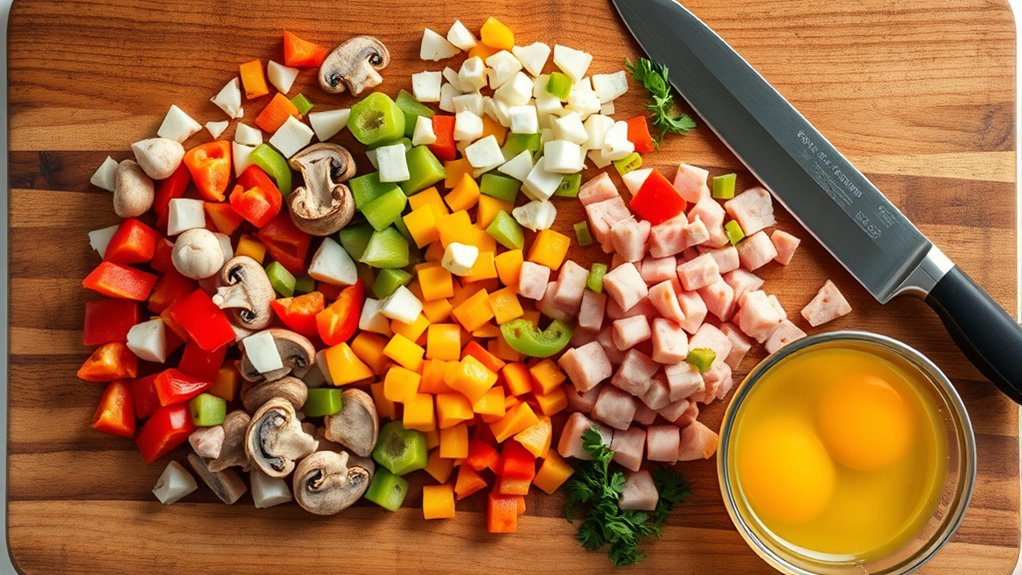
Once you have your ingredients ready, focus on prepping the vegetables and proteins to guarantee even cooking and maximum flavor. Start by washing and dicing your vegetables into uniform pieces so they cook evenly. Cut proteins like bacon, sausage, or ham into bite-sized chunks for quick cooking and easy mixing.
Don’t forget to pat proteins dry if they’re wet, which helps them brown better.
Here’s a quick checklist to prep your ingredients:
- Chop vegetables into similar-sized pieces for consistent cooking.
- Cut proteins into small chunks or strips for even heat distribution.
- Dry off proteins to achieve a crispy, well-seared texture.
Pick the Right Potatoes for Crispy Skillets

You’ll want to choose potatoes that crisp up well in the skillet, like russets or Yukon golds. These varieties have different textures—russets are starchy and get extra crispy, while Yukon golds hold their shape with a creamy center.
Knowing these differences helps you pick the perfect potato for your breakfast skillet.
Best Potato Varieties
Although many potato types can work in a breakfast skillet, choosing the right variety makes all the difference in achieving that perfect crispy texture. You want potatoes that hold their shape well and crisp up nicely without turning mushy.
Here are three of the best potato varieties for your skillet:
- Russet potatoes: High in starch, they crisp up beautifully and develop a golden crust.
- Yukon Gold potatoes: These have a medium starch content, offering a balance of creaminess and crispness.
- Red potatoes: Lower in starch, they stay firm and provide a nice bite with a subtle sweetness.
Picking one of these will elevate your breakfast skillet with the ideal crisp and flavor you’re aiming for.
Potato Texture Differences
When selecting potatoes for a crispy breakfast skillet, understanding their texture differences is key. Starchy potatoes like Russets have a high starch content and low moisture, making them perfect for getting that golden, crunchy exterior you want. Waxy potatoes, such as Red or New potatoes, hold their shape well but don’t crisp up as easily because they contain more moisture and less starch.
All-purpose potatoes, like Yukon Golds, offer a balance, crisping moderately while staying tender inside. For the crispiest skillet, choose starchy potatoes or a mix of starchy and all-purpose to get both crunch and creaminess. Avoid mostly waxy potatoes if your goal is a crisp texture—they’ll stay softer and might steam rather than fry.
Tips for Browning Sausage and Bacon Perfectly
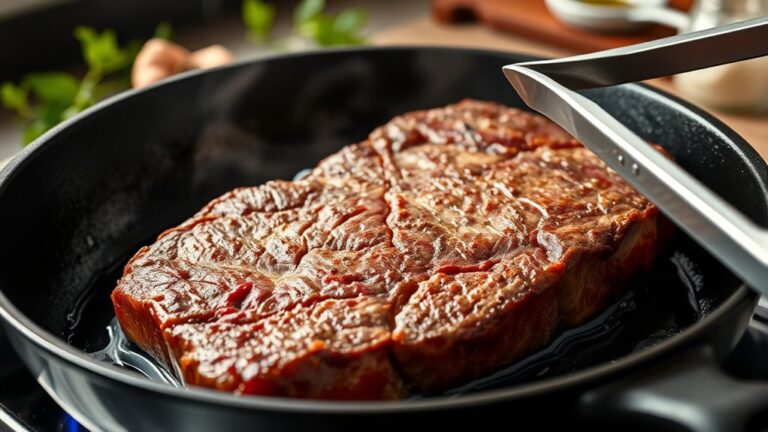
Since sausage and bacon release a lot of fat as they cook, start by heating your pan over medium heat to render the fat slowly and prevent burning. This approach helps you achieve that perfect golden-brown crust without charring the meat. Keep the pieces spaced out so they brown evenly instead of steaming.
Flip the sausage and bacon occasionally to guarantee all sides get that crispy texture.
Here are some quick tips to nail it:
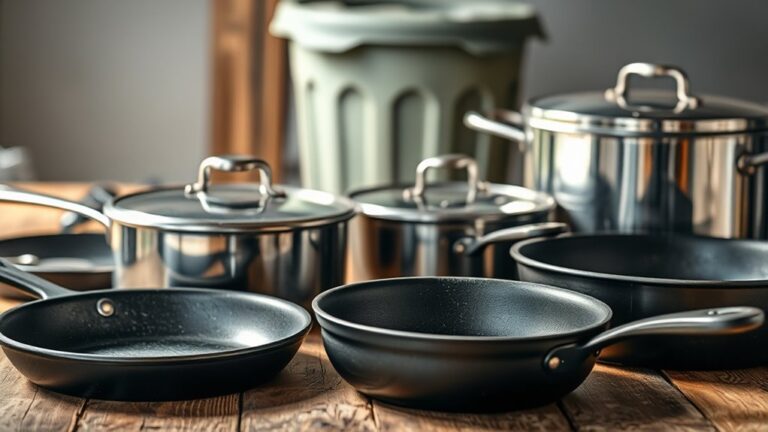
- Use a cast iron or non-stick skillet for even heat distribution.
- Don’t overcrowd the pan; give each piece room to crisp.
- Drain excess fat midway to prevent sogginess and maintain crispiness.
Following these steps, you’ll get beautifully browned, flavorful sausage and bacon every time.
How to Layer Ingredients for Even Cooking
After getting your sausage and bacon perfectly browned, the next step is to layer your ingredients thoughtfully to guarantee everything cooks evenly. Start by placing the heartier vegetables like potatoes at the bottom since they take longer to cook.
Next, add softer veggies such as bell peppers and onions. Then, place the cooked meats on top to keep them warm without overcooking. This layering ensures heat distribution and prevents sogginess.
| Layer Position | Ingredients to Add |
|---|---|
| Bottom | Potatoes, root vegetables |
| Second | Onions, bell peppers, mushrooms |
| Third | Cooked sausage, bacon |
| Top | Fresh herbs, cheese (optional) |
Follow this order for a perfectly cooked, balanced breakfast skillet every time.
When to Add Eggs to Your Skillet
Because eggs cook quickly and can become rubbery if overdone, you’ll want to add them to the skillet at just the right moment. Wait until your other ingredients—like potatoes, veggies, and meats—are fully cooked or nearly done. This guarantees the eggs don’t sit too long, keeping their texture tender and creamy.
Here’s when to add your eggs:
- After sautéing your veggies and meats, so they don’t overcook.
- Once potatoes are tender and lightly browned for even cooking.
- When the skillet is hot but not smoking, to control how quickly the eggs set.
Timing matters because it helps you achieve that perfect balance between cooked ingredients and soft, fluffy eggs.
The Best Cheeses to Melt on Your Breakfast Skillet
Adding eggs at the right moment sets the stage for the final touch: melted cheese. Choosing the best cheese can elevate your breakfast skillet to something truly delicious. Go for cheeses that melt smoothly, like cheddar, Monterey Jack, or mozzarella.
These melt evenly, creating gooey, irresistible pockets of flavor. If you want a sharper taste, try gouda or fontina—they melt well and add a rich, creamy texture. For a bit of tang, feta or goat cheese works, but add them near the end to avoid over-melting.
Sprinkle your chosen cheese over the hot skillet just before serving, letting it soften and meld with the eggs and veggies. This simple step guarantees a comforting, cheesy finish that’ll make your breakfast skillet unforgettable.
Flavor Boosters for Your Breakfast Skillet: Herbs, Spices, and Sauces
When you want to take your breakfast skillet from good to unforgettable, herbs, spices, and sauces bring vibrant layers of flavor that transform every bite. Fresh herbs like parsley, cilantro, or chives add brightness and a touch of green freshness. Spices such as smoked paprika, cumin, or black pepper give your skillet a warm, smoky depth.
Herbs, spices, and sauces add vibrant layers of flavor, turning a simple breakfast skillet into something unforgettable.
Don’t forget sauces—hot sauce, salsa, or a drizzle of pesto can elevate the dish with tang and complexity.
Try these flavor boosters to amp up your skillet:
- Fresh thyme or rosemary for earthy aroma
- A pinch of chili flakes for heat
- A splash of Worcestershire sauce for umami richness
Use these smart additions to make every bite pop with irresistible flavor.
How to Customize Your Breakfast Skillet for Dietary Preferences
You can easily tailor your breakfast skillet to fit your dietary needs by swapping in different protein options like tofu, sausage, or eggs. Don’t forget to mix up your veggies and spices to keep things fresh and flavorful.
This way, you create a meal that’s just right for you every time.
Protein Options Variety
How can you tailor your breakfast skillet to suit different dietary needs without sacrificing flavor? Start by selecting protein options that fit your preferences and dietary goals. Whether you want something classic, plant-based, or low-fat, there’s a delicious way to customize your skillet.
Here are three versatile protein choices to contemplate:
- Eggs: Scrambled, fried, or poached, eggs add richness and essential nutrients.
- Turkey sausage or lean bacon: Offers a flavorful, lower-fat alternative to traditional pork.
- Tofu or tempeh: Perfect for plant-based diets, these absorb spices well and provide protein.
Mix and match these proteins to create a satisfying skillet that fuels your morning while keeping it aligned with your health and taste preferences.
Vegetable and Spice Choices
Although protein forms the heart of your breakfast skillet, the right vegetables and spices bring its flavors to life and cater to your dietary needs. Choose vegetables that suit your taste and nutritional goals—bell peppers add sweetness, spinach offers iron, and mushrooms bring umami.
If you need low-carb options, focus on leafy greens and zucchini. For extra crunch, toss in diced onions or celery. Spice choices let you tailor heat and aroma; paprika adds smoky warmth, cumin brings earthiness, and chili flakes spice things up.
Fresh herbs like parsley or cilantro brighten the dish. Don’t forget garlic powder for depth or turmeric for anti-inflammatory benefits. By mixing and matching veggies and spices, you customize every skillet to fit your unique preferences and dietary lifestyle.
Quick Cleanup Tips After Cooking Your Breakfast Skillet
Since breakfast skillets often leave behind stubborn grease and food bits, tackling cleanup promptly makes the process much easier. Right after cooking, let the skillet cool slightly but don’t wait too long. Warm grease softens stuck-on bits, helping you clean more efficiently.
Start by soaking the skillet in hot, soapy water to loosen residue. Use a non-abrasive sponge or brush to avoid damaging the surface. Avoid harsh scrubbing, especially on non-stick or cast iron pans.
Here are quick cleanup tips to streamline the process:
- Wipe excess grease with paper towels before washing.
- Use baking soda as a gentle scrub for tough spots.
- Dry thoroughly to prevent rust, especially with cast iron.
Following these steps keeps your skillet ready for your next delicious breakfast!
Simple Variations to Keep Your Breakfast Skillet Exciting
Once your skillet is clean and ready, you can easily switch up the ingredients to keep breakfast exciting. Try swapping potatoes for sweet potatoes, or add sausage instead of bacon for a twist. You can also mix in different veggies or experiment with spices to create new flavor profiles.
Here are some simple variations to inspire you:
| Base Ingredient | Protein Option | Veggie Add-ins |
|---|---|---|
| Potatoes | Bacon | Bell Peppers |
| Sweet Potatoes | Sausage | Spinach |
| Hash Browns | Eggs (scrambled) | Mushrooms |
Feel free to combine any of these elements to suit your taste. Don’t hesitate to add cheese or hot sauce for extra flavor. Keeping it fresh keeps breakfast fun!
Frequently Asked Questions
Can I Make a Breakfast Skillet in Advance and Reheat It?
Yes, you can make a breakfast skillet in advance and reheat it. Just store it in an airtight container in the fridge, then warm it up in the oven or microwave before serving.
This helps keep it tasty and fresh.
What Type of Skillet Is Best for Cooking a Breakfast Skillet?
You’ll want a cast iron skillet—it retains heat 30% better than other pans, giving your breakfast skillet a perfect, even cook.
Plus, it crisps edges beautifully and can go straight from stovetop to oven without fuss.
How Do I Store Leftover Breakfast Skillet Safely?
You should cool your leftover breakfast skillet quickly, then transfer it to an airtight container.
Store it in the fridge and eat within 3-4 days. Reheat thoroughly before enjoying to keep it safe and tasty.
Can I Freeze a Breakfast Skillet for Later Use?
You absolutely can freeze a breakfast skillet! But here’s the catch: make sure it cools completely before packing it tightly in an airtight container or freezer bag.
When ready, just thaw and reheat for a quick, tasty meal!
What Side Dishes Pair Well With a Breakfast Skillet?
You’ll love pairing your breakfast skillet with fresh fruit, crispy toast, or fluffy pancakes. Don’t forget a side of avocado or yogurt to add creaminess and balance.
These sides will complement your hearty skillet perfectly!
Conclusion
Now that you’ve mastered the art of building a breakfast skillet, you’re ready to wake up your mornings with a sizzling symphony of flavors. Like a painter with a palette, you can mix and match ingredients to create your perfect masterpiece.
Remember, it’s all about layering flavors and textures, so don’t be afraid to get creative. Your skillet breakfast isn’t just a meal—it’s your new morning tradition, bright and bold every time!
By exploring different combinations and techniques, you can make a breakfast skillet that’s both delicious and satisfying. Embrace the joy of cooking and start each day with a flavorful breakfast skillet that energizes and delights.