Can You Use Metal Utensils on Ceramic Cookware
You can use metal utensils on ceramic cookware occasionally, but it’s important to be cautious to avoid damaging the surface. Ceramic cookware is known for its smooth, nonstick coating, which can be easily scratched by metal tools.
Frequent or aggressive scraping with metal utensils can lead to chipping, staining, and make cleaning more difficult.
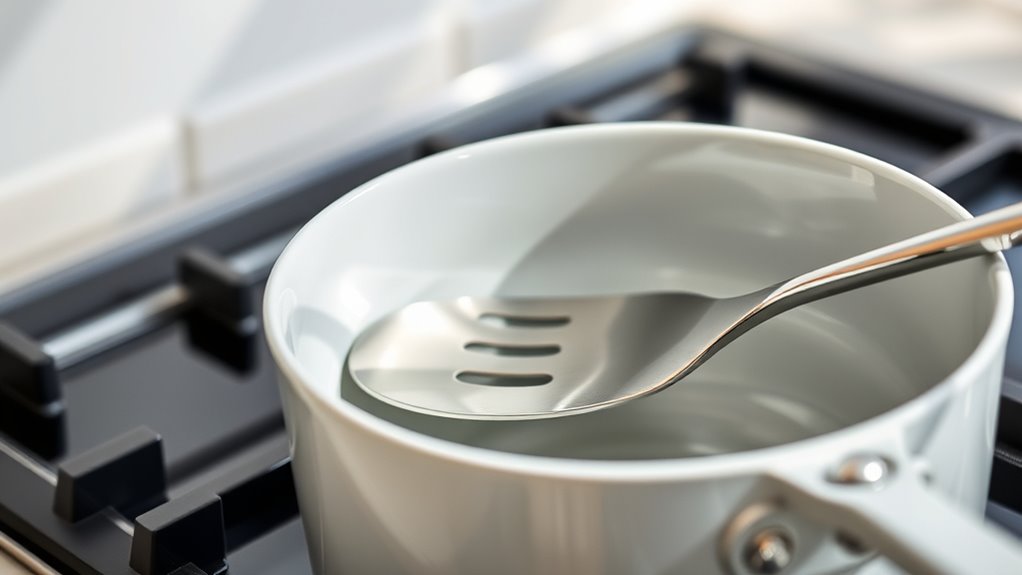
To protect your ceramic pots, consider using metal utensils with rounded edges or those coated in nylon. However, wooden or silicone utensils are the safest choice for preserving the performance and lifespan of your cookware.
Proper care will help maintain the quality and safety of your ceramic cookware over time.
Key Takeaways
- Metal utensils can scratch and damage ceramic cookware’s surface, reducing its nonstick effectiveness and lifespan over time.
- Occasional gentle use of rounded-edge stainless steel or nylon-coated metal utensils may be less harmful than aggressive scraping.
- Scratches create crevices that trap bacteria, making cleaning harder and compromising food safety and hygiene.
- Wooden, silicone, or plastic utensils are safer alternatives that preserve ceramic cookware integrity and nonstick properties.
- Proper handling, gentle cleaning, and careful storage help maintain ceramic cookware’s durability and prevent damage from utensils.
Are Metal Utensils Safe for Ceramic Cookware?
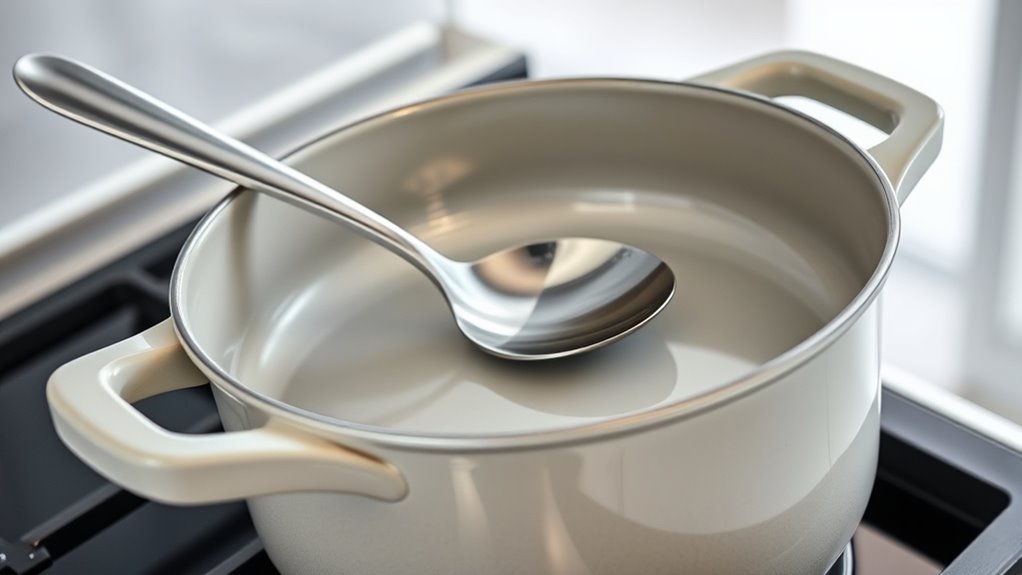
Although ceramic cookware is known for its durability and non-stick properties, you should be cautious when using metal utensils with it. Metal tools can work on ceramic surfaces, but they’re not always your best choice. If you’re careful, occasional use might not cause immediate harm, but frequent scraping or stirring with metal can wear down the surface over time.
You’ll want to avoid heavy scraping or aggressive use since ceramic coatings, while tough, aren’t invincible. Instead, consider using silicone, wooden, or plastic utensils to prolong the life of your cookware. By choosing gentler tools, you’ll keep your ceramic pots and pans looking and performing their best for longer, saving you the trouble of premature replacement or damage.
How Can Metal Utensils Damage Ceramic Coating?
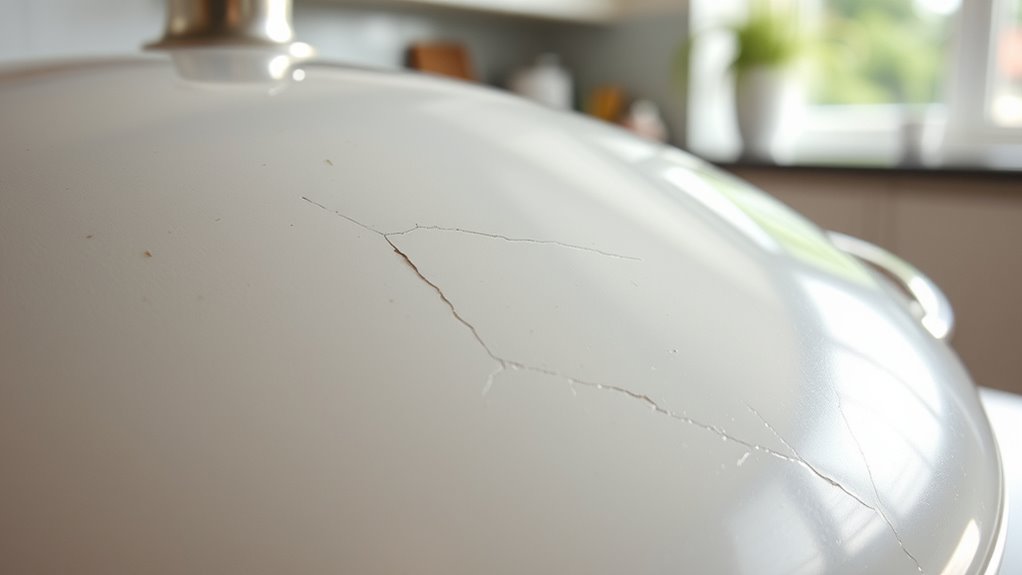
When you use metal utensils on ceramic cookware, you risk scratching the delicate surface. These scratches can reduce the nonstick effectiveness, making cooking and cleaning harder.
Over time, this wear accelerates, cutting the lifespan of your ceramic coating.
Scratching The Ceramic Surface
If you use metal utensils on ceramic cookware, you risk scratching its delicate surface. Ceramic coatings are designed to be smooth and non-porous, but metal tools have sharp edges that can easily create fine scratches or even deeper gouges. These scratches not only mar the cookware’s appearance but can compromise the integrity of the ceramic layer, making it more vulnerable to further damage.
Once scratched, the surface may become rough, which affects its durability and could trap food particles, making cleaning harder. To protect your cookware’s finish, avoid scraping or stirring aggressively with metal utensils. Instead, opt for softer tools like silicone or wooden spoons to keep that ceramic surface smooth and intact for longer use.
Reducing Nonstick Effectiveness
Because metal utensils can chip and wear down the ceramic coating, they directly reduce its nonstick effectiveness. When you use metal tools, you risk creating tiny grooves and nicks where food can stick, making cooking and cleaning harder.
Over time, these imperfections accumulate, diminishing the smooth surface that prevents food from clinging. You might notice:
- Food residue sticking more stubbornly to scratched areas
- Increased need for oil or butter to prevent sticking
- More effort required to clean your cookware
- Uneven cooking due to damaged coating spots
Accelerating Coating Wear
Using metal utensils doesn’t just reduce the nonstick properties of ceramic cookware—it also speeds up the wear and tear on its coating. When you scrape or poke with metal, you create tiny scratches and abrasions that break down the smooth surface. Over time, these imperfections worsen, causing the ceramic layer to degrade faster than it normally would.
This damage compromises the cookware’s durability and can lead to chipping or flaking of the coating. Once the protective layer weakens, your ceramic cookware becomes more vulnerable to stains and food sticking. To keep your pots and pans lasting longer, it’s best to switch to wooden, silicone, or plastic utensils.
You’ll preserve the coating’s integrity and maintain ideal cooking performance.
How to Tell If Metal Utensils Have Damaged Your Ceramic Cookware
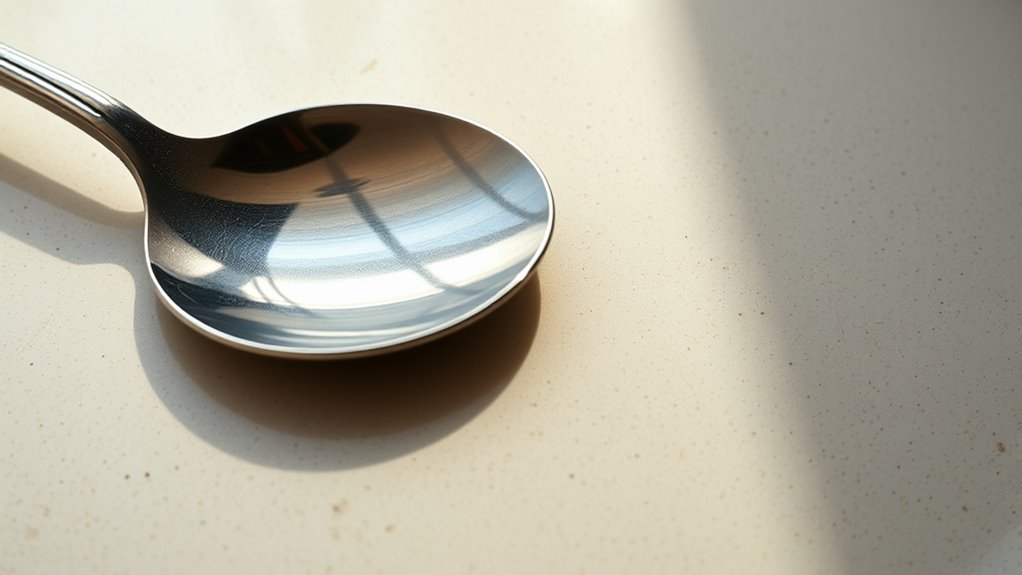
You can usually spot damage to your ceramic cookware by checking for surface scratches that weren’t there before. If your food starts sticking more than usual, that’s another sign the nonstick coating might be compromised.
Keep an eye out for these changes to know if metal utensils have caused harm.
Identifying Surface Scratches
Although ceramic cookware is designed to be durable, metal utensils can still leave visible marks or scratches on its surface. To identify if your cookware has been scratched, closely inspect the cooking area under good lighting. Look for any irregularities that stand out from the smooth finish.
Here’s what to watch for:
- Fine, shallow lines or grooves that catch the light differently
- Areas where the glossy coating appears dull or rough
- Small chips or flaking spots along edges or curves
- Discoloration or dark streaks embedded in the surface
Noticing Nonstick Performance Decline
Scratches on ceramic cookware often signal deeper issues that can affect its nonstick performance. If you notice food sticking more than usual or burning quickly, metal utensils might be to blame. These scratches create rough spots where food particles cling, making cleanup harder and ruining your cooking experience.
You might also see discoloration or dull patches where the ceramic coating has worn down. Over time, this damage reduces the cookware’s ability to cook evenly and resist sticking. To check if metal utensils caused this decline, inspect your cookware for visible scratches and test its surface by cooking something simple, like an egg.
If sticking persists, it’s a clear sign your ceramic coating has been compromised. Switching to silicone or wooden utensils can help extend your cookware’s lifespan.
Which Metal Utensils Are Safer for Ceramic Cookware?
When handling ceramic cookware, choosing the right metal utensils can prevent damage and extend its lifespan. Not all metal utensils are equally safe for ceramic surfaces. You’ll want to pick those that minimize scratching and wear while still allowing you to cook effectively.
Here are some safer metal utensil options for ceramic cookware:
- Stainless steel with rounded edges: Gentle on the surface and durable.
- Thin, flexible metal spatulas: Reduce pressure points and prevent chipping.
- Nylon-coated metal tools: Offer a protective layer over the metal core.
- Aluminum utensils with smooth finishes: Lightweight and less abrasive.
Why Wooden and Silicone Utensils Are Better Choices
Because wooden and silicone utensils are softer than metal, they cause less wear on ceramic cookware surfaces, helping you keep your pots and pans in great condition. When you use these utensils, you reduce the risk of scratching or chipping the ceramic coating, which can happen more easily with metal tools. Wooden utensils are sturdy yet gentle, making them ideal for stirring and flipping without damaging your cookware.
Silicone utensils, on the other hand, are heat-resistant and flexible, allowing you to scrape or scoop food without applying too much pressure. Plus, both materials won’t react with your food or cookware, ensuring safety and durability. Choosing wooden or silicone utensils means you’re protecting your ceramic cookware’s lifespan while cooking efficiently.
How to Protect Your Ceramic Cookware From Scratches and Chips
To keep your ceramic cookware looking and performing its best, you need to handle it with care and choose the right tools. Protecting it from scratches and chips means being mindful of how you cook and clean. Avoid sudden temperature changes and don’t stack your ceramic pots or pans without protection.
Here are some simple steps to help you protect your ceramic cookware:
- Use wooden, silicone, or plastic utensils instead of metal ones
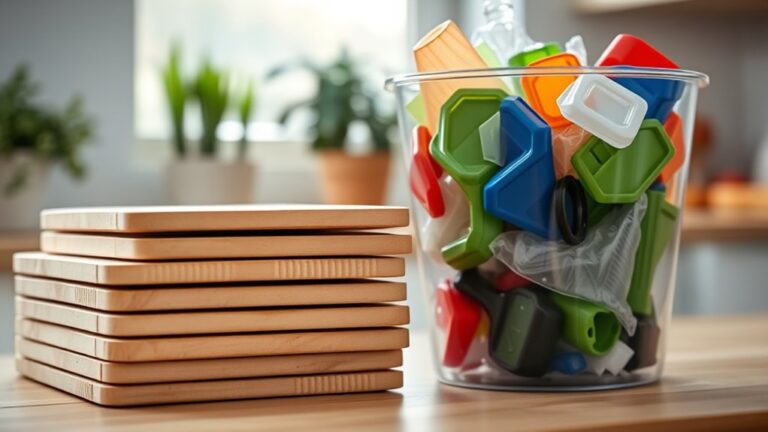
- Place soft cloths or paper towels between stacked cookware
- Avoid abrasive sponges or harsh cleaning agents when washing
- Let cookware cool completely before washing to prevent thermal shock
Do Metal Utensils Affect Cooking Performance or Safety?
Using the right utensils not only helps prevent damage to your ceramic cookware but also impacts how your food cooks and how safe your kitchen remains. When you use metal utensils, scratches can form on the ceramic surface, creating uneven spots that affect heat distribution. This uneven heating might cause your food to cook inconsistently, leading to burnt or undercooked areas.
Additionally, damaged surfaces can trap food particles and bacteria, posing a safety risk. While metal utensils won’t release toxins from the ceramic coating, the physical damage they cause can compromise your cookware’s performance and hygiene. To maintain ideal cooking results and kitchen safety, it’s best to avoid metal tools on ceramic cookware, opting instead for utensils made from softer materials like wood or silicone.
Tips to Care for Ceramic Cookware and Extend Its Lifespan
Although ceramic cookware is known for its durability, you’ll want to handle it carefully to keep it performing at its best. Proper care can prevent chipping, staining, and loss of non-stick properties, ensuring your cookware lasts for years.
Here are some simple tips to help you maintain your ceramic pots and pans:
- Use wooden, silicone, or plastic utensils instead of metal to avoid scratches.
- Avoid sudden temperature changes; let cookware cool before washing.
- Clean gently with a soft sponge and mild detergent to prevent damage.
- Store cookware carefully, preferably with protective layers between pieces.
Frequently Asked Questions
Can Metal Utensils Cause Health Risks When Used With Ceramic Cookware?
No, metal utensils don’t cause health risks with ceramic cookware. However, they can scratch the surface, which might affect cooking and durability.
You should use softer utensils to keep your cookware in better condition and safe.
Are There Specific Brands of Ceramic Cookware That Resist Metal Utensil Damage?
You’ll find some ceramic cookware brands, like GreenPan and Caraway, offer enhanced durability that gently tolerates metal utensils.
Still, it’s wise to use softer tools to preserve their elegant finish and extend their lifespan.
How Do Metal Utensils Affect the Warranty of Ceramic Cookware?
Using metal utensils usually voids your ceramic cookware’s warranty because they can scratch and damage the surface. To keep your warranty valid, stick to wooden, silicone, or plastic utensils instead.
Can Metal Utensils Be Safely Used on Ceramic Bakeware?
About 70% of ceramic bakeware users damage their pieces with metal utensils. You shouldn’t use metal on ceramic bakeware because it can scratch and chip, ruining the surface and reducing its lifespan considerably.
Do Metal Utensils Leave Residue on Ceramic Cookware Surfaces?
Yes, metal utensils can leave residue or tiny scratches on ceramic cookware surfaces. You’ll notice marks or discoloration over time, so it’s better to use silicone or wooden utensils to keep your ceramic cookware looking clean and new.
Conclusion
Using metal utensils on ceramic cookware is like walking on thin ice—you might not see damage right away, but scratches and chips can sneak up on you.
To keep your ceramic shining like new, stick with wooden or silicone tools that treat your pans like a gentle breeze. Protect your cookware, and it’ll reward you with flawless meals for years.
Remember, a little care goes a long way in preserving your kitchen’s shining star! Using the right utensils is essential when you want to maintain the quality and longevity of your ceramic cookware.