7 Cookware Types That Work With Induction Cooktops
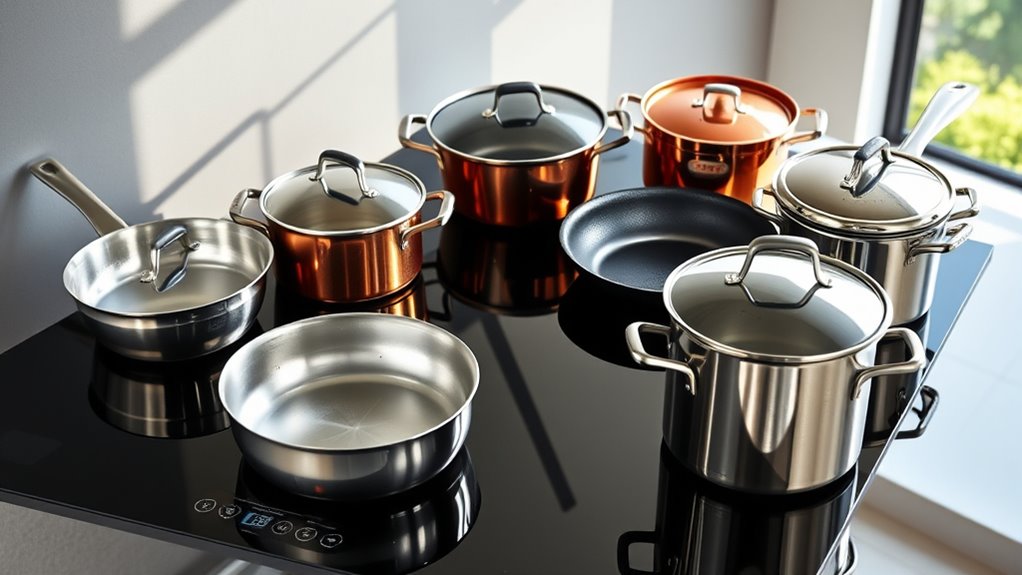
You’ll need cookware made from magnetic materials like cast iron, enameled cast iron, carbon steel, or stainless steel to work with induction cooktops. These materials are essential because induction cooking relies on magnetic fields to generate heat efficiently.
Make sure the cookware has a flat bottom for proper contact and efficient heating.
Multi-layered pieces with aluminum or copper cores also perform well, offering even heat distribution and durability. The combination of magnetic outer layers with conductive cores enhances cooking performance on induction surfaces.
If you want to know which other types and features boost your induction cooking, there’s more helpful info ahead.
Key Takeaways
- Cast iron cookware is naturally magnetic and ideal for induction cooktops due to its even heating and durability.
- Enameled cast iron combines heat retention with a magnetic base, offering rust resistance and easy maintenance.
- Carbon steel is lightweight, magnetic, heats quickly, and provides responsive temperature control for induction cooking.
- Stainless steel cookware with a magnetic core and flat, thick base works well if verified with a magnet.
- Multi-layered cookware with aluminum or copper cores enhances heat conduction and ensures even cooking on induction surfaces.
What Makes Cookware Compatible With Induction Cooktops
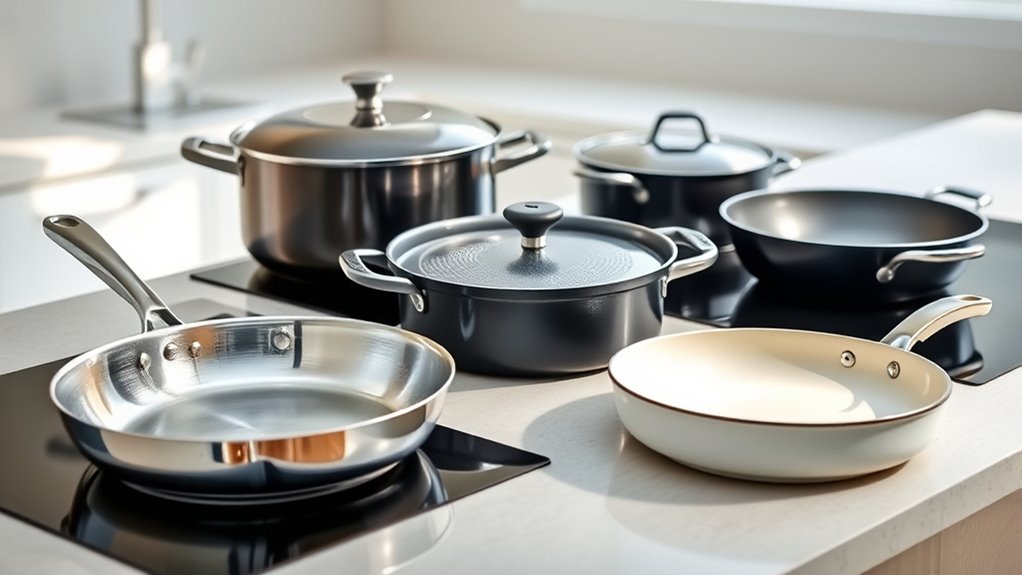
Although induction cooktops offer efficient and precise heating, they only work with certain types of cookware. You need pots and pans made from magnetic materials like stainless steel or those with a magnetic base. If your cookware isn’t magnetic, the cooktop won’t generate heat since it relies on electromagnetic fields to induce heat directly in the pan.
You can easily check if your cookware is compatible by placing a magnet on the bottom—if it sticks firmly, it’ll work. Also, flat-bottomed cookware is essential because uneven surfaces can disrupt the magnetic connection, reducing efficiency and causing uneven cooking.
Cast Iron Cookware: Durable and Induction-Ready
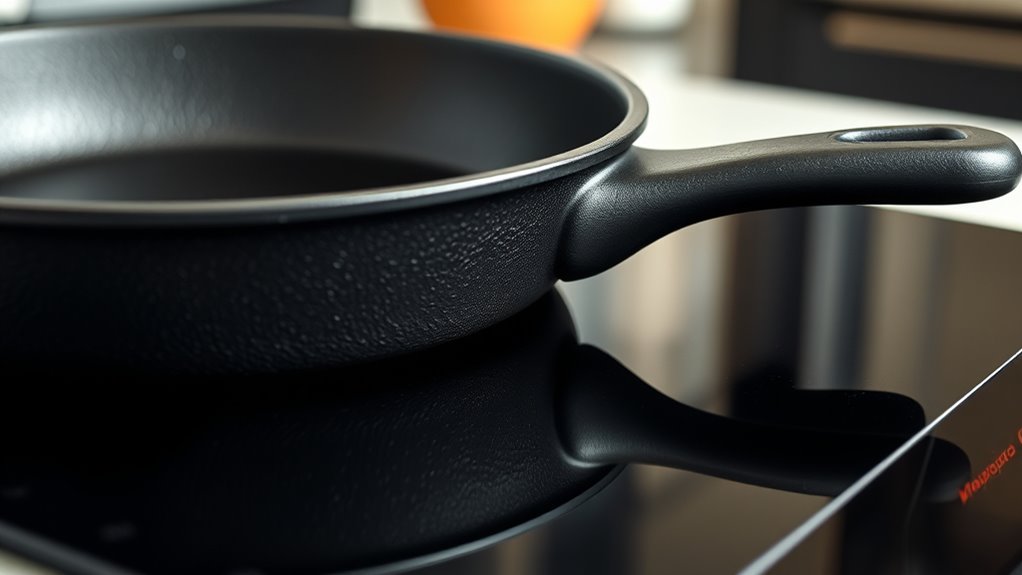
Why choose cast iron cookware for your induction cooktop? Because it’s naturally magnetic, cast iron works perfectly with induction technology. You’ll get fast, even heating that helps your meals cook consistently without hot spots.
Plus, cast iron is incredibly durable—it can withstand high heat and lasts for decades if you take care of it. When you use cast iron, you’re also getting versatile cookware that can go from stovetop to oven seamlessly. The weight might take some getting used to, but the benefits outweigh that minor inconvenience.
Just be sure to season your cast iron properly to maintain its non-stick surface and prevent rusting. With cast iron, you’re investing in reliable, induction-ready cookware that performs every time.
Enameled Cast Iron Cookware: Style Meets Induction Functionality
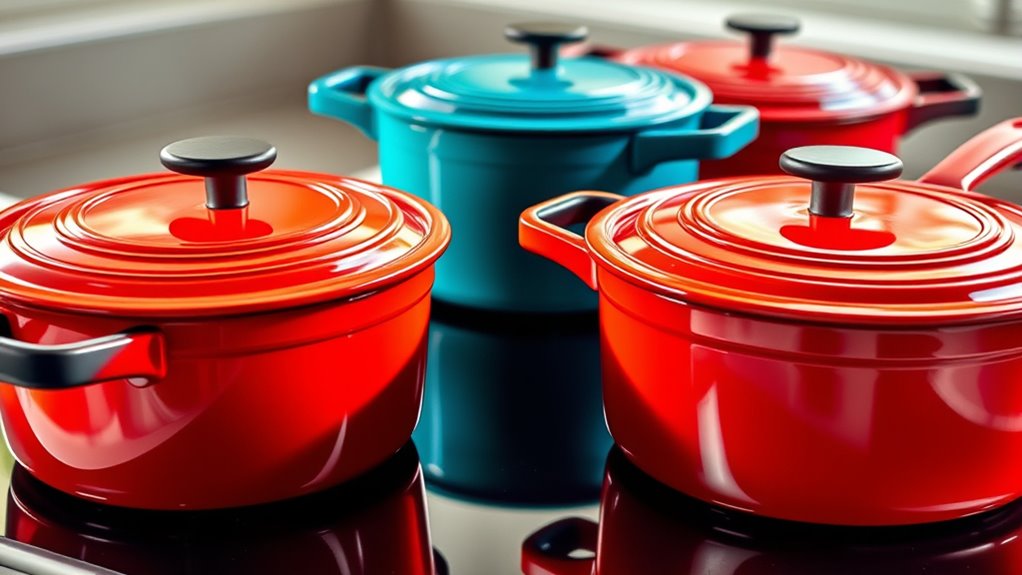
You’ll love how enameled cast iron cookware holds heat evenly while adding a pop of color to your kitchen. It’s built tough and works perfectly on induction cooktops.
Plus, its stylish finish means you don’t have to sacrifice looks for functionality.
Durable Heat Retention
How can cookware combine both style and superior heat retention on your induction cooktop? Enameled cast iron cookware nails this by offering exceptional heat retention that keeps your meals cooking evenly. When you use it, the heavy cast iron core absorbs and holds heat longer than many other materials, so your food stays warm even after you turn off the burner.
This durability means you can rely on it for slow-cooking stews, braises, and other recipes that demand consistent temperatures. Plus, the enamel coating prevents rust and eliminates the need for seasoning, making maintenance easier.
With enameled cast iron, you get cookware that not only looks great but also performs reliably, giving you confidence and control every time you cook on your induction cooktop.
Stylish Color Options
Enameled cast iron cookware doesn’t just perform well on your induction cooktop—it also brings vibrant color and style to your kitchen. You can choose from a wide array of shades, from bold reds and blues to soft pastels and classic neutrals. This variety lets you match your cookware to your kitchen’s decor or add a pop of color that reflects your personality.
The glossy enamel finish not only looks stunning but also resists staining and scratches, keeping your pots and pans looking fresh over time. Plus, the stylish appearance means you can take them straight from cooktop to table, impressing guests without needing extra serving dishes. With enameled cast iron, you get both function and flair in one package.
Compatible With Induction
What makes cookware truly compatible with induction cooktops? It’s all about magnetic properties and heat conductivity. Enameled cast iron cookware fits perfectly because it combines style with powerful induction functionality.
When you use it, you get even heating and excellent heat retention, vital for cooking precision. Plus, the enamel coating prevents rust and adds a sleek, colorful finish that looks great on your stove.
Here’s why enameled cast iron works so well with induction:
- Magnetic base ensures efficient energy transfer
- Durable construction withstands high heat
- Non-reactive enamel surface resists stains and corrosion
- Retains heat for steady cooking temperatures
- Easy to clean with a smooth, glossy finish
You’ll enjoy both form and function every time you cook.
Carbon Steel Cookware: Lightweight and Induction Friendly
You’ll appreciate carbon steel cookware for its durable yet lightweight design, making it easy to handle during cooking. Its magnetic properties guarantee excellent compatibility with induction cooktops.
This combination gives you a versatile option that heats quickly and performs reliably.
Durable And Lightweight Design
Although carbon steel cookware has a reputation for durability, it remains surprisingly lightweight, making it easy for you to handle during cooking. This balance means you won’t struggle lifting heavy pans, especially when they’re full, yet you’ll still enjoy cookware that withstands daily use.
Its design offers several benefits:
- Quick heating and responsive temperature control
- Reduced wrist strain during lengthy cooking sessions
- Easier maneuvering for tossing and flipping ingredients
- Long-lasting resistance to warping and dents
- Convenient storage due to lighter weight
With carbon steel, you get a practical combination of strength and ease, perfect for both home cooks and professionals who want reliable, user-friendly cookware on their induction cooktops.
Magnetic Properties For Induction
Because induction cooktops rely on magnetic fields to generate heat, cookware must have strong magnetic properties to work efficiently. Carbon steel cookware fits this requirement perfectly. When you use carbon steel on an induction cooktop, it heats up quickly and evenly because the metal’s magnetic nature interacts directly with the cooktop’s electromagnetic field.
You’ll also appreciate how lightweight carbon steel is compared to cast iron, making it easier to handle during cooking. Plus, it’s durable and resistant to warping, so it holds up well under frequent use. If you want cookware that’s both induction-friendly and easy to maneuver, carbon steel is a smart choice.
Just make sure your carbon steel pans have a smooth, flat bottom for the best contact with your cooktop.
Stainless Steel Cookware That Works Well on Induction
When choosing stainless steel cookware for your induction cooktop, it’s important to verify the base contains magnetic properties. Not all stainless steel works with induction, so you’ll want cookware specifically designed for that purpose.
Look for pieces with a thick, layered base that enhances heat distribution and prevents warping. High-quality stainless steel cookware often combines durability with efficient cooking performance on induction surfaces. Here are key features to take into account:
- Multi-ply construction with an iron or magnetic stainless steel core
- Flat and smooth base for full contact with the cooktop
- Heavy gauge metal for even heat retention
- Rust and corrosion resistance for longevity
- Oven-safe and dishwasher-friendly designs for versatility
Picking the right stainless steel cookware ensures you get reliable, even heating every time.
Identifying Magnetic Stainless Steel Cookware for Induction
To guarantee your stainless steel cookware works on an induction cooktop, you need to confirm it has magnetic properties. You can test this easily by holding a magnet to the bottom of the pan. If the magnet sticks firmly, the cookware is induction-compatible.
Keep in mind, not all stainless steel is magnetic; some types, particularly those labeled 18/10, might not work. Look for cookware explicitly marked as induction-ready or magnetic stainless steel. When shopping, check product descriptions or labels for this information.
Avoid guessing based on appearance alone, as some non-magnetic stainless steel looks very similar. By ensuring your cookware attracts a magnet, you’ll avoid compatibility issues and make the most of your induction cooktop’s efficiency.
Multi-Layered Cookware With Induction-Ready Bases
Magnetic stainless steel cookware works well with induction cooktops, but you can also explore multi-layered cookware designed specifically for induction use. These pieces combine different metals in layers, creating a base that heats evenly and responds quickly to your cooktop’s magnetic field.
When choosing multi-layered cookware, look for:
- An induction-ready base made of magnetic stainless steel or iron
- Aluminum or copper core layers for excellent heat conduction
- Durable construction to prevent warping over time
- Compatibility with your cooktop’s size and power settings
- Oven-safe qualities for versatile cooking options
This type of cookware offers precise temperature control and energy efficiency, making your induction cooking experience smoother and more enjoyable.
Frequently Asked Questions
Can Induction Cookware Be Used on Gas or Electric Stoves?
Yes, you can use induction cookware on gas or electric stoves. Just remember, induction pans have magnetic bottoms, so they’ll work fine on other stoves, but performance might differ compared to specialized cookware for those types.
How Do I Clean and Maintain Induction-Compatible Cookware?
You don’t need a magic wand—just wash your induction cookware with warm, soapy water after every use. Avoid abrasive scrubbers, dry thoroughly, and gently season cast iron to keep it gleaming like new!
Are There Specific Cookware Sizes Recommended for Induction Cooktops?
You should use cookware that matches your induction cooktop’s burner size for even heating. Avoid pots or pans that are too small or too large, as they can reduce efficiency and cause uneven cooking.
Do Non-Stick Coatings Affect Induction Cooking Performance?
Non-stick coatings don’t affect induction cooking performance since induction relies on the cookware’s magnetic base, not the surface.
Just make sure your non-stick pan has a ferromagnetic bottom to work efficiently on your induction cooktop.
Can I Use Glass or Ceramic Cookware on Induction Cooktops?
You can’t use glass or ceramic cookware directly on induction cooktops because they lack the magnetic properties needed.
However, you can use an induction interface disk to make them work effectively on your induction stove.
Conclusion
You might’ve heard that any metal cookware works on induction, but that’s not true. Only pots and pans with magnetic bases actually heat up. Luckily, cast iron, carbon steel, and certain stainless steel types fit the bill perfectly.
With multi-layered options too, you’ve got plenty of choices to match your cooking style. Knowing what works means you’ll never waste energy or patience—your induction cooktop and cookware will work in perfect harmony every time. Choosing the right cookware types that work with induction cooktops ensures efficient cooking and great results.