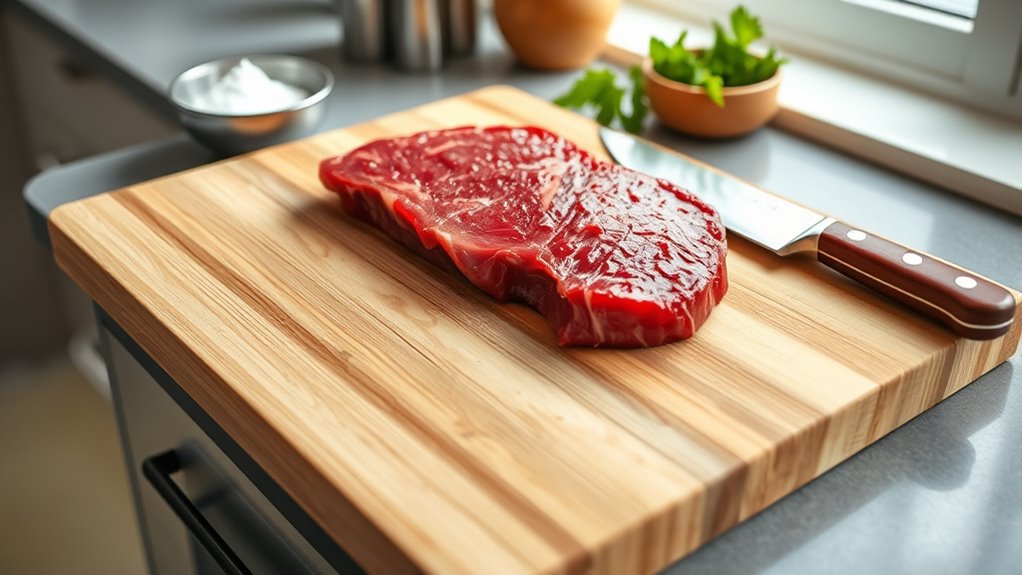
How Do You Safely Use Wood Cutting Boards for Meat?
To safely use wood cutting boards for meat, start by choosing a durable, tight-grain hardwood that resists moisture and bacteria. Wood cutting boards are favored for their natural antibacterial properties and durability, making them a great choice for meat preparation.
It’s essential to keep the board stable while cutting to prevent accidents and ensure precise cuts.
Clean up meat residue immediately with hot, soapy water to remove surface bacteria and sanitize the board with vinegar or a diluted bleach solution. Avoid soaking the board in water, as this can cause warping and damage the wood fibers.
After cleaning, dry the board thoroughly and store it upright in a dry area with good airflow to prevent moisture buildup.
Regularly inspect the cutting board for cracks or deep cuts where bacteria can hide. Replace the board if it becomes damaged to maintain hygiene and safety.
Following these steps helps you maintain hygiene and board longevity—there’s more to mastering care and safety.
Key Takeaways
- Use a separate wood cutting board exclusively for raw meat to prevent cross-contamination with other foods.
- Clean the board immediately after use with hot, soapy water, then sanitize with vinegar or diluted bleach.
- Avoid soaking the board; dry it thoroughly and store upright in a dry, ventilated area to prevent warping and bacteria growth.
- Regularly inspect for cracks, deep knife marks, warping, or discoloration, and replace the board if damage compromises safety.
- Maintain the board by sanding deep grooves and oiling periodically to preserve its surface and natural antimicrobial properties.
Benefits of Using Wood Cutting Boards for Meat
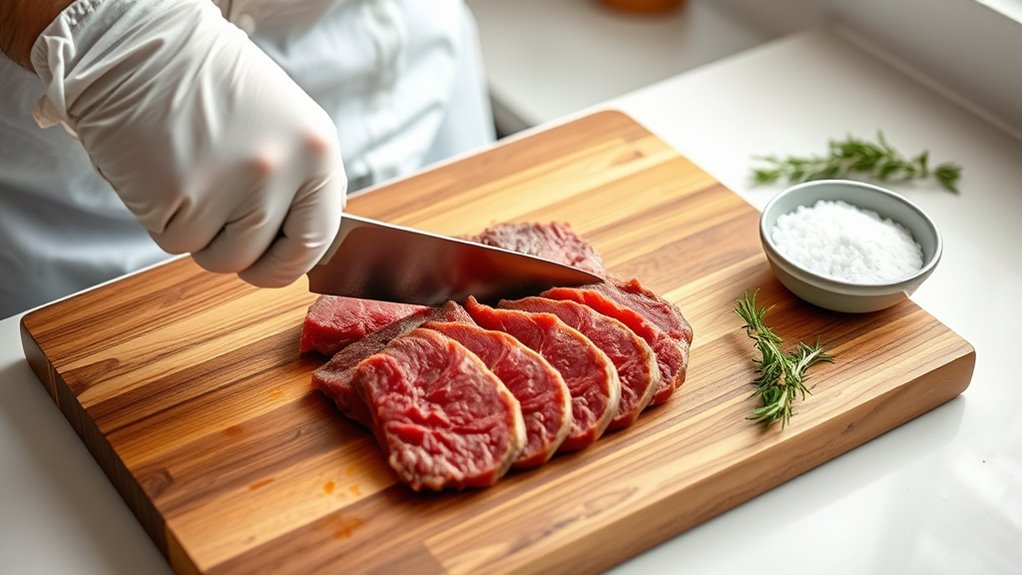
Although some people worry about hygiene, wood cutting boards offer several benefits when handling meat. You’ll find that wood is naturally antimicrobial, helping to reduce bacteria growth on its surface. Plus, wood’s texture is gentle on your knives, keeping them sharper longer compared to harder surfaces like glass or ceramic.
You also get a stable cutting surface; wood provides enough grip to prevent meat from slipping, which makes your prep safer and more efficient. Another advantage is wood’s durability—small cuts and grooves tend to close up over time, minimizing bacteria traps. Using a well-maintained wood board can improve your kitchen experience by combining safety, knife preservation, and effective cutting, so you don’t have to sacrifice quality when working with raw meat.
What Risks Should You Know About Using Wood Boards With Raw Meat?
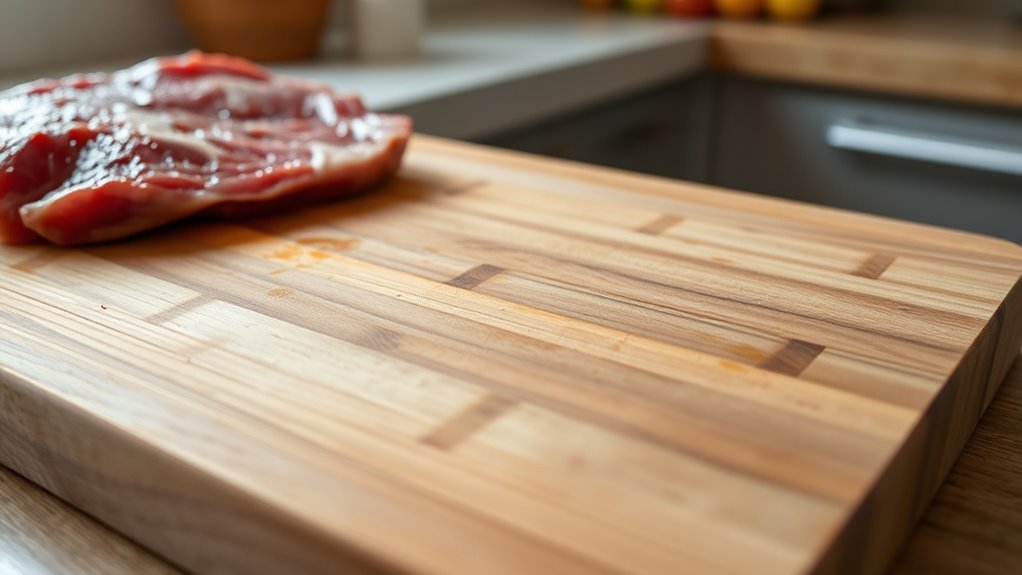
When you use wood cutting boards with raw meat, you need to watch out for bacterial contamination because wood’s porous nature can trap harmful germs. If you don’t clean and maintain the board properly, those bacteria can linger and spread.
Preventing cross-contamination is key to keeping your food safe and your kitchen healthy.
Bacterial Contamination Risks
Because raw meat often carries harmful bacteria like Salmonella and E. coli, using wood cutting boards without proper care can increase the risk of cross-contamination. These bacteria can transfer from the meat to your board’s surface, then to other foods or utensils, causing foodborne illness. While wood has natural antimicrobial properties, it’s not foolproof.
If you don’t clean your board thoroughly after each use, bacteria can linger in cuts and grooves. You should always wash your board with hot, soapy water immediately after handling raw meat and sanitize it regularly. Avoid letting raw meat juices sit on the board.
Wood Porosity Concerns
Since wood is naturally porous, its surface can absorb liquids and bacteria from raw meat, making thorough cleaning essential. These tiny pores can trap juices, creating a breeding ground for harmful microbes if not properly maintained.
You should be aware that deep cuts and grooves increase porosity, harboring bacteria even after washing. Regularly inspecting your board for damage and replacing it when necessary helps minimize risks.
| Concern | Impact | Action Needed |
|---|---|---|
| Liquid absorption | Traps meat juices | Clean immediately |
| Bacterial growth | Hidden in pores | Use hot water and soap |
| Grooves and cuts | Increase porous areas | Sand or replace damaged board |
| Drying time | Prolongs moisture retention | Air dry thoroughly |
| Oil treatment | Reduces porosity | Apply food-safe mineral oil |
Cross-Contamination Prevention
Although wood cutting boards offer durability and natural antimicrobial properties, you still need to be vigilant about cross-contamination risks when handling raw meat. Raw meat can harbor harmful bacteria like Salmonella and E. coli, which can transfer to other foods if you’re not careful.
To prevent this, follow these key practices:
- Use separate cutting boards for raw meat and other foods.
- Clean boards immediately after use with hot, soapy water.
- Sanitize your board regularly, especially after cutting meat.
- Avoid placing cooked food on surfaces that touched raw meat.
- Inspect your board for deep cuts that can trap bacteria and replace if necessary.
How to Select the Right Wood Cutting Board for Meat
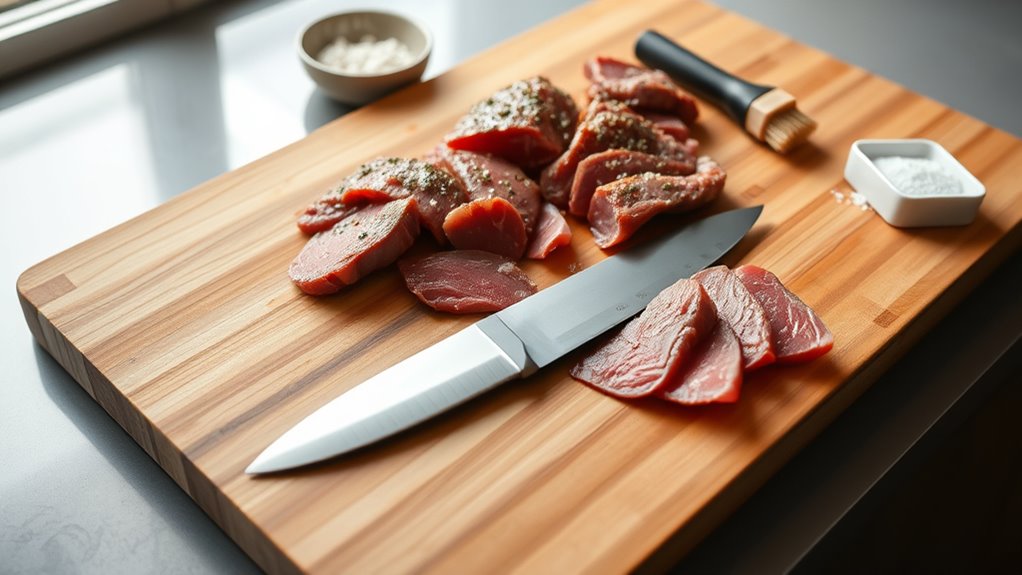
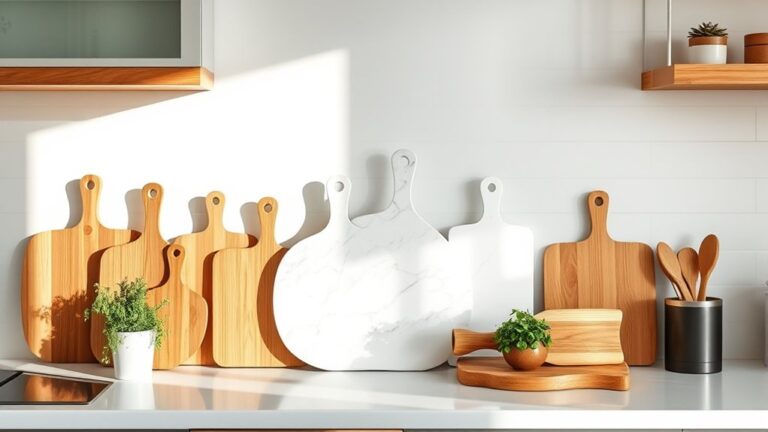
When choosing a wood cutting board for meat, you’ll want to focus on durability and grain type to guarantee safety and longevity. Hardwoods like maple, walnut, or cherry are ideal because they resist deep cuts where bacteria can hide. Avoid softwoods that scar easily.
Opt for boards with a tight, closed grain; they’re less absorbent and easier to sanitize. End-grain boards are excellent since their fibers absorb less moisture and self-heal cuts, extending the board’s life. Size matters too—choose one large enough to comfortably handle meat without crowding, reducing cross-contamination risk.
Finally, pick a board with a stable, non-slip base to prevent accidents during use. By selecting the right wood cutting board, you create a safer surface for meat preparation.
How to Clean Wood Cutting Boards Safely After Meat Use
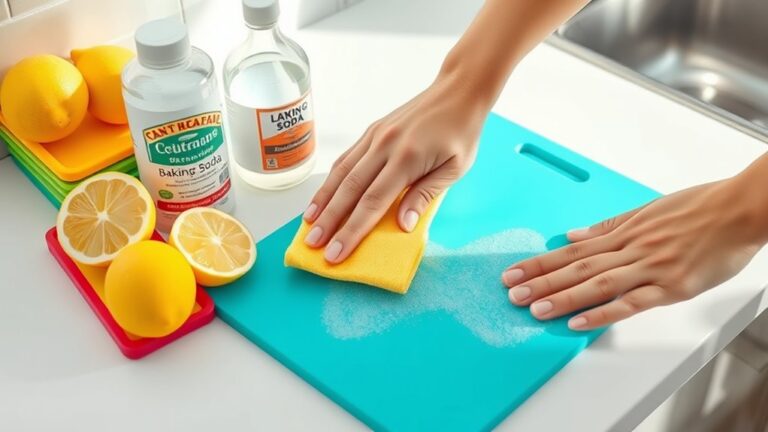
Properly cleaning your wood cutting board after handling meat is essential to prevent harmful bacteria from lingering. You should act promptly to keep your board safe and in good condition. Start by scraping off any meat residue using a bench scraper or spatula.
Then, rinse the board with hot water to wash away loose particles. Follow these steps to clean your wood cutting board safely:
- Use mild dish soap and a soft sponge to scrub the surface gently.
- Rinse thoroughly with hot water to remove soap and debris.
- Avoid soaking the board to prevent warping or cracking.
- Dry the board immediately with a clean towel.
- Stand the board upright or prop it to air dry completely.
These practices help maintain hygiene and extend your board’s lifespan.
How to Sanitize Wood Cutting Boards Without Damaging Them
Since wood is porous and can absorb liquids, you’ll need to sanitize your cutting board carefully to kill bacteria without causing damage. After cleaning, use a solution of one tablespoon of unscented liquid chlorine bleach per gallon of water. Apply it evenly, let it sit for a few minutes, then rinse thoroughly with hot water.
Avoid soaking your board or using harsh chemicals, as this can warp or crack the wood. Another effective method is to rub the surface with white vinegar, which naturally disinfects without harming the wood. Let your board air dry completely in a well-ventilated area before storing.
Regularly sanitizing your wood board this way keeps it safe without compromising its longevity.
How to Prevent Cross-Contamination When Using Wood Boards
Although wood cutting boards are durable and attractive, you need to take specific steps to prevent cross-contamination when using them for meat. Cross-contamination can spread harmful bacteria, so keeping your boards clean and separate is essential.
Wood cutting boards are durable but require careful cleaning to prevent harmful cross-contamination.
Here’s how you can prevent it:
- Use separate cutting boards for meat and other foods like vegetables or bread.
- Always wash your wood board thoroughly with hot, soapy water immediately after use.
- Avoid soaking wood boards, as excess water can damage them and harbor bacteria.
- Sanitize the board regularly with a vinegar or diluted bleach solution.
- Dry your board completely before storing to prevent bacterial growth and warping.
When and How to Oil Your Wood Cutting Board for Longevity
If you want your wood cutting board to last, you’ll need to oil it regularly to prevent drying and cracking. Apply food-grade mineral oil once a month or whenever the board looks dry. After cleaning and drying your board completely, pour a small amount of oil onto the surface.
Use a clean cloth or paper towel to rub the oil in, covering all sides and edges evenly. Let the oil soak in for several hours or overnight. Wipe off any excess oil with a dry cloth before storing.
Avoid vegetable or olive oils, as they can turn rancid. Regular oiling keeps your board hydrated, prevents warping, and maintains a smooth cutting surface, ensuring it stays safe and functional for handling meat.
Inspecting Wood Boards for Damage and When to Replace Them
You should regularly check your wood cutting board for cracks, splits, and deep knife marks that can harbor bacteria. Keep an eye out for warping or discoloration, which can affect the board’s safety and performance. Knowing when to replace your board helps keep your kitchen clean and your meat safe.
Identifying Cracks and Splits
When inspecting your wood cutting board, pay close attention to any cracks or splits that may have developed over time. These imperfections can harbor bacteria, making them unsafe for meat preparation. Even small cracks can worsen with use, so catching them early is key.
Here’s what to look for:
- Visible splits along the grain or edges
- Tiny hairline cracks that may not be obvious at first
- Areas where the wood has started to separate or lift
- Uneven surfaces caused by splitting wood fibers
- Signs of moisture trapped within cracks, causing swelling or discoloration
If you spot any of these, it’s time to evaluate whether sanding can fix the issue or if replacing the board is a safer choice to prevent contamination.
Assessing Deep Knife Marks
Although wood cutting boards are durable, deep knife marks can develop over time and create hidden crevices where bacteria thrive. You should regularly inspect your board’s surface, running your fingers over it to feel for these grooves. If you notice marks deeper than a few millimeters, it’s time to sand the board down to restore a smooth surface.
Use fine-grit sandpaper and work evenly across the entire cutting area. After sanding, clean and oil the board to maintain its condition. However, if the knife marks are extensive or have caused splintering, replacing the board is safer than risking contamination.
Recognizing Warping and Discoloration
Since wood cutting boards absorb moisture and undergo temperature changes, they can warp or discolor over time, compromising their safety and effectiveness. You need to inspect your board regularly to spot these issues early. Warping causes uneven surfaces that can trap bacteria, while discoloration may indicate mold or deep stains from raw meat juices.
Look for these signs:
- Uneven or raised edges causing instability
- Bowed or cupped surface that doesn’t lay flat
- Dark spots or patches that won’t lift with cleaning
- Persistent odors even after washing
- Cracks or splits along the surface
If you notice any of these, it’s time to replace your board to keep your food prep safe and hygienic.
How to Store Wood Cutting Boards to Keep Them Safe and Dry
To keep your wood cutting boards safe and dry, you’ll want to store them in a way that promotes air circulation and prevents moisture buildup. Avoid stacking boards directly on top of each other; instead, stand them upright on their edges in a rack or on a shelf with enough space between each board. This allows air to flow freely around them, reducing the chance of mold or warping.
Make sure your storage area is dry and well-ventilated, away from sinks or dishwashers where humidity is high. If possible, use a dedicated spot for your cutting boards, keeping them separate from raw meat or other contaminants. Proper storage extends your board’s life and keeps it hygienic for safe meat preparation.
Frequently Asked Questions
Can Wood Cutting Boards Dull My Knives Faster Than Plastic?
Yes, wood cutting boards can dull your knives faster than plastic because wood fibers are denser and resist blade edges more. However, you can minimize dulling by regularly maintaining both your knives and boards properly.
Are Certain Wood Types Naturally Antimicrobial?
Some woods quietly carry nature’s secret guards—yes, certain types like maple and teak have natural antimicrobial properties. You’ll find they gently help keep your cutting board cleaner, making your kitchen tasks a bit safer and smoother.
Is It Safe to Put Wood Cutting Boards in the Dishwasher?
No, you shouldn’t put wood cutting boards in the dishwasher. The heat and water can crack and warp the wood.
Instead, wash them by hand with mild soap and dry immediately to keep them safe and lasting longer.
How Do Temperature Changes Affect Wood Cutting Boards?
Oh, sure, slam your wood board into extreme heat or freezing cold—it’s like a spa day for cracks and warps!
You’ll want to avoid drastic temperature swings to keep your board happy and sturdy.
Can I Use the Same Wood Board for Meat and Vegetables if Cleaned?
You can use the same wood board for meat and vegetables if you clean it thoroughly with hot, soapy water and sanitize it.
But it’s safer to use separate boards to avoid any cross-contamination risks.
Conclusion
Using wood cutting boards for meat offers natural durability and style, but ignoring proper care risks harmful bacteria lurking unseen. You can enjoy the warmth and reliability of wood by cleaning, sanitizing, and oiling it regularly—turning a potential hazard into a trusted kitchen ally.
Remember, neglect leads to cracks where germs hide, but careful upkeep transforms your board into a safe, lasting companion. The choice is yours: risk contamination or embrace safe, confident cooking. Proper maintenance and hygiene are key to safely using wood cutting boards for meat.