How to Clean Stainless Steel Cookware
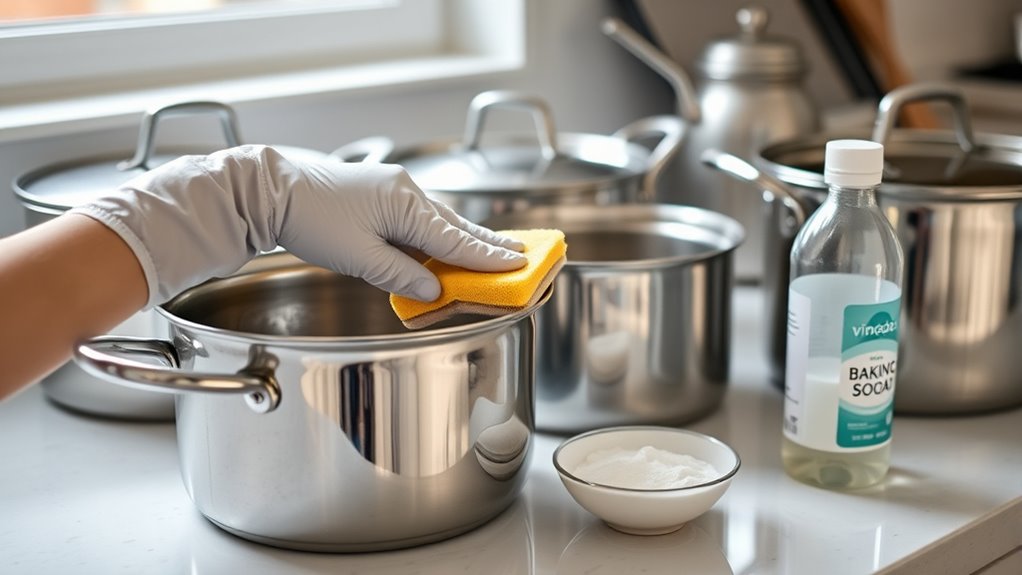
To clean your stainless steel cookware effectively, start by rinsing it with warm water after each use. Stainless steel cookware requires gentle care to maintain its shine and durability. Use mild dish soap and a soft sponge to wash the surface, avoiding scratches and damage.
For tougher stains or burnt food, soak the cookware in warm soapy water to loosen residue. Then, gently scrub with a baking soda paste or a vinegar solution to lift stubborn marks. This method helps restore the cookware’s appearance without harsh abrasion.
After washing, dry the cookware immediately to prevent water spots from forming. Store your stainless steel pieces carefully to avoid scratches and dents. Avoid abrasive cleaners and harsh chemicals, which can damage the surface.
By following these simple cleaning and maintenance tips, you can keep your stainless steel cookware shiny and lasting longer. Exploring prevention and polishing techniques will enhance both the look and performance of your cookware over time.
Key Takeaways
- Rinse cookware with warm water and mild dish soap using a soft sponge; avoid abrasive scrubbers to prevent scratches.
- Soak burnt or stubborn stains in warm, soapy water, then gently scrub with a baking soda paste or vinegar solution.
- Immediately dry cookware with a soft towel to prevent water spots and maintain its shine.
- Use natural cleaners like baking soda, vinegar, or lemon juice for removing discoloration and mineral deposits.
- Store cookware properly with cloth or paper towels between items to avoid scratches and tarnish.
Basic Daily Cleaning Tips for Stainless Steel Cookware

Although stainless steel cookware is durable, you should clean it properly after each use to keep it looking its best. Start by letting the pan cool slightly, then rinse it with warm water to remove loose food particles. Use a soft sponge or cloth with mild dish soap to wash the surface gently—avoid abrasive scrubbers that can scratch the finish.
Rinse thoroughly to make certain no soap residue remains, as this can dull the shine. Dry your cookware immediately with a soft towel to prevent water spots and maintain its polished look. For daily maintenance, avoid soaking stainless steel for extended periods, as this may lead to discoloration.
Following these simple steps will help you keep your stainless steel cookware clean and in great condition for everyday use.
How to Remove Burnt-On Food From Stainless Steel Cookware
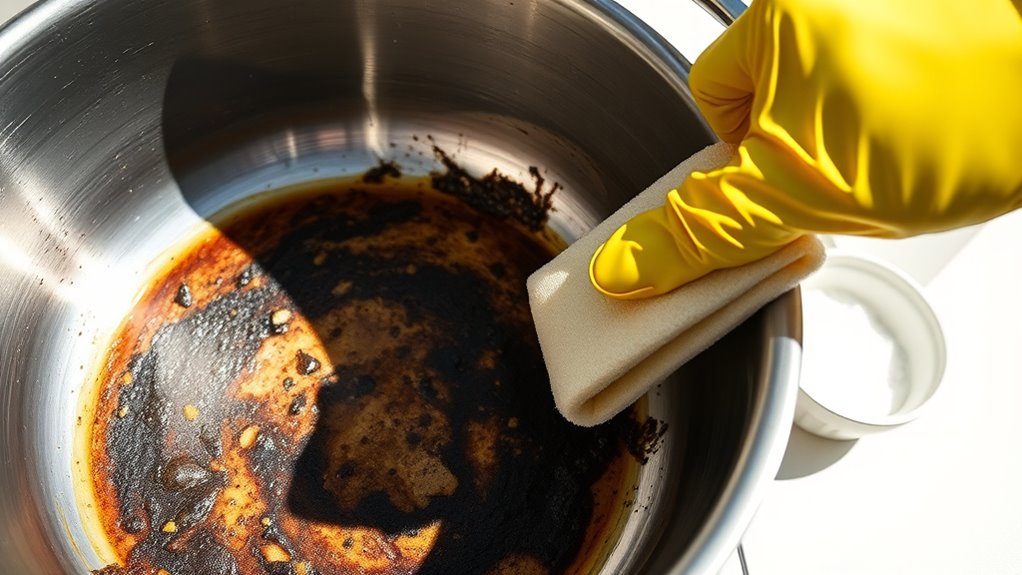
When burnt-on food sticks to your stainless steel cookware, soaking it in warm, soapy water can help loosen the residue. After soaking, use a non-abrasive scrubber to gently remove the food without damaging the surface.
These simple steps make cleanup easier and keep your cookware looking great.
Soaking Techniques
Since burnt-on food can be stubborn, soaking your stainless steel cookware is one of the most effective ways to loosen residue before scrubbing. You’ll want to fill the pan with warm water and add the right soaking agent depending on the level of burnt food.
Here’s a quick guide:
| Soaking Agent | When to Use |
|---|---|
| Warm water + soap | Light residue |
| Baking soda + water | Moderate burnt food |
| Vinegar + water | Tough burnt spots |
| Dish detergent + hot water | Heavy burnt layers, soak longer |
Let the cookware soak for at least 30 minutes. For tougher stains, you can leave it for a few hours or overnight.
This softens the food debris, making it easier to remove without damaging your stainless steel.
Scrubbing Methods
Before you start scrubbing, make sure your cookware has soaked long enough to loosen the burnt food. Use a non-abrasive scrubber like a nylon sponge or a soft-bristle brush to avoid scratching the stainless steel surface. For tougher spots, sprinkle baking soda over the burnt areas and add a little water to form a paste.
Gently scrub in circular motions, applying just enough pressure to lift the residue without damaging the finish. Avoid steel wool or harsh scouring pads, as they can leave scratches. If stubborn stains persist, try using a mixture of vinegar and water before scrubbing again.
Rinse thoroughly after scrubbing and dry immediately to prevent water spots. With the right technique, you’ll restore your cookware’s shine efficiently and safely.
Identifying Stains and Residue on Stainless Steel
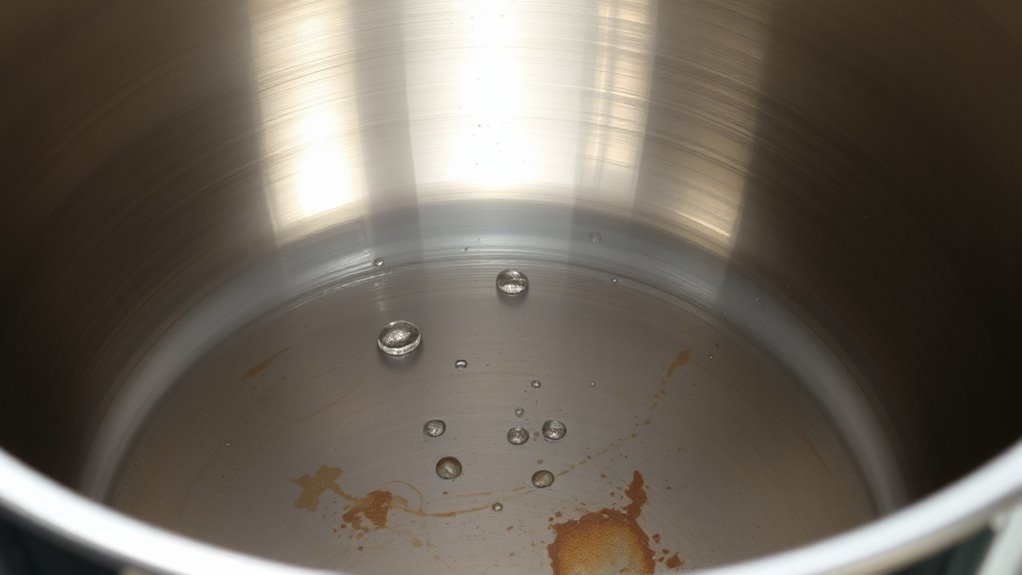
You’ll often find water spots, discoloration, and greasy residue on your stainless steel cookware. These stains come from minerals, food oils, and sometimes leftover cooking sprays.
Recognizing these common marks helps you choose the right cleaning method to restore your cookware’s shine.
Common Stainless Steel Stains
Although stainless steel is known for its durability and resistance to rust, it can still develop various stains and residues over time. When you spot discoloration or marks, it’s important to identify them quickly to keep your cookware in top shape.
Here are three common stains you might encounter:
- Water Spots – These appear as dull, cloudy patches caused by mineral deposits from hard water.
- Heat Tint – You’ll notice rainbow-colored or bluish hues, usually from overheating.
- Fingerprints and Smudges – Oils and dirt from your hands leave visible marks, especially on polished surfaces.
Recognizing these stains helps you choose the best cleaning method and prevent permanent damage to your stainless steel cookware.
Types of Residue Found
How can you tell what kind of residue has settled on your stainless steel cookware? Identifying the residue helps you choose the right cleaning method. Residue often varies in texture, color, and source.
Some stick stubbornly, while others wipe away easily. Here’s a quick guide to common residues you might find:
| Residue Type | Description |
|---|---|
| Water Spots | White, chalky marks from minerals |
| Grease/Oil | Oily, shiny films |
| Burnt Food | Dark, crusty patches |
| Discoloration | Rainbow-like or dull gray areas |
| Soap Scum | Filmy, sticky layer |
How to Use Natural Ingredients to Clean Stainless Steel Cookware
When tackling stains and buildup on your stainless steel cookware, natural ingredients offer a safe and effective solution. You can easily harness their power with simple steps:
- Baking Soda Paste: Mix baking soda with a little water to form a paste. Apply it to the cookware, let it sit for 10 minutes, then scrub gently with a soft cloth to remove stains and discoloration.
- Vinegar Rinse: Pour white vinegar into the pot or pan, let it sit for a few minutes, then rinse thoroughly. Vinegar breaks down mineral deposits and restores shine.
- Lemon Juice Spot Clean: Rub lemon juice directly on spots or stains, then rinse. Its natural acidity lifts residue without harming the surface.
Using these ingredients helps keep your cookware sparkling without harsh chemicals.
Best Household Cleaners for Tough Stainless Steel Stains
Natural ingredients work well for light stains, but tougher marks on your stainless steel cookware may need stronger household cleaners. You can rely on baking soda combined with a small amount of dish soap to create a paste that tackles burnt-on food effectively.
For stubborn discoloration or grease, try using white vinegar; spray it on, let it sit for a few minutes, then scrub gently with a non-abrasive sponge. Another handy option is a commercial stainless steel cleaner, designed specifically to handle tough stains without damaging the surface.
Remember to avoid bleach or harsh chemical cleaners, as they can cause discoloration or corrosion. Always rinse your cookware thoroughly after cleaning to remove any residue and prevent damage.
How to Restore Shine on Stainless Steel Cookware
You can bring back the shine on your stainless steel cookware by tackling water spots with simple home remedies. Polishing techniques will help restore that smooth, reflective surface you love.
Plus, learning how to prevent future tarnish keeps your cookware looking brand new longer.
Removing Water Spots
Although water spots can make your stainless steel cookware look dull, you can quickly restore its shine with a few simple steps. Start by mixing equal parts white vinegar and water in a spray bottle. Spray the solution onto the spots and let it sit for a couple of minutes to break down mineral deposits.
Next, grab a soft cloth or sponge and gently rub the affected areas in circular motions to lift the spots without scratching. Finally, rinse the cookware thoroughly with warm water and dry it immediately with a clean microfiber towel to prevent new spots from forming. This quick routine will leave your cookware gleaming and ready for your next meal.
Polishing Techniques
When stainless steel cookware starts to lose its shine, restoring its lustrous finish is easier than you might think. Begin by applying a small amount of olive oil or a stainless steel polish to a soft cloth. Gently rub the surface in the direction of the grain to avoid scratching.
For tougher spots, mix baking soda with water to form a paste, then apply it and buff with a microfiber cloth. After polishing, rinse your cookware with warm water and dry it thoroughly to prevent water spots. Avoid abrasive pads or cleaners, as they can dull the surface.
With these simple polishing techniques, your stainless steel cookware will regain its brilliant shine and look almost brand new.
Preventing Future Tarnish
Since stainless steel naturally reacts with moisture and air, taking proactive steps to prevent tarnish will keep your cookware looking its best longer. To maintain that shine, focus on these key habits:
- Dry Immediately: After washing, wipe your cookware dry with a soft cloth to prevent water spots and mineral buildup.
- Store Properly: Avoid stacking pots and pans without padding; use cloth or paper towels between them to reduce scratches and oxidation.
- Use Gentle Cleaners: Choose mild dish soap or specialized stainless steel cleaners regularly to remove residues that cause dullness.
How to Prevent Water Spots and Discoloration on Cookware
If you want your stainless steel cookware to keep its shine, preventing water spots and discoloration is key. After washing, always dry your cookware immediately with a soft towel to avoid mineral deposits from tap water. Using filtered or distilled water for the final rinse can also reduce spotting.
Avoid letting water air dry on the surface, as this often leaves stubborn marks. When cooking, maintain moderate heat—overheating can cause discoloration. If you notice spots starting to form, gently polish the cookware with a mixture of vinegar and water to restore its gleam.
Regular maintenance like this helps keep your cookware looking brand new and prevents unsightly blemishes from developing over time.
Cleaning Stainless Steel After Acidic Foods
Although stainless steel is durable, acidic foods like tomatoes or citrus can leave stubborn stains and cause pitting if not cleaned promptly. To protect your cookware, act quickly once you finish cooking.
Here’s how you can clean it effectively:
- Rinse the pan with warm water immediately to remove leftover acidic residue.
- Apply a gentle dish soap with a soft sponge, scrubbing in circular motions to lift stains without scratching.
- For tougher marks, create a paste with baking soda and water, apply it to the stain, let it sit for 10 minutes, then scrub gently and rinse thoroughly.
When You Should Skip Harsh Chemicals and Scrubbers
When you want to preserve the shine and longevity of your stainless steel cookware, avoid harsh chemicals and abrasive scrubbers that can damage the surface. Skip these when dealing with light stains or everyday residues. Instead, use warm water and mild dish soap with a soft cloth or sponge.
Harsh chemicals can strip protective finishes, while scrubbers might leave scratches that dull your pots and pans. Also, steer clear of bleach and oven cleaners—they’re too strong for stainless steel. If food is stuck, soak your cookware in soapy water first to loosen it gently.
Tips for Maintaining Stainless Steel Cookware Long Term
To keep your stainless steel cookware looking and performing its best over time, you’ll want to establish a regular care routine. First, always clean your cookware promptly after use to prevent food residue from hardening. Second, avoid using steel wool or harsh scrubbers that can scratch the surface; instead, opt for soft sponges or nylon brushes.
Third, occasionally polish your cookware with a stainless steel cleaner or a paste of baking soda and water to restore its shine and remove minor stains. By following these simple steps, you’ll maintain the cookware’s durability and appearance, ensuring it remains a reliable kitchen tool for years. Consistent care not only keeps your pots and pans attractive but also enhances their cooking performance.
Frequently Asked Questions
Can Stainless Steel Cookware Go in the Dishwasher?
Yes, you can put stainless steel cookware in the dishwasher, but it’s better to hand wash it to maintain its shine and prevent discoloration.
Dishwashers might cause spotting or dullness over time, so consider that.
Is It Safe to Use Metal Utensils on Stainless Steel Cookware?
Yes, you can use metal utensils on stainless steel cookware safely. Stainless steel is durable and resistant to scratching, so don’t worry about damage. Just avoid excessive force to keep your cookware looking great and lasting longer.
How Do I Remove Scratches From Stainless Steel Cookware?
You won’t believe how easily you can erase scratches! Just rub a stainless steel cleaner or a baking soda paste gently in the scratch’s direction.
Buff with a soft cloth, and your cookware will shine like new!
Can Stainless Steel Cookware Be Used on Induction Stovetops?
Yes, you can use stainless steel cookware on induction stovetops as long as the cookware has a magnetic base. To check, just hold a magnet to the bottom—if it sticks, it’ll work perfectly on your induction stove.
What Is the Best Way to Store Stainless Steel Cookware?
You don’t want to stack your stainless steel cookware carelessly, yet saving space is key.
Conclusion
Keeping your stainless steel cookware sparkling is easier than you think! By following these simple tips, you’ll banish burnt-on food and stubborn stains without breaking a sweat. Using natural ingredients and gentle cleaners will protect your pots and pans from damage, ensuring they last a lifetime—maybe even longer than your grandma’s legendary recipes!
With a little care, your cookware will shine like new, making every meal feel like a five-star experience. Remember, regular cleaning and proper maintenance are key to preserving the beauty and functionality of your stainless steel cookware. Incorporating these cleaning techniques will help you keep your pots and pans in top shape for years to come.