How to Make Hot Sauce With a Blender in 7 Easy Steps
Start by selecting fresh, ripe peppers, which are essential for making a flavorful hot sauce with a blender.
Chop garlic, onions, and herbs to add depth to your sauce.
Adding vinegar, water, salt, and a bit of sugar helps balance the flavors perfectly.
Blend your mixture by pulsing first, then continue blending until you reach your preferred texture.
Simmer the sauce gently for 10-15 minutes to deepen the flavors and bring everything together.
This step enhances the overall taste and aroma.
Once simmered, bottle the sauce in sterilized containers and store it in the fridge for freshness.
You can adjust the heat and flavor by varying the types of peppers or sweeteners used.
Follow these steps to craft a hot sauce that matches your perfect heat and taste every time.
Key Takeaways
- Select and prepare fresh peppers, removing stems and seeds for milder heat or keeping seeds for spiciness, and handle with gloves.
- Combine peppers with aromatics, herbs, vinegar, and sweeteners, balancing flavors by adding salt, sugar, and acid incrementally.
- Add about half a cup of vinegar and a quarter cup of water, adjusting liquids to achieve desired sauce consistency before blending.
- Blend in pulses to break down ingredients, then continue blending to reach preferred texture: chunky, medium, smooth, or thin.
- Simmer the blended sauce for 10-15 minutes, then bottle in sterilized containers, refrigerate, and label for freshness and storage.
Gather Fresh Ingredients for Your Hot Sauce
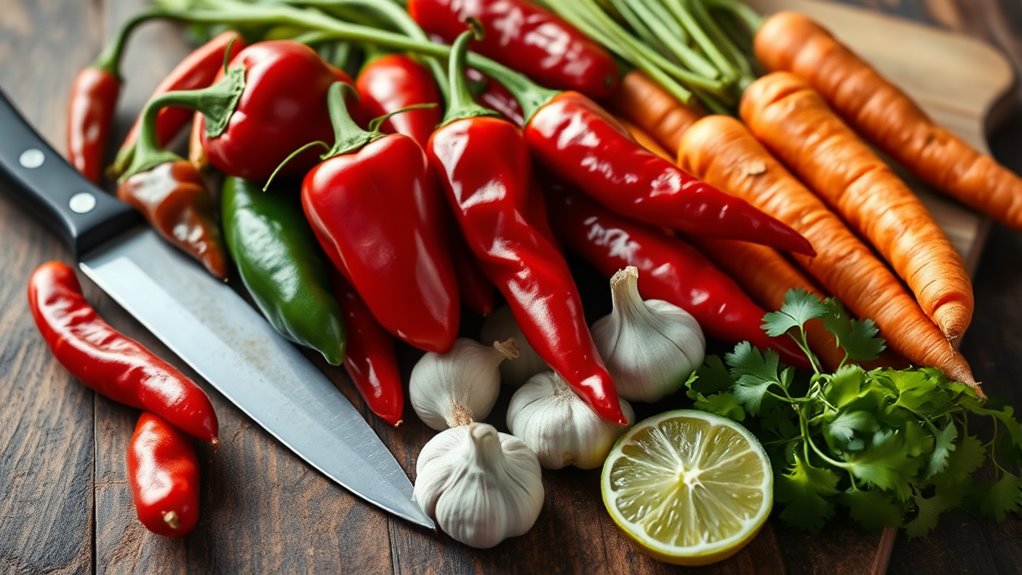
Before you start blending, gather fresh, high-quality ingredients to guarantee your hot sauce packs the best flavor. Choose ripe, vibrant peppers—they’re the foundation of your sauce. Freshness matters because old or dull peppers can make your sauce taste flat or bitter.
Don’t forget to pick fresh citrus, like limes or lemons, to add brightness. Also, grab salt and vinegar, essential for balancing heat and preserving your sauce. If you want a touch of sweetness, consider fresh fruits like mango or pineapple.
Your pantry might offer extras like sugar or honey, but fresh ingredients always deliver the best punch. By starting with the freshest components, you assure your hot sauce will burst with bold, lively flavors that make every bite unforgettable.
Prepare Your Peppers and Additional Flavorings (Garlic, Onions, Herbs)
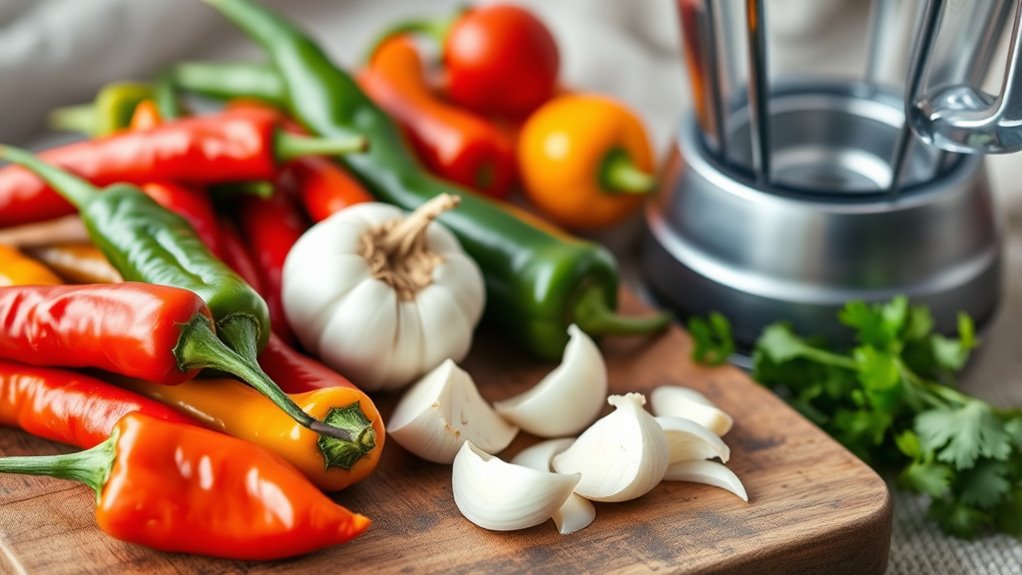
Start by choosing fresh, ripe peppers to get the best flavor and heat.
Next, prepare your garlic, onions, and herbs by cleaning and chopping them finely for even blending.
Taking these simple steps will guarantee your hot sauce has a balanced and vibrant taste.
Selecting Fresh Peppers
How do you choose the best peppers for your hot sauce? First, pick peppers that look firm, vibrant, and free from blemishes or wrinkles. Freshness is key to getting bold flavors and the right heat level.
Depending on your heat preference, select varieties like jalapeños for mild heat or habaneros for a fiery kick. Avoid peppers with soft spots or mold, as they’ll spoil the taste. When selecting, consider the size and thickness—thicker peppers often yield more sauce.
Also, think about the flavor profile: some peppers offer fruity notes, while others are earthy or smoky. While you’re picking, gather any additional fresh flavorings like garlic, onions, or herbs to complement your peppers. This guarantees your hot sauce starts with the best foundation.
Preparing Aromatic Ingredients
Once you’ve selected your peppers and additional ingredients, wash them thoroughly to remove any dirt or residues. Next, prepare your peppers by removing stems and seeds if you want a milder sauce. For extra heat, leave some seeds intact.
Peel garlic cloves and trim onions, as they’ll add depth to your sauce. Fresh herbs like cilantro or parsley can brighten the flavor—pluck the leaves, discarding tough stems. Remember, the fresher your aromatics, the more vibrant your hot sauce will taste.
Cleaning and Chopping Tips
Where should you begin when cleaning and chopping your peppers and flavorings? Start by rinsing your peppers under cold water to remove dirt and pesticides. Pat them dry with a clean towel.
When handling hot peppers, wear gloves to protect your skin from irritation. Slice off the stems, then cut the peppers open to remove seeds and membranes if you want less heat.
For garlic and onions, peel and chop them finely to release their flavors evenly in your sauce. Fresh herbs like cilantro or parsley should be washed thoroughly, shaken dry, and roughly chopped.
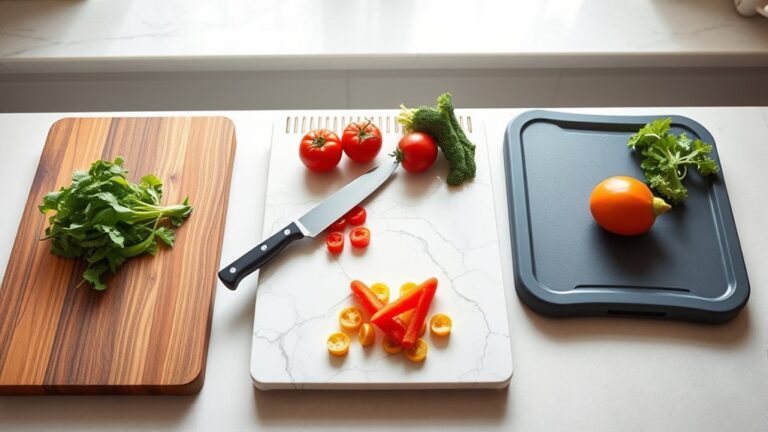
Keeping your cuts uniform helps your blender work efficiently and guarantees a smooth, well-balanced hot sauce. Clean knives and cutting boards between ingredients to avoid flavor contamination.
Pour in Liquids (Vinegar, Water) and Seasonings (Salt, Sugar)
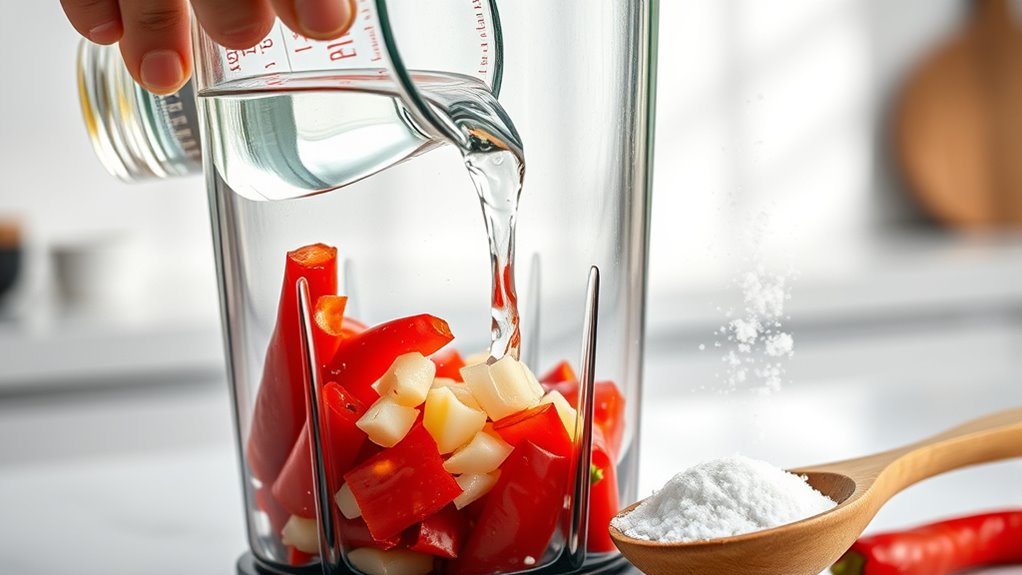
Before blending your peppers, pour in the vinegar and water to help achieve the right consistency and balance the heat. Vinegar adds acidity, which brightens the flavor and acts as a preservative, while water thins the sauce to your preferred thickness. Start with about half a cup of vinegar and a quarter cup of water, adjusting as needed later.
Next, add salt and sugar to enhance and round out the flavors. Salt intensifies the taste and helps bring out the peppers’ natural sweetness, while a small amount of sugar balances the acidity and heat. Use about a teaspoon of salt and a half teaspoon of sugar, but feel free to tweak these amounts to suit your palate before you blend.
Blend Your Hot Sauce to the Perfect Texture
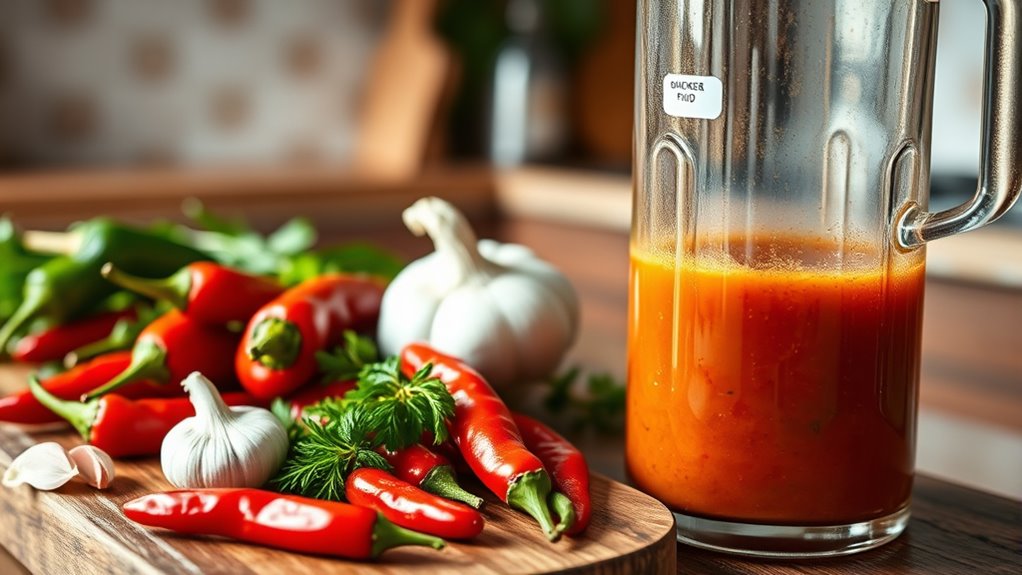
After adding your liquids and seasonings, it’s time to blend everything together to achieve the perfect texture for your hot sauce. Start by pulsing the blender a few times to break down the larger pieces, then blend continuously until you reach your desired consistency.
If you want a chunkier sauce, pulse less; for a smoother sauce, blend longer.
Here’s a quick guide to help you adjust the texture:
| Texture | Blender Time | Description | Use For |
|---|---|---|---|
| Chunky | 10-15 sec | Visible pepper bits | Dips, toppings |
| Medium | 20-30 sec | Slightly textured | Sandwich spreads |
| Smooth | 40-60 sec | Creamy and uniform | Marinades, dressings |
| Thin & Pourable | 60+ sec | Very smooth, almost liquid | Drizzling, cooking |
Adjust blending time to suit your taste.
Cook or Simmer the Sauce for Deeper Flavor
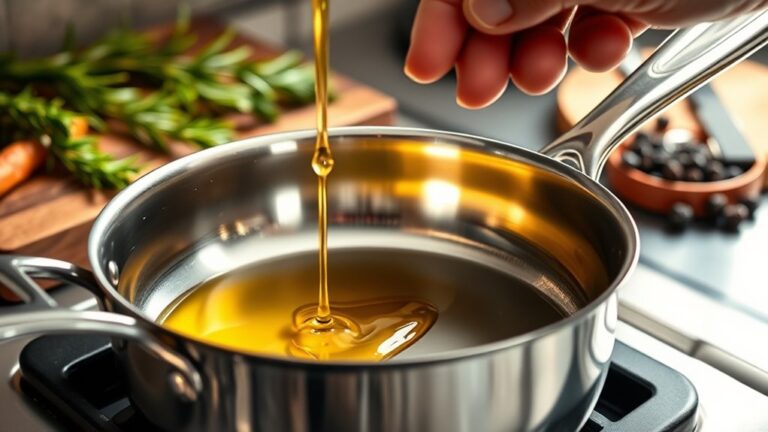
While blending creates a great base, cooking or simmering your hot sauce releases deeper, richer flavors by allowing the ingredients to meld together. Pour your blended mixture into a saucepan and bring it to a gentle simmer over medium-low heat. Stir occasionally to prevent sticking and burning.
Simmer for about 10 to 15 minutes, which helps soften any harsh raw edges from the peppers and enhances the overall taste. Keep an eye on the consistency; if it gets too thick, add a splash of water or vinegar to maintain your desired texture. Cooking also helps preserve the sauce longer by killing any unwanted bacteria.
Once you’re satisfied with the flavor and consistency, you’re ready to move on to the next step in your hot sauce-making journey.
Bottle and Store Your Homemade Hot Sauce
Once your hot sauce has simmered to the perfect flavor and consistency, it’s time to bottle it up for storage. First, sterilize your bottles or jars by boiling them in water for 10 minutes or running them through a hot dishwasher cycle. Let them dry completely before filling.
Use a funnel to pour the hot sauce carefully, leaving a little headspace at the top. Seal the bottles tightly with lids or caps to keep the sauce fresh. Store your hot sauce in the refrigerator, where it will stay fresh for several weeks.
If you want to keep it longer, consider freezing small portions. Always label your bottles with the date so you can track freshness. Enjoy your homemade hot sauce whenever you want!
Adjust Heat and Flavor in Your Hot Sauce
You can easily balance the spice levels to match your taste by adjusting the amount and type of peppers you use. Experiment with adding ingredients like garlic, vinegar, or sugar to enhance the flavor profile. Don’t be afraid to customize the heat intensity until your hot sauce feels just right.
Balancing Spice Levels
Even if you love fiery heat, balancing spice levels guarantees your hot sauce remains enjoyable and flavorful rather than overwhelming. Start by tasting your sauce early and often. If it’s too hot, add ingredients like tomato, vinegar, or sugar to mellow the heat.
Conversely, if it’s too mild, blend in more chili peppers gradually. Keep track of your adjustments to find the perfect balance.
| Adjustment | Effect |
|---|---|
| Add vinegar | Enhances tang, lowers heat |
| Add sugar | Softens heat, adds sweetness |
| Add more chilies | Increases heat intensity |
Balancing spice guarantees your sauce appeals to a wider audience while keeping your personal heat preference intact.
Enhancing Flavor Profiles
While adjusting the heat is essential, enhancing your hot sauce’s flavor profile brings depth and complexity to every drop. You can start by experimenting with fresh ingredients like garlic, onions, or citrus zest to add brightness and subtle layers. Don’t overlook herbs such as cilantro or basil—they introduce freshness that balances the spice.
Adding a touch of sweetness, like honey or brown sugar, can round out the flavors without overpowering the heat. A splash of vinegar or lime juice sharpens the sauce, giving it a lively tang. Taste as you blend and adjust incrementally.
Customizing Heat Intensity
Since heat levels can vary widely among peppers, adjusting the intensity of your hot sauce allows you to tailor it perfectly to your taste. Start by choosing peppers with the desired heat range, then control the amount you blend. Removing seeds and membranes reduces heat, while including them amps it up.
You can also add mild ingredients like tomatoes or vinegar to balance the spice.
| Heat Level | Pepper Examples |
|---|---|
| Mild | Poblano, Anaheim |
| Medium | Jalapeño, Serrano |
| Hot | Habanero, Ghost Pepper |
Experiment with small batches to find your perfect spice balance. Remember, you can always add more heat, but it’s tough to tone it down once blended.
Frequently Asked Questions
Can I Use Frozen Peppers for Hot Sauce?
Yes, you can use frozen peppers for hot sauce. They’ll blend well and add great flavor. Just thaw them first to avoid excess water,
which can thin your sauce more than fresh peppers would.
How Long Does Homemade Hot Sauce Last in the Fridge?
You’ll find your fiery homemade hot sauce lasts for about one to two months in the fridge. Keep it cold, sealed, and smell it often; if it sours or changes, toss it to stay safe.
Is It Safe to Use a Plastic Blender for Hot Sauce?
Yes, you can use a plastic blender for hot sauce, but make sure it’s BPA-free and heat-resistant. Avoid blending extremely hot ingredients directly to prevent warping or harmful chemicals.
Let ingredients cool slightly before blending.
Can I Ferment Peppers Before Blending for Added Flavor?
Yes, you can ferment peppers before blending to boost flavor. Fermentation increases beneficial bacteria by up to 1000%, enhancing complexity and tanginess. Just let peppers sit salted for 5-7 days before blending your hot sauce.
What Are the Best Peppers for a Mild Hot Sauce?
You’ll want to use jalapeños, poblanos, or banana peppers for a mild hot sauce. These peppers offer gentle heat and great flavor, letting you control spice without overwhelming your sauce’s taste.
Conclusion
Making hot sauce with a blender is like painting a fiery masterpiece—each ingredient adds a vibrant stroke. Remember, a friend once told me their homemade batch brought tears of joy (and heat) to the dinner table. Just like that, your sauce will spark flavor fireworks.
Don’t be afraid to tweak the heat and seasonings; the perfect blend is your personal flame. With these steps, you’re ready to ignite any meal with homemade heat! By following this simple method, you can easily make hot sauce with a blender that delivers bold flavor and the perfect kick every time.