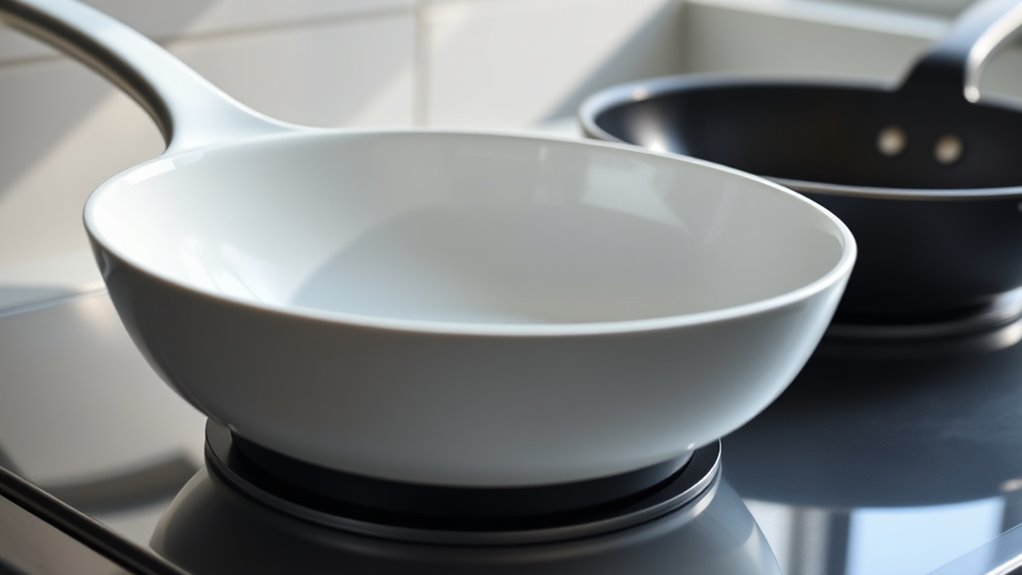
Does Ceramic Cookware Have Teflon?
You won’t find Teflon or PTFE in genuine ceramic cookware because it uses natural, mineral-based coatings to create a safe, non-stick surface without synthetic chemicals.
Ceramic cookware resists sticking and scratching while avoiding harmful fumes linked to overheated Teflon. This makes ceramic cookware a healthier alternative for your kitchen.
However, not all ceramic pans are the same. If you want to understand how ceramic differs from Teflon and how to pick the best one, there’s more to explore.
Knowing these differences can help you make an informed choice for safer cooking.
Key Takeaways
- Genuine ceramic cookware does not contain Teflon or PTFE, using mineral-based, inorganic coatings instead.
- Ceramic coatings are free from harmful chemicals like PFOA, unlike some synthetic non-stick options.
- Ceramic cookware offers a natural non-stick surface without synthetic polymers such as Teflon.
- Some ceramic pans may vary, but authentic ceramic cookware typically avoids Teflon and related chemicals.
- Choosing certified ceramic cookware ensures it is free from Teflon, PTFE, and other toxic substances.
What Is Ceramic Cookware Made Of?
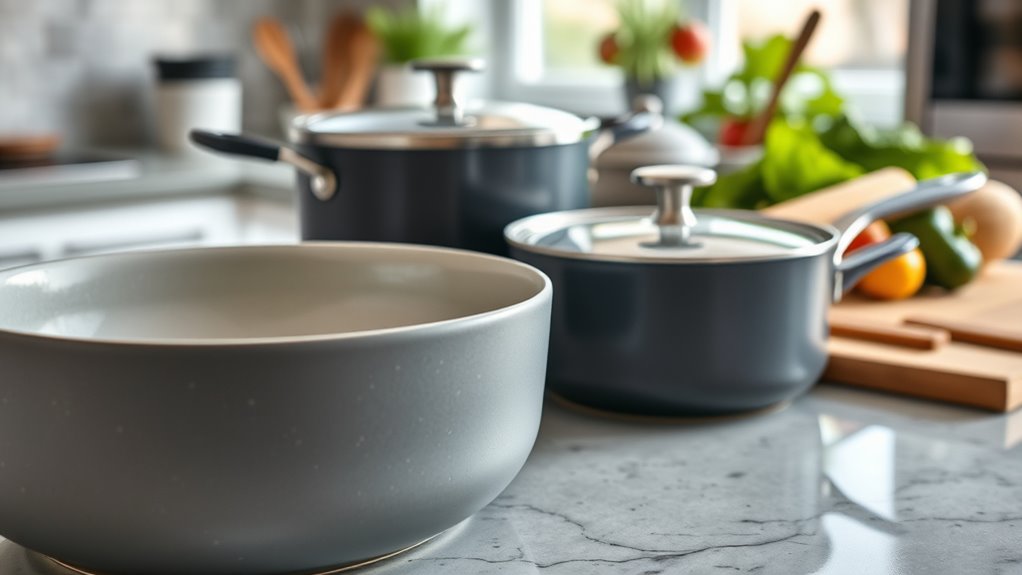
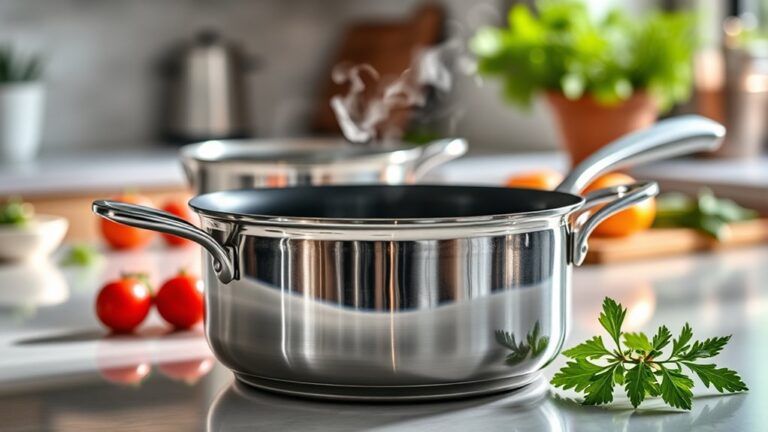
Although ceramic cookware might seem simple, it’s actually made from a blend of natural materials like clay, minerals, and water. When you use ceramic cookware, you’re benefiting from these components that are shaped and then fired at high temperatures to create a durable, non-porous surface. This firing process transforms the raw materials into a hard, glass-like finish that resists sticking and scratching.
Unlike metal pans, ceramic cookware doesn’t rely on synthetic coatings but instead uses this natural, solid surface to provide non-stick properties. You’ll find that the ceramic layer is often applied over a metal base, like aluminum or stainless steel, to combine heat conduction with ceramic’s smooth, easy-to-clean finish. This blend guarantees you get both durability and performance in your cookware.
Does Ceramic Cookware Contain Teflon or PTFE?
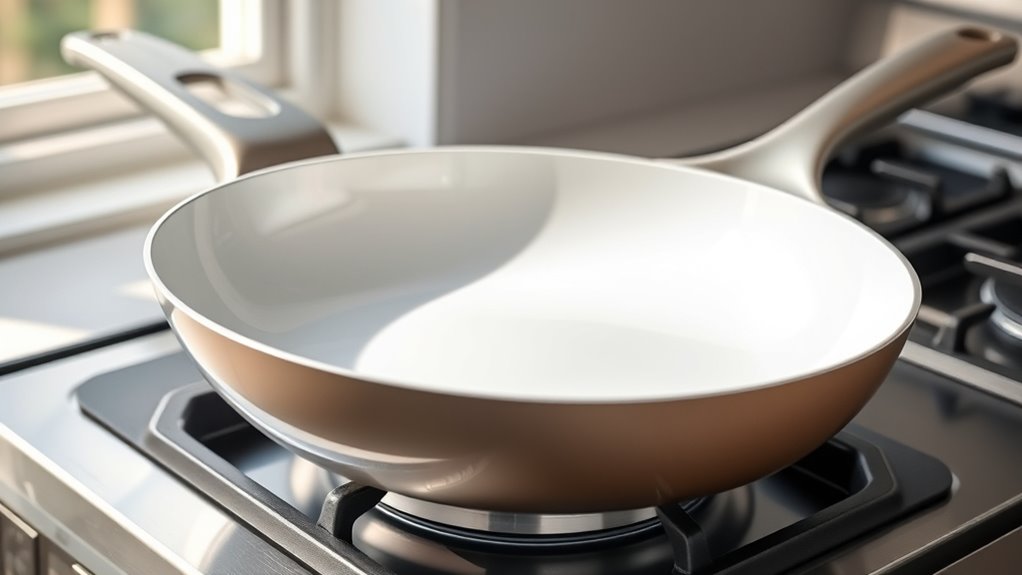
Ceramic cookware’s natural, non-stick surface sets it apart from traditional non-stick pans that often rely on synthetic coatings. When you choose ceramic cookware, you’re getting a product that doesn’t contain Teflon or PTFE. These synthetic chemicals are common in many non-stick coatings, but ceramic cookware uses a mineral-based coating instead.
This means you won’t be exposed to the potential risks linked with Teflon or PTFE, especially when overheated. So, if you’re concerned about chemical exposure or want a more natural option, ceramic cookware offers that peace of mind. Keep in mind, though, that not all ceramic-coated pans are the same, but the genuine ceramic surface itself is free of Teflon and PTFE.
How Ceramic Cookware Coatings Differ From Teflon Non-Stick Surfaces
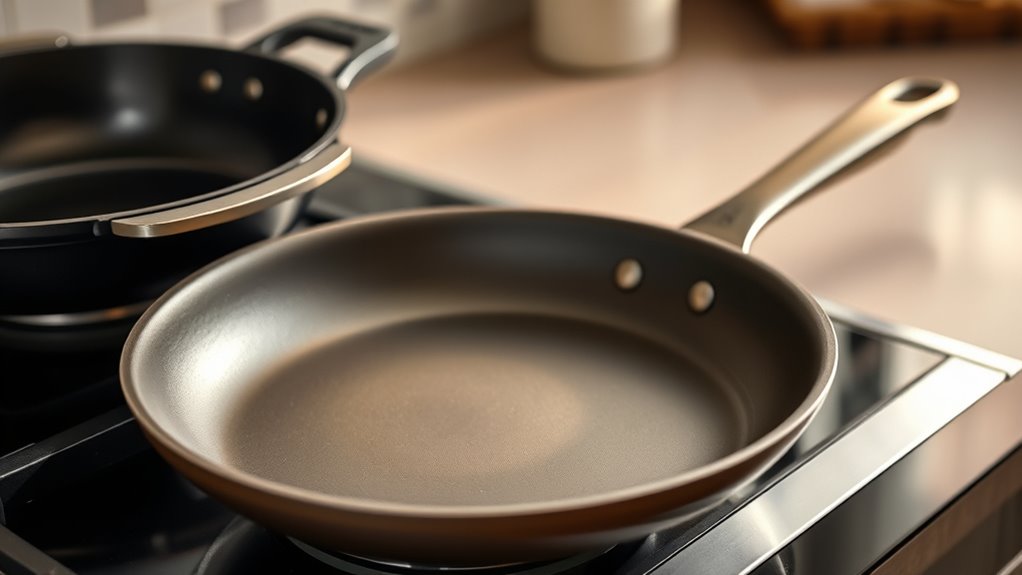
While both ceramic and Teflon coatings aim to provide non-stick surfaces, they achieve this in very different ways. Ceramic coatings are made from inorganic minerals, forming a hard, smooth layer that resists sticking by creating a slick surface. Teflon, on the other hand, is a synthetic polymer called PTFE, known for its low friction and excellent non-stick properties.
Ceramic uses mineral-based slickness, while Teflon relies on synthetic PTFE for non-stick cooking.
Here’s how they differ:
- Ceramic coatings rely on a natural, silica-based material, while Teflon uses man-made chemicals.
- Ceramic tends to be more heat resistant but may wear faster.
- Teflon offers superior non-stick performance initially but can degrade at high temperatures.
- Ceramic coatings are generally free of PTFE and PFOA.
- Teflon surfaces require careful use to avoid scratching and damage.
Understanding these differences helps you choose cookware that fits your cooking style and health preferences.
Common Myths About Ceramic Versus Teflon Cookware
Even if you’ve done some research, you might still encounter misleading claims about ceramic and Teflon cookware. One common myth is that all ceramic cookware is completely non-stick like Teflon, but ceramic coatings can vary widely in effectiveness. Another mistaken belief is that Teflon releases harmful chemicals under normal cooking, but it’s safe when used properly and not overheated.
You might also hear that ceramic cookware never scratches or wears out, but like any coating, it can degrade over time with heavy use. Finally, some say ceramic cookware contains Teflon or similar chemicals, which isn’t true—ceramic coatings are made from inorganic materials. Knowing these facts helps you make informed choices without falling for misconceptions.
Benefits of Ceramic Cookware Compared to Teflon Cookware
Understanding the myths surrounding ceramic and Teflon cookware sets the stage for appreciating their unique advantages. When you choose ceramic cookware, you get several benefits over Teflon that enhance your cooking experience. Ceramic pots and pans typically heat more evenly, helping your food cook consistently.
They also maintain their non-stick surface longer without peeling or flaking. Plus, ceramic cookware often handles higher cooking temperatures without breaking down. Many users find ceramic utensils easier to clean due to their smooth surface.
Finally, ceramic options tend to be more scratch-resistant, so you can use metal utensils without worry.
- Even heat distribution for better cooking results
- Durable non-stick coating that lasts longer
- High heat tolerance without damage
- Easy cleaning with minimal effort
- Scratch resistance for versatile utensil use
Are Ceramic Cookware Coatings Safer for Your Health and the Environment?
You’ll want to think about how ceramic cookware coatings compare to Teflon when it comes to your health and the environment. Ceramic coatings often avoid harmful chemicals linked to health risks, but it’s important to look at their full environmental impact too.
Let’s explore how these factors stack up so you can make a safer choice.
Health Benefits Compared
When choosing cookware, your health and the environment should be top priorities. Ceramic cookware coatings generally offer safer benefits compared to Teflon. They’re free from harmful chemicals like PFOA and PTFE, which can release toxic fumes if overheated.
With ceramic, you reduce your exposure to these risks, making it a healthier option for daily cooking.
Here’s why ceramic coatings might be better for your health:
- No toxic fumes at high temperatures
- Free from PFOA and PTFE chemicals
- Non-reactive surface prevents chemical leaching
- Easier to clean, reducing bacteria buildup
- Less risk of flaking and ingesting coating particles
Choosing ceramic can help you cook safely while protecting your well-being.
Environmental Impact Differences
Although both ceramic and Teflon cookware serve the same basic function, their environmental footprints differ considerably. When you choose ceramic cookware, you’re opting for materials derived from natural minerals, which generally have a lower environmental impact during production. Ceramic coatings don’t release harmful chemicals when heated or disposed of, making them safer for the environment.
On the other hand, Teflon relies on perfluorooctanoic acid (PFOA) during manufacturing, a chemical linked to pollution and health concerns. When Teflon cookware degrades, it can release toxic fumes that harm the environment. By selecting ceramic, you reduce your exposure to persistent chemicals and support eco-friendlier manufacturing.
Ultimately, ceramic cookware is a more sustainable choice that benefits both your health and the planet.
How Durable Is Ceramic Cookware Compared to Teflon Cookware?
You’ll want to think about how ceramic and Teflon cookware handle scratches, heat, and everyday wear. Each type has different limits when it comes to heat tolerance and longevity.
Let’s take a closer look at how these factors affect their durability and maintenance.
Scratch Resistance Comparison
Because you rely on your cookware every day, its ability to resist scratches matters a lot. Ceramic cookware generally offers better scratch resistance than Teflon because of its harder, inorganic coating. However, ceramic surfaces can still chip or crack if mishandled.
Teflon coatings, made from PTFE, tend to be softer and more prone to scratches from metal utensils or abrasive cleaning tools. When comparing both, consider these factors:
- Ceramic resists scratches from most utensils better than Teflon
- Teflon coatings may degrade faster with rough handling
- Ceramic surfaces can chip if dropped or hit hard
- Metal utensils can easily damage Teflon coatings
- Using silicone or wooden tools extends the life of both types
Choosing cookware with proper care can help maintain its scratch resistance longer.
Heat Tolerance Levels
When cooking at high temperatures, you need cookware that can handle the heat without breaking down or releasing harmful chemicals. Ceramic cookware typically withstands heat up to around 450°F (232°C) without damage, making it suitable for most stovetop and oven uses. It won’t emit toxic fumes if overheated, keeping your kitchen safer.
On the other hand, Teflon-coated pans start to degrade at about 500°F (260°C), and overheating beyond this can release harmful fumes. This means you have to be more cautious with Teflon when cooking on high heat. So, if you regularly cook at very high temperatures, ceramic cookware offers stronger heat tolerance and peace of mind compared to Teflon, which requires careful temperature control to maintain its safety and effectiveness.
Longevity And Maintenance
Although both ceramic and Teflon cookware offer non-stick benefits, their durability and maintenance requirements differ markedly. You’ll find ceramic cookware tends to resist scratches and maintain its coating longer, but it can chip or crack if dropped.
Teflon cookware, while more prone to scratching, requires gentler handling to avoid peeling, which impacts its lifespan. To keep either type performing well, consider these tips:
- Use wooden or silicone utensils to prevent scratches
- Avoid high heat with Teflon to preserve the coating
- Hand wash with mild detergent, skipping abrasive sponges
- Store carefully to prevent chipping or peeling
- Replace cookware at the first sign of coating damage
How to Choose Truly Non-Toxic Ceramic Cookware
To choose truly non-toxic ceramic cookware, you need to look beyond marketing claims and focus on key factors like the materials used, manufacturing process, and certifications.
Confirm the ceramic coating is free from PTFE, PFOA, lead, and cadmium. Check if the cookware is made with natural mineral-based ceramic.
Also, look for brands that provide transparent information about their production methods.
| Factor | What to Look For |
|---|---|
| Materials | 100% mineral-based ceramic |
| Manufacturing Process | No harmful chemicals or PTFE |
| Certifications | FDA-approved, LFGB, or Greenguard |
How to Care for Ceramic Cookware to Maintain Its Coating
Choosing truly non-toxic ceramic cookware sets the foundation for safe and healthy cooking, but maintaining that quality requires proper care. To keep your ceramic coating intact and effective, you need to handle your cookware gently and clean it correctly. Avoid harsh tools and extreme temperatures that can damage the surface.
Here’s how you can care for your ceramic cookware:
- Use soft sponges or cloths for cleaning.
- Avoid metal utensils that can scratch the coating.
- Cook on low to medium heat to prevent overheating.
- Hand wash with mild detergent instead of using a dishwasher.
- Let cookware cool before washing to prevent thermal shock.
Frequently Asked Questions
Can Ceramic Cookware Be Used on Induction Cooktops?
You can use ceramic cookware on induction cooktops only if it has a magnetic base. Without that, it won’t work since induction relies on magnetic fields to heat the pan.
Check the cookware’s specifications first.
Is Ceramic Cookware Dishwasher Safe?
Yes, ceramic cookware is generally dishwasher safe, but you should check the manufacturer’s instructions. Hand washing helps preserve the non-stick coating longer, so you’ll keep your cookware looking and performing great for years.
How Quickly Does Ceramic Cookware Heat Compared to Metal?
Like a slow-burning candle, ceramic cookware heats more gradually than metal. You’ll notice it takes a bit longer to reach cooking temperature, but once hot, it distributes heat evenly, giving you better control over your meals.
Can Ceramic Cookware Go in the Oven?
Yes, you can put ceramic cookware in the oven, but check the manufacturer’s temperature limits first. Most ceramic pieces handle moderate oven heat well, but avoid sudden temperature changes to prevent cracking or damage.
Does Ceramic Cookware Affect Food Taste or Odor?
You won’t notice ceramic cookware affecting your food’s taste or odor; you won’t smell any lingering scents, and you won’t experience any flavor changes.
It cooks cleanly, preserving your meal’s natural flavors perfectly every time.
Conclusion
When you choose ceramic cookware, you’re opting for a gentler touch in your kitchen—free from the whispers of Teflon’s chemical secrets. It’s like inviting a fresh breeze to your cooking routine, offering a safer, eco-friendly embrace.
While no cookware is perfect, ceramic’s natural charm and mindful care can keep your meals both healthy and delicious. This makes every dish a little brighter and your kitchen a little kinder.
In conclusion, ceramic cookware does not contain Teflon, making it a safer and more environmentally friendly choice for your cooking needs.