What Are the Best Cooking Utensils
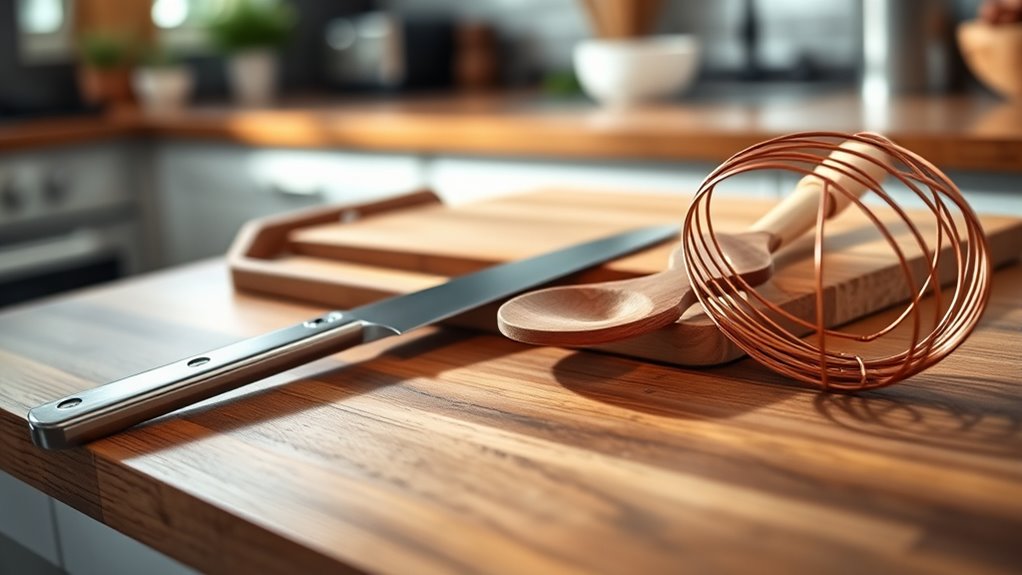
You’ll want durable, versatile cooking utensils like sturdy spatulas, sharp knives, and reliable spoons to handle flipping, chopping, and serving smoothly. Quality kitchen tools are essential for efficient meal preparation and enjoyable cooking experiences.
Add measuring cups, mixing bowls, and peelers for prep work, plus specialized tools like herb scissors and turners.
Choose quality cutting boards to keep food safe and utensils sharp. Caring for your tools properly extends their life and saves money.
Keeping these essentials ready will make cooking easier and more enjoyable.
There’s plenty more to discover about choosing and maintaining your kitchen gear. Investing in the best cooking utensils transforms your kitchen into a functional and inviting space.
Key Takeaways
- Essential cooking utensils include sturdy spatulas, versatile knives, and reliable spoons for efficient and safe food preparation. Measuring cups, mixing bowls, whisks, peelers, and specialized tools ensure precision and ease in cooking tasks.
- High-quality cutting boards made of durable wood or plastic prevent contamination and maintain knife sharpness. Proper care and storage, such as cleaning immediately and drying utensils, extend their lifespan and maintain safety.
- Choosing durable, budget-friendly utensils and avoiding unnecessary sets saves money while ensuring long-term usability.
Top Essential Cooking Utensils for Every Kitchen
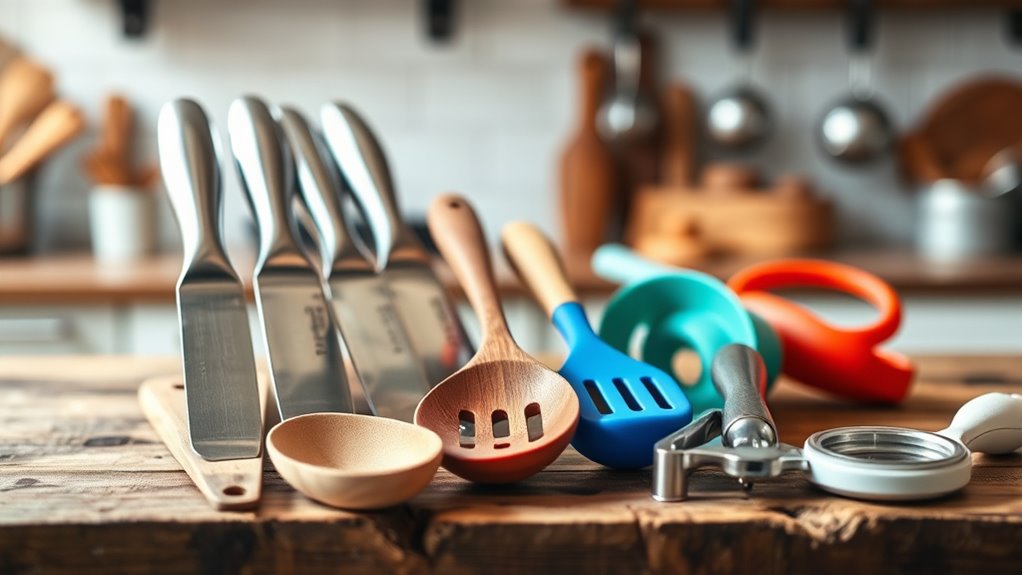
Every kitchen needs a core set of utensils that make cooking easier and more efficient. You’ll want a sturdy spatula to flip, stir, and scrape without damaging your pans. A wooden spoon works great for mixing and won’t scratch cookware.
Don’t forget a pair of tongs—they help you handle hot food safely and with precision. Measuring cups and spoons are essential for accuracy in recipes, ensuring your dishes turn out just right. A whisk is perfect for blending sauces and beating eggs smoothly.
Ultimately, a ladle lets you serve soups and stews effortlessly. By having these basics within reach, you’ll streamline meal prep, reduce frustration, and enjoy cooking more, no matter your skill level.
Choosing the Right Knives for Your Cooking Style
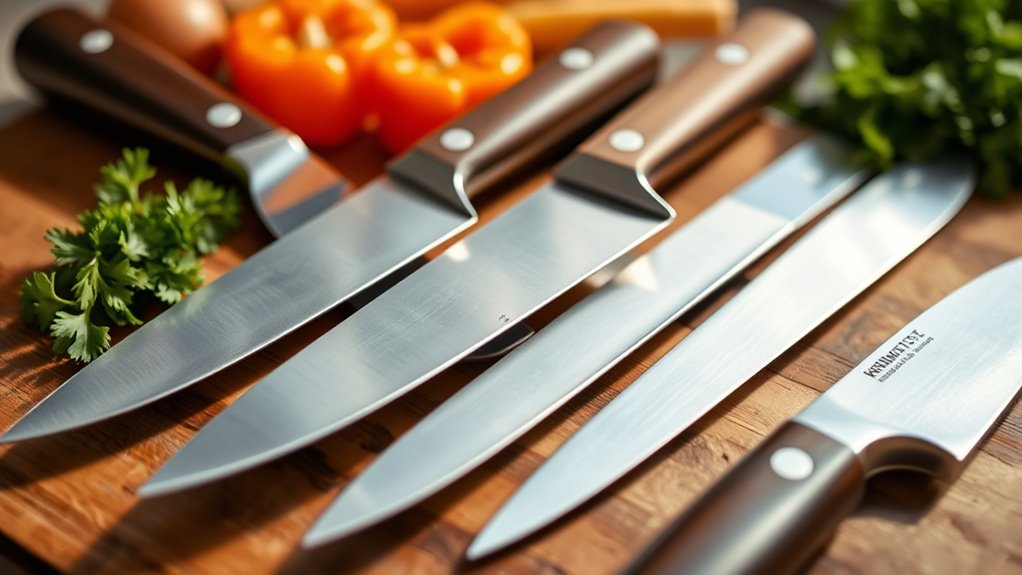
When you choose the right knives for your cooking style, you’ll work more efficiently and enjoy better results. Start by identifying how you cook most often—do you chop vegetables, slice meat, or prepare delicate fish? A chef’s knife is versatile and suits most tasks, while a paring knife handles intricate work like peeling.
If you grill or roast, a carving knife helps slice meat cleanly. For baking, consider a serrated knife to cut through bread easily. Comfort matters too; pick knives with handles that fit your grip well to reduce fatigue.
Keep your knives sharp, as dull blades slow you down and increase accidents. Matching your knives to your cooking habits guarantees smoother prep and tastier meals every time.
Why Quality Cutting Boards Make a Big Difference
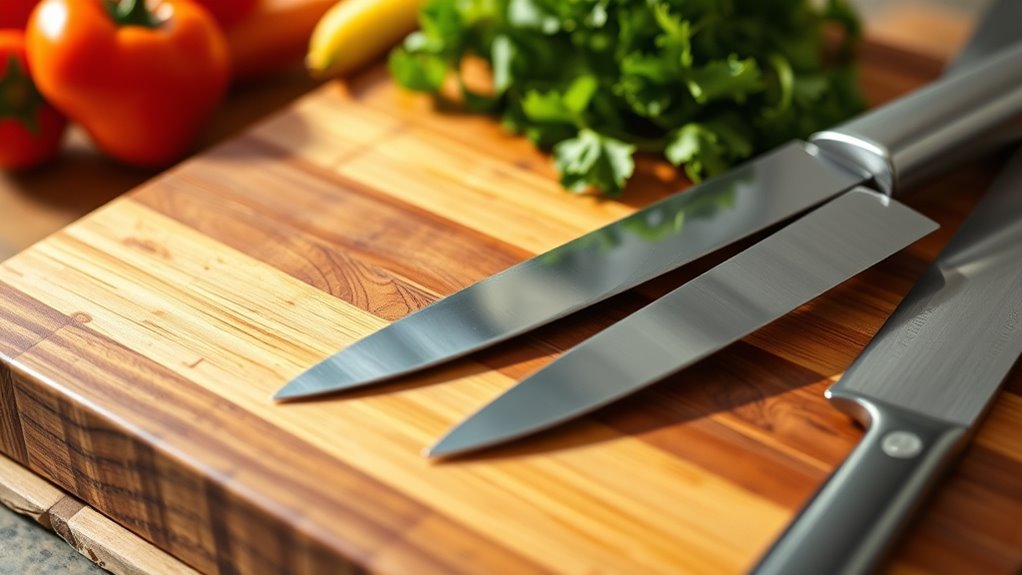
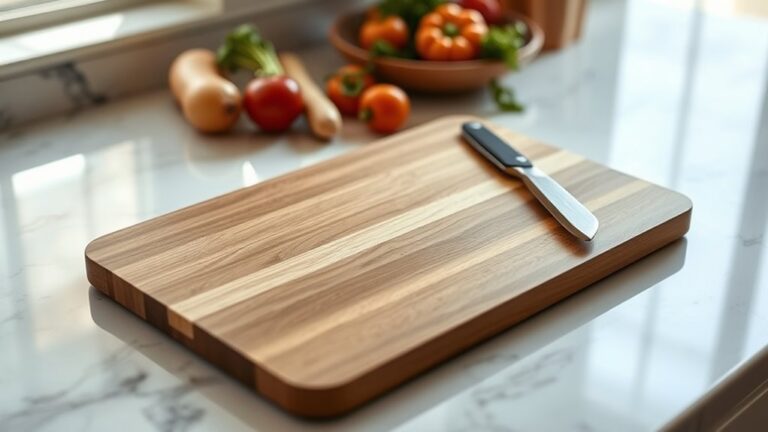
You’ll notice a quality cutting board lasts much longer and stands up better to daily use. It also helps keep your food safer by resisting deep grooves where bacteria can hide. Choosing the right board can make a big difference in both durability and hygiene.
Durability And Longevity
Because cutting boards endure constant use and exposure to moisture, choosing a high-quality one considerably impacts their durability and longevity. When you invest in a sturdy wooden or high-grade plastic cutting board, it resists warping, cracking, and deep grooves from knives. This means your board stays functional and looks good longer.
You’ll avoid replacing it frequently, saving money and reducing waste. Proper maintenance, like regular oiling for wood or thorough drying for plastics, helps extend its life even more. A durable cutting board also withstands rigorous chopping, slicing, and dicing without wearing down quickly.
When you prioritize durability, you get a reliable kitchen tool that stands up to daily use and keeps performing well for years.
Food Safety Benefits
A high-quality cutting board not only lasts longer but also plays an essential role in keeping your food safe. When you choose the right board, you reduce the risk of cross-contamination and bacterial growth.
Here’s why quality matters:
- Non-porous Surface: Quality boards resist absorbing juices, preventing bacteria from hiding in grooves.
- Easy to Clean: Durable materials stand up to thorough scrubbing and dishwashing, ensuring germs don’t linger.
- Less Knife Damage: A solid board minimizes deep cuts where harmful microbes can thrive, making sanitation simpler.
Best Cooking Utensils: Spatulas, Spoons, and Turners
You’ll want to pick spatulas that suit different cooking needs, from flipping pancakes to scraping bowls. Choosing the right spoon can make stirring and serving much easier and more efficient.
Turners come in various shapes and materials, each designed for specific tasks, so knowing which one to use helps you cook better.
Types of Spatulas
How do you choose the right spatula for your cooking needs? It depends on what you cook and how you cook it. Different spatulas serve different purposes, so having a few types in your kitchen helps you handle any task with ease.
- Flipper Spatula – Perfect for flipping pancakes, burgers, and eggs. Its wide, flat surface slides easily under food without breaking it.
- Scraper Spatula – Flexible and made for scraping every bit of batter or sauce from bowls and pans.
- Offset Spatula – Great for spreading frosting or lifting delicate items like cookies. Its angled design keeps your hand away from hot surfaces.
Choosing the right spatula makes cooking smoother and more enjoyable.
Choosing the Right Spoons
When do you reach for a spoon in the kitchen, and which one fits the task best? You’ll want a solid wooden spoon for stirring thick sauces or dough since it won’t scratch your cookware. For serving soups or stews, a deep ladle is ideal—it scoops generously without spills.
If you’re mixing delicate ingredients, a slotted spoon helps drain liquids while lifting solids. When tasting or transferring small amounts, a teaspoon offers precision. Avoid metal spoons on nonstick surfaces to prevent damage; instead, pick silicone or nylon.
Choosing the right spoon means matching its shape and material to your cooking task, ensuring efficiency and care for your pots and pans. With the right spoon in hand, your cooking flows smoothly.
Turners for Different Tasks
Although turners might seem simple, they’re essential for flipping, lifting, and serving a variety of foods with ease. Choosing the right turner can make your cooking smoother and protect your cookware.
Here are three turners to evaluate:
- Slotted Turner: Perfect for flipping pancakes or burgers, it drains excess oil or liquid, keeping your food crisp.
- Fish Turner: Thin and flexible, this one helps you flip delicate fish fillets without breaking them.
- Solid Turner: Great for lifting heavier foods like lasagna or casseroles, providing solid support without bending.
Must-Have Cooking Utensils for Mixing, Measuring, and Prep Work
Since precise measurements and thorough mixing are the foundations of successful cooking, having the right utensils for these tasks can make all the difference. Start with a sturdy set of measuring cups and spoons—accuracy here guarantees your recipes turn out as intended.
A reliable mixing bowl set, preferably nesting for easy storage, lets you combine ingredients comfortably. Invest in a versatile whisk for blending sauces and batters smoothly, and a silicone spatula to scrape bowls clean without wasting any mixture.
For prep work, a sharp chef’s knife speeds up chopping, while a durable cutting board protects your surfaces. Don’t forget a vegetable peeler for efficient peeling and a kitchen scale for weighing ingredients when precision matters most. These tools set you up for cooking success every time.
How to Pick Pots and Pans You’ll Love
Choosing the right pots and pans can transform your cooking experience, making meal preparation more efficient and enjoyable. When picking cookware, focus on what suits your style and needs best.
Selecting the right cookware enhances your cooking, making meals easier and more enjoyable.
- Material Matters: Stainless steel offers durability and even heating, while nonstick pans make cleanup a breeze. Cast iron holds heat well but requires maintenance. Choose based on your cooking habits.
- Size and Set: Start with essential sizes—small skillet, medium saucepan, and large pot—to cover most recipes without cluttering your kitchen.
- Comfort and Care: Look for sturdy handles that stay cool and check if the pans are dishwasher-safe for easy cleaning.
Specialty Utensils That Make Cooking More Fun
What tools can turn a routine cooking session into an enjoyable adventure? Specialty utensils like spiralizers, avocado slicers, and herb scissors add excitement and ease to your kitchen tasks. When you use a spiralizer, you transform veggies into fun, healthy noodles in seconds.
An avocado slicer helps you scoop, pit, and slice perfectly every time, saving you frustration. Herb scissors let you chop fresh herbs quickly without bruising, enhancing flavor effortlessly. You’ll find gadgets like pancake batter dispensers and digital meat thermometers make precise cooking simpler and more enjoyable.
These tools don’t just save time—they inspire creativity, letting you experiment with new recipes and techniques. Adding a few specialty utensils can refresh your cooking routine and make every meal more fun to prepare.
How to Care for and Maintain Your Cooking Utensils
Even the best cooking utensils won’t last long if you don’t care for them properly. To keep your tools in top shape, follow these simple steps:
- Clean Immediately: Wash utensils right after use to prevent food from hardening. Use warm, soapy water and avoid harsh scrubbers that can damage surfaces.
- Dry Thoroughly: Always dry your utensils completely to prevent rust and mold, especially with wooden or metal tools.
- Store Safely: Keep utensils in a dry, organized space. Use utensil holders or drawers to avoid scratches and bending.
Taking these small steps will extend the life of your cooking utensils, keeping them functional and safe. Proper care not only saves money but also ensures your cooking experience remains enjoyable and efficient.
Finding the Best Cooking Utensils on a Budget
Proper care helps your utensils last longer, but finding the right tools without overspending can make a big difference too. Start by prioritizing essential items like a sturdy spatula, a reliable knife, and a versatile spoon. Look for durable materials such as silicone or stainless steel, which balance quality and affordability.
Don’t hesitate to check discount stores, online sales, or secondhand shops for great deals. Avoid buying sets filled with unnecessary pieces that add cost without value. Reading reviews helps you spot budget-friendly utensils that perform well.
Frequently Asked Questions
Can Cooking Utensils Impact the Nutritional Value of Food?
Yes, cooking utensils can impact your food’s nutrition. Using non-stick or stainless steel tools helps preserve vitamins, while reactive metals might leach harmful substances.
Choosing the right utensils protects nutrients and keeps your meals healthier overall.
Are Wooden Utensils Better Than Metal for Non-Stick Cookware?
You know what they say, “Don’t fix what isn’t broken.” You’ll find wooden utensils are better for non-stick cookware since they won’t scratch the surface, preserving your pans and making cooking easier without damage.
How Do Cooking Utensils Affect Cooking Times?
Cooking utensils can speed up or slow down your cooking depending on their material and design. For example, metal spatulas conduct heat quickly, while wooden spoons don’t, affecting how fast your food cooks.
What Are the Best Utensils for Outdoor or Camping Cooking?
When camping, you’ll want lightweight, durable utensils like titanium sporks and silicone spatulas.
Like a Swiss Army knife in your pocket, these tools keep cooking simple and efficient, so you can enjoy your meal without hassle.
Can Cooking Utensils Influence Food Flavor or Aroma?
Yes, cooking utensils can influence your food’s flavor and aroma. Materials like cast iron add richness, while plastic won’t alter taste. Using the right utensils helps you preserve or enhance the natural flavors you want.
Conclusion
Now that you know the essential cooking utensils and how to choose them, aren’t you excited to upgrade your kitchen? With the right knives, cutting boards, spatulas, and specialty tools, you’ll cook more efficiently and enjoy the process even more.
Remember, quality and care go hand in hand, so invest wisely and maintain your utensils well. Your kitchen is ready for you to create delicious meals with ease and confidence!
By selecting the best cooking utensils, you enhance your culinary skills and make every cooking experience a joy.