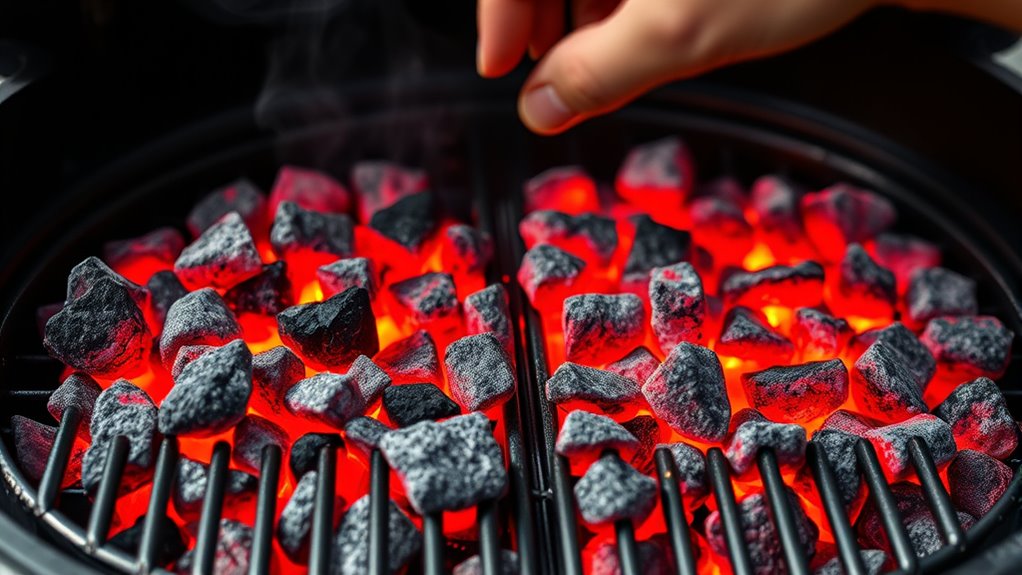
How to Control Heat on Charcoal Grill
To control heat on your charcoal grill effectively, understanding how to manage airflow and coal placement is essential. Proper heat control ensures your food cooks evenly and prevents flare-ups, making your grilling experience more enjoyable. Mastering these techniques will help you achieve perfect results every time you fire up your grill.
Start by arranging your coals to create different heat zones—pile them closely for high heat or spread them thinly for low heat. Light the coals evenly using a chimney starter, avoiding lighter fluid to maintain clean flavors.
Adjust the bottom and top vents to regulate airflow, which in turn controls the grill’s temperature. Move your food between heat zones to cook it thoroughly and avoid burning. Small vent tweaks allow you to maintain steady heat and prevent flare-ups.
Keep these basics in mind, and you’ll soon master precise grilling techniques for every cook.
Key Takeaways
- Arrange charcoal in zones for direct high heat and indirect low heat to control cooking temperature effectively.
- Use a chimney starter to light charcoal evenly without lighter fluid for consistent heat.
- Adjust bottom and top vents gradually to regulate airflow and maintain desired grill temperature.
- Move food between hot and cooler zones to manage cooking intensity and prevent flare-ups.
- Regularly clean the grill and rearrange coals to ensure steady heat and airflow during cooking.
Setting Up Your Charcoal Grill for Heat Control
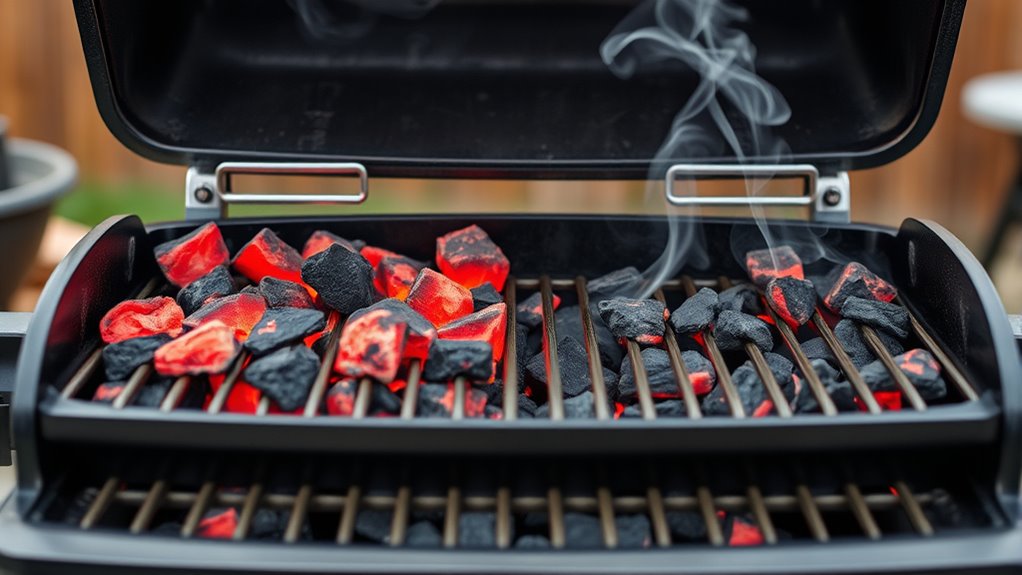
Before you light your charcoal, setting up your grill properly is essential for controlling heat. Start by cleaning the grill grate to guarantee even cooking and prevent flare-ups. Next, adjust the air vents—open vents allow more oxygen, increasing heat, while closing them reduces airflow and lowers temperature.
Make sure the grill lid fits well to retain heat efficiently. Position the charcoal grate at a height that suits your cooking style; closer to the food for higher heat, or lower for slower cooking. Finally, have a spray bottle with water handy to manage any flare-ups quickly.
Arranging Charcoal for Different Heat Zones on Your Grill
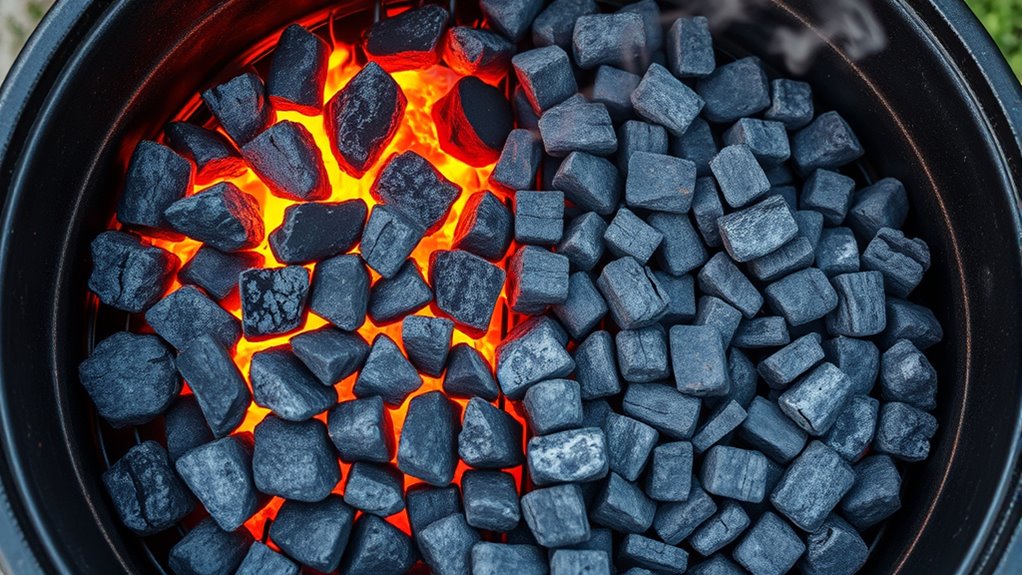
Once your grill is set up for ideal airflow and heat retention, arranging the charcoal to create different heat zones gives you more control over cooking. Start by piling coals on one side for direct, high heat perfect for searing steaks or burgers. Leave the other side empty or scatter a few coals thinly for indirect, low heat, ideal for slow-cooking or keeping food warm.
You can also create a two-tier setup by stacking more coals on one side and fewer on the other, giving you a hot zone and a cooler zone. This setup lets you move food between zones easily, preventing overcooking or burning. Experiment with your charcoal placement to match your grilling style and the foods you’re cooking.
Lighting Charcoal for Consistent Heat
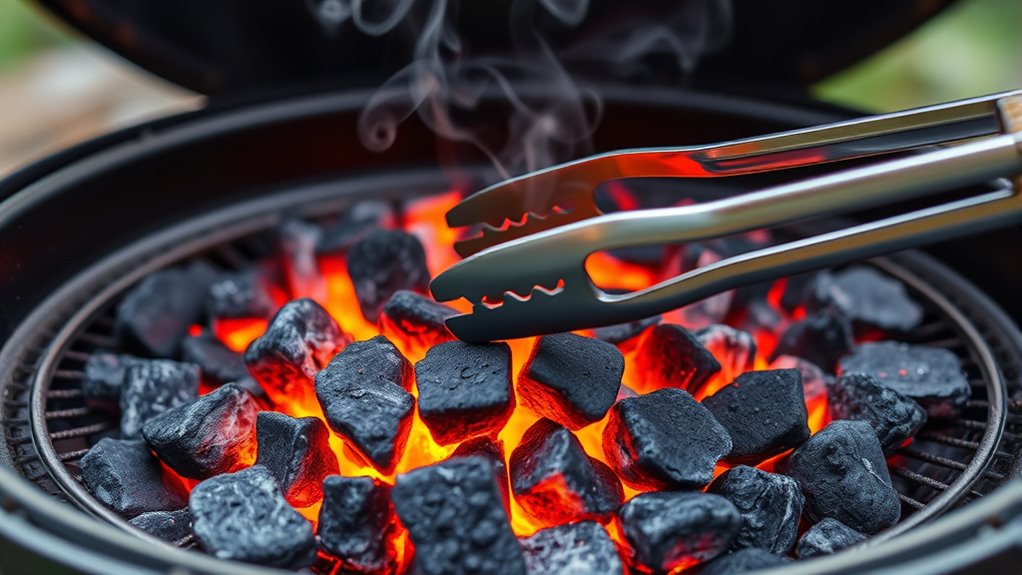
Although lighting charcoal might seem straightforward, achieving consistent heat requires proper technique and the right tools. Start by using a chimney starter; it lights the coals evenly without lighter fluid, which can cause uneven heat and off-flavors.
Fill the chimney with charcoal, place crumpled newspaper or a natural fire starter underneath, and light it. Wait until the coals are covered with gray ash—this usually takes 10-15 minutes. Then, carefully pour the hot coals into your grill, arranging them based on the heat zones you want.
Avoid adding lighter fluid directly to the charcoal, as it can create flare-ups and inconsistent heat. By lighting your charcoal this way, you’ll get steady, even heat that helps you cook your food perfectly every time.
Using Grill Vents to Control Heat
You can control your grill’s temperature by adjusting the vents. Opening the bottom vent increases airflow and raises the heat, while closing it slows the burn.
The top vent helps regulate smoke and keeps the fire steady, so you’ll want to manage both for the best results.
Adjusting Top Vent
How exactly does adjusting the top vent affect your charcoal grill’s heat? The top vent controls airflow out of the grill, which directly influences temperature and smoke flow. Opening the top vent allows more heat and smoke to escape, lowering the internal temperature.
Closing it restricts airflow, trapping heat and raising the temperature.
Use the top vent to:
- Regulate cooking temperature precisely
- Control smoke intensity and flavor
- Prevent flare-ups by managing oxygen flow
- Maintain consistent heat during long cooks
- Adjust heat without lifting the lid
Mastering the top vent helps you balance heat and smoke, ensuring perfectly grilled food every time without disturbing the charcoal or food inside.
Managing Bottom Vent
While adjusting the top vent lets heat and smoke escape, managing the bottom vent controls the airflow feeding your charcoal. Opening the bottom vent increases oxygen flow, making the coals burn hotter and faster. Closing it restricts oxygen, slowing the burn and lowering the temperature.
For high heat, open the bottom vent fully; for low and slow cooking, partially close it. Keep in mind that too little airflow can smother the fire, while too much can cause flare-ups. Always adjust the bottom vent gradually and monitor your grill’s temperature to find the sweet spot.
Mastering this balance helps you maintain consistent heat, ensuring your food cooks evenly and tastes great every time.
Controlling Airflow to Maintain Steady Heat
You’ll want to adjust your grill vents carefully to balance the oxygen flow and keep the heat steady. Using dampers effectively helps control how much air reaches the charcoal, preventing temperature spikes.
Mastering airflow is key to a consistent grilling experience.
Adjusting Grill Vents Properly
Because controlling airflow directly influences your grill’s temperature, adjusting the vents properly is essential for maintaining steady heat. You want to fine-tune the top and bottom vents to regulate oxygen flow, which feeds the charcoal and controls burn intensity. Start by opening both vents fully to get the coals going.
Then, partially close the vents to lower the temperature without starving the fire. Remember, small adjustments make big differences, so move the vents slowly and watch the heat gauge.
- Open bottom vents to increase heat
- Close bottom vents to reduce flames
- Use top vents to control smoke and heat release
- Keep vents slightly open for steady, medium heat
- Fully close vents only to extinguish coals
Adjusting vents properly keeps your cooking consistent and flavorful.
Balancing Oxygen Flow
Adjusting the vents sets the stage, but balancing oxygen flow keeps your charcoal burning evenly throughout the cook. When you manage airflow correctly, you control the fire’s intensity and maintain consistent heat. Open the bottom vents to supply oxygen, but don’t go overboard—too much oxygen makes the coals burn hot and fast, while too little causes them to smolder and cool.
Keep the top vents slightly open to allow smoke and excess heat to escape, preventing flare-ups. Monitor the grill temperature and adjust the vents incrementally; small changes make a big difference. By finding the right balance, you guarantee steady combustion, which means your food cooks evenly without sudden temperature spikes or drops.
Stay attentive, and your grill will reward you with perfect heat control.
Using Dampers Effectively
When you learn to use dampers effectively, you gain precise control over the airflow that feeds your charcoal fire. Adjusting the top and bottom vents lets you regulate oxygen flow, which directly impacts your grill’s temperature. Opening them increases heat by allowing more oxygen in, while closing them slows combustion and lowers the temperature.
To keep your heat steady, you need to find the right balance.
Here’s how to master damper control:
- Open bottom vents fully to ignite charcoal quickly
- Partially close vents to maintain medium heat
- Use the top vent to fine-tune heat and smoke flow
- Close vents slightly to reduce flare-ups
- Avoid shutting vents completely to prevent smothering the fire
Practice these tips to keep your grill temperature steady and your food perfectly cooked.
Monitoring and Maintaining Heat During Cooking
Although you’ve already set your charcoal grill to the desired temperature, keeping a close eye on the heat throughout cooking is essential to make sure your food cooks evenly and doesn’t burn. Check the grill’s temperature regularly using a built-in thermometer or a handheld one. Adjust the dampers as needed to sustain consistent airflow, which controls the temperature.
If you notice flare-ups, move your food away from direct flames and close the lid to reduce oxygen flow. Add more charcoal sparingly if the heat drops too low, but avoid overloading it as that can cause uneven cooking. Stay attentive and make small adjustments rather than big changes.
This steady monitoring helps you maintain the perfect cooking environment and ensures your meal turns out just right.
Creating Low & Slow Heat for Smoking
To create low and slow heat for smoking, you’ll need to adjust your grill’s airflow vents carefully. Controlling the oxygen flow helps keep the temperature steady without flaring up.
You should also arrange your charcoal to one side for indirect cooking, which prevents excessive heat under your food.
Adjusting Airflow Vents
Because controlling airflow directly impacts temperature, you’ll want to adjust the vents carefully to create the low and slow heat ideal for smoking. Start by partially closing the bottom vents to restrict oxygen flow, which slows the burn rate of the charcoal. Keep the top vents open just enough to allow smoke to escape, maintaining a steady airflow without overheating.
Small, gradual adjustments help you avoid temperature spikes or drops. Remember, less oxygen equals lower heat, perfect for long smokes.
- Close bottom vents halfway for a steady, slow burn
- Open top vents slightly to let smoke escape
- Adjust vents gradually for stable temperature control
- Monitor the grill thermometer closely after each tweak
- Avoid fully closing vents to prevent smothering the fire
Arranging Charcoal Placement
When you arrange your charcoal thoughtfully, you gain better control over the grill’s temperature and can achieve the low and slow heat perfect for smoking. Start by piling the coals on one side of the grill to create a two-zone fire: a hot direct heat zone and a cooler indirect heat zone. This setup allows you to sear over the coals and then move your food to the cooler side to cook slowly without burning.
For even gentler heat, spread the coals thinly in a single layer on one side. Avoid piling them too high, which can cause spikes in temperature. Remember, managing your charcoal placement gives you the flexibility to keep your smoker running smoothly for hours.
Achieving High Heat for Searing
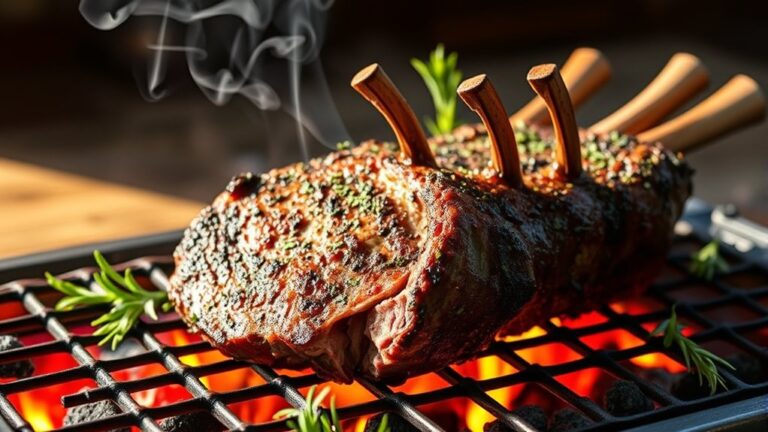
Although controlling heat on a charcoal grill can be tricky, you can achieve high temperatures perfect for searing by managing your charcoal placement and airflow. Start by piling your charcoal tightly in a single, concentrated zone to create a hot spot. Open the vents fully to maximize oxygen flow, which fuels the fire’s intensity.
Use dry, lump charcoal or briquettes for consistent, high heat. Wait until the coals are glowing red with a light ash coating—this signals peak temperature. Position your grill grate close to the coals to transfer heat efficiently.
- Arrange charcoal in a dense pile for focused heat
- Fully open bottom and top vents
- Use high-quality, dry charcoal
- Grill when coals are glowing with gray ash
- Lower grate height for closer heat exposure
Adjusting Heat Mid-Cook Without Extra Charcoal
If you need to adjust the heat mid-cook without adding more charcoal, you can control the temperature by manipulating airflow and coal arrangement. Start by adjusting the grill’s vents: opening them increases oxygen flow, raising the heat, while closing them partially lowers it.
Next, spread out the coals to reduce heat or push them closer for more concentrated warmth. You can also move your food to different zones—closer to coals for higher heat or farther away for gentler cooking.
If the fire dies down slightly, gently stir or rotate the coals to promote even burning. These simple tweaks help maintain consistent heat without the hassle of adding charcoal during cooking, ensuring your meal cooks perfectly.
Troubleshooting Common Charcoal Grill Heat Issues
Since charcoal grilling relies heavily on managing heat, you’ll inevitably face issues like uneven temperatures, flare-ups, or coals burning too quickly. When these problems arise, it’s essential to troubleshoot quickly to keep your cook on track. First, check your airflow vents—too much oxygen speeds up burning, too little suffocates the fire.
Next, rearrange the coals to balance heat zones. Watch for flare-ups caused by dripping fat and move food away when flames flare. If coals burn out fast, add smaller amounts more frequently instead of overloading.
Finally, clean your grill regularly to prevent blockages affecting airflow.
- Adjust vents to control oxygen flow
- Rearrange coals for even heat
- Manage flare-ups by moving food
- Add charcoal in small batches
- Keep grill clean for proper airflow
Frequently Asked Questions
What Type of Charcoal Burns Hottest for Grilling?
You’ll find lump charcoal burns hottest because it’s pure hardwood and lights quickly, reaching higher temperatures than briquettes. It’s perfect when you want intense heat for searing steaks or grilling thick cuts of meat.
Can Adding Water to Charcoal Affect Heat Control?
You can’t put the cart before the horse by adding water to charcoal; it’ll lower the temperature and create steam, making heat control tricky.
Instead, manage airflow and charcoal arrangement to keep your grill cooking just right.
How Does Wind Impact Charcoal Grill Temperature?
Wind increases airflow, making your charcoal burn hotter and faster. You’ll need to adjust vents or shield your grill to prevent flare-ups and temperature spikes.
Controlling wind helps you maintain steady, even heat for better cooking.
Is It Safe to Use Lighter Fluid After Lighting Charcoal?
No, you shouldn’t use lighter fluid after the charcoal is lit because it can cause flare-ups and dangerous flames.
Instead, wait until the coals are fully burning before adding more fuel or adjusting airflow for heat control.
What Tools Help Measure Grill Temperature Accurately?
Like a compass guiding a sailor, a digital grill thermometer helps you measure temperature precisely. You’ll also find infrared thermometers and built-in grill thermometers handy for accurate readings, ensuring your cooking stays right on target every time.
Conclusion
Mastering heat on your charcoal grill is like tending a glowing ember—it takes patience and gentle control. By arranging coals, adjusting vents, and managing airflow, you hold the power to transform raw ingredients into smoky perfection.
Each flicker of flame is your craft’s heartbeat, guiding you through low and slow smokes or fierce sears. Keep your fire steady, and you’ll create more than meals—you’ll ignite memories that warm the soul.
Controlling heat on a charcoal grill is essential for achieving delicious results. With practice, you can confidently manage temperature for every grilling style and recipe. Embrace these techniques, and your charcoal grilling skills will reach new heights.