How to Cook Chicken in a Skillet
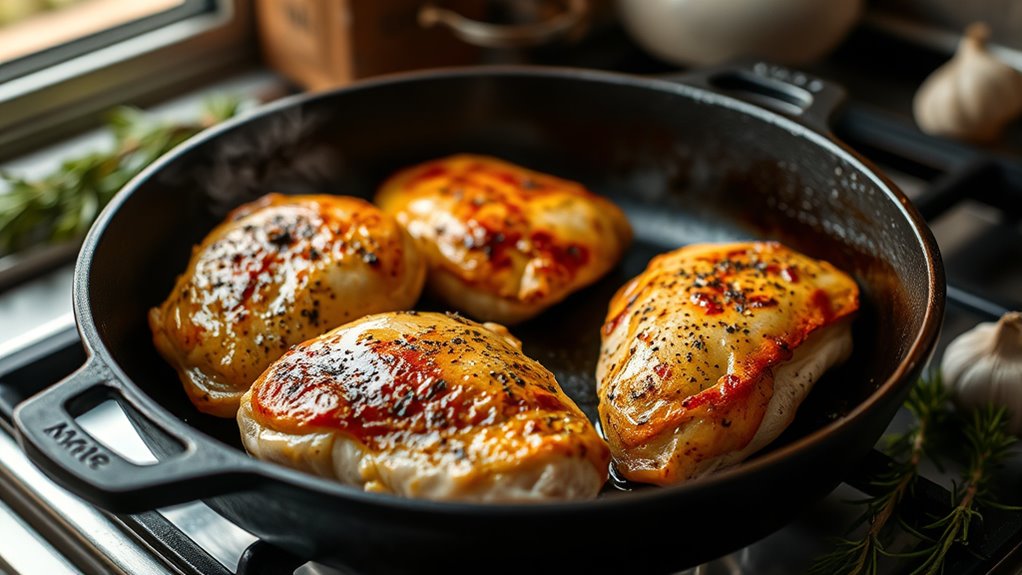
To cook chicken in a skillet, start with boneless, skinless thighs or breasts trimmed and seasoned well. Using a skillet to cook chicken is a quick and versatile method that delivers juicy, flavorful results.
Heat a cast iron or stainless steel pan over medium-high heat and add a high-smoke-point oil like avocado or grapeseed.
Sear the chicken without overcrowding until golden brown, then lower heat to cook through, aiming for 165°F inside. This technique ensures the chicken is cooked evenly and remains tender.
Let it rest briefly for juicy results.
Follow these basics, and you’ll discover tips for perfect seasoning, doneness checks, and enhancing flavor. Mastering skillet chicken opens up endless possibilities for delicious meals.
Key Takeaways
- Choose boneless, skinless chicken thighs or breasts, trimming excess fat and seasoning generously before cooking.
- Preheat a cast iron or stainless steel skillet with high smoke point oil like avocado or grapeseed oil.
- Avoid overcrowding; cook chicken over medium to medium-high heat for a crispy, golden brown crust.
- Cook chicken until internal temperature reaches 165°F (74°C), using a meat thermometer for accuracy.
- Let the chicken rest briefly after cooking to retain juiciness and redistribute juices.
Best Chicken Cuts for Skillet Cooking
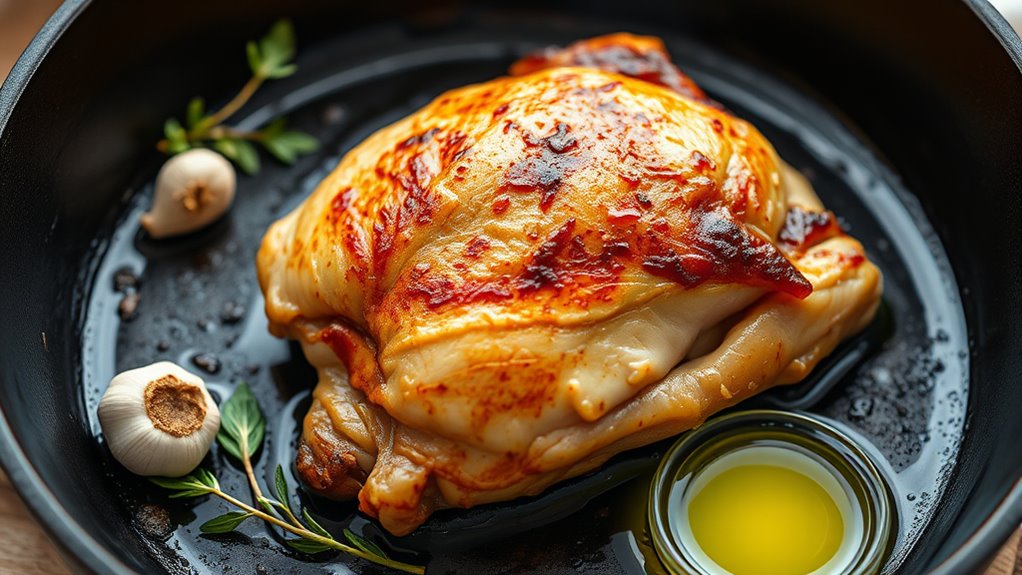
When you cook chicken in a skillet, choosing the right cut makes all the difference. You want cuts that cook evenly and stay juicy. Boneless, skinless chicken breasts are popular, but they can dry out if overcooked.
Thighs, especially boneless and skinless, are forgiving and remain tender with a rich flavor. Drumsticks work well too, but they take a bit longer to cook through. If you prefer skin-on, the skin crisps up beautifully in a hot skillet, adding texture and flavor.
Avoid very thick cuts unless you pound them thinner, so they cook evenly. Ultimately, you want chicken pieces that fit comfortably in your skillet, cook uniformly, and match your texture preference. That way, you’ll nail perfectly cooked chicken every time.
Preparing Chicken for Skillet Cooking
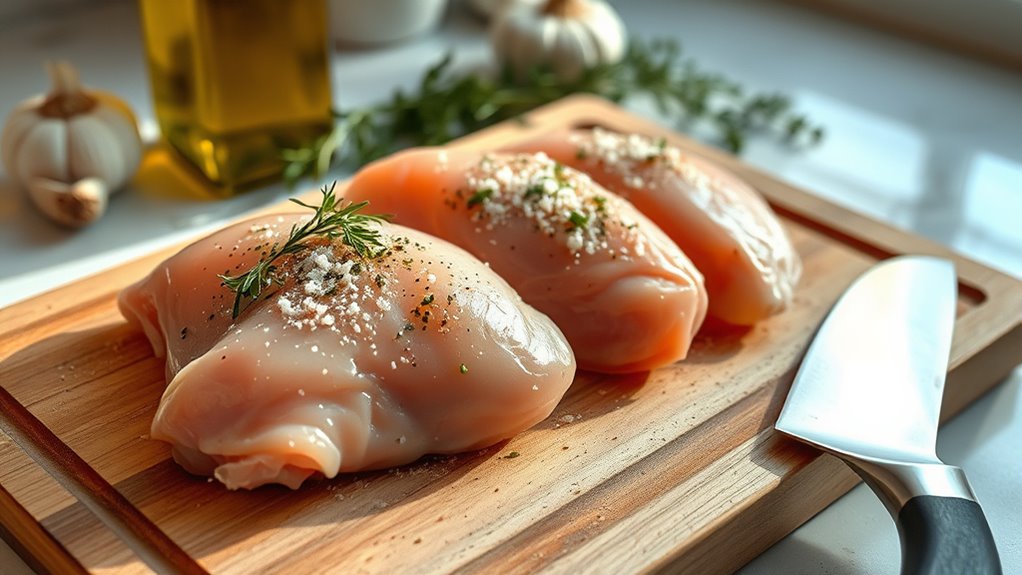
Before you start cooking, make sure you choose the right chicken cut for your skillet. Trim any excess fat or skin, then season it well for the best flavor.
Don’t forget to bring the chicken to room temperature to guarantee even cooking.
Choosing The Right Cut
Although you can cook various chicken cuts in a skillet, choosing the right one guarantees even cooking and the best flavor. Boneless, skinless chicken breasts work well because they cook quickly and evenly, making them ideal for weeknight meals. Thighs offer more fat and flavor, staying juicy during high-heat cooking, though they may need a bit longer to cook through.
Drumsticks and bone-in pieces add richness but require careful attention to avoid undercooking near the bone. If you prefer uniform cooking, flatten breasts or thighs to an even thickness before cooking. Avoid overly thick cuts unless you plan to finish them in the oven.
Selecting the right cut sets you up for success, ensuring your skillet chicken turns out tender and delicious every time.
Trimming And Seasoning
Since proper trimming and seasoning directly impact flavor and texture, you should start by removing excess fat, skin, or connective tissue from your chicken. Use a sharp knife to trim carefully, ensuring even cooking and preventing toughness.
Next, season your chicken generously to enhance taste. Salt, pepper, and your favorite herbs work well.
Here’s a quick seasoning guide:
| Seasoning | Amount | Purpose |
|---|---|---|
| Salt | 1 tsp per pound | Enhances natural flavor |
| Black pepper | ½ tsp per pound | Adds mild heat |
| Garlic powder | ¼ tsp per pound | Provides savory depth |
Apply seasoning evenly on both sides for the best results before you begin cooking.
Bringing To Room Temperature
Three simple steps will help you bring your chicken to room temperature, ensuring even cooking and juicy results. First, remove the chicken from the refrigerator about 20 to 30 minutes before cooking. This short wait allows the meat’s temperature to rise gradually.
Next, keep the chicken covered loosely with plastic wrap or a clean kitchen towel to prevent contamination. Finally, avoid leaving it out longer than 30 minutes to maintain food safety.
Bringing chicken to room temperature prevents the outside from overcooking while the inside remains underdone. When you place the chicken in your skillet, it’ll cook evenly, locking in moisture and flavor. This small step makes a big difference in achieving tender, perfectly cooked chicken every time.
Choosing the Right Skillet for Perfect Chicken
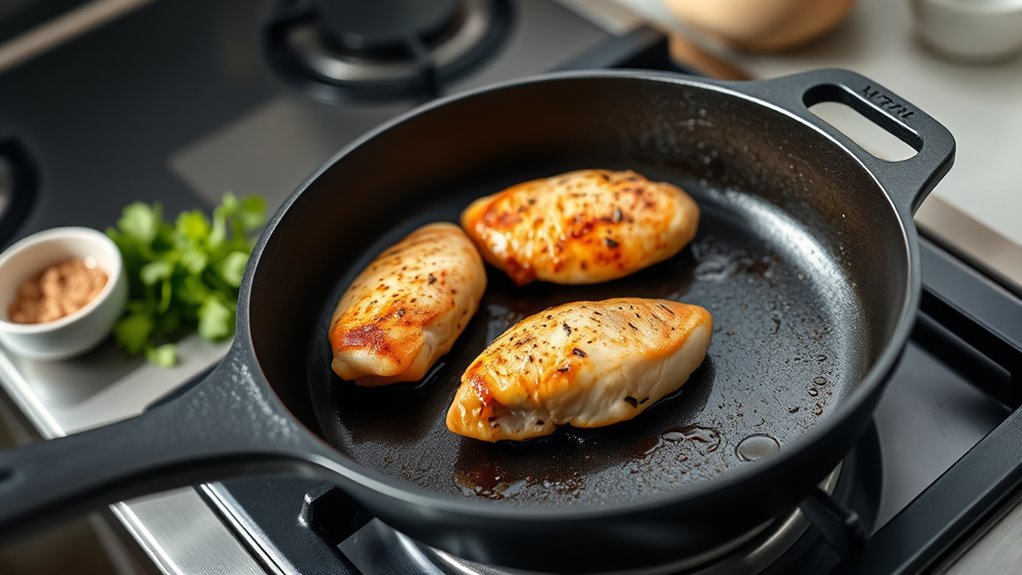
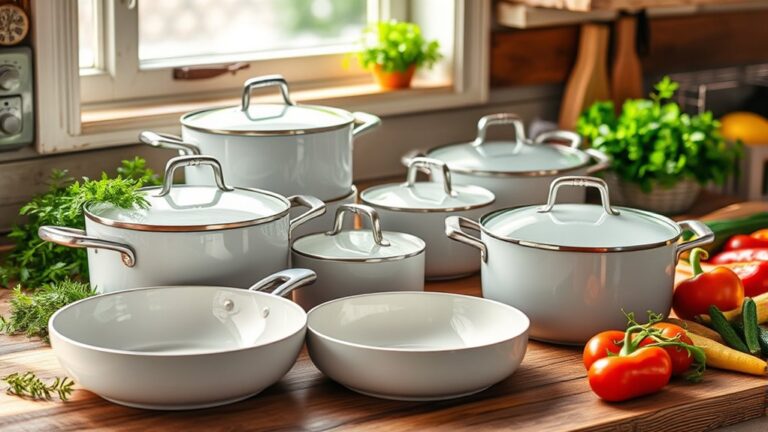
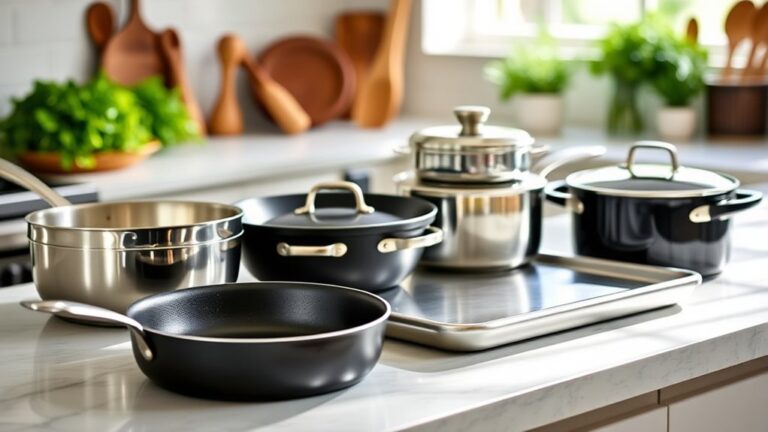
When you want perfectly cooked chicken, picking the right skillet makes all the difference. Choosing a skillet that heats evenly and retains heat guarantees your chicken cooks through without burning. Cast iron skillets are popular for their heat retention and ability to create a crispy crust, while stainless steel skillets heat quickly and are easy to clean.
Non-stick pans prevent sticking but don’t develop as much flavor.
| Skillet Type | Best For |
|---|---|
| Cast Iron | Even heat, crispy crust |
| Stainless Steel | Quick heating, easy cleanup |
| Non-Stick | Easy release, low-fat cooking |
Consider your cooking style and maintenance preferences when selecting your skillet. This choice sets the stage for juicy, flavorful chicken every time.
Selecting Fats: Butter, Oil, and More for Skillet Chicken
Although choosing the right skillet is essential, selecting the right fat can make or break your chicken’s flavor and texture. Use oils with high smoke points, like avocado or grapeseed oil, for a crisp, golden crust without burning. Olive oil adds a subtle, fruity note but watch its lower smoke point.
Butter lends rich flavor and browns beautifully but tends to burn quickly, so try mixing it with oil for balance. For a neutral option, vegetable or canola oil works well. Don’t overlook animal fats like bacon fat or ghee—they add depth and a unique taste.
Ultimately, pick a fat that complements your recipe and suits your cooking temperature, ensuring your chicken cooks evenly with delicious results every time.
Seasoning Tips to Boost Skillet Chicken Flavor
Since seasoning can transform a simple skillet chicken into a flavorful dish, you’ll want to choose your spices and herbs thoughtfully. Start by seasoning both sides generously with salt and pepper to enhance the natural taste. Then, layer in complementary flavors that suit your mood or cuisine style.
Consider these tips to boost your chicken’s flavor:
- Use garlic powder or fresh minced garlic for a savory punch.
- Add smoked paprika or chili powder to introduce warmth and depth.
- Incorporate fresh or dried herbs like thyme, rosemary, or oregano for an aromatic lift.
Remember to season the chicken before cooking, allowing the flavors to meld. This careful seasoning sets the foundation for a delicious skillet chicken meal you’ll want to make again and again.
How to Get a Crispy, Golden Brown Sear on Chicken
To get that perfect crispy, golden brown sear, start by choosing an oil with a high smoke point like avocado or canola oil. Make certain your pan is hot enough before adding the chicken, but not so hot that the oil smokes.
Managing the right temperature ensures a beautiful crust without burning.
Choosing the Right Oil
When you choose the right oil, you set the stage for a perfectly crispy, golden brown sear on your chicken. The oil’s smoke point matters because it affects flavor and prevents burning. You’ll want an oil that can handle high heat without breaking down.
Here are three great options:
- Avocado oil: Has a high smoke point around 520°F, making it ideal for searing.
- Canola oil: Affordable with a smoke point near 400°F, good for medium-high heat.
- Grapeseed oil: Neutral flavor and a smoke point around 420°F, perfect for crispiness without overpowering taste.
Avoid using oils with low smoke points, like olive oil, as they can burn quickly and create bitterness. Choosing the right oil helps you achieve that irresistible crust every time.
Managing Pan Temperature
Choosing the right oil sets you up for success, but controlling your pan’s temperature is what really locks in that crispy, golden brown sear on your chicken. Start by preheating your skillet over medium-high heat. Avoid overcrowding the pan, which lowers the temperature and causes steaming instead of searing.
Use a thermometer or watch for shimmering oil and slight wisps of smoke as signs the pan is ready. Adjust the heat as needed to maintain a steady sizzle without burning.
| Pan Temperature | Indicator | Result |
|---|---|---|
| Low | No sizzle | Pale, soggy chicken |
| Medium | Gentle sizzle | Even cooking |
| Medium-High | Loud sizzle, shimmer | Perfect golden crust |
| High | Smoke, burning smell | Burnt exterior |
| Very High | Thick smoke | Smoke damage |
Cooking Times and Temperatures for Juicy Skillet Chicken
Although skillet chicken cooks quickly, paying close attention to cooking times and temperatures guarantees your meat stays juicy and tender. Cooking chicken at the right temperature prevents dryness and assures even cooking throughout.
Mastering cooking times and temperatures keeps skillet chicken juicy, tender, and perfectly cooked every time.
Typically, boneless chicken breasts take about 6-7 minutes per side over medium heat, while bone-in pieces need a bit longer. Keep your skillet between 325°F and 375°F for the best results.
Here are key points to remember:
- Use medium to medium-high heat to sear without burning.
- Adjust cooking time based on thickness; thinner pieces cook faster.
- Let chicken rest briefly after cooking to retain juices.
Following these tips will help you master juicy, flavorful skillet chicken every time.
Checking Chicken Doneness Safely and Easily
To guarantee your skillet chicken is perfectly cooked, you need to check its doneness safely and easily. Start by using a reliable meat thermometer—insert it into the thickest part of the chicken without touching bone. The chicken is safe to eat when it reaches an internal temperature of 165°F (74°C).
If you don’t have a thermometer, cut into the thickest section and ensure the juices run clear, not pink. The meat should be opaque and firm to the touch. Avoid guessing by appearance alone, as undercooked chicken can be unsafe.
Always let your chicken rest for a few minutes after cooking; this allows juices to redistribute and makes checking more accurate. Following these steps keeps your chicken both delicious and safe.
Common Mistakes When Cooking Chicken in a Skillet
When cooking chicken in a skillet, watch out for overcrowding the pan, which can steam the meat instead of searing it. You’ll also want to use the right heat level—too high or too low can ruin the texture.
Don’t forget to season properly, or your chicken might end up bland and unappealing.
Overcrowding The Pan
If you crowd the pan, your chicken won’t brown properly and can end up steaming instead. This happens because the moisture released from the chicken has nowhere to escape, causing soggy, pale pieces rather than that golden, crispy exterior you want.
To avoid overcrowding, give each piece enough space to cook evenly.
Here’s what you should keep in mind:
- Cook in batches if needed, so the pan isn’t too full.
- Use a larger skillet or adjust the recipe quantity.
- Leave at least a little space between each piece of chicken.
Incorrect Heat Level
Although it might seem tempting to crank the heat up high for faster cooking, using the wrong heat level can ruin your chicken’s texture and flavor. High heat can quickly burn the outside while leaving the inside undercooked. On the other hand, cooking on too low a heat will make your chicken dry and rubbery because it cooks unevenly and loses moisture.
Aim for medium to medium-high heat to achieve a golden, crispy crust while ensuring the inside cooks through properly. Adjust the heat as needed during cooking to avoid burning or undercooking. Remember, controlling the skillet’s temperature helps you get juicy, tender chicken with a perfect sear every time.
Don’t rush—heat balance is key to skillet success.
Not Seasoning Properly
Failing to season your chicken properly can leave it bland and unappetizing, no matter how well you cook it. You want to make sure every bite bursts with flavor, and that starts with seasoning. Don’t just rely on salt; think about layering flavors to enhance your dish.
Here’s what to avoid:
- Using too little salt or seasoning, resulting in dull taste
- Applying seasoning only after cooking, missing the chance to infuse flavor
- Relying solely on pre-made blends without adding fresh herbs or spices
To get it right, season your chicken generously before cooking and consider marinating it to deepen the flavor. Proper seasoning transforms your skillet chicken from ordinary to mouthwatering with minimal effort.
Sauces and Extras to Enhance Skillet Chicken
When you want to elevate your skillet chicken, adding flavorful sauces and extras can make all the difference. Start with a simple pan sauce by deglazing the skillet with chicken broth, white wine, or lemon juice after cooking the chicken. Stir in butter or cream for richness, and add herbs like thyme or parsley for freshness.
For a bold kick, try a garlic and mustard sauce or a spicy sriracha glaze. Don’t forget extras like sautéed mushrooms, caramelized onions, or roasted garlic to boost texture and flavor. A sprinkle of toasted nuts or a handful of fresh greens can add contrast and brighten your dish.
These additions transform your skillet chicken from basic to memorable with minimal effort.
Storing and Reheating Leftover Skillet Chicken
Adding sauces and extras to your skillet chicken can make for a delicious meal, but you might not finish it all in one sitting. To keep your leftovers fresh and tasty, store the chicken in an airtight container and refrigerate it within two hours of cooking. Proper storage helps prevent bacterial growth and maintains flavor.
When reheating, use these tips for the best results:
- Reheat gently on the stovetop over medium heat to retain moisture.
- Avoid microwaving directly without covering; instead, cover the chicken with a damp paper towel to keep it from drying out.
- Add a splash of broth or water to the pan before reheating to keep the chicken juicy.
Following these steps ensures your skillet chicken stays delicious for your next meal.
Frequently Asked Questions
Can I Cook Chicken in a Skillet Without Oil?
Yes, you can cook chicken in a skillet without oil by using a non-stick pan or adding a bit of water or broth to prevent sticking.
Just watch the heat to avoid drying out the chicken while it cooks.
What Side Dishes Pair Best With Skillet Chicken?
Picture vibrant roasted veggies and fluffy garlic mashed potatoes on your plate.
You’ll love pairing skillet chicken with crisp green beans, fresh salad, or buttery corn—
each side balancing your meal with color, texture, and mouthwatering flavor.
How Do I Clean a Cast Iron Skillet After Cooking Chicken?
You’ll want to clean your cast iron skillet by wiping out excess grease with a paper towel, rinsing with hot water, and scrubbing gently with a brush or salt.
Dry it thoroughly and apply a light oil coat to prevent rust.
Can I Use Frozen Chicken Directly in the Skillet?
Sure, you can toss frozen chicken straight into the skillet and hope for a miracle. But don’t expect even cooking—it’ll steam more than sear.
Thaw first, or your dinner might laugh at your patience.
Is It Safe to Cook Chicken in a Non-Stick Skillet?
Yes, it’s safe to cook chicken in a non-stick skillet as long as you don’t overheat it. Keep the temperature moderate and avoid using metal utensils to protect the coating and guarantee even cooking.
Using proper utensils and maintaining the right heat helps extend the life of your skillet. This way, you ensure both safety and quality in your cooking.
Conclusion
So, you’ve mastered the art of skillet chicken—simple, right? Just toss a cut in a pan, and voilà, dinner’s done. But if it were that easy, everyone would be a chef.
The secret lies in the details: the cut, the fat, the seasoning, and patience. Skip these, and you might just get a rubbery disaster instead of a juicy masterpiece.
Turns out, cooking chicken in a skillet is as much science as it is art! Mastering these steps ensures your skillet chicken is perfectly cooked, flavorful, and tender every time.