How to Measure Frying Pan Size
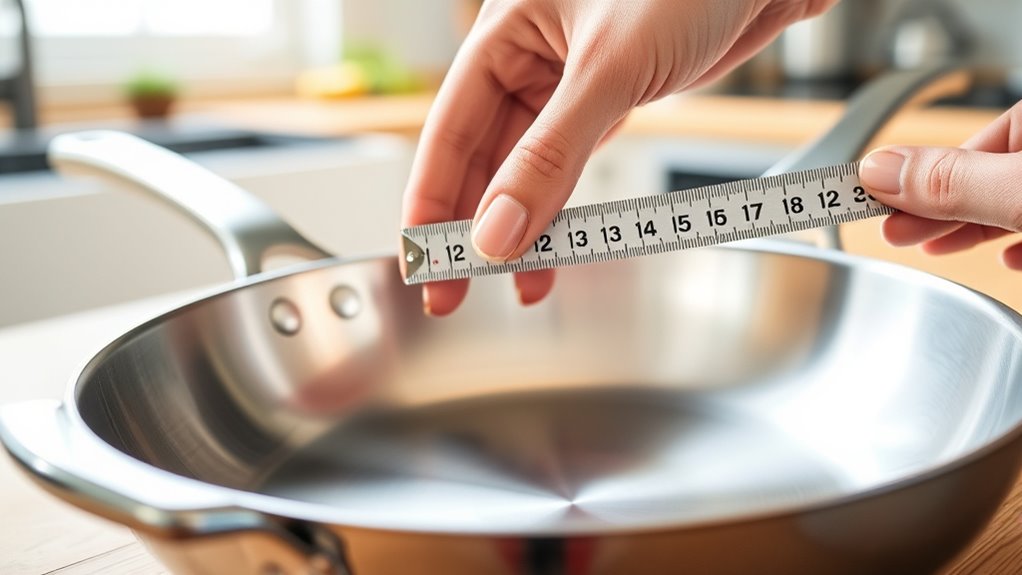
To measure your frying pan size accurately, start by placing the pan on a flat surface. Measuring the frying pan diameter is key, so focus on the inside edges and avoid the outer rim.
For round pans, measure straight across through the center.
If you have square or oval pans, note both the longest and widest internal dimensions to get a clear size.
Use a ruler or flexible tape to measure the pan’s depth by measuring from the bottom inside up to the rim.
These precise measurements help you choose the right pan size for your cooking needs. Keep going to discover tips on selecting and maintaining the perfect pan size.
Key Takeaways
- Measure the pan’s diameter by placing it on a flat surface and measuring straight across the inside from edge to edge, excluding the rim.
- Use a ruler or tape measure to determine the internal depth from the bottom interior to the rim’s inner edge.
- For round pans, measure the diameter across the center; for square or oval pans, measure both the longest length and widest width inside.
- Use a flexible measuring tape for irregular or curved pans to capture accurate longest and widest internal dimensions.
- Record all measurements to estimate cooking capacity and ensure the pan size matches your burner and cooking needs.
How to Measure the Diameter of Your Frying Pan
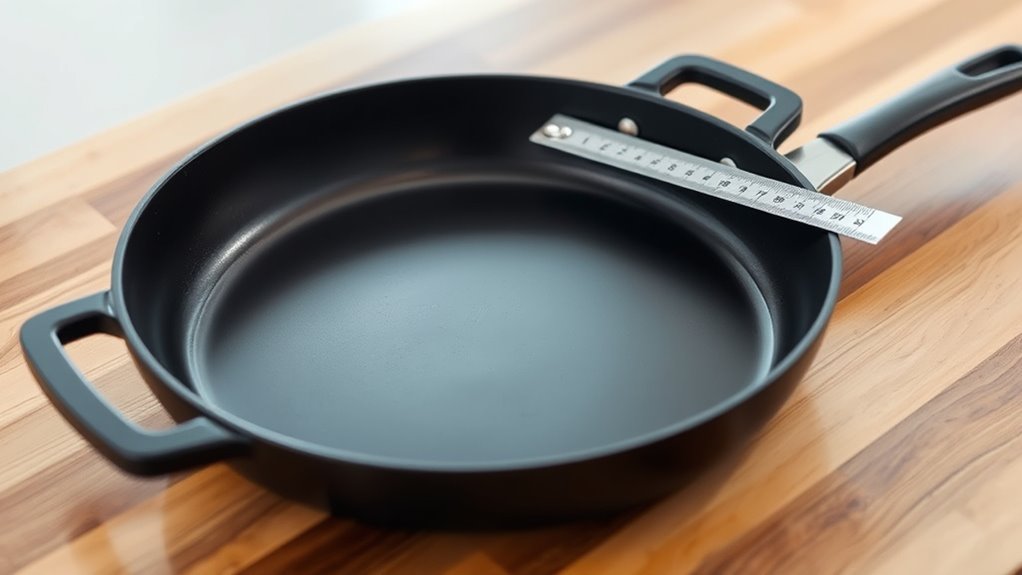
Although it might seem simple, measuring the diameter of your frying pan accurately is essential for choosing the right size for your cooking needs. To get the exact diameter, place your pan on a flat surface. Use a ruler or measuring tape and measure straight across the top, from one inner edge to the opposite inner edge.
Make sure you measure inside the rim, not including the outer edge, because that’s where your food cooks. If your pan is round, this measurement is straightforward. For square or oval pans, measure the longest distance across the cooking surface.
How to Measure the Depth of Your Frying Pan
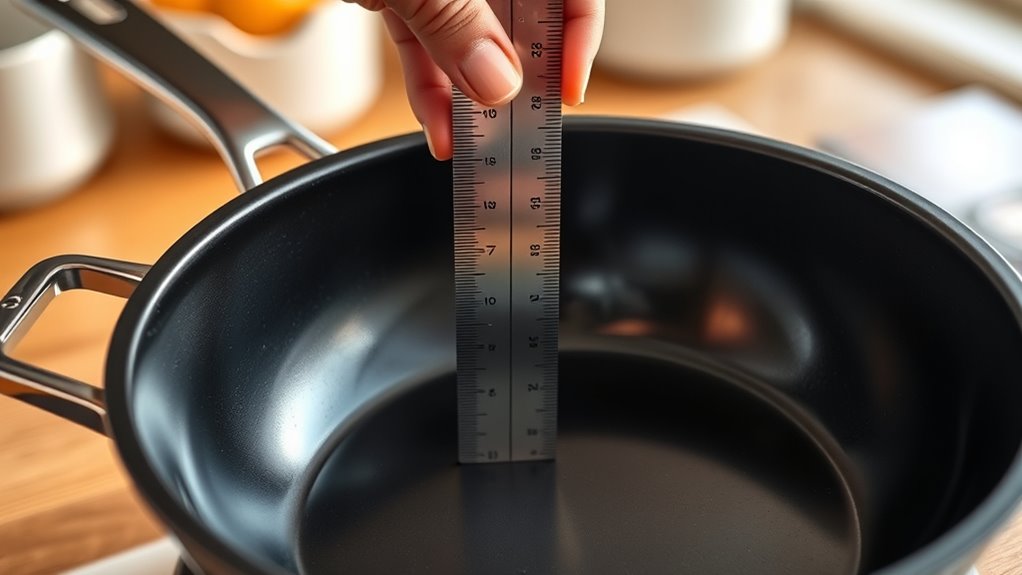
To measure the depth of your frying pan, place a ruler inside it and read the measurement from the bottom to the top edge. Make sure the ruler stands straight for an accurate reading.
This simple step helps you understand the pan’s capacity better.
Measuring Internal Depth
When you measure the internal depth of your frying pan, you get a clear idea of how much food it can hold without spilling. To do this, place the pan on a flat surface and hold a measuring tool vertically inside the pan. Measure from the bottom interior surface straight up to the rim’s inner edge.
This gives you the true usable depth, not the external measurement. Make certain the tool is perpendicular to the pan’s base to avoid inaccurate readings. Knowing this internal depth helps you choose the right pan for different recipes, especially when you need to avoid overfilling.
Accurate internal depth measurement ensures your frying pan meets your cooking needs and fits your kitchen space perfectly.
Using a Ruler Correctly
Since accurate measurement depends on proper technique, you’ll want to use a ruler correctly when measuring your frying pan’s depth. First, place the pan on a flat surface to guarantee stability. Hold the ruler vertically inside the pan, touching the bottom without tilting.
Make sure the zero mark aligns exactly with the pan’s base. Look straight down at the ruler to avoid parallax error, which can distort your reading. Note the measurement where the pan’s rim meets the ruler.
If your ruler has both metric and imperial units, choose one and stick to it for consistency. Double-check your measurement by repeating the process once or twice. Using these steps, you’ll get an accurate depth measurement for your frying pan every time.
How to Measure Round vs. Square Frying Pans
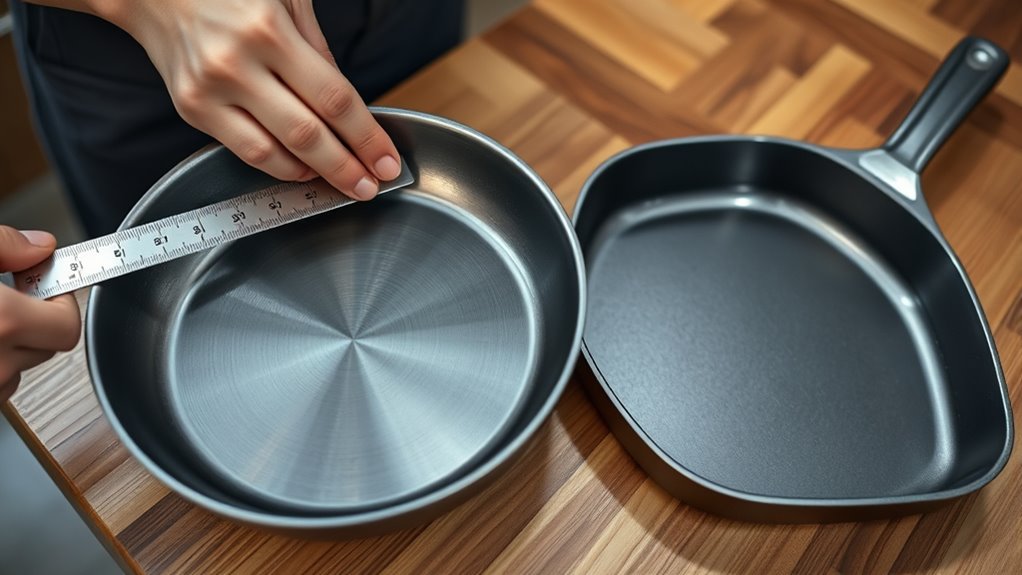
Although both round and square frying pans serve similar purposes, you’ll need to measure them differently to get an accurate size. For round pans, measure straight across the center from one inner edge to the other to find the diameter. This gives you the pan’s size in inches or centimeters.
For square pans, measure the length from one inner edge to the opposite edge, then measure the width the same way. Square pans often have equal length and width, but if not, note both dimensions. Always measure inside the pan, excluding the rim, to get the usable cooking surface.
Tips for Measuring Specialty or Irregular-Shaped Pans
Because specialty and irregular-shaped pans don’t fit standard measurements, you’ll need to get creative to determine their size accurately. Start by measuring the longest diameter, then the widest width, and finally the depth.
Use these dimensions to approximate the pan’s capacity or cooking surface. A flexible measuring tape works best for curved or angled edges.
| Step | Tool Needed | What to Measure |
|---|---|---|
| 1 | Measuring tape | Longest diameter |
| 2 | Measuring tape | Widest width |
| 3 | Ruler or tape | Depth |
| 4 | Calculator | Approximate area |
| 5 | Pen & paper | Record measurements |
With these steps, you’ll get a reliable size estimate for any pan shape.
Why Frying Pan Size Matters for Cooking Results
Now that you know how to measure any pan accurately, it’s important to understand how frying pan size impacts your cooking. Choosing the right size guarantees even heat distribution, so your food cooks consistently without burning or undercooking.
If your pan is too small, ingredients will overcrowd, causing steaming instead of frying, which affects texture and flavor. Conversely, a pan that’s too large spreads heat thin, making it harder to maintain the right temperature.
The pan size also influences portion control and how much food you can prepare at once. By selecting the correct frying pan size, you gain better control over cooking times, texture, and taste, leading to more satisfying meals every time you cook.
Tools You Need to Measure Your Frying Pan Accurately
When you want to measure your frying pan accurately, having the right tools makes the process quick and simple. Start with a flexible measuring tape or a ruler marked in inches or centimeters to measure the diameter from edge to edge. A tape measure works best for pans with curved edges, while a ruler suits flat-bottomed pans.
You might also want a caliper if you need precise measurements of the pan’s depth or rim thickness. For irregular shapes, use a piece of string to trace the widest part, then measure the string’s length with your ruler. Keep a notepad or your phone handy to record these measurements immediately, so you don’t forget.
With these tools, you’ll get exact dimensions without hassle.
How to Match Frying Pan Size to Your Stove Burner
You’ll want to match your frying pan size to your stove burner’s diameter to guarantee even heating and efficient cooking. Keep in mind that different pan materials distribute heat differently, so choosing the right size helps avoid hotspots.
Let’s look at how burner compatibility and pan material affect your cooking results.
Burner Diameter Compatibility
How do you guarantee your frying pan heats evenly on your stove? The key lies in burner diameter compatibility. Choose a pan whose base diameter closely matches your burner size.
If your pan is considerably larger than the burner, the heat won’t spread evenly, causing hot spots and undercooked sections. Conversely, a pan too small for a large burner may waste energy and heat unevenly. Measure your stove burner’s diameter and compare it to your pan’s base.
Ideally, the pan should cover the burner without extending too far beyond it. This ensures efficient heating and better cooking results. Matching burner and pan sizes also prevents damage to the pan’s base and reduces energy loss, making your cooking more effective and enjoyable.
Pan Material Heat Distribution
Why does the material of your frying pan matter for heat distribution? Because different materials conduct heat differently, affecting how evenly your food cooks. When matching pan size to your burner, consider the pan’s material to guarantee efficient heat transfer and avoid hotspots or uneven cooking.
| Material | Heat Conductivity | Best Burner Match |
|---|---|---|
| Aluminum | High | Small to medium burners |
| Stainless Steel | Moderate | Medium to large burners |
| Cast Iron | Low (but retains heat well) | Medium to large burners |
Aluminum heats up quickly, so smaller pans work well on smaller burners. Stainless steel offers steady heat, ideal for medium to larger burners. Cast iron heats slowly but retains heat, matching well with larger burners that provide consistent heat.
Choose wisely for better cooking results.
Choosing the Right Frying Pan Size for Different Recipes
When cooking different dishes, selecting the right frying pan size guarantees even heat distribution and prevents overcrowding. For small tasks like frying an egg or toasting nuts, a 6- to 8-inch pan works perfectly.
If you’re making a stir-fry or sautéing vegetables for two, a 10-inch pan gives you enough space to toss ingredients without spilling. When preparing meals for a family or cooking larger cuts of meat, opt for a 12-inch or bigger pan to accommodate more food comfortably.
How Frying Pan Size Affects Heat Distribution and Cooking Time
Although choosing the right frying pan size might seem straightforward, it directly impacts how heat spreads across the surface and how quickly your food cooks. When you use a pan that’s too large for your burner, the heat won’t distribute evenly, leaving cooler spots that slow cooking. Conversely, a pan that’s too small concentrates heat, which can cause burning or uneven cooking.
The size also affects cooking time: larger pans generally require more time to heat up but provide more space for food to cook evenly. Smaller pans heat quickly but can overcrowd your ingredients, leading to steaming rather than frying. By matching your pan size to your heat source and recipe, you guarantee even temperature control and efficient cooking every time.
How to Compare Frying Pan Sizes When Shopping Online
Since you can’t physically handle frying pans online, comparing their sizes requires a careful look at product descriptions and dimensions. Always check the diameter listed—this measurement usually refers to the top edge of the pan. Don’t assume the base size matches since it’s often smaller.
Look for details about the cooking surface area if available, as this impacts how much food you can cook at once. Pay attention to the depth too; a deeper pan may hold more but can affect heat distribution. If possible, compare photos with common objects or hands for scale.
Finally, read reviews to see if users mention the pan’s true size or if it runs larger or smaller than advertised. This approach helps you pick the right frying pan without surprises.
When Is It Time to Replace Your Frying Pan?
If your frying pan starts sticking despite proper seasoning or cleaning, it’s a clear sign you might need a replacement. Over time, non-stick coatings wear down, and even well-maintained pans can develop scratches or warping that affect cooking performance. You should also consider replacing your pan if it heats unevenly or if the handle becomes loose or damaged, which can be unsafe.
Another indicator is discoloration or rust that won’t come off with cleaning. Don’t wait until your food sticks constantly or the pan becomes difficult to handle—substituting it ensures better cooking results and safety. Regularly inspect your frying pans, and when you notice these signs, it’s time to upgrade to a new one that fits your cooking needs.
Frequently Asked Questions
How Do I Clean and Maintain My Frying Pan Properly?
You should clean your frying pan with warm, soapy water and a soft sponge right after use. Avoid harsh scrubbers, dry it thoroughly, and season cast iron pans regularly to keep them non-stick and rust-free.
What Materials Are Best for Frying Pans?
You’ll want stainless steel for durability, cast iron for heat retention, and non-stick coatings for easy cooking. Each suits different needs, so choose based on what you cook and how much maintenance you’re willing to do.
Can I Use a Frying Pan in the Oven?
You can use a frying pan in the oven if it’s oven-safe. Check the handle and material—metal pans usually work, but plastic handles don’t.
Always verify the manufacturer’s temperature limits to avoid damage or danger.
How Do I Season a Non-Stick Frying Pan?
You don’t need to season a non-stick frying pan like cast iron. Just wash it gently, dry thoroughly, then lightly coat with oil before heating on low.
This helps maintain the non-stick surface and prolongs its life.
Are Frying Pans Dishwasher Safe?
Most frying pans aren’t dishwasher safe because harsh detergents and high heat can damage their coating. You should hand wash them with mild soap and a soft sponge to keep them in great condition longer.
Conclusion
Now that you know how to measure your frying pan, you’re armed to choose the perfect size for every meal. Remember, the right pan is like a trusted dance partner—it moves with you, making cooking smoother and more enjoyable.
Whether you’re searing, sautéing, or frying, selecting the right size ensures even heat and better results. So, keep these tips in mind, and your kitchen adventures will always be a step ahead.
Choosing the correct frying pan size is essential for efficient cooking and achieving delicious meals. By measuring your pan accurately, you guarantee optimal heat distribution and cooking performance every time. Use these frying pan size tips to enhance your culinary skills and enjoy better cooking results.