Are Wood Cutting Boards Safe?
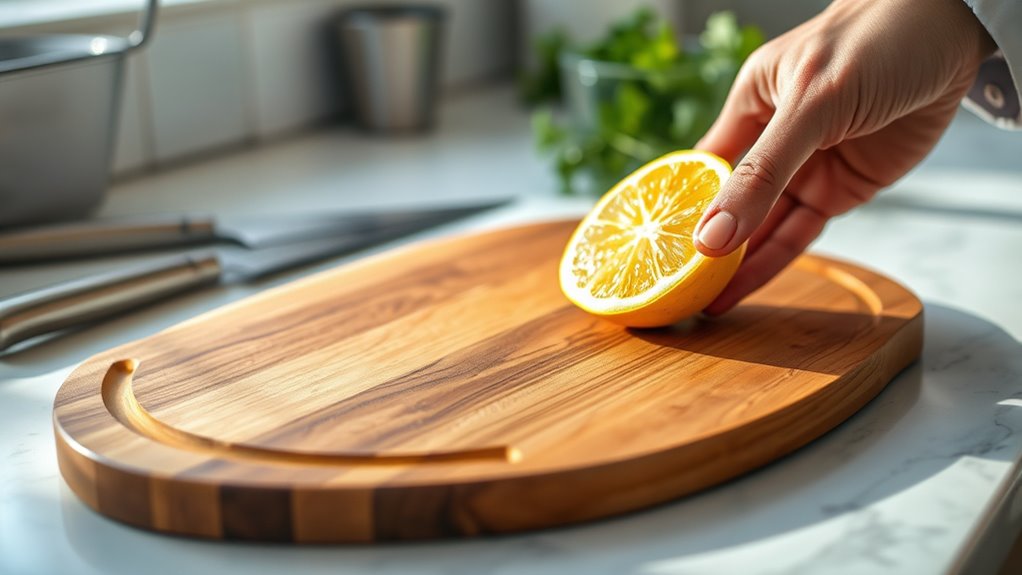
You can safely use wood cutting boards as long as you clean and maintain them properly. Wood cutting boards are popular in kitchens due to their natural antimicrobial properties and durability. Their dense grain structure traps and kills bacteria, reducing risks of contamination.
Avoid soaking or placing wood boards in dishwashers, as this can cause warping and cracking. Instead, wash them with hot soapy water and sanitize occasionally to keep them hygienic. Regularly oiling the boards helps prevent damage and extends their lifespan.
It is best to steer clear of using wood boards for raw poultry and acidic foods to avoid cross-contamination and staining. If you want to understand how wood compares to plastic, the best wood types, and maintenance tips, keep exploring for a full picture.
Key Takeaways
- Properly maintained wood cutting boards do not harbor more harmful bacteria than other materials due to natural antimicrobial properties.
- Wood’s dense grain traps and immobilizes bacteria, reducing their spread across the surface.
- Thorough cleaning with hot, soapy water and immediate drying prevents bacterial growth and mold on wood boards.
- Avoid soaking or dishwasher use to prevent warping, cracking, and damage that can harbor bacteria.
- Regular oiling and maintenance prolong lifespan and keep wood boards safe and hygienic for food preparation.
Can Wood Cutting Boards Harbor Harmful Bacteria?
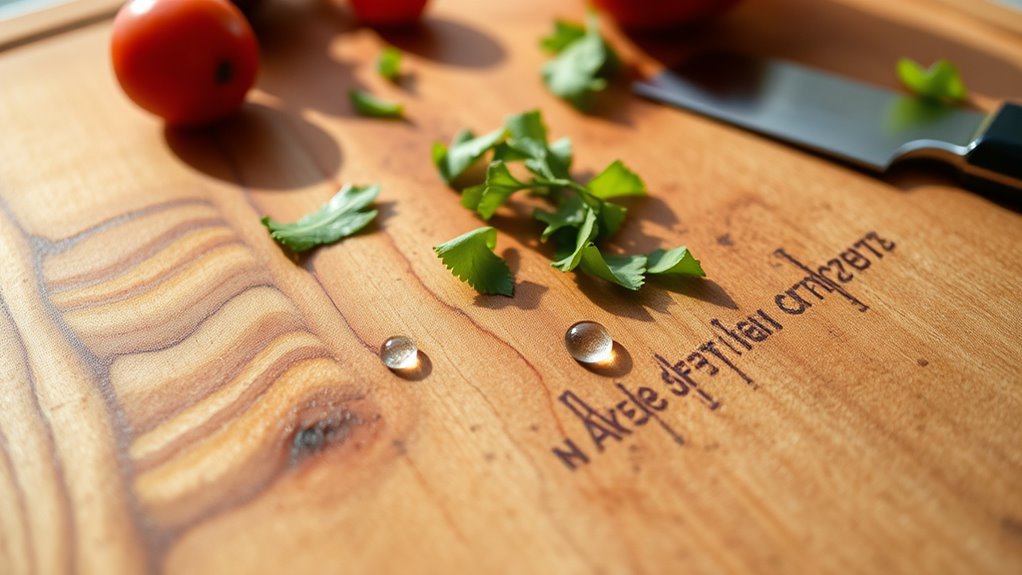
Although wood might seem like a breeding ground for bacteria, it actually has natural properties that inhibit bacterial growth. When you use a wood cutting board, microscopic pores in the wood absorb moisture and trap bacteria below the surface, where they can’t multiply easily. Unlike plastic boards, which can develop deep grooves that harbor bacteria, wood’s self-healing fibers close up after you cut.
You might worry about contamination, but research shows that properly maintained wood boards don’t harbor more harmful bacteria than other materials. Of course, this assumes you use your board correctly and keep it dry between uses. So, while wood cutting boards can hold bacteria temporarily, their natural properties and your care work together to minimize health risks effectively.
How Should You Clean and Sanitize Wood Cutting Boards?
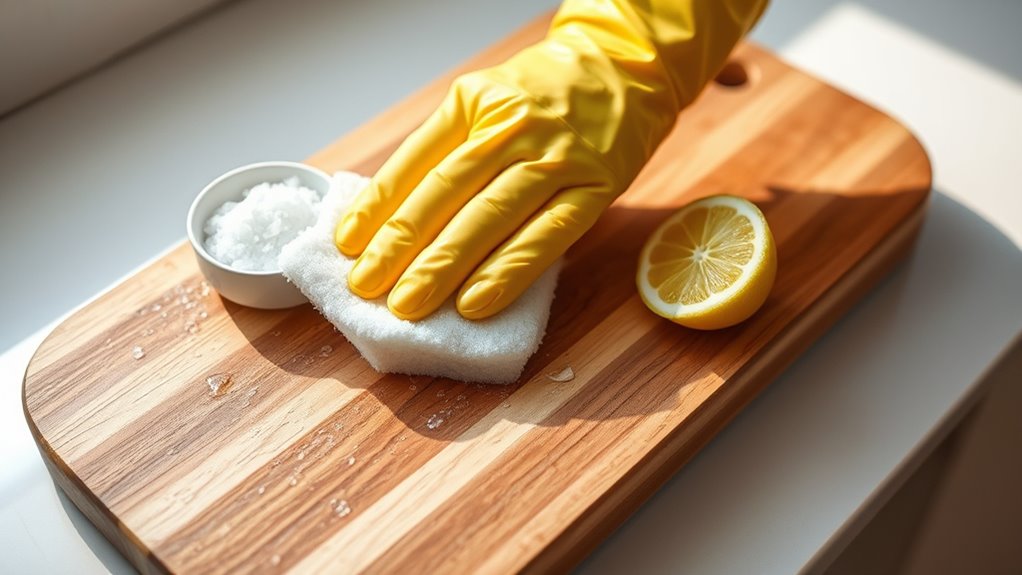
Since wood cutting boards absorb moisture and bacteria below their surface, you need to clean and sanitize them carefully to keep them safe. After each use, wash your board with hot, soapy water, scrubbing all surfaces thoroughly. Avoid soaking it or putting it in the dishwasher, as excess water can cause warping or cracking.
Rinse well and dry immediately with a clean towel, then let it air-dry standing upright. To sanitize, use a solution of one tablespoon of unscented bleach mixed with one gallon of water. Apply it to the board, let it sit for a few minutes, then rinse and dry.
Alternatively, you can use white vinegar or hydrogen peroxide for a natural sanitizing option. Regular cleaning and proper drying prevent bacteria buildup and keep your board safe for food prep.
How Wood Cutting Boards’ Natural Properties Affect Food Safety
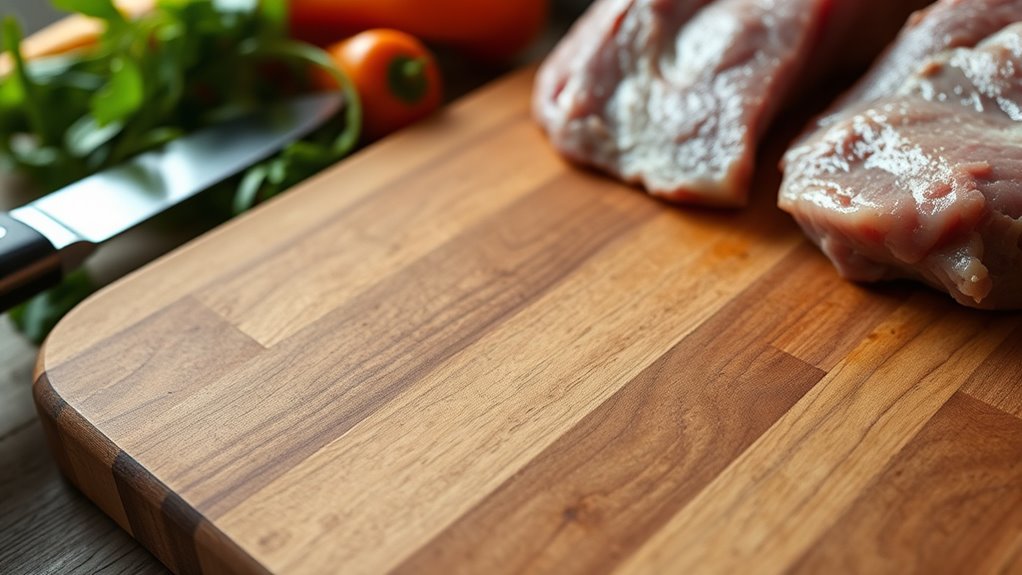
When you use a wood cutting board, its natural properties play a key role in food safety. Wood has a dense grain structure that helps trap and immobilize bacteria, preventing them from spreading across the surface. This means harmful microbes are less likely to multiply or transfer to your food.
Additionally, wood’s natural antimicrobial compounds can inhibit bacterial growth, adding an extra layer of protection. Because wood absorbs moisture, it helps reduce pooling of liquids where bacteria thrive. However, this also means you need to dry your board properly after cleaning to avoid mold.
Understanding these natural traits lets you care for your wood cutting board effectively, keeping your kitchen safer without needing harsh chemicals or constant replacement.
Wood vs. Plastic Cutting Boards: Which Is Safer?
Deciding between wood and plastic cutting boards can feel tricky, but understanding their safety differences helps you make the best choice for your kitchen. Wood boards naturally resist bacteria due to their porous surface, which traps and kills microbes. Plastic boards, however, can develop deep grooves that harbor bacteria if not replaced regularly.
Both require proper cleaning to stay safe.
| Aspect | Wood | Plastic |
|---|---|---|
| Bacteria Resistance | Natural antimicrobial action | Can retain bacteria in cuts |
| Maintenance | Hand wash and oil regularly | Dishwasher safe, replace when worn |
| Durability | Long-lasting with care | Less durable, needs frequent replacing |
Choosing depends on your cleaning habits and how often you replace worn boards.
What Types of Wood Are Best for Cutting Boards?
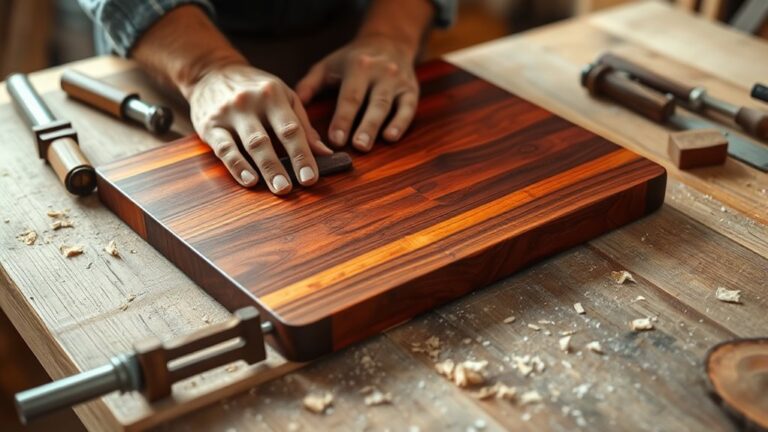
You’ll want to choose hardwoods over softwoods for your cutting board because they’re more durable and less prone to damage. Popular options like maple, walnut, and cherry offer a strong surface that’s also gentle on your knives.
Let’s explore why these woods stand out and what makes them safe choices for your kitchen.
Hardwoods vs Softwoods
Although both hardwoods and softwoods can be used for cutting boards, hardwoods are generally the better choice because they’re denser and more durable. You want a board that resists deep cuts, which can harbor bacteria and damage your knife’s edge. Hardwoods like maple or walnut offer tight grain structures that naturally repel moisture and bacteria.
Softwoods, such as pine, tend to be porous and scratch easily, making them less sanitary.
When choosing wood for your cutting board, picture:
- Smooth, tightly packed grains that resist water absorption
- A firm surface that withstands knife marks over time
- A sturdy feel that won’t warp or crack with regular use
These qualities help keep your cutting board safe and long-lasting.
Popular Wood Choices
When selecting wood for your cutting board, knowing which types perform best can make a big difference in durability and hygiene. Hardwoods like maple, walnut, and cherry are popular because they’re dense and have tight grain structures, which resist bacteria and prevent deep knife marks. Maple is especially favored for its hardness and light color, making it easy to spot dirt.
Walnut offers a rich, dark tone and is gentle on knives, while cherry provides a warm, reddish hue and ages beautifully. Bamboo, though technically a grass, is also common due to its sustainability and hardness. Avoid softwoods like pine, which can scar easily and harbor bacteria.
Choosing the right wood guarantees your cutting board stays safe, lasts longer, and looks great in your kitchen.
Are There Foods You Should Avoid Using on Wood Boards?
Since wood cutting boards can absorb liquids and odors, certain foods may not be the best choice for them. You should be cautious when cutting highly acidic or strongly flavored foods, as they can stain or leave lingering smells. Also, raw meats and fish can harbor bacteria that penetrate the board’s surface, even if you clean thoroughly.
Avoid using wood boards for:
- Citrus fruits like lemons and oranges, which can discolor the wood.
- Raw poultry or seafood, to reduce bacterial contamination risks.
- Strongly scented foods such as garlic or onions, which can leave persistent odors.
When Is It Time to Replace Your Wood Cutting Board?
You should replace your wood cutting board when deep grooves or cracks appear, as they can harbor bacteria. If cleaning doesn’t restore its surface or eliminate odors, it’s a sign the board isn’t hygienic anymore.
Regularly inspecting your board helps keep your kitchen safe and clean.
Signs Of Wear
Several clear signs can help you determine when it’s time to replace your wood cutting board. Over time, wear and tear can compromise its safety and effectiveness. Watch for these key indicators:
- Deep grooves and cracks where bacteria can hide, making cleaning difficult
- Warping or splitting that causes uneven surfaces and instability while cutting
- Persistent stains or discoloration that don’t fade after thorough cleaning
If you notice any of these signs, it’s best to retire your cutting board. Continuing to use a worn board increases the risk of contamination and affects your food prep quality.
Regularly inspecting your board guarantees you maintain a safe and hygienic kitchen environment, so you can confidently protect yourself and your family.
Hygiene Concerns
How often should you consider replacing your wood cutting board due to hygiene concerns? If your board has deep grooves, cracks, or warping that trap food particles and bacteria, it’s time to substitute it. Over time, these imperfections become breeding grounds for harmful microbes, even with regular cleaning.
If your board retains strong odors or stains despite thorough washing, that’s another sign it’s no longer safe to use. Also, if you notice mold or persistent discoloration, don’t hesitate to get a new one. Regularly inspect your board after each use, especially when cutting raw meat or fish.
Proper maintenance extends its life, but prioritizing hygiene ensures your food stays safe and you avoid cross-contamination risks. When in doubt, replace it.
Pros and Cons of Wood Cutting Boards
Although wood cutting boards have been a kitchen staple for centuries, they come with both advantages and drawbacks that you should consider before choosing one. On the plus side, wood is gentle on your knives, preserving their sharpness longer. It also has natural antimicrobial properties, reducing some bacteria risks.
However, wood boards can be prone to cracking or warping if not properly maintained, and they require regular oiling to stay in good condition. Plus, they might absorb juices from raw meat, raising hygiene concerns if not cleaned thoroughly.
Here’s a quick look:
- Smooth, knife-friendly surface that extends blade life
- Requires consistent care to prevent damage and bacteria buildup
- Can develop deep grooves that trap food particles
Weigh these factors to pick what fits your kitchen best.
Frequently Asked Questions
Can Wood Cutting Boards Be Used for Serving Food?
Yes, you can use wood cutting boards for serving food. Just make sure they’re clean and well-maintained to avoid bacteria buildup. They add a rustic touch, perfect for cheeses, bread, or charcuterie presentations.
How Do Wood Cutting Boards Affect Knife Sharpness?
Wood cutting boards are gentle on your knives, so they help keep them sharper longer. Unlike harder surfaces, wood absorbs some impact, reducing blade dulling.
You’ll find your knives stay sharper and last longer using wood boards.
Are There Eco-Friendly Treatments for Wood Cutting Boards?
You can coat your wooden board with eco-friendly oils like coconut or beeswax, creating a natural shield that smells fresh and keeps moisture out.
These treatments protect wood while being safe for your kitchen and the planet.
Can Wood Cutting Boards Cause Allergies?
Yes, wood cutting boards can cause allergies if you’re sensitive to certain woods or dust.
You’ll want to choose hypoallergenic wood types and keep your board clean to minimize any allergic reactions while cooking.
How Should Wood Cutting Boards Be Stored to Maintain Quality?
Think of your wood cutting board as a treasured book—store it standing upright in a dry, well-ventilated place. This way, it won’t warp or trap moisture, preserving its strength and beauty for years to come.
Conclusion
You might be surprised to learn that studies show wood cutting boards can actually harbor fewer bacteria than plastic ones, thanks to their natural antimicrobial properties. By properly cleaning and maintaining your wood board, you’re ensuring a safe and durable kitchen tool. Just remember to replace it when deep grooves appear.
With the right care, wood cutting boards can be both safe and long-lasting, making them a smart choice for your kitchen. Proper cleaning and regular maintenance are key to maximizing the safety and durability of your wood cutting board. Choosing wood cutting boards is a practical and hygienic option for food preparation.