How to Clean Wooden Cutting Boards in 7 Easy Steps
To clean your wooden cutting board effectively and maintain its longevity, start by gathering essential items: mild soap, warm water, a soft sponge, coarse salt, lemon, and mineral oil. Proper cleaning and care are crucial to prevent bacteria buildup and keep your board safe for food preparation.
Begin by scraping off any food debris, then rinse the board with warm water without soaking it. Dry the board immediately to avoid warping or cracking.
Sanitize your cutting board by scrubbing the surface with coarse salt and lemon, then rinse and dry again. Store the board upright to allow air circulation.
Regularly apply mineral oil to keep the wood nourished and lasting longer. Following these simple steps guarantees your board stays safe and durable—there’s more to explore for deep care and maintenance.
Key Takeaways
- Remove stuck food particles with a bench scraper, then rinse the board under warm running water without soaking.
- Clean the surface gently using mild dish soap and a soft sponge or cloth.
- Sanitize naturally by scrubbing with coarse salt and lemon juice, then rinse thoroughly.
- Dry the board immediately with a towel and store it upright for proper air circulation.
- Regularly apply food-safe mineral oil or conditioner to maintain and protect the wood.
Why Wooden Cutting Boards Need Special Care
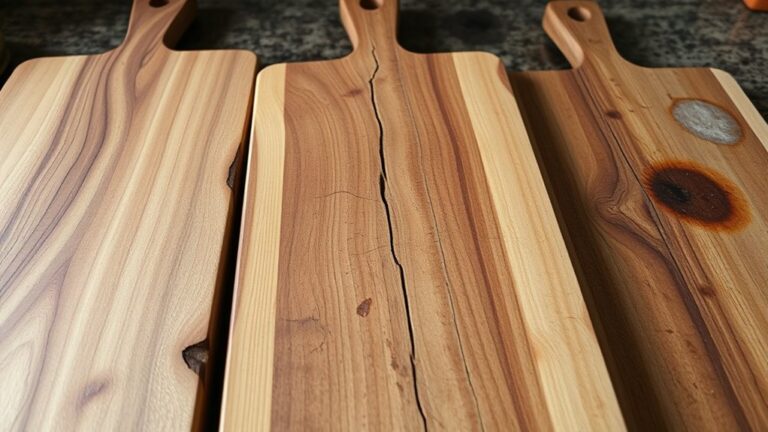
Because wooden cutting boards absorb moisture and food particles, they require special care to prevent bacteria buildup and warping. When you use a wooden board, tiny grooves form from knife cuts, trapping food debris and moisture. If you don’t clean and dry it properly, bacteria can grow, risking contamination.
Also, wood swells when wet and shrinks as it dries, so inconsistent moisture exposure can cause cracks or warping. Unlike plastic boards, wooden ones aren’t dishwasher-safe, as high heat and water damage the wood. To keep your board safe and durable, you need to handle it with care, cleaning it thoroughly and drying it immediately.
Taking these steps helps maintain a hygienic surface and extends your wooden board’s lifespan.
Gather Supplies for Cleaning Your Wooden Cutting Board
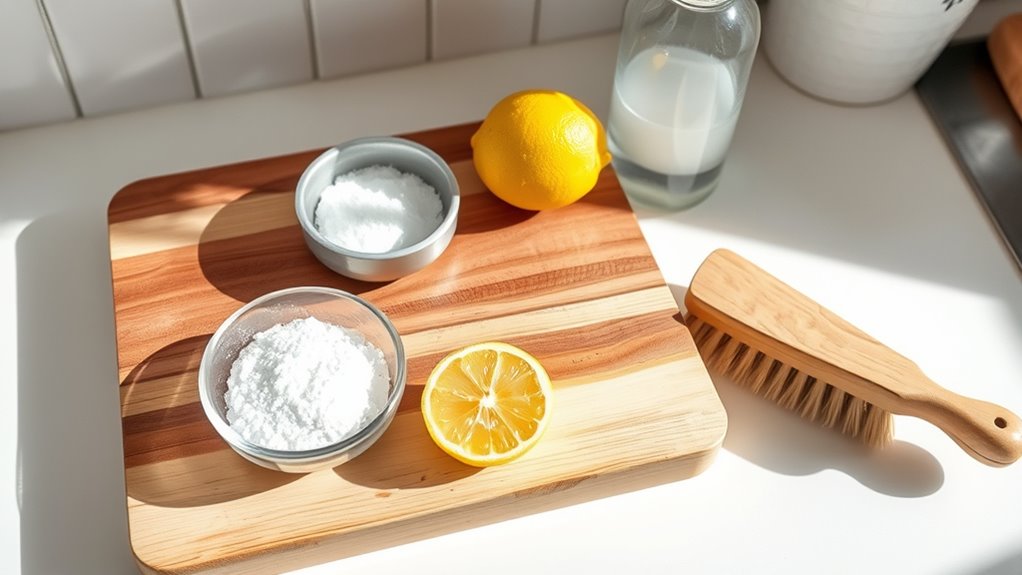
To keep your wooden cutting board in great shape, you’ll need the right cleaning supplies on hand. Start with mild dish soap and warm water to safely clean without damaging the wood. Avoid harsh chemicals that can strip the board’s natural oils.
Have a soft sponge or cloth ready to gently scrub the surface. You might also want some coarse salt and a lemon for deeper cleaning and deodorizing. A clean towel or drying rack is essential to dry your board thoroughly and prevent moisture buildup.
Finally, keep food-safe mineral oil or a specialized cutting board conditioner nearby to regularly nourish and protect the wood. Gathering these supplies before you start makes the cleaning process smooth and ensures your board lasts longer.
Remove Food Residue and Surface Debris From Your Board
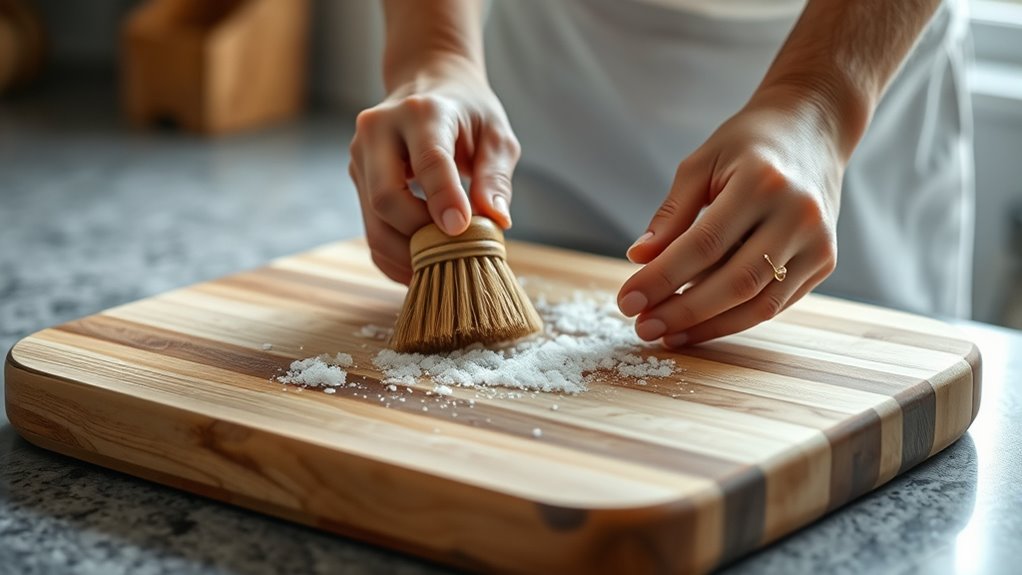
Before you plunge into deep cleaning, clear away any leftover food and surface debris from your wooden cutting board. Use a bench scraper or a spatula to gently remove stuck-on bits without damaging the wood. After scraping, rinse the board under warm running water to wash off loose particles.
Avoid soaking the board, as excessive water can cause warping. Next, grab a clean cloth or paper towel and wipe the surface dry. Pay attention to the edges and grooves where food residue tends to hide.
Removing this debris first guarantees your board is ready for thorough cleaning and helps prevent bacteria buildup. Taking these simple steps makes the entire cleaning process more effective and keeps your wooden cutting board in great condition.
Sanitize Your Wooden Cutting Board With Natural Cleaners
While wooden cutting boards naturally resist bacteria better than plastic, you should still sanitize them regularly to keep them safe and fresh. To do this naturally, squeeze fresh lemon juice over the surface and let it sit for a few minutes. The lemon’s acidity helps kill bacteria without damaging the wood.
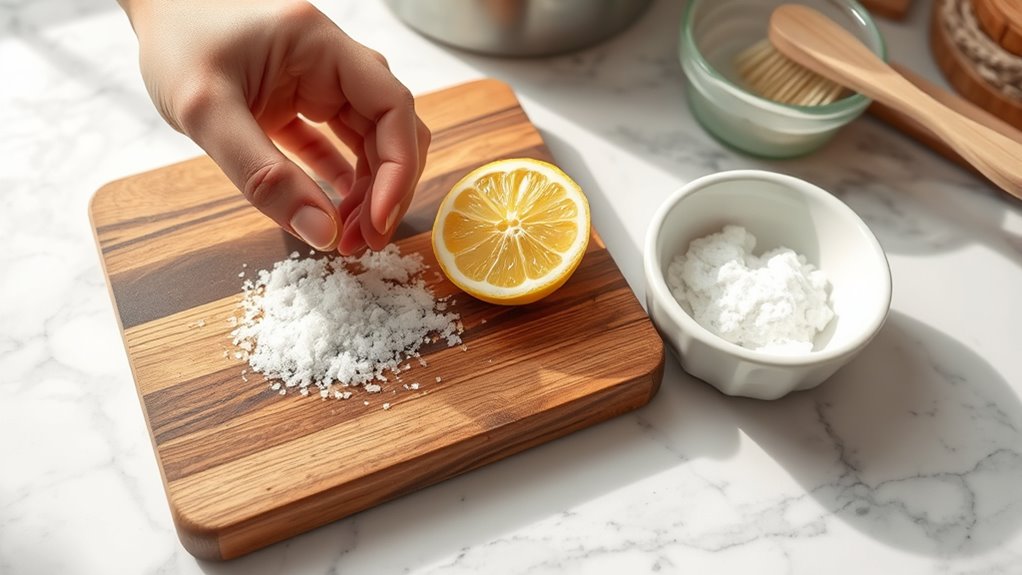
Afterward, sprinkle coarse salt on the board, then scrub it using a cut lemon as a scrubber. This method not only sanitizes but also lifts away stubborn residues. Finally, rinse the board with warm water and dry it thoroughly with a clean towel.
Using natural cleaners like lemon and salt prevents harsh chemical buildup, preserving your board’s integrity while ensuring it’s hygienic and ready for your next meal prep.
Get Rid of Odors and Stains Safely Without Damaging Wood
Even if you clean your wooden cutting board regularly, odors and stains can still develop over time. To tackle odors, sprinkle coarse salt or baking soda on the board, then rub it with half a lemon. The natural acidity neutralizes smells without harming the wood.
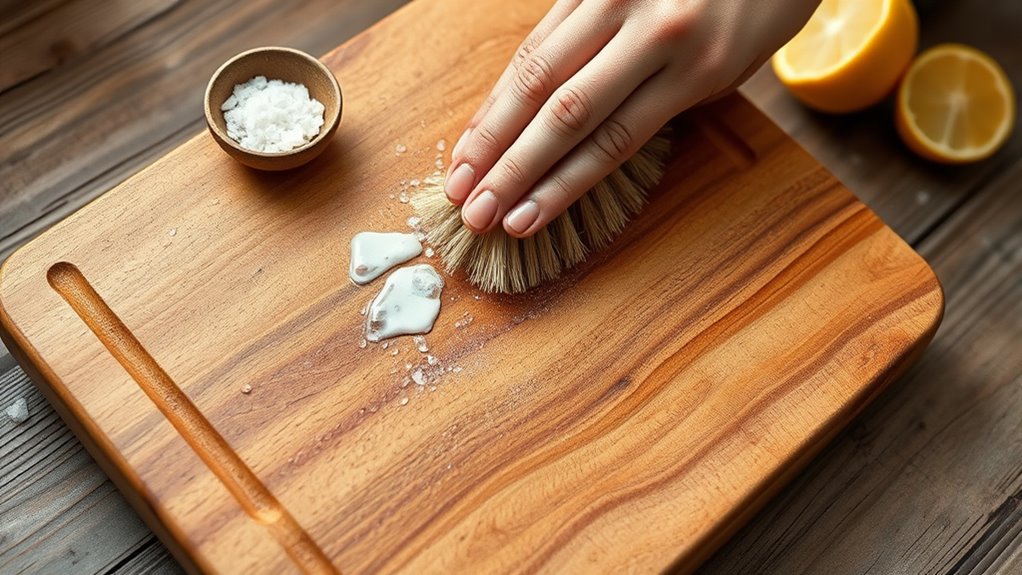
For stubborn stains, make a paste of baking soda and water, apply it to the stained area, and let it sit for a few minutes before scrubbing gently with a soft brush or cloth. Avoid harsh chemicals or soaking the board, as these can damage the wood fibers. Afterward, rinse thoroughly with warm water and dry immediately.
This approach helps keep your cutting board fresh and stain-free while preserving its natural surface.
Dry and Store Your Wooden Cutting Board to Prevent Warping
After cleaning, make sure you dry your wooden cutting board thoroughly to avoid warping. Store it in a well-ventilated area where air can circulate freely around it.
Keeping moisture away is key to preserving your board’s shape and longevity.
Proper Drying Techniques
Because wooden cutting boards absorb moisture during cleaning, you’ll need to dry them thoroughly to prevent warping and cracking. Start by wiping your board with a clean, dry towel immediately after washing to remove excess water. Then, stand it upright or prop it on its edge to allow air to circulate around all sides.
Avoid laying it flat, as trapped moisture can cause damage. If possible, dry the board near a fan or in a well-ventilated area to speed up the process.
Here are some effective drying techniques to keep in mind:
- Use a lint-free towel to blot water off the surface
- Stand the board on its side for even air exposure
- Avoid stacking wet boards or placing them flat
- Let natural airflow reach all surfaces for complete drying
Ideal Storage Conditions
When you finish drying your wooden cutting board, store it in a cool, dry place where air can circulate freely. Avoid stacking your board flat under heavy items, as this can trap moisture and cause warping. Instead, position it upright or on its edge, allowing both sides to breathe.
Keep your board away from direct sunlight or heat sources like stoves and radiators, which can dry out the wood unevenly and lead to cracks. Using a dedicated rack or stand designed for cutting boards helps maintain proper airflow. By storing your wooden cutting board properly, you’ll maintain its shape and longevity, ensuring it stays sturdy and safe for your food prep.
This simple step protects your investment and keeps your board in top condition.
Preventing Moisture Damage
Properly drying and storing your wooden cutting board is essential to prevent moisture damage and warping. After washing, pat it dry with a clean towel, then let it air dry completely before storing. Avoid stacking it while still damp, as trapped moisture causes warping and mold.
Store your board in a well-ventilated area, standing upright or on its side to allow airflow around it.
To help you visualize:
- A wooden board standing vertically on a drying rack
- Sunlight gently warming a board near a window
- A clean towel absorbing water from the surface
- An open cabinet with boards spaced out for air circulation
Following these steps will keep your wooden cutting board flat, dry, and ready for use.
Oil and Maintain Your Board for Long-Lasting Durability
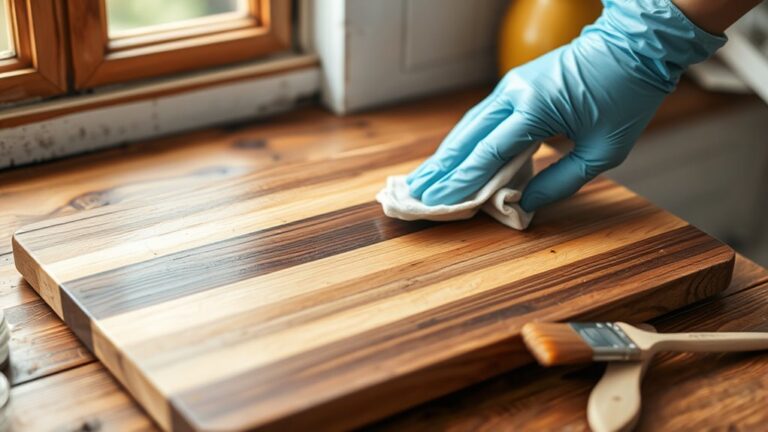
To keep your wooden cutting board in top shape, you’ll want to regularly oil it to prevent drying and cracking. Apply food-grade mineral oil or beeswax to nourish the wood and create a protective barrier. Oil your board once a month or when it looks dry.
After oiling, let it soak overnight, then wipe off any excess.
Here’s a simple maintenance guide:
| Step | Frequency | Tip |
|---|---|---|
| Clean & Dry | After each use | Dry thoroughly to avoid mold |
| Oil Application | Monthly | Use mineral oil or beeswax |
| Resting Time | Overnight | Let oil absorb fully |
| Inspection | Monthly | Check for cracks or splits |
Consistent care keeps your board durable and safe for food prep.
Frequently Asked Questions
Can Wooden Cutting Boards Be Cleaned in a Dishwasher?
You shouldn’t put wooden cutting boards in the dishwasher because the heat and water can warp and crack them. Instead, wash them by hand with mild soap and water, then dry immediately to keep them in good shape.
How Often Should I Replace My Wooden Cutting Board?
You should replace your wooden cutting board whenever it starts looking like a battle-scarred relic—deep grooves, cracks, or stubborn stains.
Otherwise, treat it well, and it’ll stick around longer than your favorite kitchen gadget.
Are Wooden Cutting Boards Safer Than Plastic Ones?
You’ll find wooden cutting boards are often safer because wood naturally resists bacteria and self-heals small cuts.
However, if you don’t clean them properly, plastic boards can be just as safe.
Can I Use Bleach on My Wooden Cutting Board?
You shouldn’t use bleach on your wooden cutting board because it can damage the wood and leave harmful residues.
Instead, use mild soap, warm water, and occasionally vinegar to disinfect it safely without ruining the surface.
What Type of Wood Is Best for Cutting Boards?
Imagine a sturdy oak standing tall in your kitchen—hardwoods like maple, walnut, or cherry are best for cutting boards. They resist knife marks and bacteria, giving you a reliable, beautiful surface that lasts through countless meals.
Conclusion
Taking care of your wooden cutting board is like giving your kitchen a loyal friend the care it deserves. By following these simple steps—cleaning, sanitizing, deodorizing, drying, and oiling—you’ll keep your board looking fresh and lasting longer.
With just a little regular attention, your wooden cutting board will stay strong and beautiful, ready to handle every chopping task you throw its way. Treat it well, and it won’t let you down!
Remember, proper maintenance is key to prolonging the life of your wooden cutting board. Regular cleaning and oiling help prevent cracks and warping, ensuring your cutting board remains a reliable kitchen tool for years to come.