How to Make a Grilled Cheese Sandwich on a Skillet
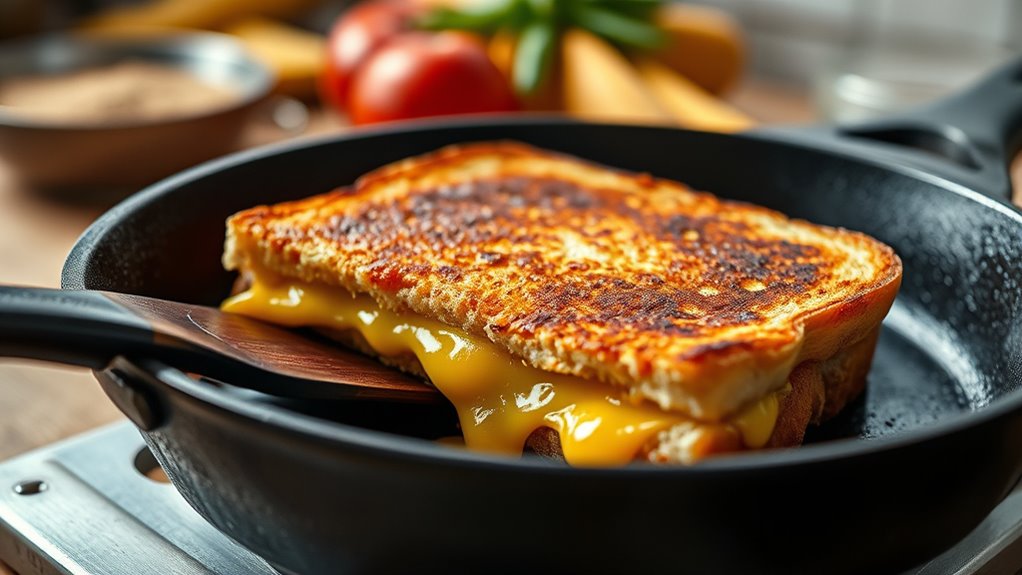
To make a grilled cheese sandwich on a skillet, start by spreading butter evenly on the outer sides of sturdy bread like sourdough.
Using a skillet for grilled cheese ensures a crispy, golden crust and perfectly melted cheese inside.
Layer good melting cheeses, such as cheddar or mozzarella, and press the sandwich gently.
Heat a non-stick or cast-iron skillet over medium-low, then cook the sandwich slowly, flipping once the bottom is golden brown.
Cover the skillet briefly to melt the cheese perfectly.
Keep the heat steady to avoid burning and achieve a crispy, gooey result.
There’s plenty more to explore for perfecting your sandwich.
Experiment with different breads and cheeses to find your favorite combination.
With these simple steps, you can master the art of making a delicious grilled cheese sandwich on a skillet.
Key Takeaways
- Butter the outer sides of sturdy bread evenly for a crispy, golden crust and rich flavor.
- Use medium-low heat on a preheated non-stick or cast-iron skillet to prevent burning.
- Layer good melting cheeses, grated or thinly sliced, for even melting and gooey texture.
- Cook sandwich on one side until golden brown, then flip carefully and cover skillet to melt cheese.
- Monitor cooking closely, gently press with a spatula, and adjust heat to balance toasting and melting.
Essential Ingredients for the Perfect Grilled Cheese

Before you fire up the pan, gather your essential ingredients carefully to guarantee a delicious grilled cheese sandwich. You’ll need butter, as it’s key for that golden, crispy crust and rich flavor. Don’t skip on spreading it evenly on the bread’s outer sides to prevent sticking and ensure even browning.
Next, pick your cheese wisely—though we’ll dive deeper into types later, make sure you have a good melting cheese on hand for the perfect gooey texture. You’ll also want a clean skillet or non-stick pan to cook your sandwich. Having a spatula ready helps you flip your sandwich without losing fillings.
Lastly, keep paper towels handy to blot excess butter if needed, keeping your grilled cheese just right—not greasy.
Choosing the Best Bread and Cheese for Grilled Cheese

When selecting bread and cheese for your grilled cheese, choosing varieties that complement each other makes all the difference in flavor and texture. Start with sturdy bread like sourdough, whole wheat, or a classic white loaf—these hold up well to melting cheese without getting soggy. For cheese, go for types that melt smoothly, such as cheddar, American, or Gruyère.
Don’t hesitate to mix cheeses for a richer taste and creamier texture. Avoid crumbly cheeses like feta or very hard ones like Parmesan alone, as they won’t melt properly. Keep the thickness of both bread and cheese balanced to ensure even melting and toasting.
Choosing the right bread and cheese sets the stage for a perfectly gooey, crispy grilled cheese every time.
Preparing Your Skillet and Setting the Ideal Temperature
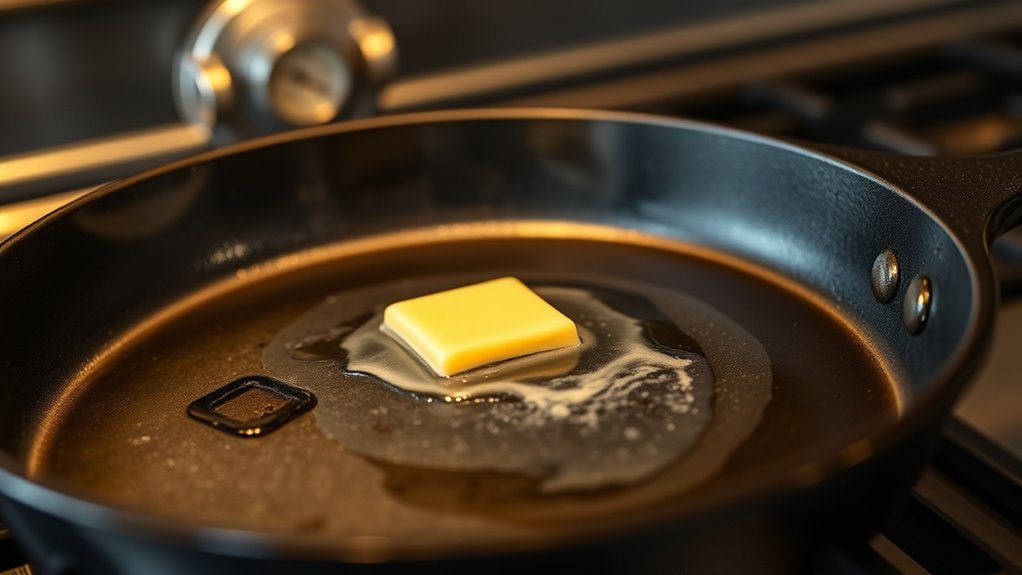
Now that you’ve chosen the perfect bread and cheese combination, it’s time to prepare your skillet and get the temperature just right. Start by placing a non-stick or cast-iron skillet on your stove over medium-low heat. You want the pan hot enough to melt the cheese evenly but not so hot that the bread burns before the cheese melts.
Give your skillet a minute or two to warm up fully. To test the temperature, sprinkle a few drops of water on the surface; if they dance and evaporate quickly, the skillet is ready. Avoid overheating, which can lead to uneven cooking.
Adjust the heat as needed during cooking to maintain this ideal temperature and ensure a perfectly crispy, golden grilled cheese every time.
Step-by-Step Guide to Assembling Your Grilled Cheese Sandwich
As you prepare to assemble your grilled cheese sandwich, gather your ingredients and have your skillet heated to the ideal temperature. Start by spreading a thin layer of butter evenly on one side of each bread slice.
Place one slice, butter side down, on a clean surface. Next, add your cheese—use enough to cover the bread but not so much it spills out. Feel free to layer different cheeses for extra flavor.
Top with the second slice of bread, butter side up. Press the sandwich gently to help the ingredients stick together. Now your grilled cheese is perfectly assembled and ready to transfer to the skillet for cooking.
Keep your tools nearby for easy handling. This simple process sets the foundation for a delicious sandwich.
How to Cook Your Grilled Cheese Evenly Without Burning
Although it might seem simple, cooking your grilled cheese evenly without burning requires attention and control. Start by preheating your skillet on medium-low heat. Too high, and the bread will burn before the cheese melts.
Use a spatula to gently press the sandwich, guaranteeing even contact with the skillet. Flip it carefully to avoid tearing the bread.
| What to Do | Why It Matters |
|---|---|
| Cook on medium-low heat | Prevents burning, cooks evenly |
| Press sandwich lightly | Ensures even toasting |
| Flip gently and on time | Avoids tearing and burning |
Tips to Melt Grilled Cheese Cheese Perfectly
If you want your grilled cheese to have perfectly melted cheese, controlling the heat and choosing the right type of cheese are key. Use medium-low heat to give the cheese time to melt without burning the bread. Don’t rush the process by turning up the heat; patience pays off here.
Opt for cheeses that melt smoothly, like cheddar, American, mozzarella, or fontina. Grate or thinly slice the cheese to help it melt faster and more evenly. Cover your skillet with a lid for a minute or two to trap heat and encourage melting.
Keep an eye on the sandwich, flipping it gently once the bottom is golden. These simple tips guarantee gooey, perfectly melted cheese every time.
Creative Add-Ins and Variations for Your Grilled Cheese
You can take your grilled cheese to the next level by mixing unique cheese combinations and adding flavorful ingredients like herbs, veggies, or meats. Don’t forget to experiment with different breads and spreads to create new textures and tastes.
With a few simple swaps, you’ll keep every bite exciting and delicious.
Unique Cheese Combinations
When you want to elevate your grilled cheese beyond the classic, experimenting with unique cheese combinations can transform each bite into a flavorful adventure. Mixing cheeses with different textures and tastes adds depth and excitement to your sandwich.
Here are three combinations to try:
- Sharp Cheddar + Gruyère: The sharpness of cheddar pairs beautifully with Gruyère’s nutty, creamy profile for a rich, melty experience.
- Mozzarella + Fontina: This duo melts smoothly, offering mild, buttery flavors that create a luscious, gooey texture.
- Blue Cheese + Monterey Jack: The tangy punch of blue cheese balances the mild, creamy Monterey Jack, delivering a bold, savory bite.
Don’t be afraid to mix and match to find your perfect grilled cheese blend!
Flavorful Ingredient Additions
Although the classic grilled cheese shines on its own, adding flavorful ingredients can take your sandwich to the next level. Try layering thinly sliced tomatoes or caramelized onions for a sweet contrast. A few fresh basil leaves or a sprinkle of crushed red pepper flakes can add a surprising kick.
You can also incorporate cooked bacon or sautéed mushrooms to boost texture and taste. For a tangy twist, spread a bit of Dijon mustard or a swipe of pesto inside before grilling. Don’t hesitate to experiment with different herbs and spices; they infuse your sandwich with unique flavors that complement the gooey cheese.
These creative add-ins let you customize your grilled cheese, turning a simple comfort food into something truly memorable.
Bread and Spread Options
Enhancing your grilled cheese with tasty fillings is just the beginning—choosing the right bread and spreads can elevate the entire sandwich experience. The bread you pick sets the foundation, while the spread adds flavor and helps achieve that perfect golden crust.
Here are three options to try:
- Sourdough Bread – Its tangy flavor and sturdy texture hold up well to melting cheese, giving you a rustic, satisfying bite.
- Garlic Butter Spread – Mix softened butter with minced garlic and a pinch of parsley for a savory, aromatic crust.
- Honey Mustard Spread – Add a thin layer of honey mustard inside the bread for a sweet and tangy twist that complements sharp cheeses.
Experimenting with these choices transforms your grilled cheese from simple to spectacular.
Common Grilled Cheese Problems and How to Fix Them
You’ve probably burned your bread or ended up with cheese that’s not quite melted right. To fix this, you need to control your heat and give the cheese enough time to soften.
Let’s go over how to prevent burning and get that perfect melt every time.
Bread Burning Prevention
Why does your grilled cheese sometimes come out with burnt bread? It usually boils down to heat control and timing. To prevent burning, you need to manage the skillet temperature and keep an eye on the cooking process.
Here are three quick tips to save your sandwich:
- Use Medium-Low Heat: Too high a temperature burns the bread before the cheese melts. Keep the heat moderate for even cooking.
- Preheat the Skillet Properly: A properly heated pan ensures consistent cooking without sudden hot spots that char the bread.
- Watch the Cooking Time: Flip your sandwich as soon as the bread turns golden brown. Don’t walk away—burning happens fast!
Follow these to enjoy perfectly toasted bread without the bitterness of burnt spots.
Cheese Melting Tips
Although perfectly toasted bread is essential, your grilled cheese won’t satisfy if the cheese stays firm and unmelted. To fix this, use medium-low heat to give the cheese enough time to soften without burning the bread. Cover the skillet with a lid or foil to trap heat, which helps melt the cheese evenly.
Choose cheeses known for melting well, like cheddar, American, or mozzarella. If your cheese is thickly sliced, consider shredding it for quicker melting. Avoid stacking too much cheese, or the sandwich may become soggy and unevenly heated.
If your cheese still resists melting, add a tiny splash of milk or butter inside the sandwich before grilling. These simple tweaks guarantee a gooey, satisfying grilled cheese every time.
Easy Cleanup Tips After Making Grilled Cheese on a Skillet
Since grilled cheese sandwiches tend to leave melted cheese and crumbs on your skillet, cleaning up right after cooking makes the process much easier. You don’t want melted cheese hardening and sticking, which can be a pain to remove later.
Here’s how you can keep cleanup simple:
- Soak Immediately: Fill the skillet with warm, soapy water and let it soak for 10 minutes to loosen stuck-on cheese.
- Use a Soft Sponge: Gently scrub with a nonabrasive sponge to avoid damaging the skillet’s surface.
- Dry Thoroughly: Wipe the skillet dry with a clean towel to prevent rust and keep it in good shape.
Frequently Asked Questions
Can I Use a Non-Stick Skillet for Grilled Cheese?
Yes, you can use a non-stick skillet for grilled cheese. It helps prevent sticking and makes flipping easier.
Just heat it over medium, add butter, and cook your sandwich until golden and melty inside.
How Long Does a Grilled Cheese Sandwich Stay Fresh?
Your grilled cheese won’t survive more than 2 hours at room temperature without turning into a sad, soggy mess.
If you want it fresh longer, pop it in the fridge and eat within 1-2 days!
What Drinks Pair Well With Grilled Cheese Sandwiches?
You’ll love pairing grilled cheese with tomato soup, iced tea, or a crisp apple cider.
If you want something fizzy, a light beer or sparkling water with lemon works great to balance the rich cheese flavors.
Can I Make Grilled Cheese Sandwiches Ahead of Time?
Think of grilled cheese like a perfect meeting: best fresh. You can make them ahead, but they might turn soggy reheated.
If you must, wrap tightly and toast again for crispness—you’ll revive that golden charm.
Is It Healthier to Use Butter or Oil on the Skillet?
It’s generally healthier to use oil, especially olive or avocado oil, because they contain good fats. Butter adds flavor but has more saturated fat. You can choose based on taste or health goals, but oil’s usually better.
Conclusion
Now that you’ve mastered grilling cheese on your skillet, you’re ready to impress like a 1950s diner chef with a modern twist. Remember, patience and the right temperature are your best friends to get that golden crust and melty center. Don’t be afraid to experiment with add-ins—your grilled cheese is your canvas.
Clean up quickly, and you’re set for your next delicious adventure. Happy grilling, and may your sandwiches always be legendary! With these grilled cheese sandwich tips, your skillet cooking will elevate every bite. Keep practicing, and enjoy the perfect grilled cheese every time.