Are Composite Cutting Boards Safe
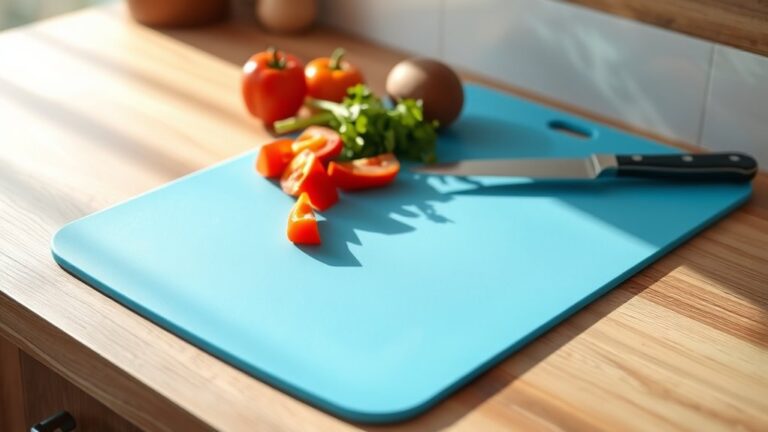
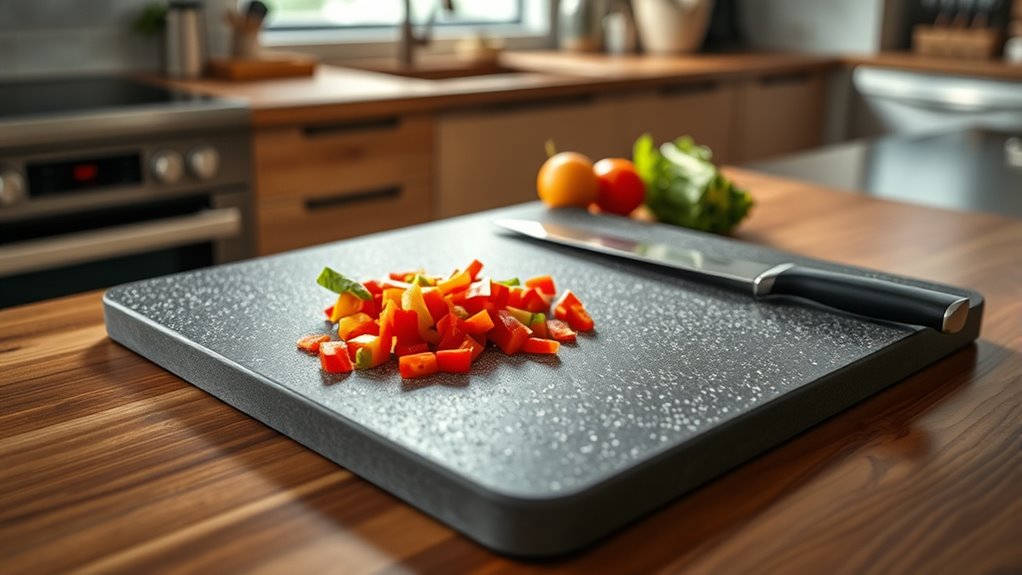
You can trust composite cutting boards to be safe and hygienic for your food prep. Composite cutting boards are made from natural fibers and resin, creating a non-porous surface that resists bacteria and deep grooves. This makes them an excellent choice for maintaining food safety in your kitchen.
These boards won’t dull your knives quickly and handle moisture better than wood. They’re easy to clean—often dishwasher safe—and don’t hold stains or smells when properly maintained.
Keep an eye out for wear, and you’ll enjoy their long-lasting benefits. Discover what else makes them a smart kitchen choice. Their durability and ease of maintenance make composite cutting boards a reliable addition to any cooking space.
Key Takeaways
- Composite cutting boards have a non-porous surface that reduces bacterial absorption, promoting safer food preparation.
- They resist deep grooves and cracks, minimizing bacterial hiding spots and enhancing hygiene.
- These boards are dishwasher safe and easy to clean with hot, soapy water, supporting effective sanitation.
- The resin surface is knife-friendly, helping maintain blade sharpness while preventing contamination.
- Regular inspection for wear and replacement ensures ongoing safety and prevents bacterial buildup.
Why Choose Composite Cutting Boards?
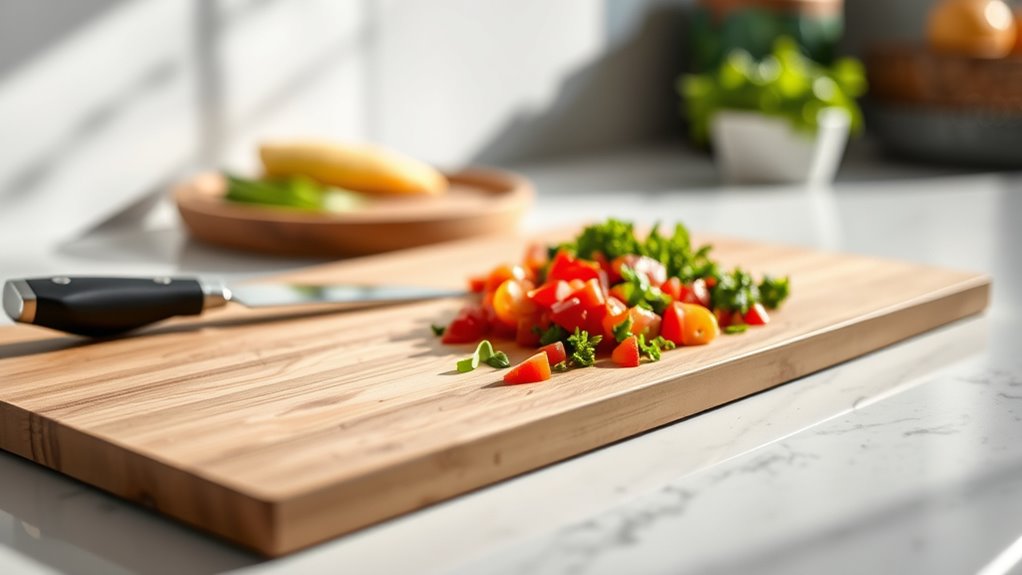
Why should you choose composite cutting boards? Because they offer a great balance between durability and maintenance. You’ll find that composite boards resist deep scratches and cuts, which means fewer grooves where bacteria can hide.
They’re also less likely to warp or crack compared to wooden boards, so they last longer even with frequent use. You can toss them in the dishwasher without worrying about damage, making cleanup easier and more hygienic. Plus, they provide a stable surface that’s gentle on your knives, helping keep your blades sharp.
If you want a cutting board that combines practicality with low upkeep, composite cutting boards are an excellent choice. Their versatility fits well in any kitchen, making food prep safer and more efficient for you.
What Are Composite Cutting Boards Made Of?
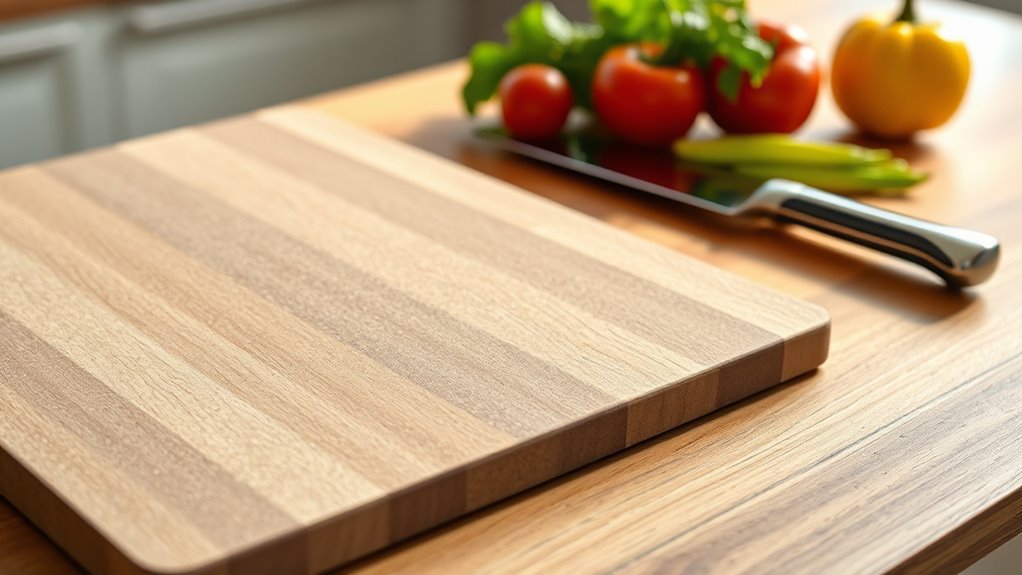
You’ll find composite cutting boards are usually made from a mix of wood fibers, resin, and sometimes recycled materials. The manufacturing process binds these components tightly to create a durable surface.
Each material brings its own benefits and drawbacks that affect safety and performance.
Common Composite Materials
Although composite cutting boards come in various styles, they’re typically made from a blend of natural wood fibers and durable resins. This combination offers both strength and resistance to moisture.
When you pick a composite board, you’ll often encounter these common materials:
- Wood fibers – Provide a natural feel and reduce knife dulling.
- Phenolic resin – Adds toughness and water resistance.
- Melamine resin – Offers heat resistance and durability.
- Paper fibers – Sometimes used for lightweight options with good stability.
These materials work together to create boards that balance durability and hygiene. Understanding what’s inside can help you make an informed choice about the safety and performance of your composite cutting board.
Manufacturing Process Overview
Composite cutting boards are crafted through a detailed process that combines natural fibers and resins under high pressure and heat. You start with materials like wood fibers, recycled paper, or other plant-based fibers mixed with food-safe resins, usually phenolic or melamine. These ingredients are blended into a thick, moldable mixture.
Then, the blend is placed into molds and subjected to intense pressure and elevated temperatures, which solidify the board into a dense, durable slab. This process guarantees the fibers bond tightly with the resin, creating a hard, non-porous surface that’s resistant to moisture and bacteria. After molding, the boards are cooled, trimmed, and sanded to smooth out any rough edges.
This manufacturing method gives composite boards their strength and longevity while keeping them lightweight and easy to handle.
Material Benefits And Drawbacks
The combination of natural fibers and resins in these boards gives them unique qualities you’ll want to contemplate before choosing one for your kitchen. Composite cutting boards are mainly made from wood fibers or paper bonded with food-safe resins, creating a durable and water-resistant surface. Here’s what you should consider:
- Durability – They’re harder than traditional wood but gentler on knives than plastic.
- Maintenance – Less prone to warping or cracking, requiring minimal upkeep.
- Hygiene – Non-porous surfaces reduce bacterial absorption but can develop knife marks over time.
- Environmental impact – Often made from recycled materials, making them eco-friendlier than pure plastic options.
Knowing these benefits and drawbacks helps you decide if a composite cutting board fits your cooking style and safety needs.
Composite Cutting Boards vs. Wood and Plastic: Durability and Safety

When choosing a cutting board, you’ll want to compare how composite materials hold up against wood and plastic regarding durability. You also need to think about which option keeps your kitchen safest by resisting bacteria and cuts.
Let’s explore how these materials stack up on both fronts.
Material Durability Comparison
Although wood and plastic cutting boards have long been kitchen staples, you might wonder how composite boards hold up regarding durability and safety. Composite boards combine wood fibers with resin, creating a robust surface that resists deep cuts and warping better than many wooden boards.
Here’s how they compare:
- Wood: Durable but prone to cracking and absorbing moisture, which can compromise longevity.
- Plastic: Affordable and dishwasher-safe but can scar easily, harboring bacteria in deep grooves.
- Composite: Highly resistant to warping and cracking, offering a balance between toughness and maintenance.
- Longevity: Composite boards often outlast plastic and wood, maintaining a solid cutting surface longer.
When you choose a board, consider how each material’s durability affects your kitchen routine.
Hygiene and Safety Factors
Choosing a durable cutting board is important, but you also need to think about how each material handles hygiene and safety. Composite cutting boards resist deep grooves better than plastic, which helps prevent bacteria from hiding in cuts. Unlike wood, composites don’t absorb moisture, reducing the chance of bacterial growth.
However, composite boards can still develop scratches over time, so regular inspection and cleaning are key. You should wash composite boards with hot, soapy water and occasionally sanitize them to keep them safe. Compared to plastic, composites often offer better durability without sacrificing hygiene.
Wood boards naturally have antimicrobial properties but require more maintenance to avoid warping and bacteria buildup. Overall, if you maintain them properly, composite boards provide a safe, hygienic surface for your food prep.
Will Composite Cutting Boards Dull My Knives?
If you care about keeping your knives sharp, you might wonder whether composite cutting boards will dull them faster than other materials. The good news is composite boards are generally knife-friendly, but some factors can affect dulling. Here’s what you should know:
- Composite boards are harder than wood but softer than glass or stone, striking a good balance for knife edges. The resin in composite boards creates a firm surface that resists deep cuts, preventing uneven wear on your blade. Over time, repeated cutting can cause minor dulling, but this is typical with any board type.
- Avoid cutting on boards with deep grooves or cracks, as they can damage your knives more quickly.
How to Clean Composite Cutting Boards: Dishwasher and Stain Resistance
When you clean composite cutting boards, you’ll find they’re generally low-maintenance and durable. Most composite boards are dishwasher safe, so you can simply place them on the top rack for a thorough wash. The high heat and strong detergent help sanitize the surface effectively.
However, always check the manufacturer’s instructions to be sure your specific board can handle dishwasher cycles. For everyday cleaning, wash with warm, soapy water and a sponge, then rinse and dry thoroughly. Composite boards resist many stains better than wooden ones, but if you notice any discoloration, a baking soda paste can help lift it without damaging the surface.
With proper care, your composite cutting board stays clean, safe, and ready for daily kitchen use.
Do Composite Cutting Boards Hold Stains or Smells?
Cleaning your composite cutting board properly helps prevent stains and odors, but you might still wonder how well these boards resist holding onto them over time. Composite boards are generally good at resisting stains and smells compared to wood, but they’re not completely immune. Here’s what to keep in mind:
- Material density: High-density composites repel liquids better, reducing stain absorption.
- Surface condition: Scratches and grooves trap food particles, causing odors and stains.
- Type of food: Strong pigments (like beets or turmeric) and pungent foods (like garlic) are more likely to leave marks.
- Cleaning frequency: Regular washing and drying prevent buildup and lingering smells.
With proper care, your composite board can stay fresh and stain-free for a long time.
When to Replace Your Composite Cutting Board
Though composite cutting boards are durable, you’ll need to replace them once they develop deep grooves, cracks, or excessive wear that can harbor bacteria and compromise food safety. If you notice your board has rough, uneven surfaces or visible damage, it’s time to retire it. Regularly inspect your board after cleaning to spot any signs of deterioration early.
Also, if your board starts to warp or lose its firmness, it won’t provide a safe cutting surface anymore. Remember, no matter how well you maintain it, composite boards don’t last forever. Replacing your board when these issues arise helps you avoid cross-contamination and ensures your kitchen stays hygienic and safe for food prep.
Are Composite Cutting Boards a Smart Long-Term Kitchen Investment?
Because composite cutting boards combine durability with ease of maintenance, they can be a smart long-term kitchen investment. When you choose one, you’re getting a board that resists warping and cracking, which means it lasts longer than many alternatives. Plus, they’re dishwasher safe, making cleanup a breeze.
Consider these benefits:
- Durable surface withstands heavy chopping without deep grooves.
- Non-porous material reduces bacterial buildup.
- Easy to clean, saving you time and effort.
- Can handle both wet and dry food prep without damage.
Frequently Asked Questions
Can Composite Cutting Boards Be Used for Serving Food?
Yes, you can use composite cutting boards for serving food. Just make sure they’re clean and dry first. Their sturdy surface looks great for presentation,
and they’re less prone to bacteria than some other materials when properly maintained.
Are Composite Cutting Boards Environmentally Friendly?
Composite cutting boards aren’t the most environmentally friendly choice since they often contain resins and synthetic materials. However, they last longer than plastic, so you’ll reduce waste by not replacing them frequently.
Do Composite Cutting Boards Require Special Storage Conditions?
Think of your composite cutting board like a trusty book—keep it dry and flat. You don’t need special storage, but avoid soaking or extreme heat to preserve its durability and prevent warping over time.
Can I Use Composite Boards for Hot Pots or Pans?
You shouldn’t put hot pots or pans directly on composite boards, as heat can warp or damage them.
Instead, use trivets or heat-resistant mats to protect your board and keep it in good shape.
Are Composite Cutting Boards Safe for Allergen-Free Food Prep?
You can trust composite cutting boards for allergen-free prep, as they resist deep cuts where allergens hide. Just clean them thoroughly; they’re like a fortress keeping cross-contamination at bay when you’re cooking carefully.
Conclusion
So, are composite cutting boards safe? Absolutely—unless you fancy playing Russian roulette with your knives or prefer a high-maintenance, stain-loving diva in your kitchen. Composite boards give you durability, easy cleaning, and less wear on your blades, all without the drama.
They resist cracking and warping better than wood and don’t harbor bacteria like some plastic boards can. Plus, their low-maintenance nature means less time worrying about stains and more time cooking.
So go ahead, invest smartly and let your knives live their best, sharp lives—because who needs the chaos of wood cracks or plastic war zones when you’ve got composite calm? Composite cutting boards are a safe, practical choice for any kitchen.