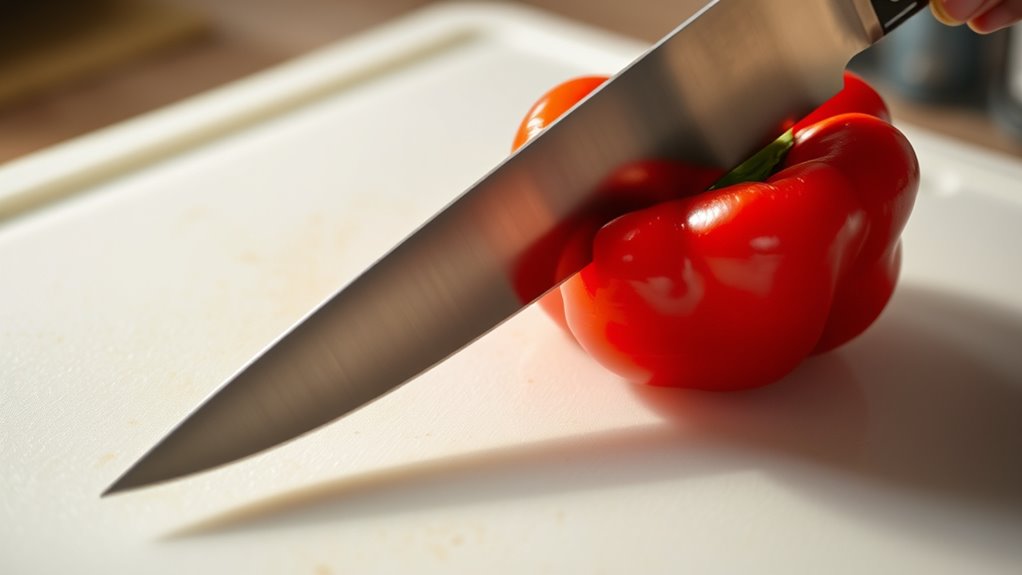
Do Plastic Cutting Boards Dull Knives?
You don’t have to worry about plastic cutting boards dulling your knives quickly, since plastic is softer than wood or bamboo and won’t cause immediate edge damage. Plastic cutting boards are popular for their durability and ease of cleaning, making them a common choice in many kitchens.
However, repeated use creates grooves and traps particles that slowly wear down your blade. Over time, you’ll notice dulling and may need to replace or resurface the board.
Understanding how material, texture, and knife type affect sharpness can help you extend your knife’s life and maintain cutting performance. Proper maintenance of both your cutting board and knives ensures they stay in good condition longer.
Key Takeaways
- Plastic cutting boards initially cause less knife dulling compared to harder surfaces like glass or ceramic.
- Deep grooves form on plastic boards over time, increasing friction and accelerating blade wear.
- Hard particles trapped in plastic scratches can damage knife edges and cause microscopic nicks.
- Plastic’s softer material offers a gentler surface but requires regular replacement to prevent excessive wear.
- Proper maintenance and timely resurfacing or replacement help minimize dulling and ensure cutting safety.
Do Plastic Cutting Boards Dull Knives Faster?
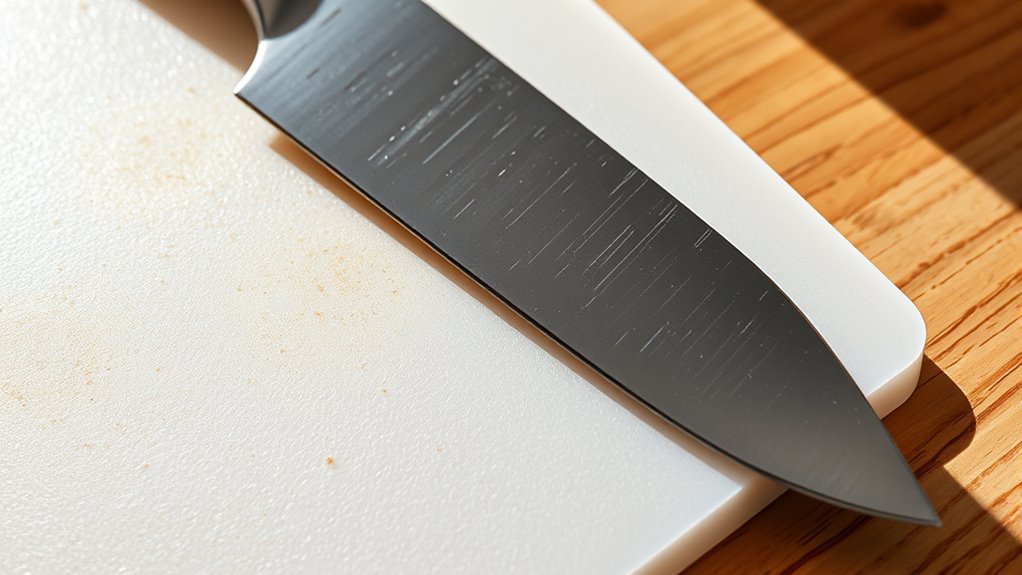
Many people wonder if plastic cutting boards wear down knives more quickly than other materials. When you use a plastic board, you’ll find it’s generally gentler on your knife’s edge compared to harder surfaces like glass or ceramic. Plastic’s slightly softer texture absorbs some impact, reducing immediate dulling.
However, compared to wood, plastic can sometimes cause more wear because it’s less forgiving and can develop deep grooves where blades catch. These grooves might contribute to faster dulling over time, but the difference isn’t drastic if you maintain your knives properly.
Why Knives Dull When Cutting on Plastic Boards
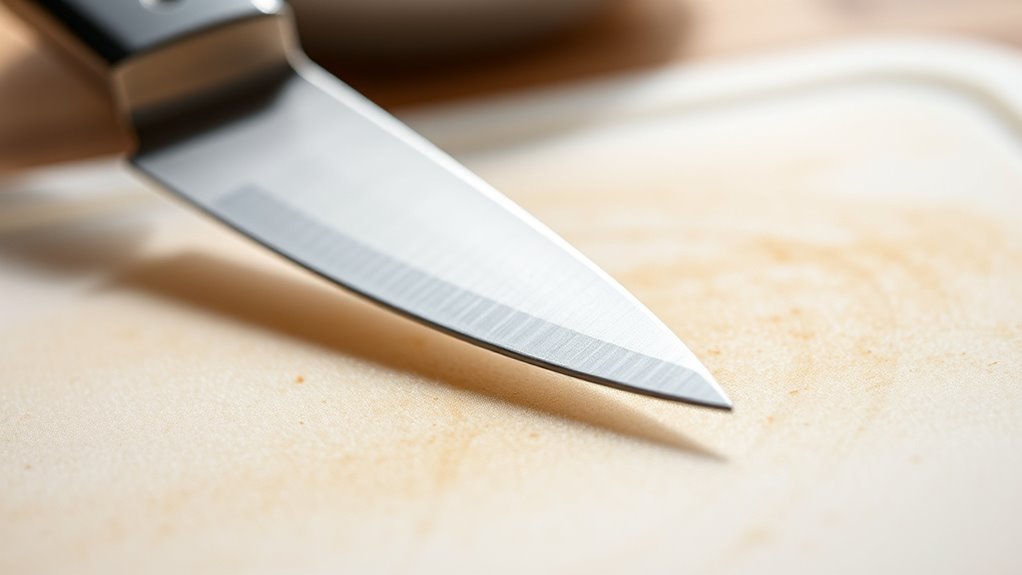
Although plastic cutting boards are softer than glass or ceramic, your knives still dull because the board’s surface can develop grooves and scratches over time. When you cut, your blade hits these rough spots repeatedly, causing microscopic nicks and wear on the edge.
Over time, this dulls your knife even though the board feels soft.
Here’s a quick look at how this happens:
| Factor | Impact on Knife Edge |
|---|---|
| Surface grooves | Cause uneven blade contact |
| Scratches | Create abrasive cutting areas |
| Repeated impact points | Increase edge wear |
Understanding these factors helps you realize why plastic boards, while gentle, still contribute to knife dulling.
How Cutting Board Texture Impacts Knife Wear

Because the texture of your cutting board directly affects how your knife interacts with its surface, it plays a crucial role in the rate of blade wear. A rough or uneven texture forces your knife to encounter more resistance, which can dull its edge faster.
The texture of your cutting board significantly influences knife wear by increasing resistance and dulling the blade faster.
On the other hand, a smoother surface allows for cleaner cuts with less friction.
Consider these texture factors that impact knife wear:
- Material hardness: Harder surfaces cause more abrasion.
- Surface roughness: Rough textures increase blade friction.
- Grooves and scratches: Deep cuts in the board accelerate dulling.
- Surface maintenance: Regular sanding or resurfacing smooths the board.
- Moisture retention: Dampness can soften the surface, affecting texture.
Comparing Plastic Cutting Boards With Wood and Bamboo
When choosing between plastic, wood, and bamboo cutting boards, you’ll want to take into account how each affects your knife’s edge and overall durability. Plastic boards are softer but may wear out faster, while wood and bamboo offer varying hardness levels that impact knife sharpness differently.
Understanding their maintenance needs and lifespan can help you pick the best option for your kitchen.
Durability and Knife Impact
If you want to keep your knives sharp longer, the type of cutting board you choose matters. Plastic boards are generally less durable than wood or bamboo but offer a softer surface that’s gentler on your blades. Wood and bamboo tend to be harder, which means they last longer but may cause more wear on your knives over time.
When considering durability and knife impact, keep these points in mind:
- Plastic boards can develop deep grooves quickly, trapping bacteria but causing less knife dulling.
- Wood boards self-heal minor cuts, preserving both board integrity and knife edges.
- Bamboo is harder than wood, offering longevity but potentially dulling knives faster.
- Plastic boards are lightweight and easy to replace.
- Wood and bamboo require more upkeep but provide a balanced surface for knife care.
Choose based on your priority: durability or knife friendliness.
Surface Hardness Comparison
Although plastic cutting boards feel softer under your knife, their surface hardness varies considerably compared to wood and bamboo. Plastic boards are generally less hard, which means your knife edge meets less resistance, reducing dulling.
Wood boards, especially hardwoods like maple or walnut, have a firmer surface that still offers some give, protecting your blade while standing up well to cutting. Bamboo, while technically a grass, is harder and more rigid than most woods and plastics, providing a tougher cutting surface.
This increased hardness can wear your knife edge faster if you’re not careful. So, when choosing between these materials, consider how the surface hardness will interact with your knives—plastic offers a softer touch, wood balances hardness and blade care, and bamboo leans toward durability but can be harsher on blades.
Maintenance and Longevity
Because plastic cutting boards require less upkeep than wood or bamboo, you’ll find they often last longer with minimal effort. Unlike wooden or bamboo boards, plastic won’t warp or crack when exposed to moisture. You can clean plastic boards easily in the dishwasher without worrying about damage.
Here’s why plastic excels in maintenance and longevity:
- Resistant to stains and odors
- Dishwasher safe for thorough cleaning
- No need for regular oiling or conditioning
- Less prone to warping or splitting over time
- Affordable and easy to replace when worn
While wood and bamboo look great and are eco-friendly, they demand more care. If convenience and durability are your priorities, plastic cutting boards make a smart, low-maintenance choice.
Does Knife Type Affect Dulling on Plastic Boards?
You’ll notice that the type of knife you use plays a big role in how quickly it dulls on plastic boards. Different materials, like stainless steel or carbon steel, hold their edges differently when cutting.
Understanding these differences can help you choose the right knife and maintain its sharpness longer.
Knife Material Impact
When you use different knife materials on plastic cutting boards, the rate at which your knives dull can vary considerably. Some materials interact with the plastic surface differently, affecting sharpness loss over time. Here’s what you should keep in mind:
- Stainless steel blades tend to dull slower on plastic due to their hardness and corrosion resistance.
- Carbon steel knives can dull faster but are easier to sharpen if needed.
- Ceramic knives resist dulling but are more brittle and may chip.
- Titanium knives maintain sharpness well but often have softer edges that dull quicker.
- Damascus steel knives combine layers for durability but can vary depending on the core steel.
Understanding your knife’s material helps you manage maintenance and extend its lifespan on plastic boards.
Edge Retention Differences
Although all knives will eventually dull on plastic cutting boards, your knife type considerably affects how quickly this happens. High-carbon steel knives tend to retain their edge longer due to their hardness, resisting wear better on plastic surfaces. In contrast, stainless steel knives, which are softer, may lose sharpness faster when used on plastic boards.
Ceramic knives, although extremely hard and resistant to corrosion, can chip more easily and aren’t ideal for plastic cutting boards. You’ll notice that knives with a finer edge angle dull quicker because they have less material supporting the edge. So, if you want your knives to stay sharp longer on plastic boards, consider using harder steel blades and avoid excessive force or twisting motions during cutting.
Can Plastic Cutting Boards Cause Micro-Scratches?
Plastic cutting boards can indeed cause micro-scratches on your knives over time. While softer than glass or ceramic, plastic still creates tiny abrasions that slowly wear down your blade’s edge. These micro-scratches may not be visible immediately but accumulate with regular use, dulling your knife gradually.
Here’s why plastic boards cause micro-scratches:
- Plastic surface has small grooves from repeated cutting
- Knife edges press into these grooves, creating friction
- Hard particles trapped in plastic can scratch blades
- Repeated cutting motions exacerbate surface wear
- Thinner or cheaper plastic boards wear faster, increasing scratches
Being aware of these factors helps you understand how plastic boards affect your knife’s sharpness over time.
How to Spot If Your Plastic Board Is Dulling Your Knife
You can tell if your plastic board is dulling your knife by checking for visible damage on the blade’s edge or excessive wear on the board’s surface. Notice if your cuts feel less smooth or require more effort than usual.
These signs usually mean your board is affecting your knife’s sharpness.
Visible Knife Edge Damage
When you notice your knife struggling to cut smoothly, it might be time to check for visible edge damage caused by your cutting board. Plastic boards can cause small chips or dents on your knife’s edge, which dull its performance.
Here’s how you can spot these signs:
- Look for tiny nicks or chips along the blade’s edge.
- Check if the edge appears uneven or jagged under good lighting.
- Run your thumb gently along the blade to feel for rough spots.
- Notice if the knife requires more force to cut through food.
- Watch for a dull or matte finish on the edge instead of a sharp shine.
Regularly inspecting your knife helps you catch damage early and maintain a sharp, efficient blade.
Board Surface Wear
Noticing visible knife edge damage is just one part of understanding how your cutting surface affects blade sharpness. You should also check your plastic cutting board for signs of wear that could contribute to dulling. Look closely for deep grooves, scratches, or an uneven surface caused by repeated cutting.
These imperfections increase friction on your blade, making it work harder and lose sharpness faster. If your board feels rough or you can catch your fingernail in the grooves, it’s time to contemplate resurfacing or replacing it.
Regularly inspecting your board’s condition helps you maintain a smooth cutting surface, which protects your knife’s edge and extends its lifespan. Don’t overlook the board itself; it plays a key role in how well your knife performs.
Cutting Performance Changes
Although plastic cutting boards are generally gentler on knives than harder surfaces, subtle changes in your cutting performance can signal that the board is dulling your blade. You might not notice immediately, but your knife’s efficiency can drop over time. Watch for these signs:
- Increased resistance when slicing through food
- More frequent need to apply extra pressure
- Cuts that aren’t as clean or precise as before
- Food sticking more to the blade during cutting
- Difficulty achieving thin, smooth slices
If you experience these, your plastic board might be contributing to blade dulling. Regularly inspect your cutting surface and sharpen your knife as needed to maintain ideal performance and maximize your prep work stays effortless.
When to Replace or Resurface Plastic Cutting Boards
How do you know it’s time to replace or resurface your plastic cutting board? Look for deep grooves and scratches that accumulate over time. These crevices can harbor bacteria and make cleaning less effective.
If your board is warped, cracked, or excessively worn, it’s safer to replace it rather than risk contamination. Resurfacing, like sanding the board’s surface, can restore a smoother cutting area, extending its life. However, if the damage is too extensive or the board is very old, replacement is a better option.
Regularly inspect your board after heavy use and clean it thoroughly. By maintaining a smooth surface, you’ll protect your knives and keep your food prep hygienic and safe.
Knife Maintenance Tips After Using Plastic Boards
Since plastic cutting boards can develop grooves that affect your knife’s edge, it’s important to maintain your knives properly after each use. Taking a few simple steps guarantees your blades stay sharp and ready for your next meal prep.
Here’s what you should do after using plastic boards:
- Wash your knife with warm, soapy water immediately to avoid buildup.
- Dry the blade thoroughly to prevent rust and corrosion.
- Use a sharpening stone or honing rod regularly to realign the edge.
- Store knives in a block or magnetic strip to keep the edge protected.
- Avoid the dishwasher, as harsh detergents and heat can damage the blade.
Tips to Protect Knives When Using Plastic Cutting Boards
Taking care of your knives after using plastic cutting boards helps maintain their sharpness, but you can also protect your blades during use. First, avoid cutting on overly worn or deeply scored boards, as these can cause your knife to catch and dull faster. Use a gentle rocking motion rather than forcing the blade straight down; this reduces impact and preserves the edge.
Keep your knives sharp—dull blades require more pressure, increasing wear on both knife and board. Also, clean your board properly to prevent residue buildup that can interfere with smooth cutting. Finally, consider rotating your cutting boards to distribute wear evenly.
Choosing the Right Cutting Board to Keep Knives Sharp
When you choose the right cutting board, you help keep your knives sharper for longer. The material and surface texture play a huge role in how quickly your blades dull. Soft, resilient boards reduce wear, while hard, abrasive surfaces can chip or dull edges faster.
To make the best choice, consider these factors:
- Opt for wood or bamboo for a balance of durability and knife-friendliness.
- Avoid glass or ceramic boards—they’re too hard and damage blades.
- Use plastic boards for easy cleaning but choose softer types to minimize dulling.
- Select boards with a textured surface to prevent slipping but not too rough.
- Maintain your board regularly to prevent grooves that can harm your knife edges.
Picking wisely means less sharpening and longer-lasting knives.
Frequently Asked Questions
Are Plastic Cutting Boards Dishwasher Safe?
Yes, plastic cutting boards are dishwasher safe. You can put them on the top rack to avoid warping. This makes cleaning easy and helps kill bacteria,
keeping your board hygienic and ready for your next meal prep.
How Do Plastic Boards Compare in Price to Other Materials?
Plastic cutting boards usually cost around $10 to $20, making them cheaper than wood or bamboo options, which often range from $20 to $50.
You’ll save money while still getting a durable, easy-to-clean surface.
Can Plastic Boards Harbor Bacteria if Not Cleaned Properly?
Yes, plastic boards can harbor bacteria if you don’t clean them properly. Make sure you wash them thoroughly with hot, soapy water and sanitize regularly to keep germs from lingering and contaminating your food.
What Are the Environmental Impacts of Plastic Cutting Boards?
Plastic cutting boards often act like tiny landfills, contributing to pollution because they’re made from non-biodegradable materials. You’ll want to choose eco-friendly options or recycle properly to help reduce their environmental footprint.
Are There Any Health Risks Associated With Using Plastic Cutting Boards?
Yes, plastic cutting boards can harbor bacteria if scratched or not cleaned properly. You should replace them regularly and sanitize after cutting raw meat to reduce health risks like foodborne illnesses and cross-contamination.
Conclusion
If you think plastic cutting boards dull your knives faster, think again—they’re not the true culprits. The texture and how you use them matter more than the material itself. Like a silent partner, your cutting board quietly influences blade wear, but proper maintenance and choosing the right board make all the difference.
So, don’t blame plastic outright; instead, sharpen your habits to keep your knives keen and ready for any culinary adventure. Remember, regular sharpening and using appropriate cutting techniques are key to preserving your knife’s edge. Ultimately, understanding how cutting boards affect knives helps you maintain sharp blades longer and improve your kitchen experience.