What to Look for in Stainless Steel Cookware
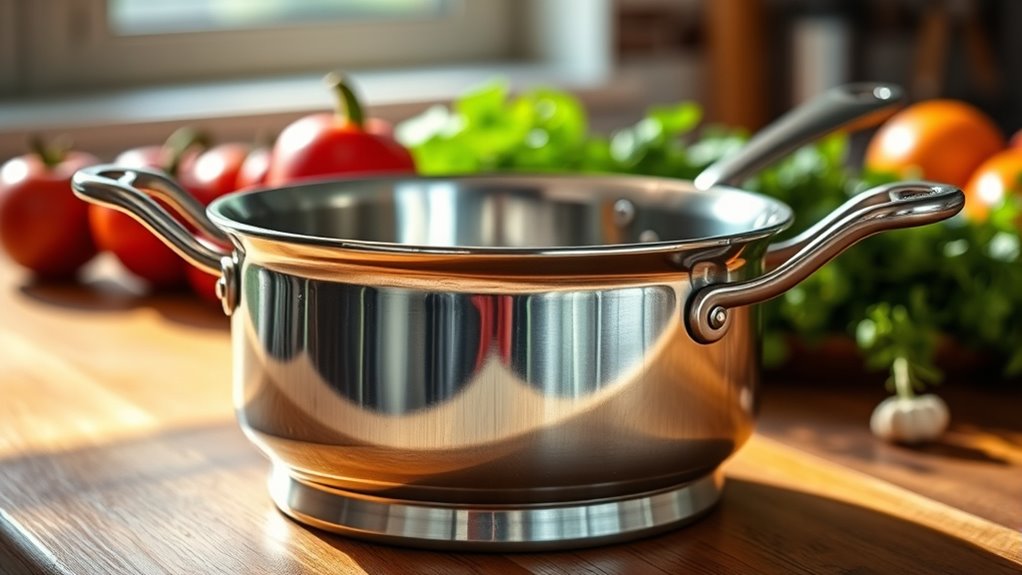
When choosing stainless steel cookware, prioritize high-quality grades like 18/10 or 18/8 stainless steel, which ensure durability, corrosion resistance, and excellent cooking performance. Selecting the right stainless steel cookware can make a significant difference in your kitchen, offering even heat distribution and long-lasting use.
Opt for multi-ply construction with an aluminum or copper core for consistent heat across the cooking surface.
Pay close attention to handle design—ergonomic, sturdy, and heat-resistant handles improve comfort and safety during use.
Make sure lids fit tightly and include steam vents to control moisture.
Also, check if the cookware is oven and dishwasher safe for added convenience. These features enhance both performance and ease of use, helping you cook like a pro.
Key Takeaways
- Choose cookware with multi-ply construction or aluminum/copper cores for even heat distribution and reduced hot spots.
- Select stainless steel grades like 18/10 or 18/8 for excellent corrosion resistance and durability.
- Ensure handles are securely riveted, ergonomic, and made from heat-resistant materials for safe, comfortable use.
- Look for lids that fit snugly with steam vents and heat-resistant handles to lock in moisture and enhance cooking safety.
- Consider finishes like brushed or electropolished for better scratch resistance and easier maintenance over time.
Why Stainless Steel Cookware Is a Smart Choice
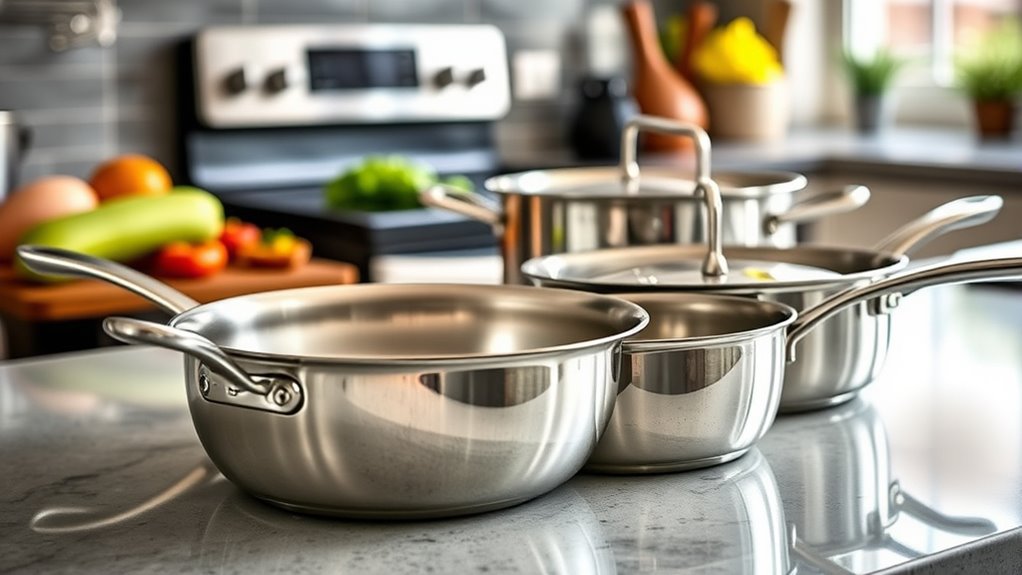
Although you might find many cookware options, stainless steel stands out because it combines durability, versatility, and ease of maintenance. You’ll appreciate how resistant it is to rust, stains, and corrosion, meaning your pots and pans will last for years without losing their shine. Cooking with stainless steel is also safe since it doesn’t react with acidic or alkaline foods, keeping flavors pure.
You can use it on various heat sources, including induction, gas, or electric stoves, making it flexible in your kitchen. Plus, it heats evenly, reducing the risk of hot spots and burnt food. When it comes to cleaning, stainless steel is dishwasher-safe and doesn’t require special treatments—just a good scrub will do.
This combination makes it a smart, practical choice for everyday cooking.
Understanding Stainless Steel Grades for Cookware
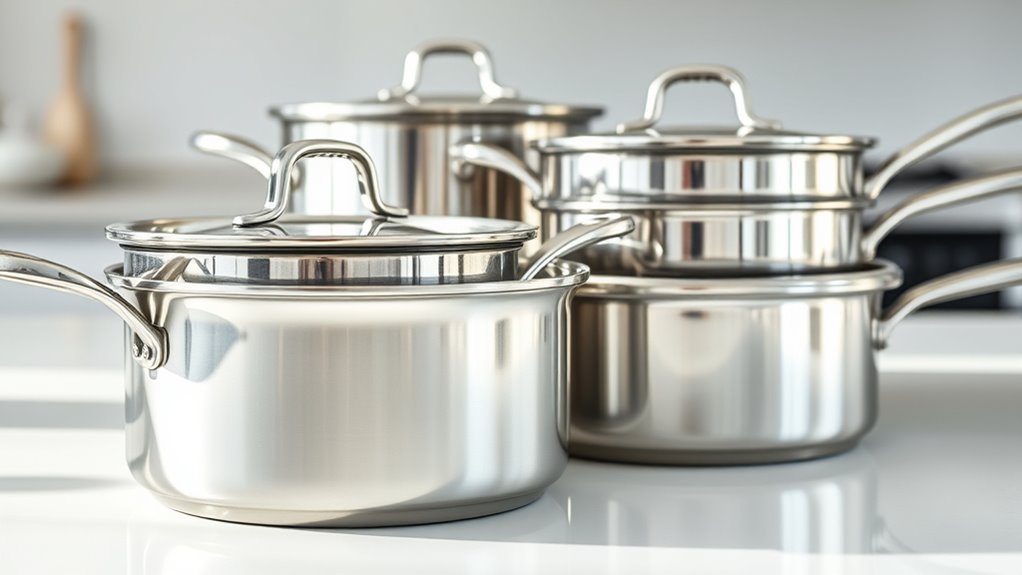
You’ll want to know which stainless steel grades are best for cookware since they affect performance and durability. Common grades like 18/10 and 18/8 offer different levels of corrosion resistance and strength.
Understanding these differences helps you pick cookware that lasts and cooks evenly.
Common Stainless Steel Grades
When choosing stainless steel cookware, understanding the different grades can help you pick the best option for your kitchen. The most common grades you’ll encounter are 18/10, 18/8, and 18/0. These numbers refer to the percentage of chromium and nickel in the steel.
For example, 18/10 contains 18% chromium and 10% nickel, offering excellent corrosion resistance and a shiny finish. 18/8 is similar but has slightly less nickel, while 18/0 contains no nickel, making it less resistant to rust but often more affordable.
You might also see 304 or 316 grades, which are industrial standards corresponding roughly to 18/8 and 18/10. Knowing these grades lets you make an informed choice based on your preferences and budget.
Grade Impact on Durability
Since stainless steel grades vary in composition, their durability also differs markedly. When you choose cookware, understanding the grade helps you pick pieces that last. For example, 18/10 stainless steel—meaning 18% chromium and 10% nickel—offers excellent corrosion resistance and strength.
This grade resists rust and maintains its shine longer, so your pots and pans endure daily use. In contrast, lower grades like 18/8 or 18/0 contain less nickel, making them less resistant to corrosion and more prone to wear over time. If you want cookware that’s tough and reliable, prioritize higher grades with more nickel and chromium.
This way, you avoid rust, dents, or warping, ensuring your stainless steel cookware serves you well for years.
How Stainless Steel Cookware Bases Affect Heat Distribution
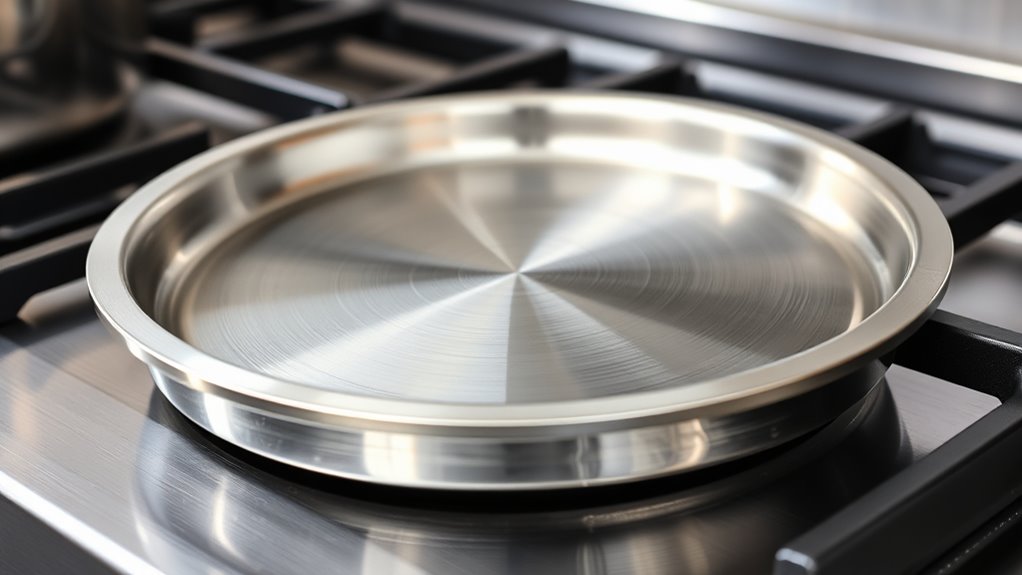
Although stainless steel is prized for its durability, the base of your cookware plays a crucial role in how evenly it heats. A flat, thick base ensures better contact with your stove, reducing hot spots that can burn food. Thin bases heat unevenly, causing frustration as some areas cook faster than others.
Some bases include an aluminum or copper core, which spreads heat more quickly and uniformly than stainless steel alone. This means your meals cook consistently, preventing undercooked centers or scorched edges. When choosing cookware, check the base’s construction and thickness—it directly affects cooking performance.
Why Multi-Ply Construction Improves Cooking Performance
Because multi-ply construction layers different metals together, it dramatically enhances how your cookware conducts and retains heat. This design combines the strengths of each metal, giving you superior cooking control.
Here’s why it improves your cooking performance:
- Even Heat Distribution: The layers spread heat uniformly, preventing hot spots that can burn food.
- Faster Heat-Up and Retention: Multi-ply pans heat quickly and hold temperature longer, so your cooking stays consistent.
- Durability and Stability: The bonded metals resist warping and maintain their shape under high heat, ensuring your cookware lasts.
With multi-ply cookware, you get more precise temperature control and efficient cooking, which means better results every time you step into the kitchen.
Choosing Durable Handles and Attachments for Stainless Steel Cookware
When selecting stainless steel cookware, pay close attention to the handle materials, since they affect comfort and heat resistance. You’ll also want to check how securely the handles are attached to guarantee they last through heavy use.
Finally, choose handles that feel comfortable and offer a good grip to make cooking safer and easier.
Handle Material Options
Choosing the right handle material for your stainless steel cookware can make a big difference in comfort and safety during cooking. You want handles that stay cool, provide a secure grip, and last through frequent use.
Here are three common handle materials to weigh:
- Stainless Steel – Durable and oven-safe, but can get hot during stovetop cooking.
- Silicone – Offers excellent heat resistance and a comfortable grip, but may wear over time.
- Cast Iron – Extremely sturdy and heat-resistant; however, it’s heavy and requires care to avoid rust.
Attachment Durability Factors
Handles made from durable materials only perform well if they’re securely attached to your cookware. When checking attachment durability, focus on how the handles are fixed. Look for riveted handles rather than welded or screwed ones, as rivets provide a stronger, more lasting bond that withstands heat and heavy use.
Also, verify the rivets are flush inside the pan to prevent food buildup and make cleaning easier. Avoid cookware with loose or wobbly attachments, which can compromise safety and durability. Pay attention to the number of attachment points—more rivets usually mean better stability.
Ease of Grip
Because you’ll be gripping your cookware frequently, ease of grip plays a crucial role in both comfort and safety. When choosing stainless steel cookware, consider how the handles feel in your hands and how securely they’re attached.
Here are three key factors to keep in mind:
- Ergonomic Design: Look for handles shaped to fit your hand comfortably, reducing strain during use.
- Non-Slip Material: Handles with silicone or textured finishes provide better control, even when wet or greasy.
- Secure Attachment: Make sure handles are riveted or welded firmly to the pot or pan, preventing wobbling or loosening over time.
Selecting Size and Shape for Your Cooking Needs
When you pick stainless steel cookware, matching the size and shape to your typical meals can make a big difference in cooking efficiency and results. If you often prepare large meals or cook for a family, opt for bigger pots and pans to accommodate more food without overcrowding. For everyday meals or smaller portions, smaller pans help you maintain better heat control and reduce cooking time.
Consider shapes carefully: wide, shallow pans work well for searing and sautéing, while taller, narrow pots are ideal for boiling or simmering liquids. Also, think about storage space—choose shapes that fit neatly in your kitchen. By selecting cookware that suits your cooking habits, you’ll improve meal quality and streamline your time in the kitchen.
How Weight Affects Performance and Comfort
You’ll notice that the weight of your stainless steel cookware directly impacts how evenly it heats your food. Heavier pans usually offer better heat distribution but can feel tiring to handle during long cooking sessions.
Finding the right balance between weight and comfort makes your cooking experience smoother and more enjoyable.
Weight and Heat Distribution
Although stainless steel cookware is prized for durability and style, its weight plays a crucial role in how it performs and feels during use. The weight impacts heat distribution and cooking efficiency, so you need to take it into account carefully. Here’s what to keep in mind:
- Even Heat Distribution: Heavier pans usually have thicker bases, which help distribute heat uniformly, reducing hot spots and preventing food from burning.
- Heat Retention: A substantial weight allows cookware to retain heat longer, maintaining a steady temperature ideal for searing and simmering.
- Control Over Cooking: While heavier pans offer better heat management, they require more effort to handle, especially when moving from stove to oven.
Choosing the right weight balances performance and convenience, giving you ideal cooking results.
Comfort During Extended Use
Since stainless steel cookware can be heavy, it directly affects how comfortable you feel during extended cooking sessions. If you’re stirring, flipping, or lifting pots and pans frequently, heavier pieces can cause fatigue or strain your wrists and arms. Choosing cookware with balanced weight helps you maintain control without tiring quickly.
Look for pieces that feel sturdy yet manageable in your hands. Handles also matter—a well-designed, ergonomic handle reduces stress and improves grip, making heavy cookware easier to handle over time. Remember, comfort doesn’t mean compromising durability or heat retention.
The Importance of Lid Quality in Stainless Steel Cookware
When you cook with stainless steel cookware, the lid quality plays a crucial role in your overall experience. A good lid ensures efficient cooking, better heat retention, and prevents spills.
Here’s what you should look for:
Here’s what you should look for when choosing the perfect lid for your stainless steel cookware.
- Material and Fit: Choose lids made from tempered glass or stainless steel that fit snugly to lock in moisture and heat, enhancing flavor and reducing cooking time.
- Handle Design: Opt for lids with sturdy, heat-resistant handles that let you lift them safely without burning your fingers or needing extra tools.
- Steam Vents: Some lids feature small vents to release excess pressure, preventing boiling over while maintaining enough steam for perfect cooking.
Why Oven and Dishwasher Safety Matter for Stainless Steel Cookware
Because you want your stainless steel cookware to last and perform well, understanding its oven and dishwasher safety is essential. Not all stainless steel pots and pans can withstand high oven temperatures or harsh dishwasher cycles. Using cookware beyond its recommended oven limits can warp or damage it, affecting heat distribution and durability.
Similarly, some stainless steel pieces have handles or lids that aren’t dishwasher-safe, which can degrade their finish or loosen attachments over time. By checking these safety features, you guarantee your cookware stays reliable and maintains its appearance. Plus, knowing what’s safe simplifies your cooking and cleaning routines, saving you time and protecting your investment.
Always verify the manufacturer’s guidelines before exposing your cookware to ovens or dishwashers.
Identifying Finishes That Resist Stains and Scratches
Understanding how your stainless steel cookware holds up in the oven and dishwasher helps you appreciate the importance of its finish. The right finish not only boosts durability but also keeps your pots and pans looking new.
To identify finishes that resist stains and scratches, consider these three key types:
- Brushed Finish: Its matte texture masks scratches and fingerprints, making it ideal if you want less visible wear.
- Polished Finish: Although shiny and attractive, it can show scratches more easily but resists stains well when properly maintained.
- Electropolished Finish: This smooth, glossy finish enhances corrosion resistance and minimizes surface imperfections, offering superior stain and scratch resistance.
Choosing a finish that suits your cooking style helps you maintain cookware that’s both functional and attractive for years.
Evaluating Brand Reputation and Warranty for Stainless Steel Cookware
Although stainless steel cookware comes in many varieties, not all brands offer the same level of quality and support. When choosing cookware, you should research the brand’s reputation to guarantee they consistently deliver durable, high-performing products. Look for customer reviews and professional endorsements to get a clear picture of reliability.
Also, pay close attention to the warranty terms. A solid warranty signals the manufacturer’s confidence in their product and protects your investment against defects or issues. Some brands offer limited lifetime warranties, which can save you money and hassle down the road.
Tips for Caring for and Maintaining Stainless Steel Cookware
When you invest in stainless steel cookware, proper care is essential to keep it looking great and performing well. To maintain your cookware’s shine and functionality, follow these tips:
- Clean Immediately: After cooking, soak the cookware in warm, soapy water and clean it with a non-abrasive sponge to prevent food residue from sticking and staining.
- Avoid Harsh Chemicals: Steer clear of bleach or steel wool, which can scratch the surface. Instead, use a mixture of baking soda and water for tough stains.
- Dry Thoroughly: After washing, dry your cookware immediately to prevent water spots and maintain its polished finish.
Frequently Asked Questions
Can Stainless Steel Cookware Be Used on Induction Cooktops?
Yes, you can use stainless steel cookware on induction cooktops as long as the base is magnetic.
Just test it with a magnet—if it sticks, your cookware will work perfectly with induction heat.
Is Stainless Steel Cookware Safe for Acidic Foods?
Yes, stainless steel cookware is safe for acidic foods. You won’t have to worry about reactions or flavors altering since it’s non-reactive.
Just avoid prolonged cooking with highly acidic ingredients to keep your cookware in top shape.
How Long Does Stainless Steel Cookware Typically Last?
Stainless steel cookware lasts like a trusty old friend—decades if you care for it properly. You’ll avoid rust and warping by cleaning it gently and storing it well, ensuring it stays durable and reliable for years.
Can Stainless Steel Pots and Pans Go From Stovetop to Freezer?
Yes, you can put stainless steel pots and pans from stovetop straight to the freezer. Just be cautious with rapid temperature changes—they can cause warping or damage.
Let your cookware cool slightly before freezing for best results.
Does Stainless Steel Cookware Require Seasoning Like Cast Iron?
No, stainless steel cookware doesn’t require seasoning like cast iron. You can use it right away, but seasoning can create a smoother surface and help with sticking.
It’s optional, not necessary for good cooking.
Conclusion
Choosing the right stainless steel cookware is like picking a reliable ship for your kitchen voyage—you want something sturdy, efficient, and built to last. By understanding grades, multi-ply construction, and durable handles, you’ll navigate cooking smoothly. Don’t forget oven safety and easy maintenance to keep your cookware shining like new.
With smart choices, your stainless steel set will be your trusted first mate, making every meal a success on your culinary journey. Remember to focus on high-quality materials, excellent heat distribution, and ergonomic design. These factors ensure your cookware performs well and remains durable over time.