Why Use Cast Iron Cookware in Your Kitchen?
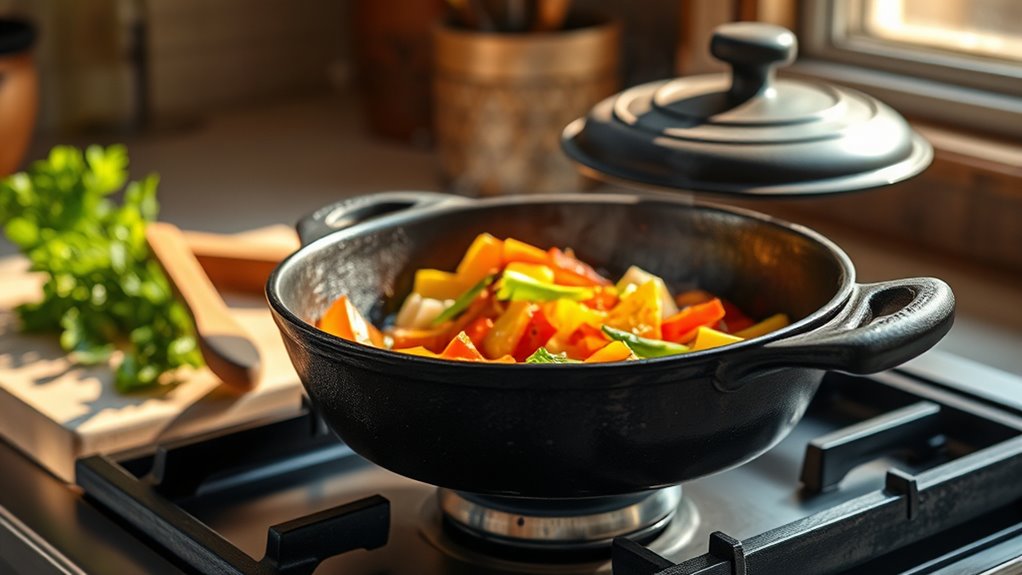
You’ll love using cast iron cookware in your kitchen because it’s incredibly durable and heats evenly, giving you perfectly cooked meals every time. This type of cookware retains heat well, so your food stays warm longer, making it ideal for busy households.
Its natural seasoning adds rich, smoky flavors that actually improve with use, enhancing the taste of your dishes over time.
Plus, cast iron cookware is versatile enough for searing, roasting, and baking all kinds of meals. With proper care, it lasts for generations, becoming a reliable kitchen staple you can trust.
Explore more to see how it can transform your cooking and elevate your culinary skills.
Key Takeaways
- Cast iron cookware offers exceptional durability, lasting generations with proper care and reducing the need for frequent replacements.
- It provides superior heat retention and even distribution, ensuring consistent cooking results and maintaining warmth longer.
- Versatile for various cooking methods, cast iron excels at searing, roasting, baking, and simmering a wide range of dishes.
- The seasoning layer enhances flavor development, imparting a subtle smoky depth and improving food texture over time.
- Easy to maintain with simple cleaning and regular oiling, cast iron resists rust and improves its natural non-stick surface.
Why Cast Iron Should Be in Your Kitchen
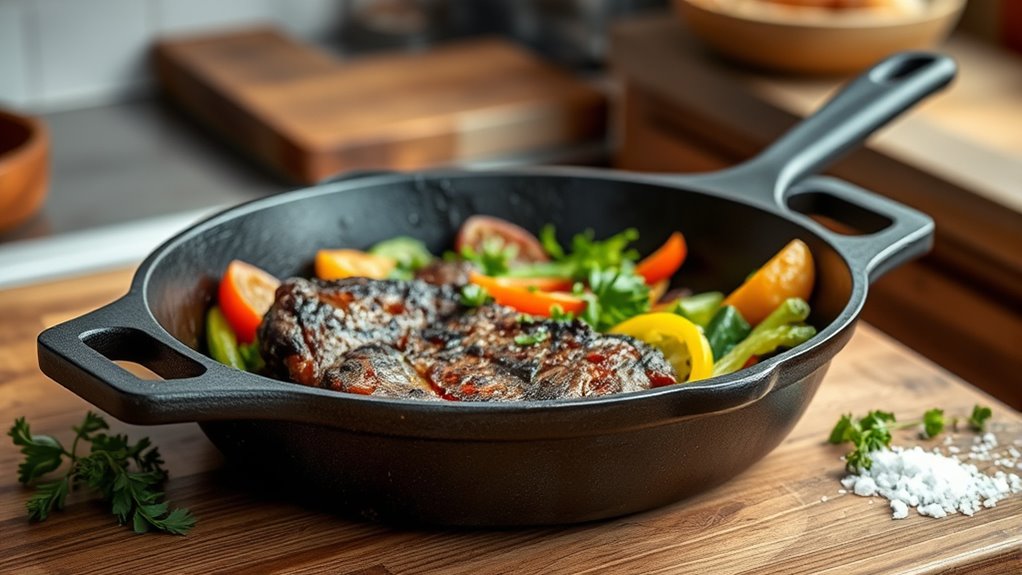
Although you might already have several types of cookware, cast iron should definitely be part of your kitchen arsenal. It’s incredibly durable and can last for generations if you take care of it. You’ll appreciate how versatile it is—perfect for searing, frying, baking, and even slow-cooking.
Unlike many non-stick pans, cast iron doesn’t contain synthetic coatings, so it provides a natural cooking surface that improves with use. You’ll find it’s excellent for everyday meals and special recipes alike. Plus, cast iron is budget-friendly, offering great value over time compared to frequent replacements of cheaper cookware.
Once you start using cast iron, you’ll wonder how you ever cooked without it. It’s a reliable, practical addition that enhances your kitchen’s efficiency and your cooking experience.
How Cast Iron Cookware Improves Heat Retention and Cooking Results
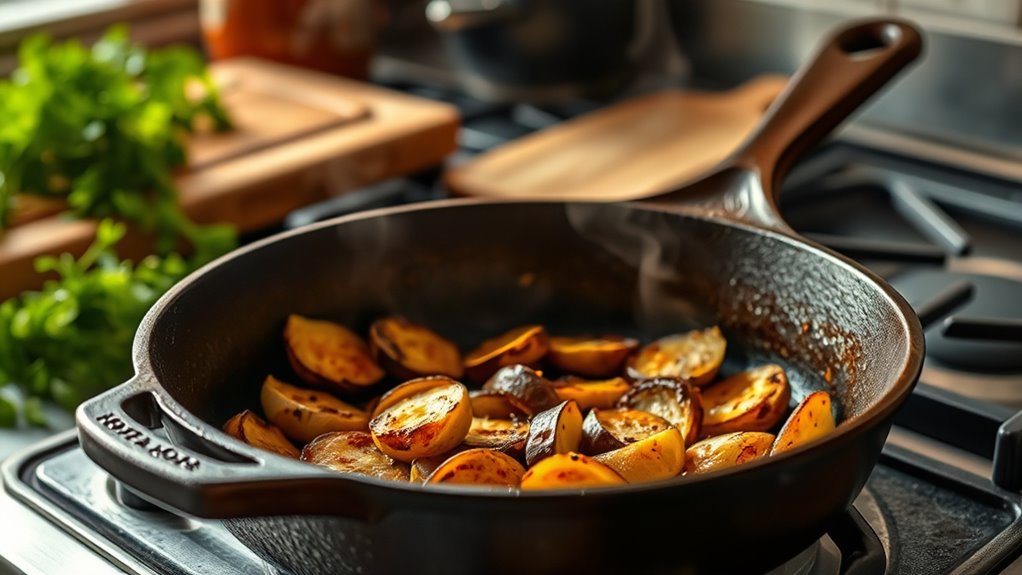
When you cook with cast iron, you benefit from its exceptional heat retention, which means your food cooks more evenly and stays warm longer. Unlike thinner pans, cast iron absorbs and holds heat steadily, preventing hot spots that can burn your food. This consistency lets you maintain a steady temperature, making it easier to sear meats, sauté vegetables, or simmer sauces perfectly.
Because cast iron keeps heat well, you don’t need to crank the stove constantly, saving energy and reducing temperature swings. Plus, once heated, the pan continues cooking your food gently even after you remove it from the burner. This reliable heat control helps you achieve better texture and doneness, giving you professional-level results with less guesswork and frustration in the kitchen.
Why Cast Iron Adds Unique Flavor to Your Meals
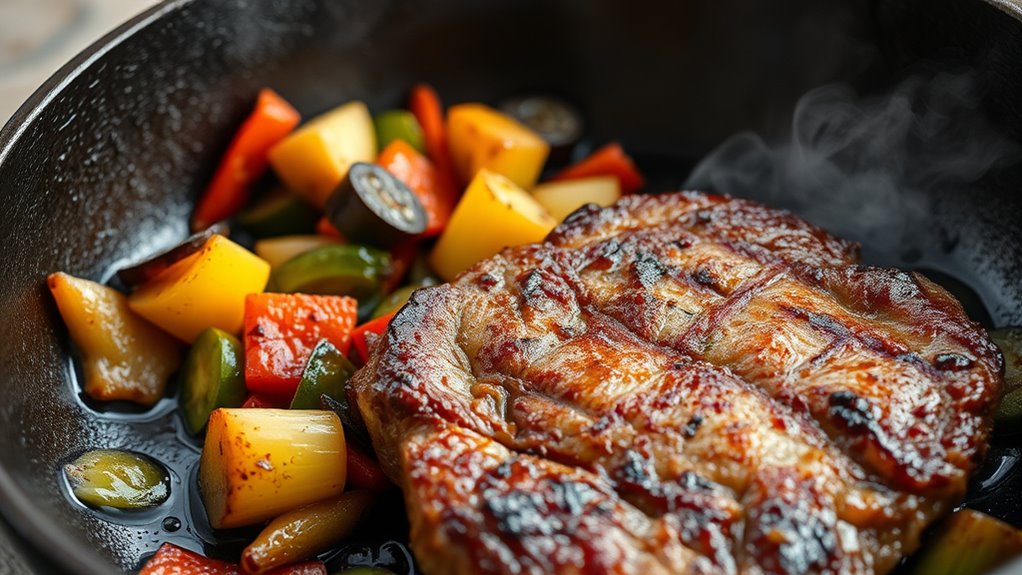
Mastering heat retention with cast iron sets the stage for another benefit that often surprises home cooks: the unique flavor it imparts to your meals. When you cook with cast iron, the pan’s surface develops a natural seasoning over time, made from layers of polymerized oils. This seasoning not only creates a non-stick surface but also infuses your food with a subtle, smoky depth you won’t get from other cookware.
Each dish you prepare absorbs some of these flavors, enriching your meals in a way that builds with every use. Plus, the even heat helps caramelize ingredients beautifully, enhancing their natural taste. With cast iron, your cooking gains a distinctive character, turning everyday meals into memorable experiences.
The Versatility of Cast Iron Cookware for Cooking Styles
Because cast iron cookware adapts to so many cooking methods, it becomes a trusted tool no matter what you want to prepare. You can rely on it whether you’re searing, roasting, or simmering. Its ability to maintain and distribute heat evenly means your food cooks consistently, enhancing your results.
With cast iron, you can:
- Sear steaks to get a perfect crust without hot spots
- Bake cornbread or even deep-dish pizza in the oven
- Simmer stews and sauces slowly without burning
This versatility lets you experiment freely in the kitchen, knowing your cookware can handle diverse heat levels and cooking styles. Once you start using cast iron, you’ll find it hard to switch back to other pans.
What Foods and Recipes Work Best With Cast Iron
Although cast iron cookware excels with many dishes, certain foods truly shine when cooked in it. You’ll find that searing steaks or frying chicken is perfect because cast iron maintains heat evenly, creating a crispy, golden crust. It’s also ideal for dishes like cornbread and frittatas, where steady, consistent heat helps achieve a tender, well-cooked center.
When roasting vegetables, cast iron ensures caramelization without burning. You can even use it for baking pizzas, thanks to its ability to mimic a brick oven’s intense heat. Soups and stews benefit too, as cast iron distributes warmth evenly, preventing hotspots.
How Cast Iron Develops a Natural Nonstick Surface
The way cast iron holds and distributes heat makes it perfect for cooking a variety of dishes, but its appeal goes beyond temperature control. One of its standout features is how it naturally develops a nonstick surface. This happens as oils polymerize on the pan’s surface during cooking, creating a durable, slick layer that improves with use.
You’ll notice:
- Food releases easily without sticking or tearing.
- The seasoning layer becomes more effective with each meal.
- Fewer added fats are needed for cooking.
This natural nonstick quality means you can enjoy healthier cooking and effortless cleanup. Over time, your cast iron becomes uniquely seasoned, enhancing both performance and flavor in your kitchen.
How to Properly Care for and Season Cast Iron Cookware
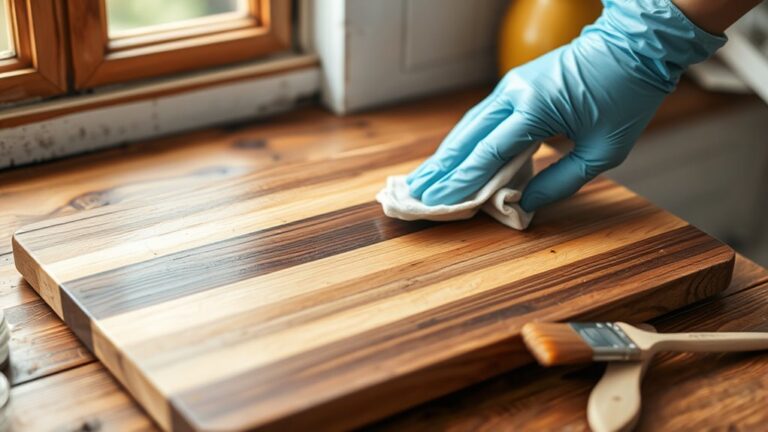
When you want your cast iron cookware to last and perform at its best, proper care and seasoning are essential. After cooking, clean your pan with hot water and a stiff brush; avoid soap and the dishwasher, as they can strip the seasoning.
Dry it thoroughly to prevent rust, then apply a thin layer of vegetable oil inside and out. Heat the pan on the stove or in the oven to help the oil bond with the surface, reinforcing the seasoning layer.
If food starts sticking or the surface looks dull, reseason by coating the pan with oil and baking it at 375°F for an hour. With this routine, your cast iron will stay smooth, nonstick, and ready for countless meals.
Why Cast Iron Is a Durable, Long-Lasting Investment
Because cast iron cookware is built to withstand high heat and rough handling, you’ll find it lasts for decades with proper care. You’re investing in a piece that not only endures but improves over time. Its durability means you won’t need frequent replacements, saving you money and hassle.
Cast iron cookware endures high heat and rough use, lasting for decades with proper care.
Plus, cast iron resists warping and cracking, unlike many other materials.
Here’s why cast iron stands the test of time:
- It’s made from a dense, solid metal that handles heavy use.
- Proper seasoning creates a natural non-stick surface that strengthens with each use.
- You can restore and reseason cast iron even if it rusts or gets damaged.
With this cookware, you’re choosing reliability and longevity for your kitchen.
How Cast Iron Compares to Other Cookware Materials
Although you might be tempted to choose lightweight or non-stick options, cast iron offers unique benefits that many other cookware materials can’t match. Unlike aluminum or stainless steel, cast iron excels at retaining and evenly distributing heat, helping you cook food uniformly. While non-stick pans are easy to clean, their coatings can wear off quickly, but cast iron actually improves with seasoning over time, becoming naturally non-stick.
It’s heavier and requires more care to prevent rust, but the durability means it can last generations, unlike cheaper pans that wear out. Cast iron also tolerates extremely high temperatures, making it versatile for stovetop, oven, or even campfire cooking. When you compare it to other materials, cast iron stands out for performance, longevity, and adaptability in your kitchen.
When to Choose Cast Iron Over Other Cookware Types
You’ll want to reach for cast iron when you need even heat and long-lasting durability. Its ability to retain heat makes it perfect for searing and slow cooking.
Plus, cast iron works well with a wide range of recipes, giving you plenty of cooking options.
Heat Retention And Distribution
When you cook with cast iron, you benefit from its exceptional ability to retain and evenly distribute heat. This means your food cooks more consistently, reducing hot spots that can burn or undercook your meals. Unlike thinner cookware, cast iron maintains a steady temperature, which is perfect for searing, frying, and slow cooking.
Here’s why you might choose cast iron for heat retention and distribution:
- It holds heat longer, so your food stays warm even off the stove.
- Provides even cooking, preventing unevenly cooked dishes.
- Works well on various heat sources, including induction and campfires.
With cast iron, you get reliable, uniform heat that helps you cook with confidence every time.
Durability And Longevity
Because cast iron cookware is incredibly sturdy, it outlasts many other types of pots and pans you might use in your kitchen. When you invest in cast iron, you’re choosing a tool that can handle heavy use without warping or cracking. Unlike nonstick or aluminum pans that wear out or get scratched easily, cast iron builds character and strength with every meal.
You don’t have to worry about replacing it frequently, which saves you money over time. Plus, with proper care, your cast iron skillet can become a family heirloom passed down through generations. So, if durability and longevity matter to you, cast iron is the smart choice that keeps performing well, year after year.
Versatility In Cooking
Cast iron’s durability makes it a reliable choice, but its true strength lies in versatility. You’ll find cast iron perfect for a range of cooking tasks where other cookware might fall short. When you want to:
- Sear meats to lock in flavor with even heat distribution
- Bake cornbread or deep-dish pizza directly in the oven
- Simmer stews or sauces on the stovetop without worrying about hot spots
Cast iron adapts effortlessly. Its ability to go from stovetop to oven means you don’t need multiple pans, saving space and time. Plus, it develops a natural non-stick surface with use, making it ideal for both high-heat cooking and gentle simmering.
Frequently Asked Questions
Can Cast Iron Cookware Be Used on Induction Cooktops?
Yes, you can use cast iron cookware on induction cooktops. Since cast iron is magnetic, it works perfectly with induction technology, heating evenly and efficiently.
Just be careful not to scratch the cooktop surface while cooking.
Is Cast Iron Safe for Acidic Foods Like Tomatoes?
Imagine simmering tomato sauce in cast iron; it’s safe but can cause slight iron leaching, altering taste and color.
You’ll want to avoid prolonged cooking with acidic foods to prevent damage and maintain flavor balance.
How Heavy Is Cast Iron Cookware Compared to Other Materials?
Cast iron cookware is heavier than aluminum or stainless steel, often weighing twice as much. You’ll notice the weight when lifting or moving it, but that heft helps with even heat distribution and excellent cooking performance.
Can Cast Iron Cookware Be Used in the Microwave?
You can’t use cast iron cookware in the microwave because it’s metal. It’ll cause sparks and damage your microwave.
Instead, stick to microwave-safe glass or ceramic dishes to heat your food safely and efficiently.
Does Cast Iron Cookware Contain Any Harmful Chemicals?
No, cast iron cookware doesn’t contain harmful chemicals—it’s like cooking with a trusty old friend.
You’ll only get iron, which can even boost your health, making it a safe and natural choice for your kitchen.
Conclusion
Choosing cast iron cookware is like inviting a trusted old friend into your kitchen—reliable, sturdy, and full of character. It not only enhances your cooking with even heat and rich flavors but also adapts to your every culinary style.
With proper care, it becomes a lifelong companion, outlasting fleeting trends. So, when you want durability and versatility wrapped in one, cast iron stands ready.
Turning every meal into a timeless masterpiece, cast iron cookware offers unmatched performance, longevity, and cooking precision. Choose cast iron for a kitchen essential that truly lasts.