How to Go Oven Cooking With All-Clad Cookware
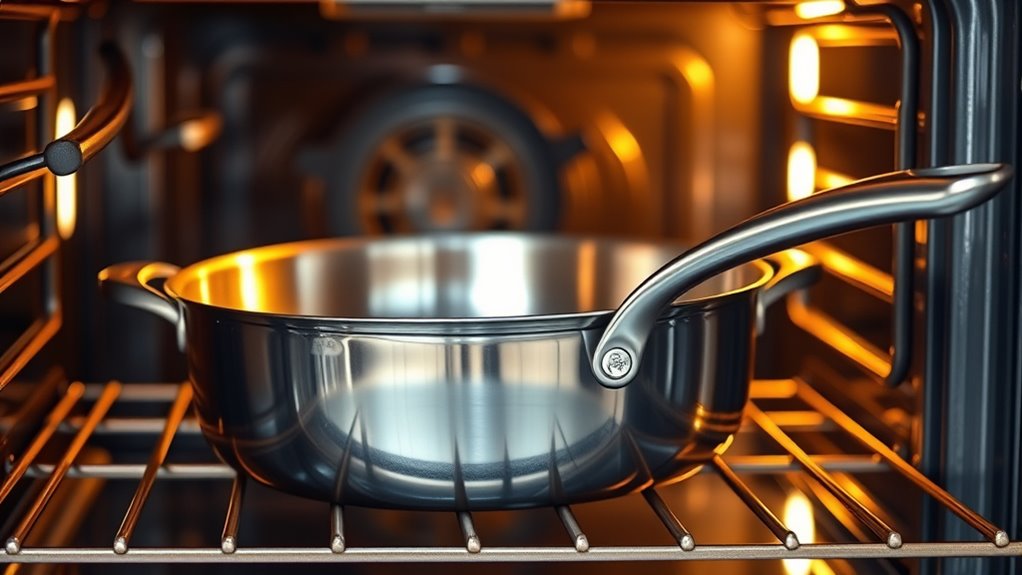
To go oven cooking with All-Clad cookware, it’s essential to understand the oven safety of your pans and handles. Most stainless steel All-Clad models can withstand temperatures up to 600°F, making them ideal for a wide range of oven recipes.
However, if your cookware has plastic or wood handles, the oven-safe temperature limit drops to around 350°F–400°F.
Before placing your All-Clad pan in the oven, preheat the oven and lightly oil the pan to ensure even heat distribution and easy food release.
Avoid subjecting your cookware to sudden temperature changes, as this can cause warping.
Always use oven mitts when handling hot pans for safety.
With proper preparation and care, your All-Clad cookware will help your dishes cook evenly and taste delicious.
You’ll find additional tips on perfect temperatures and maintenance advice following this guide.
Key Takeaways
- Verify your All-Clad cookware and handles are oven-safe, adhering to temperature limits (usually up to 600°F for stainless steel).
- Preheat both oven and pan for even heat distribution and to prevent warping or thermal shock.
- Use appropriate cookware size and type based on the dish to ensure even cooking and avoid overcrowding.
- Lightly oil the pan interior to reduce sticking and promote even browning during oven cooking.
- After use, cool cookware naturally, clean with warm soapy water, and dry immediately to maintain durability and appearance.
Why All-Clad Is Great for Oven Cooking
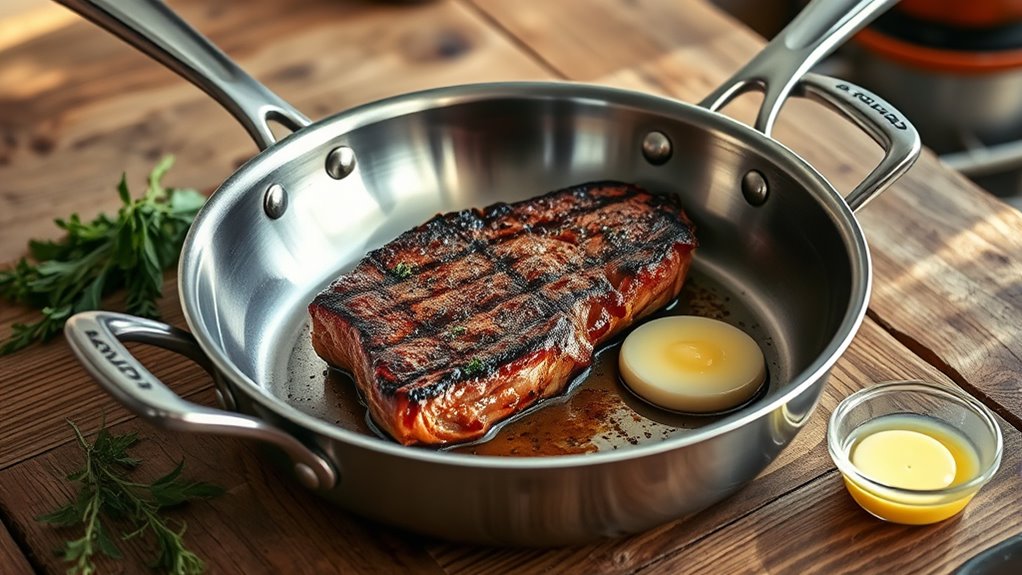
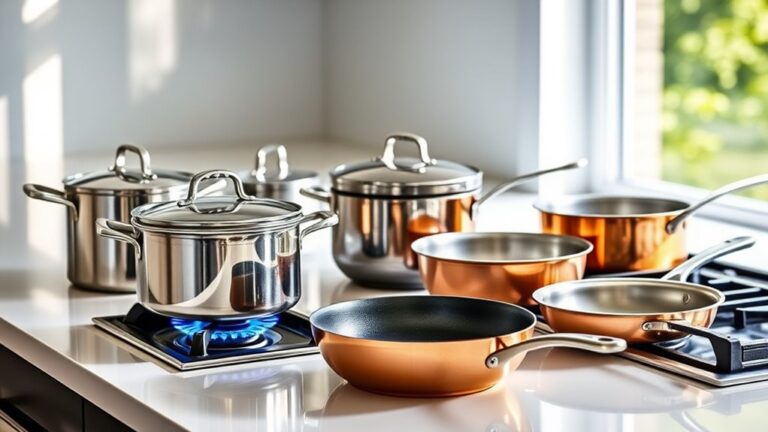
Why should you choose All-Clad cookware for oven cooking? Because it delivers unmatched durability and even heat distribution, ensuring your dishes cook perfectly every time. When you use All-Clad, you can trust its high-quality stainless steel and aluminum layers to handle oven temperatures without warping or degrading.
This means you can move seamlessly from stovetop to oven, making your cooking process more efficient. All-Clad’s design also resists sticking and promotes even browning, which is essential for roasting and baking. Plus, its sturdy handles stay cool longer, letting you manage hot dishes safely.
Choosing All-Clad means investing in cookware that performs consistently, making your oven cooking reliable and enjoyable. You’ll appreciate the professional-level results it helps you achieve.
Checking If Your All-Clad Cookware Is Oven-Safe
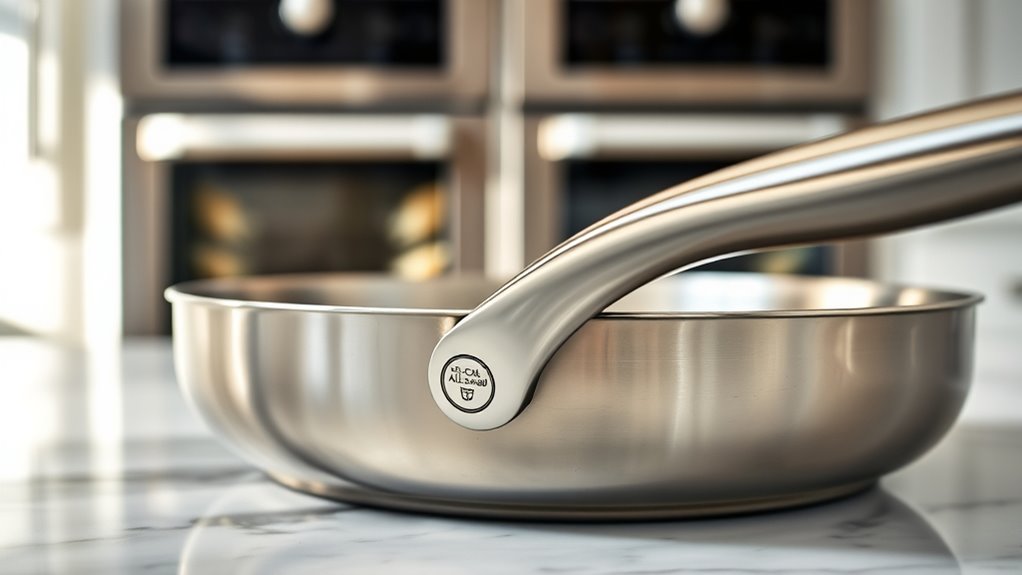
Before you put your All-Clad cookware in the oven, it’s important to confirm that it can safely withstand the temperatures you plan to use. First, check the manufacturer’s guidelines—All-Clad typically lists oven-safe temperatures for each product. Most stainless steel and tri-ply cookware handle oven heat up to 600°F, but handles and lids might have lower limits.
Avoid putting any cookware with plastic or wooden handles in the oven unless specified as safe. Also, inspect your cookware for any damage or loose parts that could affect its oven safety. When in doubt, refer to the product manual or All-Clad’s official website to verify.
Taking these steps will help you avoid damaging your cookware or ruining your meal.
Choosing All-Clad Cookware for Oven Recipes
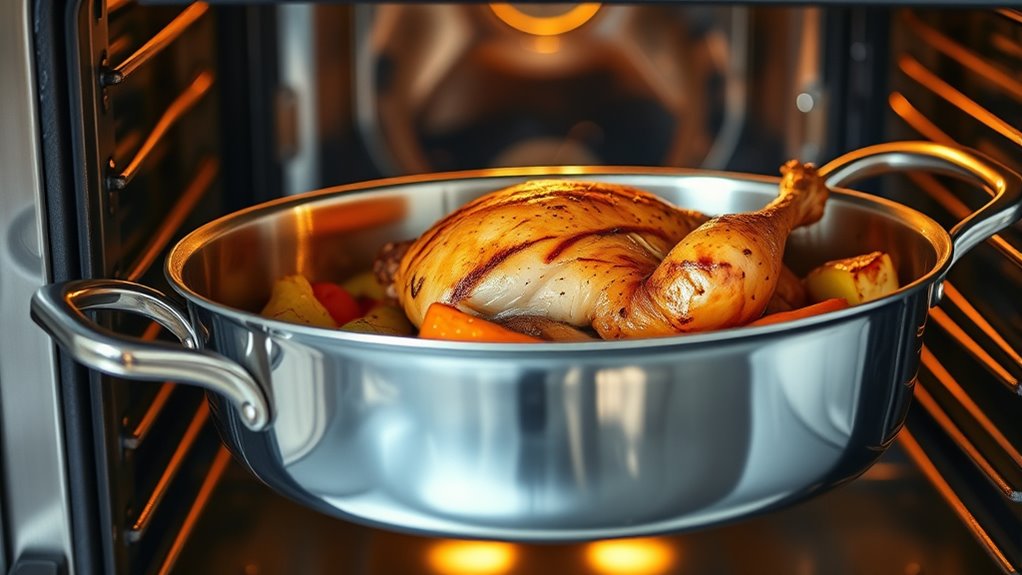
Once you’ve confirmed your All-Clad cookware can handle oven temperatures, selecting the right piece for your recipe becomes the next step. Consider the type of dish you’re making—deep roasting pans work well for casseroles, while shallow skillets are perfect for searing and finishing meats in the oven. Size matters, too; choose a pan that fits your portion size without overcrowding.
Look for pieces with sturdy, oven-safe handles, especially if you plan to transfer cookware frequently. Remember, All-Clad’s tri-ply stainless steel pans distribute heat evenly, so pick one that matches your cooking method. Avoid nonstick surfaces if you’ll be using very high heat, as they might degrade over time.
With the right All-Clad cookware, your oven recipes will turn out beautifully every time.
Preparing All-Clad Cookware for Oven Cooking
Before you pop your All-Clad cookware in the oven, make sure you know the oven-safe temperature limits to avoid damage. You’ll also want to prepare the cookware properly by preheating and using the right oils or liners.
Finally, steer clear of common mistakes like sudden temperature changes that can warp your pans.
Oven-Safe Temperature Limits
Although All-Clad cookware is designed to withstand high heat, you need to know its oven-safe temperature limits to avoid damaging your pots and pans. Most All-Clad stainless steel pieces are safe up to 600°F, but those with non-stick coatings generally handle up to 500°F. If your cookware has plastic or wooden handles, their oven tolerance will be lower—usually around 350°F to 400°F.
Always check the manufacturer’s guidelines for your specific set to confirm these limits. Surpassing the recommended temperature can warp the metal, degrade non-stick surfaces, or damage handles. Sticking within these limits ensures your All-Clad cookware stays durable and performs well for oven cooking.
When in doubt, keeping temperatures moderate is the safest bet to protect your investment.
Preparing Cookware Properly
When you prepare your All-Clad cookware for oven use, proper cleaning and seasoning play a vital role in maintaining its performance and appearance. Start by thoroughly washing the cookware with warm, soapy water to remove any residues. Then, dry it completely to prevent water spots or rust.
Before placing it in the oven, lightly coat the interior with a thin layer of oil to enhance seasoning and protect the surface. Finally, preheat the oven to the desired temperature to ensure even cooking.
- Wash cookware with warm, soapy water.
- Dry completely to avoid water spots.
- Apply a thin layer of oil inside.
- Preheat oven for even heat distribution.
Following these steps keeps your All-Clad ready and reliable for oven cooking.
Avoiding Common Oven Mistakes
To get the best results from your All-Clad cookware in the oven, you need to steer clear of common mistakes that can damage the cookware or affect your food. First, never preheat an empty pan; this can warp the metal. Always add oil or ingredients before heating.
Avoid drastic temperature changes—don’t move your cookware directly from the fridge to a hot oven, as thermal shock may cause warping. Also, check your cookware’s oven-safe temperature limits to prevent overheating. Skip using plastic handles or lids that aren’t oven-safe.
Finally, always use oven mitts when handling hot All-Clad pans to prevent burns and maintain a secure grip. Following these tips ensures your cookware stays in top shape and your meals turn out perfect every time.
Oven Temperatures That Work Best With All-Clad
You’ll want to keep your oven temperature between 350°F and 500°F for the best results with All-Clad cookware. This range ensures even heat distribution without damaging the cookware’s finish.
Understanding how heat spreads across your pans will help you cook more evenly every time.
Optimal Temperature Ranges
How hot should you set your oven for the best results with All-Clad cookware? Generally, All-Clad handles oven heat well up to 500°F, but sticking to ideal ranges ensures durability and cooking precision.
Here’s what you should keep in mind:
- Low Heat (200°F – 300°F): Perfect for slow cooking or warming without overcooking.
- Medium Heat (300°F – 375°F): Ideal for baking casseroles and roasting vegetables evenly.
- High Heat (375°F – 450°F): Use for searing meats or baking dishes that need a crispy top.
- Maximum Heat (450°F – 500°F): Reserved for broiling or quick roasting; avoid prolonged use to maintain cookware integrity.
Following these ranges helps you maximize All-Clad’s performance while protecting your investment.
Heat Distribution Tips
Understanding the right oven temperatures lays the foundation for even heat distribution when cooking with All-Clad. These pans excel at conducting heat uniformly, but you still need to avoid extremes. Stick to moderate oven temperatures, typically between 325°F and 425°F.
This range allows the cookware’s bonded layers to spread heat evenly without hot spots or warping. Avoid sudden temperature changes, like placing a cold All-Clad pan into a preheated oven, as this can stress the metal and affect performance. When roasting or baking, preheating both the oven and pan ensures consistent results.
Roasting and Braising Techniques Using All-Clad
When roasting or braising with All-Clad cookware, you benefit from its superior heat retention and even distribution, which help achieve perfectly cooked dishes every time. To make the most of these techniques:
- Preheat your All-Clad pan on the stovetop to sear meat, locking in juices before moving it to the oven.
- Use the oven-safe lids to keep moisture in during braising, ensuring tender, flavorful results.
- Choose the right size pan so ingredients cook evenly without overcrowding.
- Monitor internal temperatures with a meat thermometer for precise doneness.
All-Clad’s sturdy construction lets you switch seamlessly between stovetop and oven, making roasting and braising straightforward and efficient. Your meals will come out juicy and evenly cooked, every time.
Finishing Stovetop-To-Oven Recipes With All-Clad
Although you’ve started your dish on the stovetop, finishing it in the oven with All-Clad cookware guarantees even cooking and enhanced flavors. After searing meat or sautéing vegetables, transfer your All-Clad pan directly into the preheated oven without switching containers. Its heavy-duty construction ensures consistent heat distribution, so your food cooks evenly without hot spots.
This method locks in juices and deepens flavors, perfect for dishes like braised short ribs or frittatas. Just make sure your pan’s handles are oven-safe and preheat your oven accordingly. Using All-Clad’s versatility, you can smoothly shift from stovetop to oven, saving time and minimizing cleanup.
This approach also allows you to monitor and adjust cooking easily, ensuring your meals turn out perfectly every time.
Cleaning and Maintaining All-Clad After Oven Use
Since your All-Clad cookware endures high oven temperatures, proper cleaning and maintenance are essential to keep it performing well. After oven use, avoid sudden temperature changes by letting your cookware cool before washing. Use warm, soapy water and a soft sponge to clean it; harsh abrasives can damage the finish.
For stubborn residue, soak your All-Clad in warm water before scrubbing gently. Finally, dry your cookware immediately to prevent water spots and maintain its shine.
- Let cookware cool naturally before cleaning.
- Wash with warm, soapy water and a soft sponge.
- Soak and gently scrub stubborn food residue.
- Dry immediately to avoid spots and maintain luster.
Following these steps guarantees your All-Clad stays durable and beautiful after every oven use.
Troubleshooting Oven Cooking Issues With All-Clad
If your All-Clad cookware isn’t heating evenly or food sticks after oven use, you might be facing common issues that can be quickly resolved. First, verify you’re preheating the oven and the pan properly to avoid hotspots. Uneven heating often results from placing cold cookware into a hot oven.
Also, check your oven’s temperature accuracy with an external thermometer; ovens can run hotter or cooler than their settings. If food sticks, try using a bit more oil or butter, and avoid cooking sprays that can build residue. Make sure your All-Clad pan is clean and free from burnt-on food, which can cause sticking.
Finally, avoid sudden temperature changes, like rinsing a hot pan with cold water, to maintain your cookware’s performance and longevity.
Frequently Asked Questions
Can I Use All-Clad Cookware on Induction Cooktops?
Yes, you can use All-Clad cookware on induction cooktops. Their stainless steel bases are magnetic, ensuring efficient heat transfer.
Just make sure your specific All-Clad piece is labeled induction-compatible before cooking.
Is All-Clad Cookware Dishwasher Safe?
Yes, you can put most All-Clad cookware in the dishwasher, but it’s better to hand wash to preserve the finish. Dishwasher detergents can dull the shine and damage the surface over time, so take care.
What Is the Warranty Coverage for All-Clad Cookware?
Warranty coverage for All-Clad cookware is the golden ticket—it offers a limited lifetime warranty against defects in material and workmanship.
If something goes wrong, you can count on them to make things right without hassle.
Can All-Clad Cookware Be Used for Deep Frying?
Yes, you can use All-Clad cookware for deep frying. Its sturdy construction and even heat distribution make it ideal.
Just make sure to monitor oil temperature carefully to avoid overheating and maintain safety.
How Do I Prevent Food From Sticking to All-Clad Pans?
Want to avoid sticky messes? You’ll want to preheat your All-Clad pan properly, add enough oil or butter, and don’t crowd the pan.
Patience helps—let food release naturally before flipping or stirring.
Conclusion
Using All-Clad cookware in the oven is like having a trusted teammate who never lets you down. Just like a marathon runner pacing themselves for the finish, All-Clad’s even heat distribution helps you cook dishes perfectly every time.
Remember, one home cook reported their roast came out so tender and juicy, their family asked for seconds twice! With the right prep and care, All-Clad makes oven cooking both easy and rewarding for you.
When you choose All-Clad for oven cooking, you’re investing in durability, performance, and consistent results. Oven cooking with All-Clad cookware ensures your meals are cooked evenly and deliciously every time. Embrace the ease and satisfaction that come with All-Clad cookware and oven cooking.