
How to Grate a Potato Without a Grater in 7 Easy Steps
To grate a potato without a grater, start by washing and peeling it thoroughly. Then, cut the potato into thin slices or small pieces to make the process easier. Using a sharp knife, carefully slice the pieces into thin strips.
Another method is to freeze the potato slices first, then scrape them with a spoon to create shreds. You can also rub the potato directly on a wire rack to break it down.
Alternatively, pulse chunks of potato in a food processor for quick shredding.
Be sure to press out any excess moisture before cooking to achieve crisp, golden results. Keep following these tips, and you’ll discover easy ways to create perfect shredded potatoes every time.
Key Takeaways
- Peel and slice the potato into thin pieces or manageable chunks for easier shredding without a grater.
- Use a sharp knife to carefully cut thin slabs, then stack and slice into thin strips like shreds.
- Freeze sliced potato pieces until solid, then scrape the surface with a knife or spoon to create shreds.
- Rub potato against a wire rack or pull through folded cheesecloth to shred evenly without a grater.
- Pulse small potato chunks in a food processor or blender briefly, then drain excess moisture before use.
Prepare Your Potato for Grating Without a Grater

Before you start grating your potato without a grater, make sure to wash and peel it thoroughly. Clean off any dirt or debris under running water, and use a vegetable peeler or a small knife to remove the skin completely.
Once peeled, dry the potato with a clean towel to prevent slipping while you work. Next, cut the potato into manageable pieces, about two to three inches long, so you can handle them easily. Smaller pieces give you better control and make the process safer.
If the potato feels too firm, you can soak it in cold water for a few minutes to soften it slightly, but avoid soaking too long to keep the starch intact. Proper preparation is key to making grating without a grater effective and safe.
Use a Knife to Make Thin Potato Strips
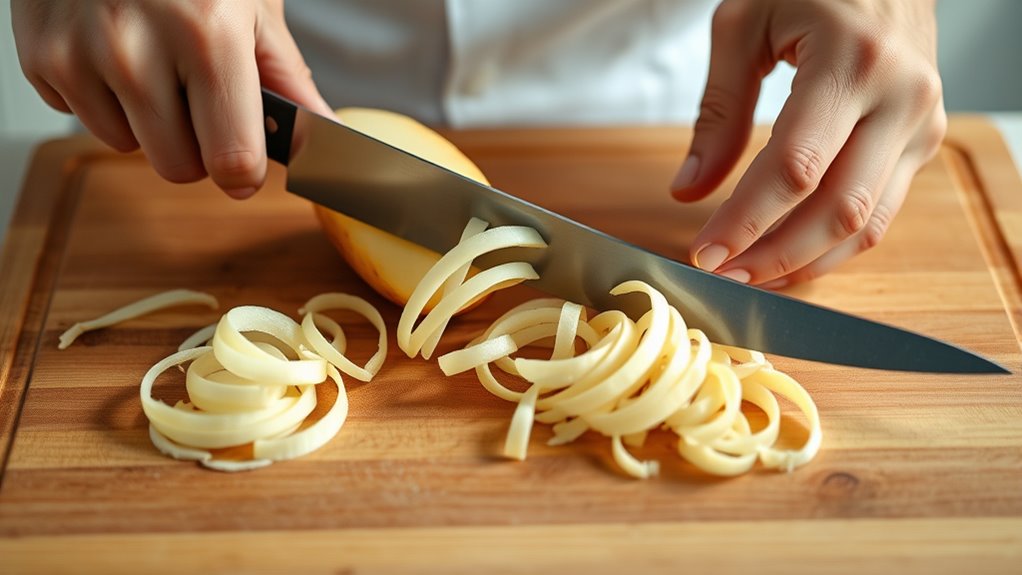
You’ll want a sharp, sturdy knife to make thin potato strips safely and efficiently. Focus on steady, even cuts by holding the potato firmly and slicing with a smooth, controlled motion. Mastering these simple techniques will help you achieve consistent, grate-like strips without a grater.
Knife Selection Tips
How do you choose the best knife for turning a potato into thin strips? Start with a sharp, narrow blade—like a paring knife or a small chef’s knife. These give you better control and precision, making it easier to slice thin, even pieces.
Avoid large, bulky knives; they’re harder to maneuver and increase the risk of uneven cuts or accidents. Make sure your knife feels comfortable in your hand, with a secure grip to prevent slips. A stainless steel blade works well because it holds sharpness longer and resists rust.
Finally, always check that your knife is properly sharpened before you start. A dull knife forces you to use more pressure, which can lead to mistakes or injury. Choosing the right knife sets you up for success.
Cutting Techniques Explained
Selecting the right knife is only part of the process; mastering the cutting technique is what turns a whole potato into thin, uniform strips. First, peel the potato and trim its edges to create a stable base.
Then, slice the potato lengthwise into thin slabs. Stack a few slabs and cut them lengthwise again to form thin strips. Keep your fingers curled to avoid cuts and use a steady, controlled motion.
| Step | Action | Tip |
|---|---|---|
| 1. Prep | Peel and trim edges | Create flat base |
| 2. Slice | Cut thin slabs | Aim for uniform thickness |
| 3. Strip | Cut slabs into strips | Keep fingers curled |
With practice, you’ll get consistent, grate-like strips using just your knife.
Grate Potatoes Using the Freezing and Scraping Method
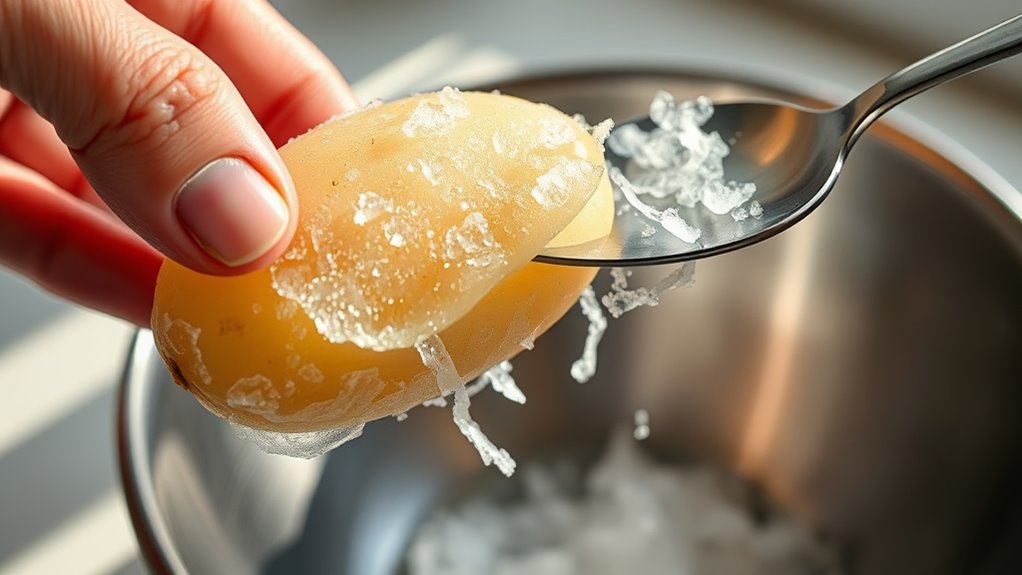
Although it may sound unconventional, freezing a potato before scraping it can create a texture similar to grated potato. Start by washing and peeling your potato. Slice it into thin, flat pieces and place them in the freezer until they’re solid, usually a few hours.
Once frozen, take a piece and hold it firmly. Use a sharp knife or a spoon to scrape the surface repeatedly, creating small shreds. The freezing makes the potato firmer and easier to scrape, producing thin, grated-like strands.
Be careful not to apply too much pressure to avoid breaking the shreds. This method works well for recipes needing grated potatoes but no grater, giving you flexibility with simple tools you already have at home.
Shred Potatoes With a Wire Rack or Cheesecloth
You’ll want to pick a wire rack with evenly spaced, sharp wires to make shredding easier. Before you start, peel and rinse your potatoes to guarantee a smoother process.
Then, use steady pressure and consistent motion to shred the potatoes effectively through the rack or cheesecloth.
Choosing the Right Wire Rack
When you don’t have a traditional grater, a wire rack can serve as a handy alternative for shredding potatoes. Choose a wire rack with evenly spaced, thin wires to guarantee you get fine, consistent shreds. Avoid racks with thick or widely spaced wires, as they won’t break down the potato properly.
Stainless steel racks are ideal since they resist rust and are easy to clean. Make sure the rack is sturdy enough to handle pressure without bending. If you can, pick one with a flat surface to make shredding easier and safer.
Using the right wire rack will save you time and effort, giving you shredded potatoes that work well for recipes like hash browns or latkes.
Preparing Potatoes for Shredding
Before you start shredding, wash and peel your potatoes to remove any dirt and skin that could affect the texture. Next, cut them into manageable pieces that fit comfortably on your wire rack or inside your cheesecloth. This makes shredding easier and safer.
If you’re using cheesecloth, fold it to create a sturdy pouch for the potato pieces. For the wire rack, verify it’s clean and dry to prevent slipping.
| Step | Wire Rack Preparation | Cheesecloth Preparation |
|---|---|---|
| Clean | Rinse and dry thoroughly | Wash and dry |
| Cut | Slice into thin pieces | Cut into chunks |
| Position | Lay flat on a stable surface | Fold cloth into a pouch |
| Secure | Hold firmly while shredding | Hold ends tightly |
These steps set you up for smooth shredding.
Effective Shredding Techniques
Although shredding potatoes without a grater might seem tricky, using a wire rack or cheesecloth provides an effective alternative. You can easily break down the potato into fine shreds with these simple tools. Here’s how to get started:
- Place the potato on a clean wire rack and rub it back and forth firmly.
- Use cheesecloth by wrapping the potato and pulling it against a rough surface.
- Apply consistent pressure to shred evenly.
- Rotate the potato to shred all sides.
- Collect the shredded pieces as they fall or press the cheesecloth to release them.
These methods give you control over the shred size and avoid the need for a traditional grater. With a little patience, you’ll have perfectly shredded potatoes ready for your recipes.
Grate Potatoes With a Food Processor or Blender
If you don’t have a grater on hand, you can quickly shred potatoes using a food processor or blender. Start by peeling and cutting the potato into smaller chunks to ensure even processing. Use the pulse function to control the texture and avoid over-processing.
Add a bit of water if needed to help blend smoothly, but don’t overdo it or the potato will become mushy. After shredding, drain excess moisture using a clean cloth or strainer.
| Tool | Pros | Cons |
|---|---|---|
| Food Processor | Fast, even shredding | Requires larger appliance |
| Blender | Common household item | Can overblend easily |
| Pulse Feature | Controls texture | Needs manual attention |
| Water Use | Helps blending | Risk of mushiness |
| Draining | Prevents soggy results | Extra step required |
Pick the Best Substitute Tools When You Don’t Have a Grater
When you don’t have a grater, you can still achieve finely shredded potatoes by using common kitchen tools like a knife, mandoline, or even a vegetable peeler. Each tool offers a unique way to mimic grating, depending on the texture you want and what’s available.
Consider these substitutes:
- Sharp knife: Julienne or finely mince potatoes by hand with precise cuts.
- Mandoline slicer: Use the julienne blade for thin, uniform strips.
- Vegetable peeler: Create thin potato ribbons that can be chopped into smaller shreds.
- Box cutter or vegetable slicer: Some have fine slicing options that work well.
- Food processor with shredding blade: An electric alternative if you have one around.
Choose the tool that fits your needs and kitchen setup best.
Tips for Cooking and Handling Shredded Potatoes
Since shredded potatoes tend to release moisture quickly, you’ll want to squeeze out excess water before cooking to guarantee they crisp up nicely. Use a clean kitchen towel or cheesecloth to press out as much liquid as possible. When cooking, heat your pan well and use a bit of oil or butter to prevent sticking and enhance browning.
Spread the potatoes evenly to assure even cooking and avoid overcrowding the pan, which can cause steaming instead of crisping. Flip them gently once the edges turn golden brown. After cooking, season immediately with salt and pepper to boost flavor.
If you’re not cooking right away, store shredded potatoes submerged in cold water to prevent browning, but drain and dry them thoroughly before cooking.
Frequently Asked Questions
Can I Grate Other Vegetables Without a Grater?
Yes, you can grate other vegetables without a grater by using a knife to finely chop or shred them, or by blending them briefly in a food processor.
Just be careful and work slowly for best results.
How Do I Store Shredded Potatoes to Prevent Browning?
To prevent shredded potatoes from browning, you should soak them in cold water with a little lemon juice or vinegar.
Store them in an airtight container in the fridge and use within 24 hours for best freshness.
What Dishes Are Best Made With Grated Potatoes?
Grated potatoes are your canvas for crispy latkes, golden hash browns, and hearty potato pancakes. Like a painter blending colors, you’ll create comfort and crunch in every bite, turning simple spuds into culinary art.
Is It Safe to Use a Knife for Children to Grate Potatoes?
You shouldn’t let children use a knife to grate potatoes because it’s risky.
Instead, supervise them closely or opt for safer tools like vegetable peelers or food processors designed with safety features to avoid accidents.
How Do I Clean Tools Used for Grating Potatoes Without a Grater?
You’ll wash your tools like rivers cleanse the land—rinsing off starch and bits with warm water and soap.
Scrub gently, then dry thoroughly, letting each tool breathe like leaves in sunlight, ready for your next creation.
Conclusion
Now that you know how to grate a potato without a grater, you’re ready to tackle any recipe with ease. Remember, “where there’s a will, there’s a way”—even without the perfect tools, creativity can save the day.
Whether you use a knife, freezer, or food processor, these simple methods will help you shred potatoes like a pro. So, get cooking and enjoy the delicious results of your handy handiwork!
By mastering these easy steps to grate a potato without a grater, you can confidently prepare your favorite dishes anytime. Embrace these creative techniques and make potato grating effortless and fun.