Top 10 Best Cookware for Gas Stoves in 2026
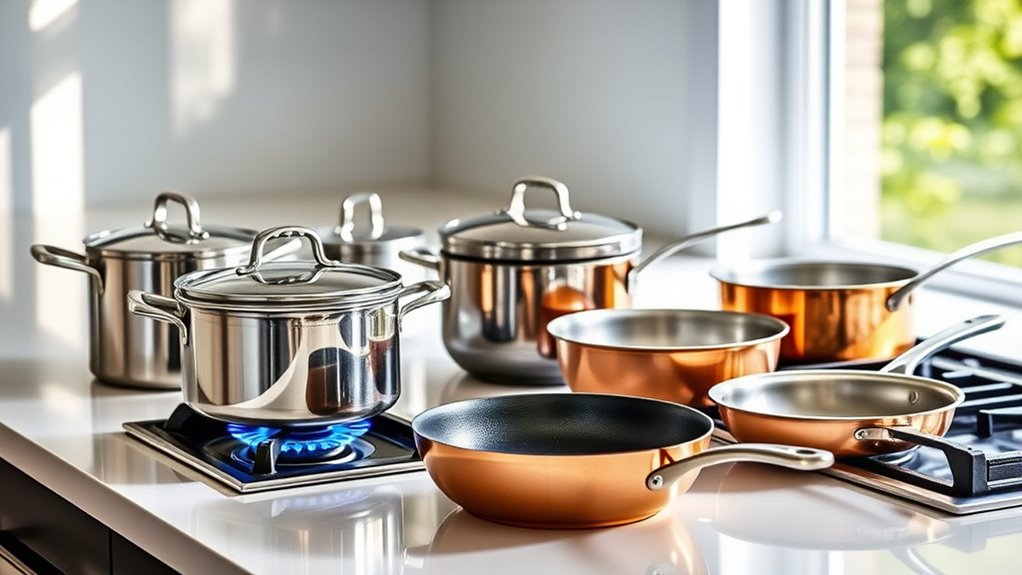
For the best cookware on gas stoves in 2026, prioritize sets with thick, flat bases that ensure even heat distribution and resist warping. Choosing the right cookware for gas stoves is essential for efficient cooking and durability.
Materials such as tri-ply stainless steel, cast iron, and hard-anodized aluminum offer excellent heat response and long-lasting performance.
Nonstick options with high-quality coatings are great if handled with care, providing easy food release and simple cleanup.
Lightweight cookware pieces can make cooking more comfortable and manageable.
Proper maintenance and cleaning routines will significantly extend the life of your cookware.
Keep exploring to discover top-rated brands, useful maintenance tips, and smart buying advice tailored specifically to your gas stove needs.
Finding the perfect cookware set will enhance your cooking experience and ensure consistent results every time.
Key Takeaways
- Choose cookware with thick, flat bases and multi-ply construction for even heat distribution on gas stoves. Prioritize durable materials like stainless steel with copper/aluminum cores or cast iron for optimal heat retention and control. Consider nonstick options with high-quality ceramic or PTFE coatings that resist warping and allow easy food release.
- Select lightweight sets in hard-anodized aluminum or titanium for faster heating and easier handling. Purchase from reputable brands like All-Clad, Cuisinart, and Lodge, ensuring warranties and positive user reviews.
Key Features That Make Cookware Ideal for Gas Stoves
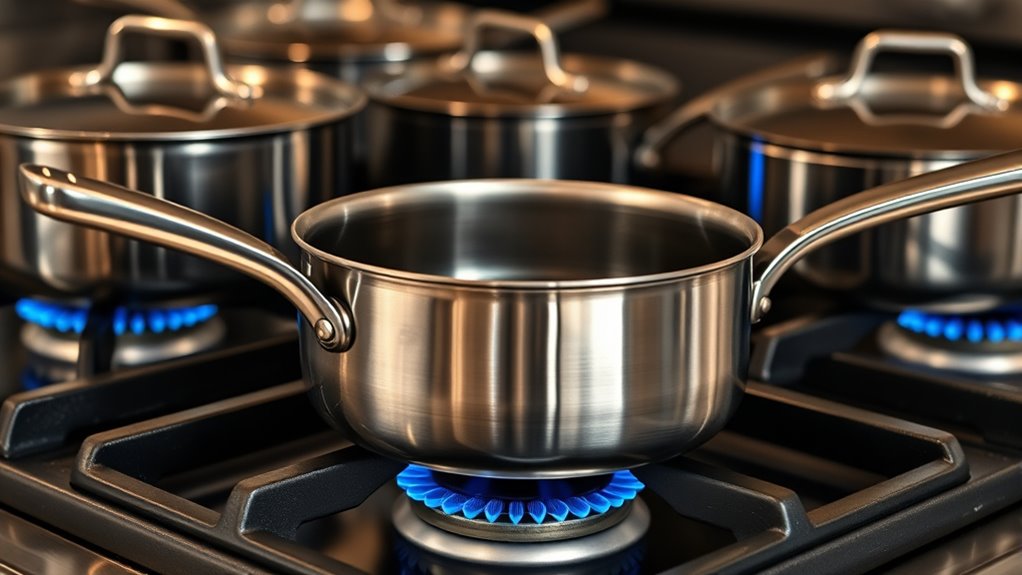
When you cook on a gas stove, you need cookware that can handle direct, uneven heat without warping or losing efficiency. You’ll want pots and pans with thick, sturdy bases that distribute heat evenly to prevent hot spots. Durable materials that resist warping under high temperatures are essential.
Look for cookware with a flat, stable bottom to guarantee good contact with the burner flames, which improves cooking performance. Handles should stay cool and be securely attached to handle the frequent movement typical with gas stoves. Also, opt for pieces that respond quickly to temperature changes since gas stoves offer precise heat control.
These features together help you cook consistently and safely, making your experience smoother and more enjoyable every time.
How Cookware Materials Affect Gas Stove Performance
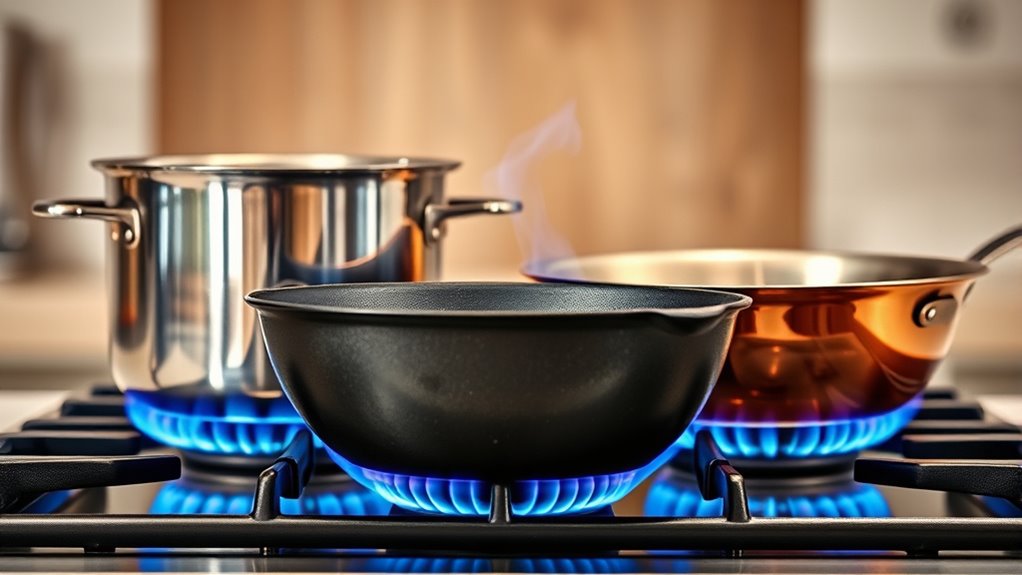
Although gas stoves provide quick and adjustable heat, the cookware material you choose directly affects how efficiently that heat transfers to your food. Materials like copper and aluminum conduct heat rapidly, helping your food cook evenly and reducing hotspots.
Stainless steel is durable and resists corrosion but heats slower, so look for multi-ply options with aluminum or copper cores for better performance. Cast iron retains heat exceptionally well, making it great for slow cooking, but it takes longer to heat up.
Nonstick coatings work well on gas stoves but require careful temperature control to avoid damage. By understanding these material differences, you’ll pick cookware that maximizes your gas stove’s efficiency, ensuring better cooking results every time.
Top 3 Durable Cookware Sets for Gas Stoves
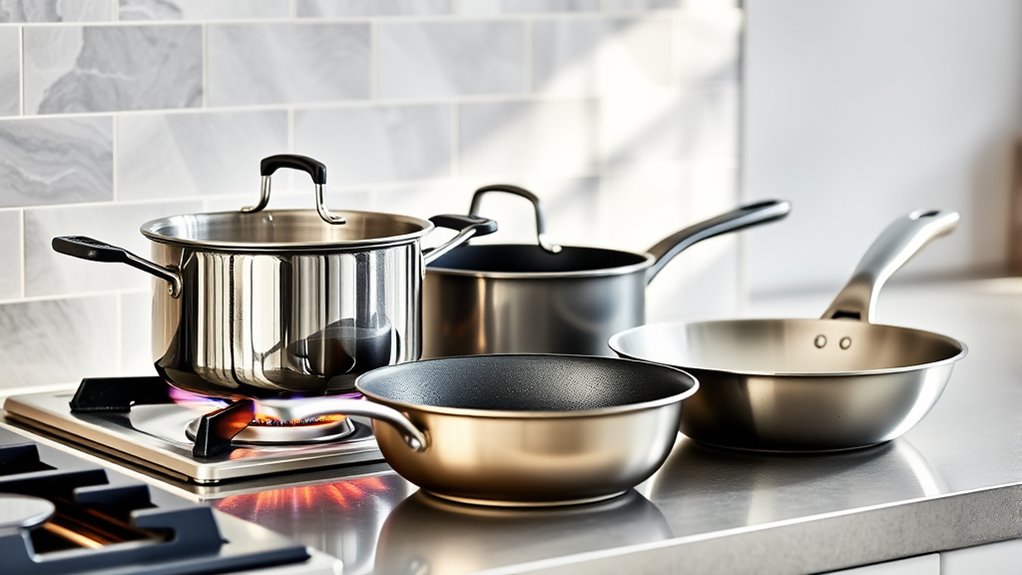
Since durability is key for cookware on gas stoves, you’ll want sets that withstand high heat and frequent use without warping or losing performance. The All-Clad D3 Stainless Steel Set is a top choice, offering tri-ply construction that guarantees even heat distribution and lasting strength.
Another excellent option is the Cuisinart Multiclad Pro, known for its sturdy build and resistance to dents and warping. If you prefer cast iron, Lodge’s Enameled Cast Iron Set is incredibly durable and retains heat well, perfect for consistent cooking on gas burners.
Each of these sets combines toughness with efficient heat conduction, so you can cook confidently without worrying about damage or uneven cooking. Picking any of these will serve you well for years.
Best Nonstick Pans for Cooking on Gas Stoves
If you want hassle-free cooking and easy cleanup, choosing the right nonstick pan for your gas stove is essential. Look for pans with a thick, warp-resistant base that distributes heat evenly to avoid hot spots. High-quality nonstick coatings, like ceramic or PTFE, guarantee food releases easily without sticking, making your cooking smoother and cleanup quicker.
Opt for pans with sturdy handles that stay cool and provide a comfortable grip. Also, make sure the pan is compatible with high heat since gas stoves can produce intense flames. Brands known for durability and performance, such as T-fal or GreenPan, offer excellent options.
With the right nonstick pan, you’ll enjoy cooking delicate foods like eggs or fish without worry or mess.
Why Cast Iron Cookware Works Perfectly on Gas Stoves
Nonstick pans make cooking on gas stoves easier, but cast iron cookware brings unmatched durability and heat retention to the table. When you use cast iron on a gas stove, it heats evenly and holds that heat longer, giving you better control over your cooking temperature. This means your food cooks more consistently without hot spots.
Plus, cast iron’s weight and robust construction make it stable on the burner, preventing wobbling. It also responds quickly when you adjust the flame, allowing you to fine-tune your heat with ease. Over time, cast iron develops a natural seasoning that enhances its nonstick qualities, making it even better the more you use it.
If you want cookware that stands up to heavy use and delivers reliable results, cast iron is a smart choice for gas stoves.
Affordable Cookware Sets That Don’t Sacrifice Quality
While many assume quality cookware demands a high price, you can find affordable sets that deliver excellent performance on gas stoves. Look for options made from durable materials like stainless steel or hard-anodized aluminum, which heat evenly and resist warping. These sets often include essential pieces such as frying pans, saucepans, and stockpots, giving you versatility without breaking the bank.
Brands that focus on budget-friendly lines usually design their cookware with sturdy handles and tight-fitting lids, ensuring safety and efficiency. When shopping, prioritize sets with good customer reviews and warranties to secure long-term value. With the right choice, you won’t have to compromise on cooking results or durability, even if you’re working within a limited budget.
Lightweight Cookware Options for Gas Stove Handling
Because gas stove flames require careful control, choosing lightweight cookware can make your cooking experience smoother and safer. When you pick lighter pots and pans, you’ll find it easier to handle them, especially when adjusting their position over the flame or transferring them from stove to counter. Materials like aluminum and titanium offer excellent lightweight options without compromising durability.
You’ll avoid the strain that comes with heavy cast iron or thick stainless steel, which can be cumbersome during quick cooking tasks. Plus, lightweight cookware heats up faster, helping you react quickly to flame adjustments. Just make sure your chosen set has sturdy handles for a secure grip.
Best Cookware for Even Heat Distribution on Gas Stoves
To get even heat distribution on your gas stove, focus on cookware made from materials like cast iron or copper that conduct heat well. Look for designs with thick, flat bottoms to spread heat evenly across the surface.
Also, keep your cookware clean and well-maintained to guarantee consistent cooking performance.
Material Types for Heat
When you cook on a gas stove, choosing the right cookware material is key to achieving even heat distribution. Materials like copper and aluminum excel here; they heat quickly and spread warmth uniformly, preventing hot spots. Stainless steel is durable but often requires an aluminum or copper core to balance heat distribution.
Cast iron retains heat exceptionally well, offering steady, even cooking once it’s hot, though it takes longer to warm up. You’ll want to avoid thin, low-quality metals that heat unevenly and cause burning or sticking. By selecting cookware made from materials known for consistent heat conduction, you’ll get better control over your cooking, resulting in perfectly cooked meals every time.
Prioritize materials that respond well to gas flames for the best kitchen experience.
Design Features Enhancing Distribution
Although material matters, the design of your cookware plays a crucial role in distributing heat evenly on a gas stove. Look for pieces with a thick, flat base that guarantees stable contact with the burner, preventing hot spots. Multi-ply construction, where layers of metal are bonded together, spreads heat efficiently across the cooking surface.
Additionally, cookware with a wider base captures more flame, promoting uniform heating. Pay attention to the shape of the pan—slightly curved sides help circulate heat better than steep walls. Some designs include a layered or encapsulated base that combines metals for excellent conductivity.
Maintenance Tips for Performance
Keeping your cookware in top condition guarantees it maintains even heat distribution on your gas stove. Always clean your pots and pans thoroughly after each use to prevent residue buildup, which can cause hotspots. Avoid abrasive scrubbers that can damage the surface and reduce conductivity.
Season cast iron regularly to maintain its non-stick properties and consistent heat transfer. Store your cookware properly to prevent warping—stack carefully or hang them to avoid dents. Check for any warps or damages periodically, as uneven bases lead to poor heat distribution.
Finally, preheat your cookware gradually on low to medium heat before increasing the temperature; this helps avoid thermal shock and promotes uniform heating. Following these steps guarantees your cookware performs at its best every time.
Easy Tips to Clean and Maintain Gas Stove Cookware
You’ll want to keep your gas stove cookware clean to guarantee it lasts longer and cooks better. Simple cleaning techniques can prevent buildup and damage.
Let’s go over some easy maintenance tips to help you care for your pots and pans.
Cleaning Techniques
Since cookware on gas stoves often faces tough stains and grease buildup, regular cleaning is essential to maintain its performance and appearance. Start by soaking your pots and pans in warm, soapy water right after use to loosen stuck-on food. Use a non-abrasive sponge or cloth to avoid scratching the surface.
For stubborn grease, sprinkle baking soda on the cookware, add a little water to form a paste, then scrub gently. Avoid harsh chemicals that can damage your cookware’s finish. Rinse thoroughly and dry immediately to prevent water spots and rust.
For cast iron, avoid soaking; instead, wipe clean and dry promptly. By adopting these simple cleaning techniques, you’ll keep your gas stove cookware looking great and cooking efficiently with minimal effort.
Maintenance Tips
Although gas stove cookware is designed to withstand high heat and frequent use, regular maintenance is key to extending its lifespan and ensuring peak performance. After each use, wipe your cookware with a soft cloth or sponge while it’s still warm to prevent food buildup. Avoid harsh abrasives that can scratch surfaces, especially non-stick coatings.
For stubborn stains, soak cookware in warm, soapy water before gently scrubbing. Dry thoroughly to prevent rust, particularly on cast iron. Season cast iron regularly with a thin layer of oil to maintain its non-stick properties.
Store your cookware properly, stacking carefully or using protective liners to avoid damage. By following these simple steps, you’ll keep your gas stove cookware in excellent condition for years to come.
Where to Buy the Best Gas Stove Cookware in 2026
When shopping for the best cookware for your gas stove in 2026, knowing where to look can save you time and money. Start with reputable kitchenware stores, both physical and online, where you can find trusted brands and detailed product descriptions. Websites like Amazon, Williams Sonoma, and Sur La Table offer extensive selections and user reviews, helping you make informed decisions.
Don’t overlook specialty cookware stores—they often carry high-quality, durable options tailored for gas stoves. Additionally, check manufacturer websites for exclusive deals or warranties. If you prefer hands-on experience, visit local retailers to test the cookware’s weight and balance.
Frequently Asked Questions
Can I Use Induction Cookware on a Gas Stove?
Yes, you can use induction cookware on a gas stove. Induction pots and pans work perfectly on gas because they’re made with magnetic materials, so you won’t have any issues cooking with them over an open flame.
How Do I Prevent Cookware From Warping on Gas Stoves?
You can prevent cookware from warping on gas stoves by heating it gradually, avoiding high heat settings, and using flat-bottomed pans.
Additionally, avoid cooling hot pans immediately with cold water. These steps help maintain your cookware’s shape.
Are There Eco-Friendly Cookware Options for Gas Stoves?
Yes, you can find eco-friendly cookware for gas stoves made from sustainable materials like recycled stainless steel or cast iron. These options last long, reduce waste, and often avoid harmful chemicals, making your cooking greener and safer.
What Cookware Brands Offer the Best Warranty for Gas Stove Use?
Think of your cookware warranty as a safety net. Brands like All-Clad, Le Creuset, and Calphalon offer some of the best warranties, ensuring you’re covered if your gas stove pots or pans ever fail.
Can I Use Cookware Designed for Electric Stoves on Gas Stoves?
You can use cookware designed for electric stoves on gas stoves, but make sure it’s durable and has a flat bottom. Some materials might warp or wear out faster with direct flame exposure, so check compatibility first.
Always inspect your cookware for signs of damage or warping before using it on a gas stove. Proper maintenance can extend its lifespan and ensure safe cooking.
If you’re unsure, refer to the manufacturer’s guidelines or consider investing in cookware specifically made for gas stoves.
Conclusion
Choosing the right cookware for your gas stove is like finding the perfect dance partner—smooth, reliable, and in sync. Whether you prefer the sturdy embrace of cast iron or the light touch of nonstick pans, the key is harmony between material and flame. By picking cookware that spreads warmth evenly and cleans up effortlessly, you’ll keep your kitchen’s rhythm flowing gracefully.
So, step into the spotlight with confidence, ready to create culinary magic every time. Remember, the best cookware for gas stoves in 2026 combines durability, heat distribution, and ease of maintenance. Selecting the right cookware will ensure your cooking experience is both efficient and enjoyable.