How Many Watts Does a Blender Use
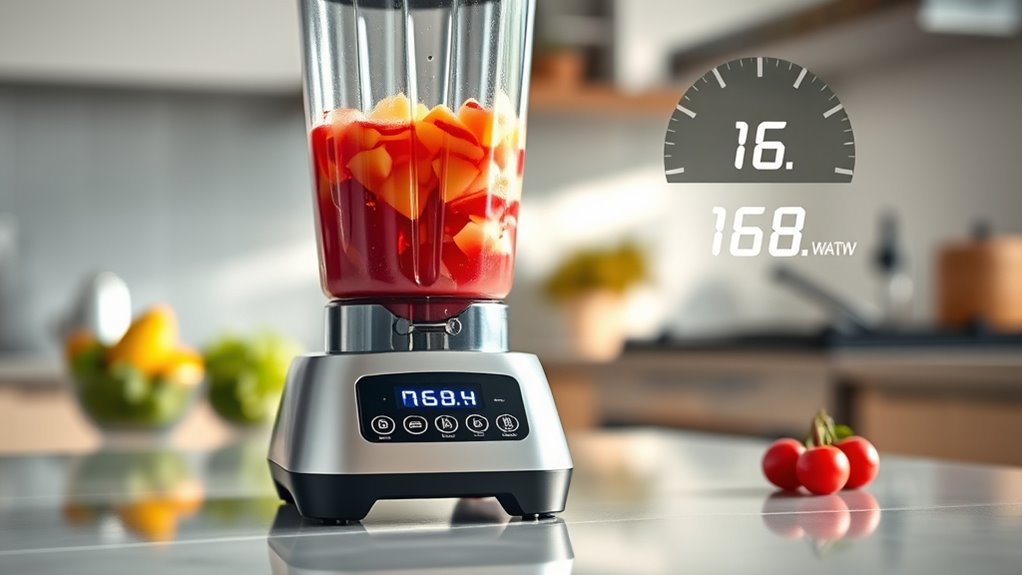
Your blender usually uses between 300 and 700 watts, depending on what you’re blending. The wattage of a blender plays a crucial role in its performance and energy consumption. Understanding how many watts a blender uses can help you choose the right model for your kitchen needs.
Lower wattage models handle soft ingredients and simple tasks, while higher wattage blenders crush ice and tough foods more efficiently. Personal blenders tend to have less power, and professional ones use 900 watts or more.
The wattage you choose affects both performance and energy use.
Keep exploring to discover how to balance power with efficiency for your needs.
Key Takeaways
- Household blenders typically use between 300 and 700 watts, depending on their motor size and intended tasks.
- Personal blenders generally operate at 200-600 watts, while professional models range from 900 to 1500 watts.
- Higher wattage blenders handle tough or dense ingredients faster but consume more electricity per use.
- Most blending sessions last only a few minutes, resulting in relatively low overall energy consumption.
- Choosing wattage based on blending needs balances performance and energy efficiency, optimizing both power use and cost.
How Many Watts Does a Typical Blender Use?
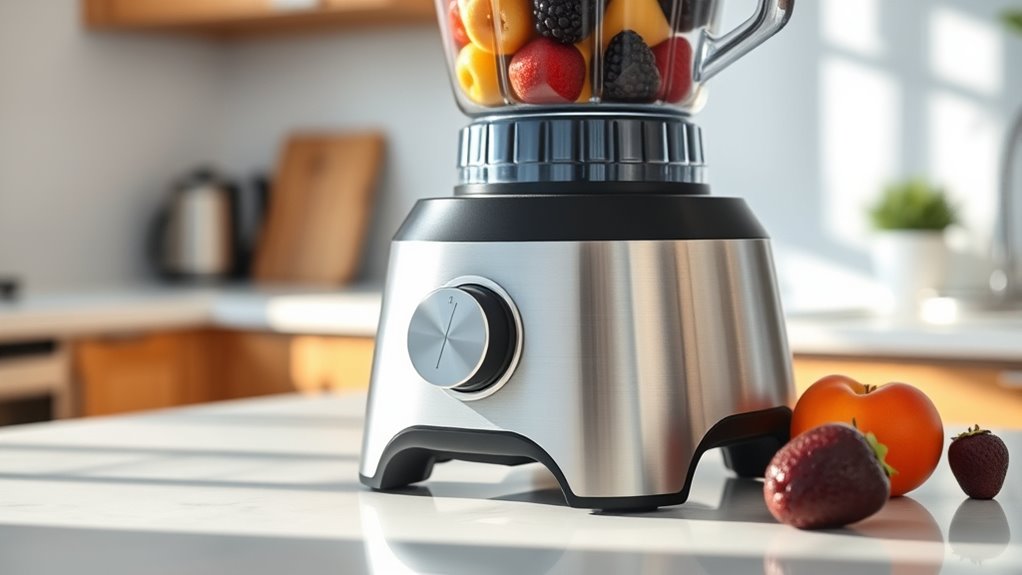
How many watts does a typical blender use? Most household blenders fall within the range of 300 to 700 watts. If you’re blending smoothies or making sauces, a 500-watt blender often does the trick.
You can expect lower wattage models, around 300 watts, to handle softer ingredients and light tasks. On the other hand, blenders with wattage closer to 700 watts provide more power, allowing you to crush ice and blend tougher ingredients with ease.
Keep in mind, wattage indicates the motor’s strength, not necessarily the blender’s efficiency or quality. So, if you’re considering a new blender, focus on your typical blending needs to choose the wattage that suits your kitchen routine best.
Key Factors That Affect Blender Wattage
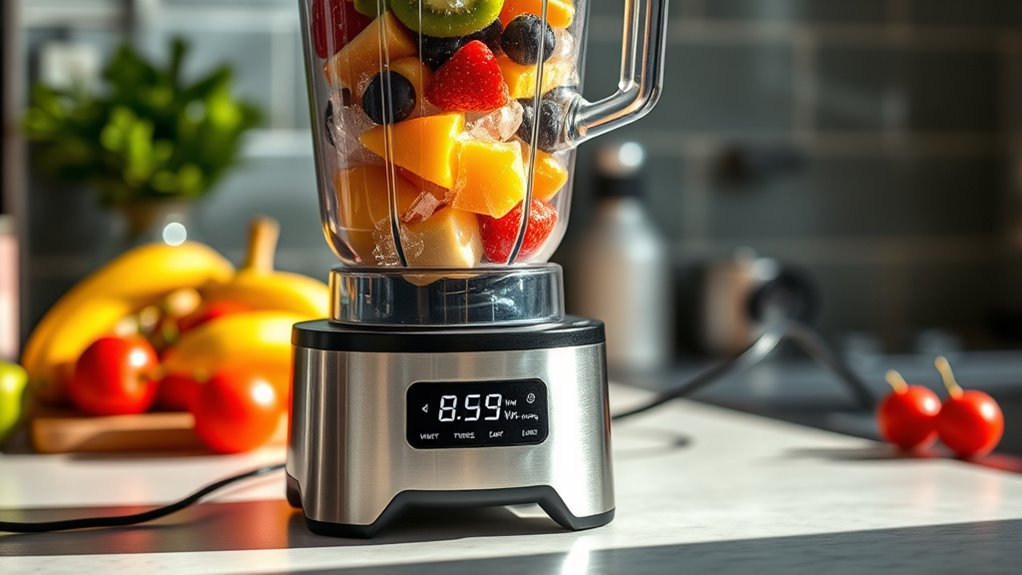
Because blender wattage varies widely, several key factors influence the power requirements you should consider before making a purchase. First, the motor size directly affects wattage—larger, more robust motors need more power to handle tough ingredients. Second, the type of blade design plays a role; sharper, heavier blades may demand higher wattage for efficient blending.
Third, the jar material and capacity impact power use—larger or thicker jars require more energy to blend contents evenly. Finally, the intended use matters; if you plan to crush ice or blend hard vegetables often, you’ll need a higher wattage blender. Understanding these factors helps you choose a blender that matches your needs without wasting energy or money.
Blender Features That Increase Power Use
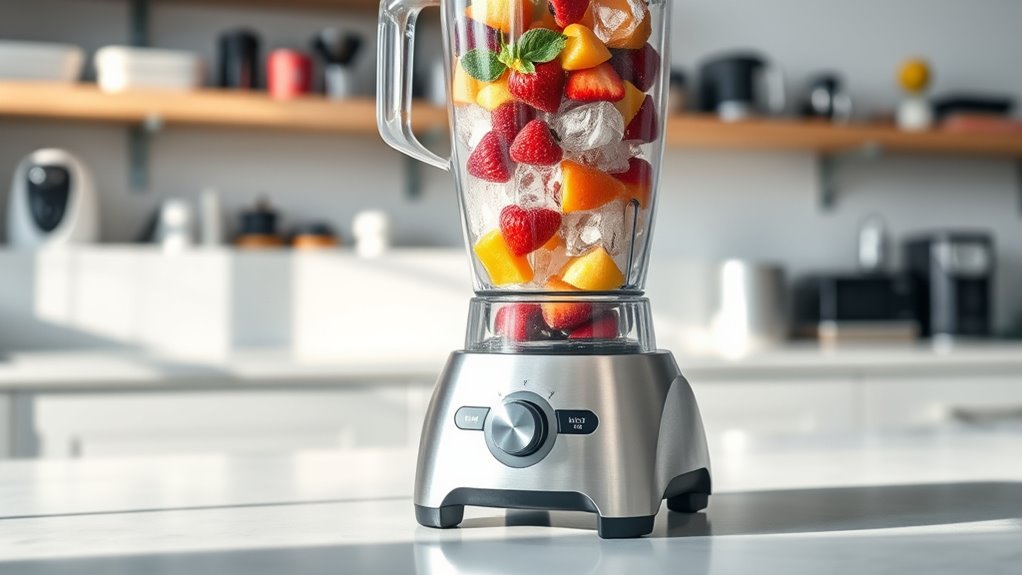
You’ll notice that motor speed settings can considerably affect how much power your blender uses. Higher speeds demand more energy to handle tougher ingredients.
Also, any additional attachments like food processors or grinders will increase the overall wattage required.
Motor Speed Settings
When adjusting your blender’s motor speed settings, you’ll notice the power consumption changes markedly. Higher speeds demand more energy because the motor works harder to spin the blades faster. For example, low or pulse settings use less wattage, ideal for light tasks like mixing or chopping soft ingredients.
In contrast, high-speed settings considerably increase power use to crush ice or blend tough items, which requires more torque. If you frequently use maximum speeds, expect your blender to draw more watts and consume more electricity. Being mindful of speed settings helps you balance power use and performance.
You can save energy by selecting the lowest speed that gets the job done efficiently without compromising your blending needs.
Additional Attachments Power
Adjusting motor speed impacts your blender’s power use, but the attachments you add can also affect energy consumption. When you use accessories like food processor bowls, whisk attachments, or personal blender cups, your blender may draw more power to handle different tasks. For instance, chopping dense ingredients with a food processor attachment usually requires the motor to work harder, increasing wattage.
Similarly, using a frother or grinder attachment can add to the load, causing a slight rise in electricity use. Keep in mind that not all attachments demand the same power; heavier-duty ones generally consume more watts. By understanding how these features influence power use, you can make smarter choices about when and how to use your blender efficiently.
Comparing Blender Wattage: Personal vs. Professional Models
You’ll find that personal blenders usually use less power, making them perfect for quick, simple tasks. Professional models pack more watts to handle tougher ingredients and larger batches.
Understanding these differences helps you pick the right blender for your needs.
Personal Blender Power
Although personal blenders often feature lower wattage than professional models, they still deliver enough power for everyday blending tasks. You’ll find most personal blenders range between 200 to 600 watts, making them ideal for smoothies, shakes, and light food prep. Their compact size and wattage mean they may struggle with dense ingredients like ice or nuts in large quantities, but for quick, small batches, they’re efficient and convenient.
If you mostly blend soft fruits, yogurt, or protein powders, a personal blender’s power is more than sufficient. Plus, they consume less electricity, saving energy and costs. When choosing, focus on your blending habits—personal blenders balance power with portability, fitting well into your daily routine without the bulk of professional models.
Professional Blender Energy
While personal blenders suit light, everyday tasks, professional blenders pack considerably more power to handle tougher ingredients and larger batches. You’ll find professional models typically range from 900 to 1500 watts, compared to personal blenders’ 200 to 700 watts. This extra wattage lets you blend dense vegetables, ice, and nuts quickly and smoothly without overheating the motor.
If you regularly prepare large quantities or thick mixtures, a professional blender will save you time and effort. However, keep in mind that higher wattage means more electricity usage, so they consume more power during operation. Still, their efficiency often offsets energy costs by finishing jobs faster.
When choosing a blender, consider your blending needs—powerful professional blenders suit heavy-duty use, while personal models are perfect for simpler, smaller tasks.
Estimating Energy Use for Blender Sessions
Because blender sessions usually last just a few minutes, their overall energy use tends to be low. To estimate how much energy your blender uses, multiply its wattage by the time you run it. For example, if your blender is 500 watts and you blend for 2 minutes, the calculation is 500 watts × (2/60) hours, which equals about 16.7 watt-hours.
This means each blending session consumes roughly 0.017 kilowatt-hours (kWh). Over time, even frequent use won’t add up to much energy. You can track your sessions and multiply by this value to estimate monthly consumption.
This simple approach helps you understand how much power your blender draws without needing complex tools or meters.
How Your Blender’s Wattage Affects Your Electric Bill
When you consider your blender’s wattage, you can better understand how it impacts your electric bill. Higher wattage blenders draw more power per minute, which means they use more electricity while running. For example, a 700-watt blender consumes more energy than a 300-watt one in the same time frame.
However, since most blending sessions last only a few minutes, the actual cost added to your electric bill is usually minimal. Still, if you blend frequently or for longer periods, those watts add up. Knowing your blender’s wattage helps you estimate its energy consumption more accurately, letting you see how much it contributes to your overall electricity usage.
This awareness is key to managing your household energy costs efficiently.
Tips for Using Your Blender More Energy-Efficiently
To save energy while using your blender, focus on blending only what you need and for the shortest time possible. Avoid overfilling the jar, as this forces the motor to work harder and consume more power. Use the pulse function instead of continuous blending when possible; it helps control blending and reduces energy use.
Make sure your blades are sharp and clean, so the blender runs efficiently without extra strain. Prepare ingredients by cutting them into smaller pieces to speed up blending. Also, try blending at lower speeds when appropriate, since higher speeds use more wattage.
Finally, unplug your blender when you’re done to prevent phantom energy drain. These simple steps help you get the job done while keeping energy consumption in check.
Should You Choose a Higher or Lower Wattage Blender?
Saving energy while using your blender often leads to questions about the blender’s wattage and its impact on performance and power consumption. Choosing between higher or lower wattage depends on what you blend and how often.
High-wattage blenders handle tough ingredients quickly but consume more power. Lower wattage blenders use less energy but may struggle with dense or frozen items.
Consider these factors when deciding:
- Frequency: Blend daily? Higher wattage offers efficiency and speed.
- Ingredients: Hard or frozen items need more power to blend smoothly.
- Energy Use: Lower wattage saves electricity but may increase blending time.
You can balance power and efficiency by matching the wattage to your blending needs.
Frequently Asked Questions
How Do I Clean My Blender Blades Safely?
You should unplug the blender first, then carefully remove the blades. Use warm, soapy water and a brush to clean them safely. Avoid touching sharp edges directly, and rinse thoroughly before reassembling.
Can Blenders Crush Ice Effectively?
You can crush ice so effectively with your blender it might feel like you’re wielding a tiny glacier crusher! Just make sure your blender’s powerful enough, and it’ll pulverize ice into perfect, smooth chunks every time.
What Materials Are Blender Jars Made From?
Blender jars are usually made from glass, plastic, or stainless steel. You’ll want glass for durability, plastic for lightweight convenience, and stainless steel if you prefer a sleek, shatterproof option that also keeps your blends cooler.
How Long Do Blender Motors Typically Last?
You can expect blender motors to last around 5 to 10 years with regular use. Taking care of it, like avoiding overheating and cleaning properly, will help your motor run smoothly and extend its lifespan considerably.
Are There Blenders Designed Specifically for Smoothies?
Yes, you’ll find blenders designed specifically for smoothies, featuring powerful motors and sharp blades. They’re built to crush ice and blend fruits smoothly, so you get creamy, delicious smoothies every time without any hassle.
Conclusion
Now that you know how many watts your blender uses, isn’t it easier to choose one that fits your needs and saves energy? Remember, higher wattage means more power but also higher energy use.
By understanding your blender’s wattage and using it wisely, you can blend efficiently without spiking your electric bill. So, why not blend smart and keep both your kitchen and budget happy? Choosing the right blender wattage helps you balance performance and energy consumption effectively.