Is Teak or Bamboo Better for Cooking Utensils
If you’re choosing between teak and bamboo cooking utensils, it’s important to weigh their benefits carefully.
Teak is known for its natural oils and exceptional durability, making it ideal for utensils that last longer and handle heat well.
Bamboo, meanwhile, offers a lightweight, eco-friendly, and more affordable alternative.
However, bamboo may wear out faster under heavy use or exposure to heat.
Both materials require proper care to maintain their quality, but teak generally demands less maintenance.
Your decision ultimately depends on your cooking style and how you plan to care for your utensils.
Keep exploring to find the perfect fit for your kitchen needs.
Key Takeaways
- Teak is more durable and heat-resistant, making it ideal for high-heat cooking tasks like frying or searing.
- Bamboo is lightweight and eco-friendly but may wear faster under heavy or prolonged heat exposure.
- Teak requires less frequent maintenance due to its natural oils, while bamboo needs regular oiling and careful drying.
- Bamboo is more sustainable and affordable, growing rapidly with a lower environmental impact than slow-growing teak.
- Choose teak for longevity and elegance; opt for bamboo for affordability, light use, and a natural aesthetic.
Why Teak and Bamboo Are Popular for Cooking Utensils
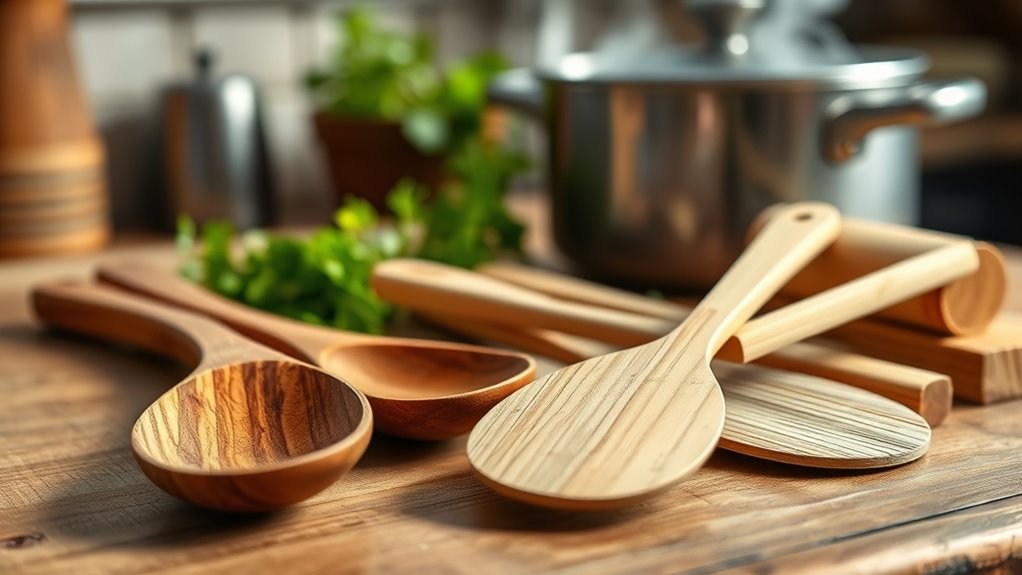
Although many materials are available, teak and bamboo stand out because they combine durability with natural resistance to moisture and heat. When you use teak utensils, you’ll notice their strength and smooth finish, which help prevent cracking or warping even after repeated exposure to water and heat.
Bamboo, on the other hand, grows quickly and is lightweight, making it an eco-friendly choice that’s easy to handle. You’ll appreciate bamboo’s natural antimicrobial properties, which help keep your utensils hygienic. Both materials avoid damaging your cookware’s surface, unlike metal, so they’re gentle on nonstick pans.
Plus, teak’s rich grain and bamboo’s light color add a touch of natural beauty to your kitchen tools, making them both practical and visually appealing for everyday cooking.
Key Factors to Compare Teak and Bamboo Utensils
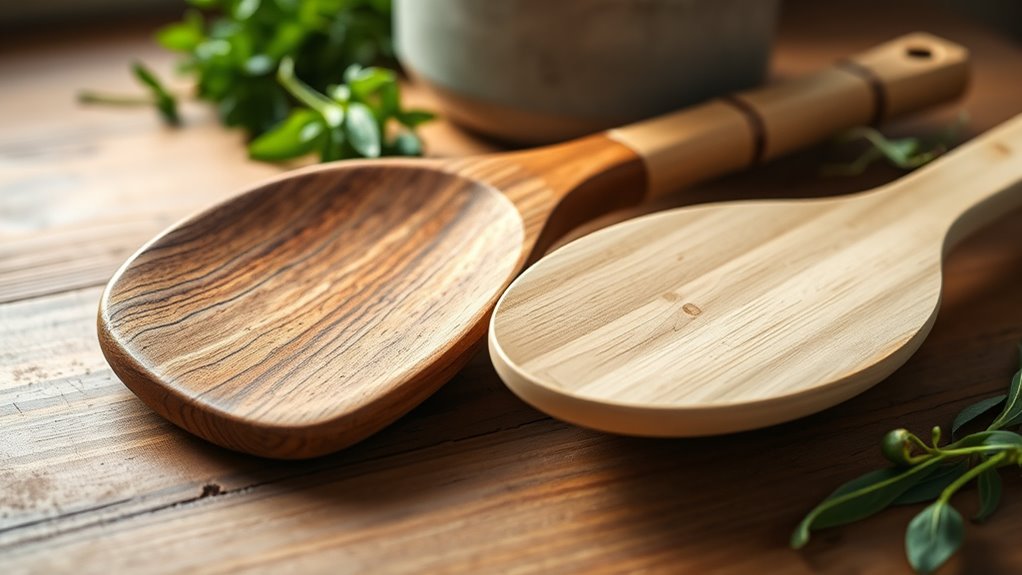
When choosing between teak and bamboo utensils, you’ll want to think about durability and how long they’ll last with regular use. Maintenance and care also play a big role in keeping your utensils in good shape.
Let’s look at how each material holds up and what kind of upkeep they require.
Durability and Longevity
Because you want cooking utensils that last, durability and longevity are essential factors to take into account when choosing between teak and bamboo. Teak, known for its dense grain and natural oils, offers exceptional resistance to moisture and cracking, making it highly durable. Bamboo, while strong and lightweight, tends to wear faster under heavy use but resists swelling and shrinking well.
Consider these points:
- Moisture Resistance: Teak’s natural oils repel water better, reducing warping over time.
- Wear and Tear: Bamboo may show scratches and dents sooner, especially with frequent use.
- Lifespan: With proper use, teak utensils generally outlast bamboo, offering longer-lasting performance.
Your choice depends on how long you want your utensils to endure daily kitchen demands.
Maintenance and Care
Since proper maintenance directly impacts the lifespan of your cooking utensils, understanding how to care for teak and bamboo is essential. Teak utensils require occasional oiling with food-safe mineral oil to maintain their natural oils and prevent cracking. Avoid soaking them in water or putting them in the dishwasher, as excessive moisture can damage the wood.
Bamboo utensils are easier to maintain—you can hand wash them with mild soap and dry them immediately. Like teak, avoid prolonged soaking and dishwashers to prevent warping or splitting. Both materials benefit from drying thoroughly before storage.
How Durable Are Teak vs. Bamboo Cooking Utensils?
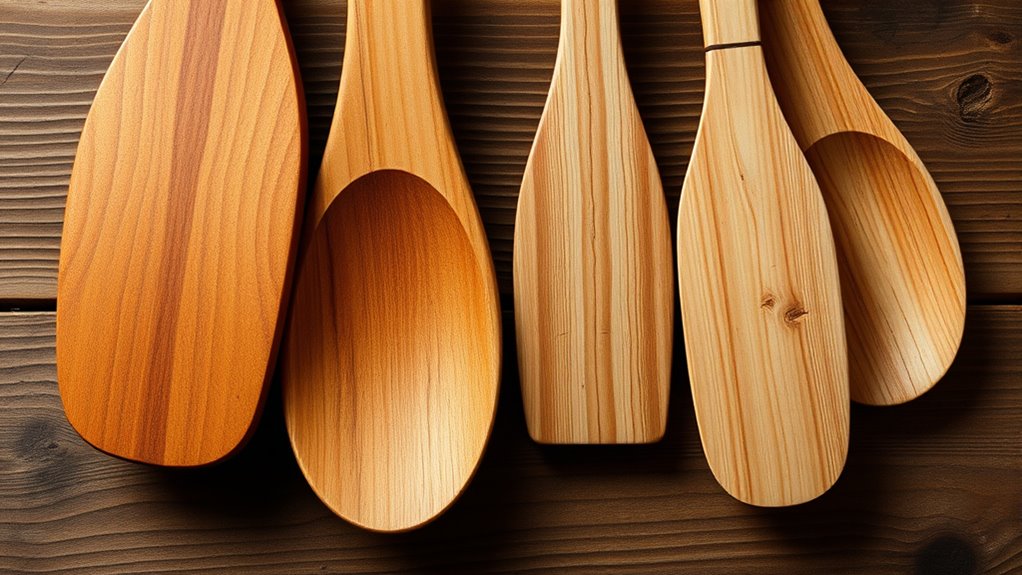
Although both teak and bamboo are popular choices for cooking utensils, you’ll find their durability varies considerably. Teak’s natural oils make it highly resistant to cracking, warping, and water damage, giving it a longer lifespan.
Teak’s natural oils enhance durability, making it more resistant to cracking, warping, and water damage than bamboo.
Bamboo, while strong, is more prone to splintering and may wear down faster with heavy use.
Here’s what to weigh:
- Resistance to Wear: Teak withstands daily use better, maintaining smooth surfaces longer than bamboo.
- Impact Strength: Bamboo is flexible but can chip under heavy pressure, unlike tougher teak.
- Longevity: With proper care, teak utensils often last several years beyond bamboo ones.
Choosing teak means investing in durability, while bamboo suits lighter, occasional use.
How Teak and Bamboo Handle Heat and Moisture in the Kitchen
When you cook, your utensils face constant exposure to heat and moisture, so their material’s response matters a lot. Teak handles heat well, thanks to natural oils that prevent cracking and warping.
Bamboo resists moisture due to its dense fibers but can become brittle with prolonged heat exposure.
| Property | Teak | Bamboo |
|---|---|---|
| Heat Resistance | High, thanks to natural oils | Moderate, can dry out |
| Moisture Resistance | Excellent, water repellent | Good, but absorbs some water |
| Warping | Rare due to oily composition | Possible if exposed to heat/moisture cycles |
| Longevity in Wet Conditions | Long-lasting | Can degrade faster |
| Suitability for Hot Cooking | Ideal | Suitable with care |
Choose teak if you want a utensil that endures heat and moisture better over time.
How Easy Is It to Maintain Teak and Bamboo Utensils?
Keeping your cooking utensils in good shape depends largely on how easy they are to maintain. Both teak and bamboo require some care, but teak tends to be more forgiving. Here’s what you need to know:
- Cleaning: You can wash bamboo utensils with warm, soapy water and dry them quickly to prevent cracking. Teak’s natural oils make it more resistant to water, so it’s less likely to warp or split after washing.
- Oiling: Bamboo needs regular oiling to stay smooth and prevent drying out. Teak, however, often retains its oils longer, so you can oil it less frequently.
- Storage: Keep both utensils in a dry, ventilated area. Avoid soaking either for long periods to prolong their lifespan.
With proper care, both materials can last, but teak is generally easier to maintain over time.
What’s the Environmental Impact of Teak vs. Bamboo?
Taking care of your utensils is important, but you might also want to think about how their materials affect the planet. Teak comes from slow-growing hardwood trees, often harvested from tropical forests. This can lead to deforestation and habitat loss if not managed responsibly.
Bamboo, on the other hand, grows rapidly and regenerates quickly after harvesting, making it a more sustainable option. It requires fewer pesticides and less water compared to teak trees. Choosing bamboo utensils typically reduces your carbon footprint and supports renewable resources.
However, make sure the bamboo is sourced ethically to avoid environmental harm. So, if you care about eco-friendliness, bamboo generally has the advantage over teak in terms of environmental impact.
Cost Differences Between Teak and Bamboo Utensils
Although both teak and bamboo offer durable options for cooking utensils, their price points can vary considerably due to differences in material availability, processing, and demand. When choosing between them, consider these cost factors:
Both teak and bamboo provide durable cooking utensils, but their costs differ due to availability, processing, and demand.
- Material Sourcing: Teak is a hardwood that takes decades to mature, making it rarer and pricier. Bamboo grows quickly and abundantly, keeping costs lower.
- Manufacturing Process: Teak requires more labor-intensive cutting and finishing, which adds to the expense. Bamboo utensils often involve simpler processing techniques.
- Market Demand: Teak’s reputation for luxury and durability can drive up prices, whereas bamboo’s eco-friendly appeal attracts budget-conscious buyers, often resulting in more competitive pricing.
Understanding these differences helps you balance quality with budget when selecting your ideal cooking utensils.
Which Utensils Work Best for Different Cooking Styles?
When choosing utensils for your cooking style, you’ll want to take into account heat resistance and how well they hold up with frequent use. Teak and bamboo each offer different levels of durability and maintenance needs that impact their longevity.
Let’s explore which material suits your kitchen habits best.
Heat Resistance Comparison
Because cooking styles vary widely, choosing utensils with the right heat resistance is essential to avoid damage or safety issues. Teak handles moderate heat well, making it ideal for sautéing and stirring, while bamboo excels in low-heat or cold applications, like mixing or serving.
Here’s how heat resistance impacts your utensil choice:
- High-Heat Cooking: Teak’s natural oils provide better protection against warping or cracking under direct heat, perfect for frying or searing.
- Low-Heat Tasks: Bamboo’s lighter structure resists heat absorption, so it won’t get hot quickly, making it safer for gentle stirring or serving.
- Exposure Time: If you leave utensils in hot pots or pans, teak holds up better without degrading, while bamboo may weaken faster.
Pick your tools based on how much heat they’ll face in your cooking style.
Durability in High-Use
Since you rely on your cooking utensils day after day, durability becomes a key factor in choosing between teak and bamboo. If you often stir thick sauces or handle heavy-duty tasks, teak’s dense, oily grain stands up better to constant use without cracking or splintering.
Bamboo, while strong and lightweight, suits lighter cooking styles like sautéing or tossing salads but may wear faster under intense chopping or scraping. For high-heat frying or frequent stirring, teak’s resilience guarantees your tools last longer.
On the other hand, bamboo works well if you prefer quick, gentle cooking or need utensils that are easy to maneuver. Understanding your cooking style helps you pick utensils that hold up well and perform consistently in your kitchen.
Maintenance and Longevity
Although both teak and bamboo utensils require regular care to maintain their quality, their maintenance needs differ based on your cooking habits. If you cook frequently with oils or acidic ingredients, teak’s natural oils help resist moisture, making it easier to clean and less prone to cracking. Bamboo, being lighter and less oily, requires more frequent oiling to prevent drying and splitting.
Consider these tips to choose utensils that suit your cooking style:
- For high-heat cooking, teak handles heat better and lasts longer without warping.
- If you prefer quick, light cooking or steaming, bamboo’s lightweight design offers better control.
- For acidic or oily dishes, teak’s natural oils provide better resistance and durability.
Tailoring your utensil choice to your cooking style boosts longevity and performance.
How to Choose Between Teak and Bamboo for Your Kitchen
When choosing between teak and bamboo for your kitchen, consider how each material matches your cooking habits and maintenance preferences. If you want utensils that feel sturdy and last long with minimal care, teak is a solid choice. It resists moisture and heat well, making it ideal for heavy-duty cooking.
On the other hand, if you prefer a lightweight, eco-friendly option that’s easy to clean and replace, bamboo suits you better. Bamboo dries quickly and resists bacteria but may wear out faster under constant use. Also, think about the look you want—teak offers a rich, dark finish, while bamboo has a lighter, natural tone.
Match your choice to your cooking style and how much time you’ll spend maintaining your utensils.
Frequently Asked Questions
Can Teak or Bamboo Utensils Affect the Taste of Food?
You won’t notice teak or bamboo utensils affecting your food’s taste because both are neutral and non-reactive.
Just make sure to clean them well, so no lingering flavors from previous dishes transfer to your meals.
Are Teak and Bamboo Utensils Safe for Dishwasher Use?
You shouldn’t put teak or bamboo utensils in the dishwasher since the heat and water can cause cracking or warping. Instead, hand wash them gently and dry immediately to keep them safe and lasting longer.
Do Teak or Bamboo Utensils Absorb Food Odors?
You won’t find your teak or bamboo utensils hosting a perfume party—they barely absorb food odors.
Can Teak or Bamboo Utensils Be Used With Non-Stick Cookware?
You can confidently use both teak and bamboo utensils with non-stick cookware since they’re gentle and won’t scratch the surface.
Just remember to clean and dry them properly to keep them lasting longer and odor-free.
Are There Any Health Concerns With Using Teak or Bamboo Utensils?
You don’t need to worry about health concerns with teak or bamboo utensils since both are naturally antimicrobial and chemical-free when untreated. Just make sure to avoid cracked or splintered pieces to keep your cooking safe and hygienic.
Conclusion
When choosing between teak and bamboo utensils, remember that “you get what you pay for.” Teak offers unmatched durability and heat resistance, perfect for heavy-duty cooking, while bamboo shines with its lightweight, eco-friendly appeal and easy maintenance.
Consider your cooking style, budget, and environmental values to pick the best fit. Ultimately, both materials bring unique benefits, so trust your kitchen needs to guide you toward the right choice. Choosing between teak and bamboo depends on what qualities you prioritize in your cooking utensils.