Can Wood Cutting Boards Go in the Dishwasher?
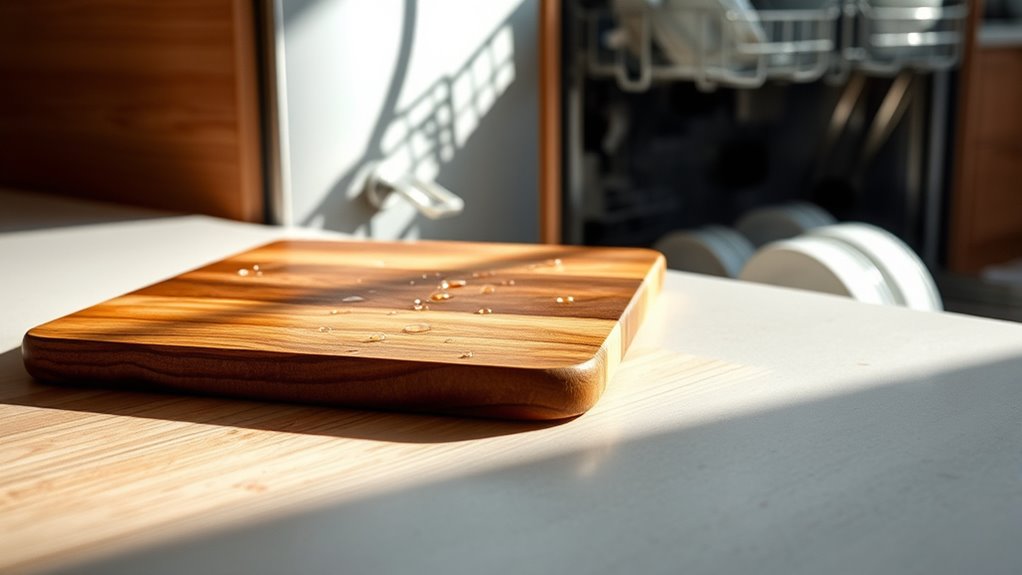
You shouldn’t put wood cutting boards in the dishwasher because the intense heat, moisture, and harsh detergents can cause warping, cracking, and drying out of the wood. These effects damage the structural integrity of the board, making it less safe and harder to clean effectively.
Proper care is essential to maintain the longevity and hygiene of your wood cutting board.
Instead, hand wash your wood board with mild soap and water, then dry it promptly to prevent moisture damage. Avoid soaking the board, as prolonged exposure to water can also lead to warping.
If you want to keep your wood board in good shape and learn how to care for it properly, there’s more helpful info you’ll want to explore.
Key Takeaways
- Wood cutting boards should not go in the dishwasher due to heat and moisture causing warping, cracking, and structural damage.
- Dishwasher detergents strip natural oils, drying out wood and making it brittle and prone to damage.
- Repeated dishwasher exposure creates bacteria-harboring cracks and surface roughness, compromising food safety.
- Hand washing with mild soap, warm water, and immediate drying preserves the board’s integrity and lifespan.
- Only boards labeled dishwasher safe may tolerate gentle cycles, but dishwasher use is generally discouraged for wood boards.
Are Wood Cutting Boards Dishwasher Safe?
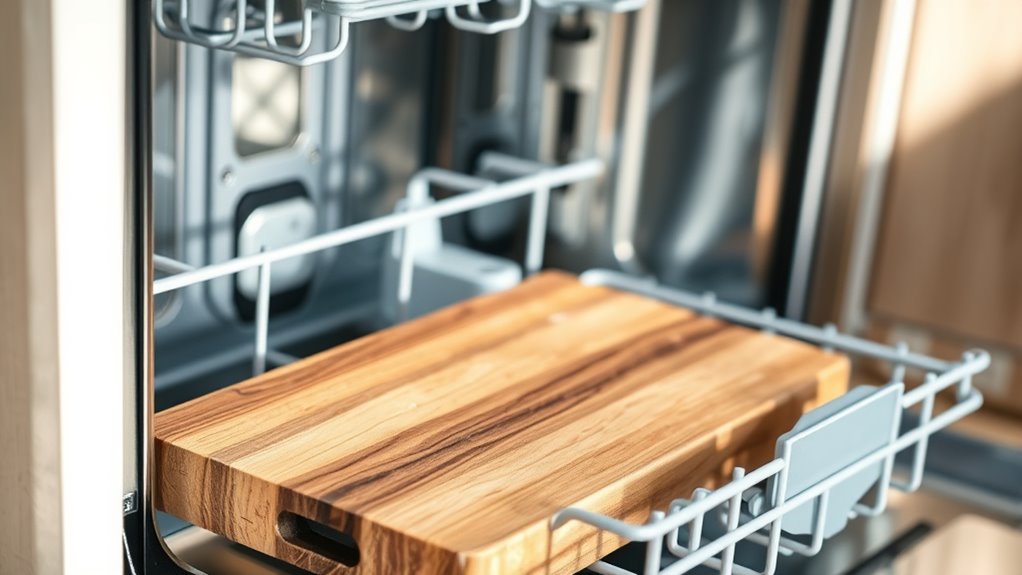
Although dishwashers offer convenience, you shouldn’t put wood cutting boards in them. Wood is porous and sensitive to moisture and heat changes. When you run a wood board through the dishwasher, it’s exposed to intense heat and water pressure that can cause warping, cracking, and splitting.
This damages the board’s structure and shortens its lifespan. Plus, the dishwasher’s harsh detergents can strip the wood’s natural oils, leaving it dry and more prone to damage. Instead, you should wash wood cutting boards by hand with mild soap and warm water, then dry them immediately.
This way, you protect the board’s integrity and keep it safe for food prep. So, avoid the dishwasher and stick to gentle cleaning methods for your wood boards.
How Does Dishwasher Heat and Water Damage Wood Boards?
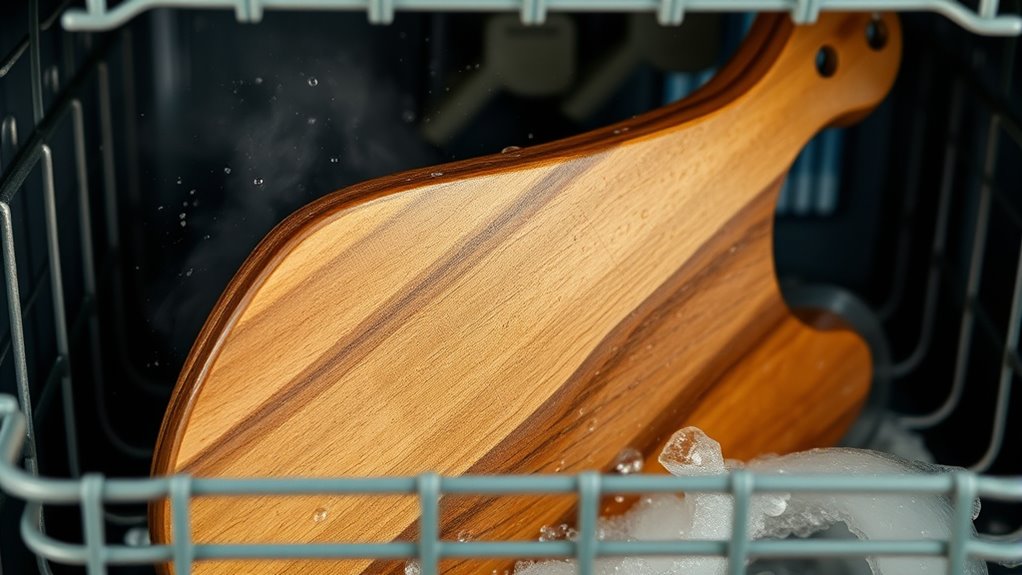
You might not realize how much dishwasher heat can dry out and weaken your wood cutting board. When wood soaks up water, it swells, and as it dries, it can warp or crack.
Understanding these effects helps you protect your boards from damage.
Heat Effects on Wood
When you place a wooden cutting board in the dishwasher, the intense heat and prolonged exposure to water can cause significant damage. Heat causes wood fibers to expand and contract rapidly, leading to warping and cracking. The dishwasher’s high temperatures also strip the wood of its natural oils, leaving it dry and brittle over time.
You’ll notice your board becoming rougher and less durable after repeated cycles.
| Effect | Cause | Result |
|---|---|---|
| Warping | Rapid heat expansion | Uneven, twisted surface |
| Cracking | Heat-induced stress | Splits and fractures |
| Dryness | Oil loss from heat | Brittle, weakened wood |
| Surface roughness | Fiber damage | Rough, hard-to-clean board |
Water Absorption Issues
How exactly does dishwasher heat and water affect your wooden cutting board’s ability to absorb moisture? When exposed to the intense heat and water spray inside a dishwasher, your board soaks up moisture unevenly. This causes it to swell and retain water longer than usual.
Here’s what happens to your wood:
- Water seeps deep into the fibers
- Surface becomes soft and spongy
- Internal moisture disrupts wood’s natural oils
- Prolonged dampness encourages bacterial growth
- Wood loses its natural resistance to stains and odors
Because wood is porous, the dishwasher’s hot water forces moisture inside, weakening the board’s structure over time. This absorption problem reduces your cutting board’s lifespan and affects its hygiene, making it less safe for food prep.
Warping and Cracking Risks
Because dishwasher heat rapidly fluctuates and water saturates your wooden cutting board, it can cause serious warping and cracking. The intense heat dries the board unevenly, while the prolonged water exposure makes the wood swell. Over time, this cycle damages the board’s structural integrity, leading to splits and deformations.
| Heat Level | Water Exposure | Resulting Damage |
|---|---|---|
| High | Prolonged | Severe warping |
| High | Short | Surface cracks |
| Low | Prolonged | Internal moisture trap |
| Moderate | Moderate | Minor distortion |
| Fluctuating | Variable | Accelerated cracking |
To keep your board safe, avoid the dishwasher and instead hand wash it promptly.
Common Dishwasher Damage to Wood Cutting Boards
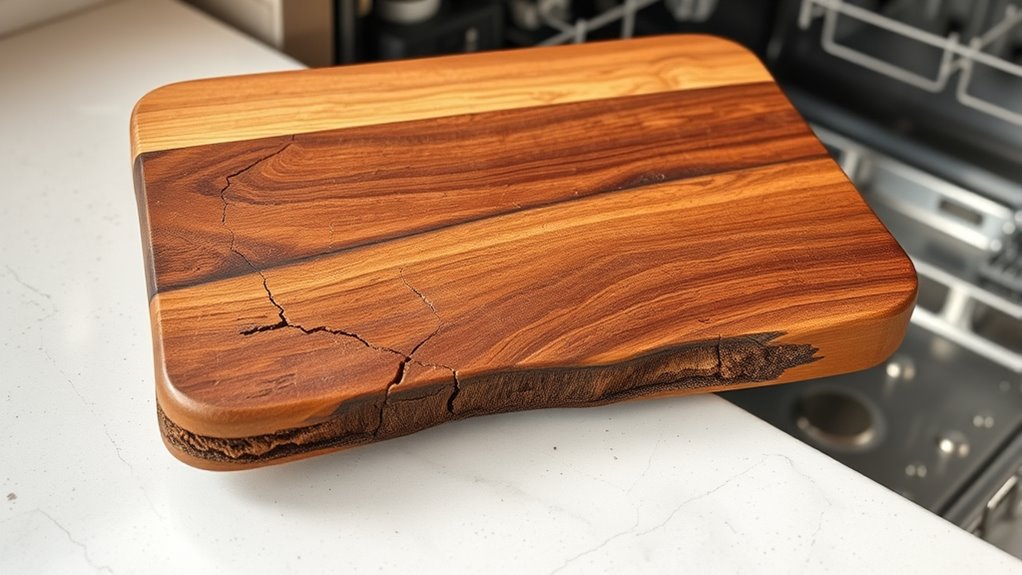
You’ll notice that putting wood cutting boards in the dishwasher often leads to warping and cracking. The intense heat and water strip away the board’s natural oils, leaving it dry and brittle.
Over time, this can cause surface splitting, weakening your board’s structure.
Warping and Cracking
Though dishwashers offer convenience, they can cause your wood cutting board to warp and crack. The intense heat and prolonged exposure to water force the wood fibers to swell unevenly. As the board dries, this uneven swelling leads to distortion and splitting.
You might notice:
- Edges bending upwards, creating a warped surface
- Deep cracks forming along the grain
- Surface splitting, making cleaning difficult
- Uneven texture, causing instability when chopping
- Small fissures that harbor bacteria
Warping and cracking not only ruin your board’s appearance but also compromise its structural integrity. To keep your cutting board safe, avoid putting it in the dishwasher and stick to gentle hand washing instead. This care prevents damage and extends the life of your wooden board.
Loss of Natural Oils
Warping and cracking aren’t the only risks your wood cutting board faces in the dishwasher. The intense heat and harsh detergents strip away the natural oils that keep the wood hydrated and resilient. When these oils disappear, your board loses its ability to repel moisture, making it more prone to drying out and absorbing water during use.
This moisture imbalance weakens the wood, leading to brittleness and shortening its lifespan. You might notice your board looking dull or feeling rough after a dishwasher cycle—signs that the essential oils are gone. To maintain your board’s durability and appearance, it’s best to avoid dishwasher use and regularly treat it with food-safe mineral oil or conditioner.
Doing so keeps the wood nourished and protected.
Surface Splitting Risks
A wood cutting board faces a high risk of surface splitting when exposed to the dishwasher’s intense heat and moisture fluctuations. When you put your board through a dishwasher cycle, the rapid changes cause the wood to expand and contract unevenly. This stresses the fibers, leading to cracks and splits that can ruin your board’s surface.
You might notice:
- Jagged cracks forming along grain lines
- Small, shallow splits that catch crumbs and bacteria
- Warping that worsens splits over time
- Rough edges where wood fibers pull apart
- Visible gaps that weaken the board’s integrity
Avoiding the dishwasher helps preserve your board’s smooth, intact surface and extends its lifespan. Hand washing is always a safer bet to keep your wood cutting board strong and functional.
When Is It Okay to Use a Dishwasher for Wood Boards?
Even if your dishwasher seems like a convenient option, you should only use it for wood cutting boards in rare cases. If your board is labeled as dishwasher safe or made from engineered wood designed to withstand heat and moisture, it might handle a dishwasher cycle. Also, small wooden boards without cracks or warping could tolerate occasional dishwasher cleaning.
However, avoid this if your board is thick, hand-crafted, or has deep grooves, as dishwasher heat and water pressure can cause damage. If you absolutely must use a dishwasher, select a gentle cycle with low heat and remove the board promptly to dry. Remember, frequent dishwasher use can shorten your board’s lifespan, so reserve this method only for times when thorough sanitation is essential.
How to Clean Wood Cutting Boards Without a Dishwasher
Many wood cutting boards require gentle cleaning methods to maintain their quality and longevity. You can keep your board clean without a dishwasher by following these simple steps:
- Rinse the board with warm water immediately after use to remove food particles.
- Scrub gently with a sponge or brush and mild dish soap.
- Sprinkle coarse salt or baking soda on the surface to deodorize and scrub stubborn stains.
- Use half a lemon to rub the board, which helps sanitize and freshen it naturally.
- Rinse thoroughly with warm water and wipe with a clean cloth.
Avoid soaking your board or letting it sit wet, as this can cause warping or cracking. These steps will keep your wood cutting board clean and safe for continued use.
How to Dry and Maintain Wood Cutting Boards
After cleaning your wood cutting board, properly drying and maintaining it guarantees it stays in great condition for years. Pat it dry immediately with a clean towel to prevent moisture from seeping in and causing warping or cracking. Then, stand it upright or place it in a well-ventilated area to air dry completely.
Avoid leaving it flat on the counter, as trapped moisture can damage the wood.
To maintain your board, regularly apply food-safe mineral oil or beeswax. This nourishes the wood, keeps it from drying out, and creates a protective barrier against stains and odors. Rub the oil in with a soft cloth, let it absorb for a few hours or overnight, then wipe off any excess.
Repeat this treatment monthly or whenever the board looks dry.
How to Restore Wood Boards Damaged by Dishwashers
If your wood cutting board has warped, cracked, or dried out from dishwasher exposure, you can take steps to restore it. Start by sanding the surface gently to smooth rough patches and remove damaged layers. Next, clean the board thoroughly with mild soap and warm water, then dry it completely.
After that, apply a food-safe mineral oil or beeswax to rehydrate and seal the wood. Let it soak in overnight for the best results. Here’s a quick restoration checklist:
- Sand down warped or cracked areas
- Wash with mild soap and warm water
- Dry board fully, avoiding direct heat
- Apply mineral oil or beeswax evenly
- Let board absorb oil overnight
With consistent care, you can bring your board back to life and extend its usability.
Best Tools and Products to Clean Wood Cutting Boards
When caring for wood cutting boards, choosing the right tools and products makes all the difference in maintaining their durability and appearance. Use a soft-bristle brush or non-abrasive sponge to gently scrub the surface without damaging the wood fibers. Avoid harsh scouring pads that can leave scratches.
For cleaning, opt for mild dish soap mixed with warm water; it effectively removes food particles without stripping natural oils. To sanitize, try a vinegar solution or a mixture of lemon juice and coarse salt—both are natural and safe for wood. After cleaning, always dry your board thoroughly with a clean towel.
Regularly treat it with food-grade mineral oil or specialized cutting board oil to prevent cracking and warping. These simple tools and products keep your wood board in excellent shape.
Frequently Asked Questions
Can Wood Cutting Boards Harbor Bacteria Compared to Plastic Boards?
Yes, wood cutting boards can harbor bacteria, but you’ll find they’re naturally antimicrobial and less prone to deep cuts where bacteria hide.
Just clean and dry them properly to keep them safe compared to plastic boards.
What Types of Wood Are Best for Cutting Boards?
You’ll want to choose hardwoods like maple, walnut, or cherry for cutting boards. They’re durable, resist knife marks, and have tight grain that helps prevent bacteria from settling, keeping your board safe and long-lasting.
How Often Should I Oil My Wood Cutting Board?
Just like a knight oiling his armor, you should oil your wood cutting board once a month. This keeps it strong, prevents cracking, and makes sure your board stays smooth and ready for all your culinary quests.
Can Cutting Boards Be Used for Both Meat and Vegetables?
You shouldn’t use the same cutting board for meat and vegetables without washing it thoroughly first. Cross-contamination risks foodborne illness, so always clean boards well or use separate ones for meat and veggies to stay safe.
Are There Eco-Friendly Alternatives to Wood Cutting Boards?
Before smartphones, you’d find bamboo and recycled plastic cutting boards as eco-friendly alternatives to wood. You’ll love their durability and sustainability, plus they won’t warp or harbor bacteria like traditional wooden boards might.
Conclusion
You shouldn’t put wood cutting boards in the dishwasher because heat warps them, water weakens them, and harsh detergents strip their oils. Instead, wash them by hand, dry them thoroughly, and oil them regularly to keep them strong, smooth, and safe. When damage happens, sand, re-oil, and restore.
By choosing gentle care over the dishwasher, you protect your boards, preserve their beauty, and prolong their life. Treat them well, and they’ll reward you daily. Proper maintenance is key to ensuring wood cutting boards remain durable and hygienic for everyday use.