Are Stainless Steel Cutting Boards Good: 7 Key Benefits
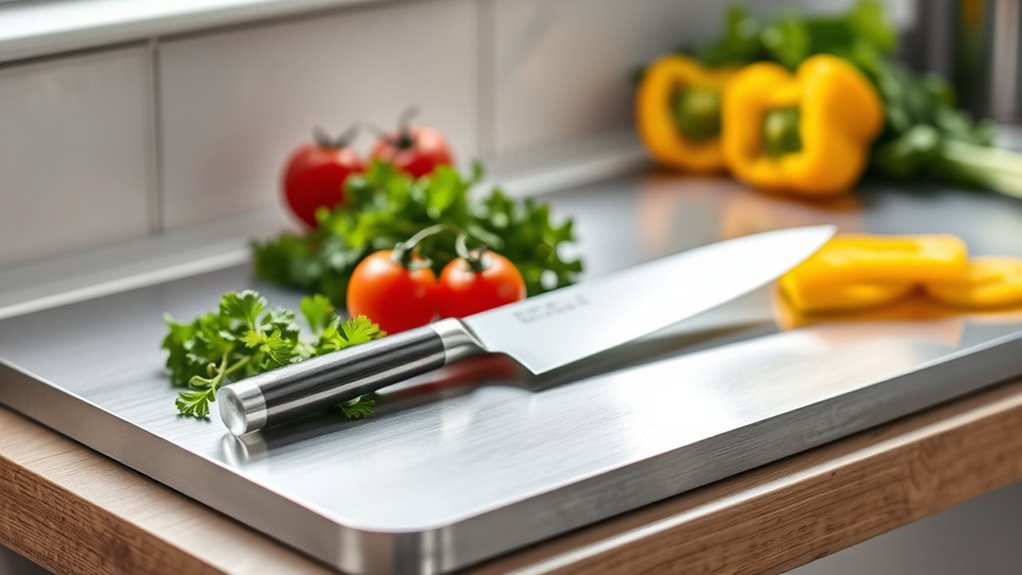
Stainless steel cutting boards are a smart choice if you want durability, hygiene, and easy maintenance in your kitchen tools. Known for their resistance to scratches, stains, and odors, these cutting boards outperform wood or plastic options.
They last for years while protecting your knives from dulling, making them a practical investment.
Their non-porous surface keeps bacteria away, ensuring a safer kitchen environment. Plus, they’re simple to clean and won’t warp or crack over time.
If you want a practical, long-lasting kitchen tool, you’ll find plenty more benefits to explore.
Key Takeaways
- Stainless steel cutting boards are highly durable, resisting scratches, dents, warping, and deep knife marks better than wood or plastic.
- Their non-porous surface prevents bacteria buildup, stains, and odors, promoting a hygienic and safe kitchen environment.
- They require minimal maintenance, needing only simple cleaning with warm, soapy water and no special treatments or oils.
- Stainless steel boards protect knives by providing a smooth, even surface that reduces blade dulling and prevents debris buildup.
- Available in various sizes and designs, they offer practical features like juice grooves and non-slip edges for safer, efficient kitchen use.
Why Stainless Steel Cutting Boards Are More Durable Than Wood or Plastic
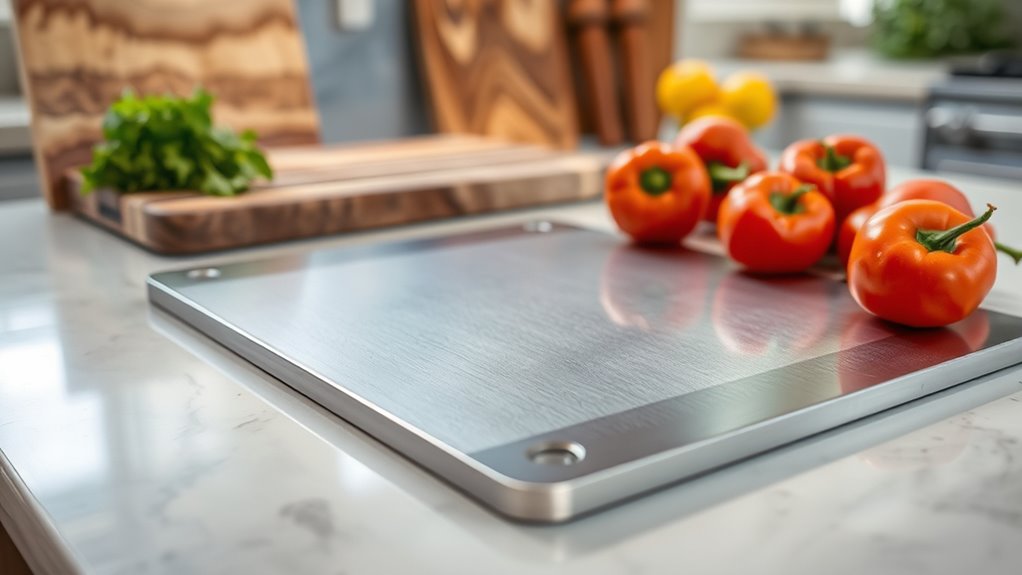
Although wood and plastic cutting boards have their uses, stainless steel boards stand out for their superior durability. When you choose stainless steel, you’re picking a material that resists scratches, dents, and cracks far better than wood or plastic. Unlike wood, which can warp or split over time, stainless steel stays solid and intact even with heavy use.
Plastic boards tend to get deeply scored from knives, creating a breeding ground for bacteria, but stainless steel’s hard surface prevents this damage. You won’t have to worry about replacing your board frequently, saving you money and hassle. Plus, stainless steel won’t absorb moisture or swell like wood, so it maintains its shape and strength through countless uses in your kitchen.
Why Stainless Steel Cutting Boards Resist Stains, Odors, and Warping
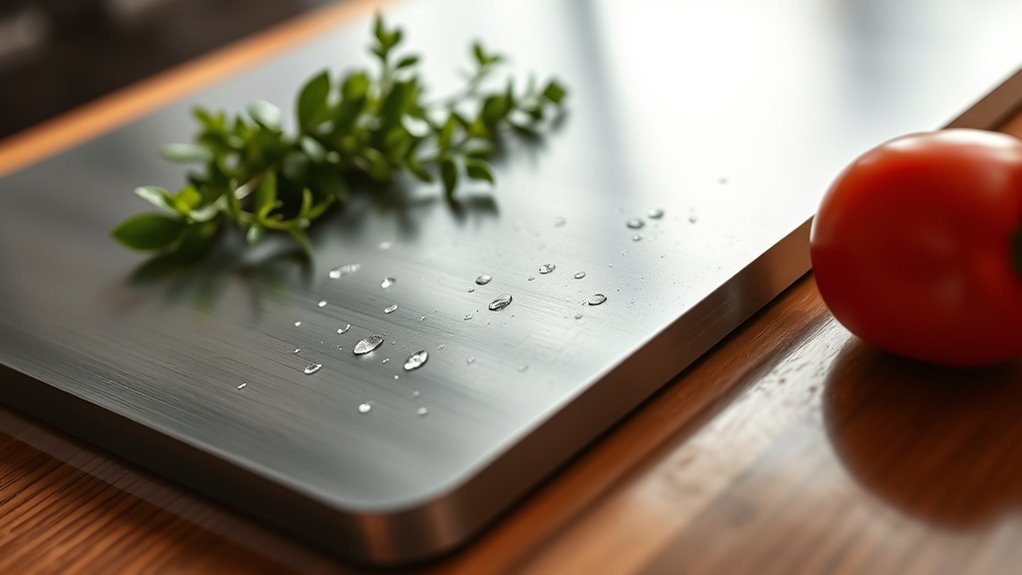
You’ll appreciate how stainless steel’s non-porous surface keeps stains and odors from settling in. Its durable material also prevents warping, even after heavy use.
This combination makes maintenance simple and keeps your cutting board looking like new.
Non-Porous Surface Benefits
Because stainless steel cutting boards have a non-porous surface, they naturally resist stains, odors, and warping. This feature makes them incredibly hygienic and easy to maintain in your kitchen. You’ll find they won’t absorb juices from raw meats or colorful fruits, preventing lingering smells and unsightly discoloration.
Plus, you won’t have to worry about the board swelling or bending after repeated washing.
Here are three key benefits of their non-porous nature:
- Easy Cleaning: Food particles and bacteria can’t sink in, so you simply wipe or wash the surface thoroughly.
- Odor Resistance: No absorption means no lingering smells from pungent ingredients like garlic or onions.
- Warp-Free: The solid surface won’t warp or crack, keeping your cutting board flat and safe.
Durable Material Properties
When you choose a stainless steel cutting board, you’re investing in a material that naturally withstands stains, odors, and warping due to its robust composition. Stainless steel’s dense, non-porous surface doesn’t absorb liquids or food particles, so stains and smells have nowhere to cling. Unlike wood or plastic, it won’t harbor bacteria that cause odors.
Plus, stainless steel resists moisture and temperature changes, preventing warping or cracking over time. You don’t have to worry about replacing your board frequently because it maintains its shape and integrity even with heavy use. This durability means your board stays hygienic and functional longer, making it a smart, low-maintenance choice for any kitchen.
Why Stainless Steel Cutting Boards Keep Your Kitchen More Hygienic
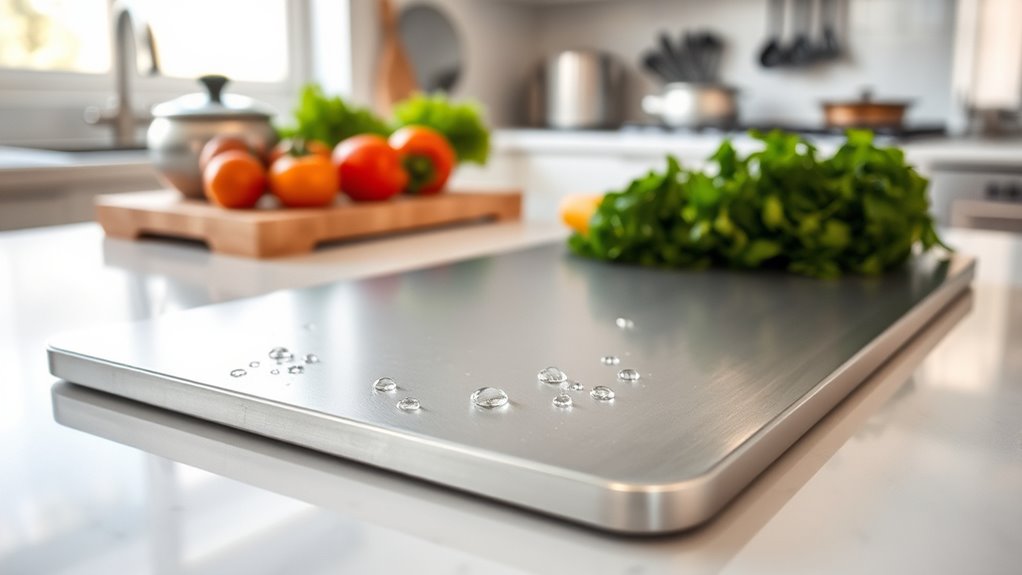
You’ll appreciate how stainless steel cutting boards keep your kitchen more hygienic thanks to their non-porous surface that won’t trap bacteria or odors. They’re incredibly easy to sanitize, so you can quickly clean them between uses without hassle. This resistance to bacteria helps you maintain a safer cooking environment every day.
Non-Porous Surface Benefits
Although many cutting boards absorb liquids and harbor bacteria, stainless steel cutting boards resist these issues thanks to their non-porous surfaces. This unique feature keeps your kitchen safer and cleaner by preventing harmful microbes from settling into tiny cracks or grooves.
Here’s why their non-porous nature benefits you:
- No Liquid Absorption – Spills and juices won’t seep in, reducing cross-contamination risks.
- Bacteria-Resistant – Without pores, bacteria have nowhere to hide, making your cutting area more hygienic.
- Odor-Free – Since nothing gets trapped, unpleasant smells won’t develop over time.
Choosing a stainless steel cutting board means you’re investing in a surface that naturally discourages bacterial growth, helping you maintain a healthier kitchen environment.
Easy To Sanitize
Because stainless steel cutting boards have smooth, non-porous surfaces, you can sanitize them quickly and thoroughly with minimal effort. Unlike wooden or plastic boards, they don’t absorb liquids or food particles, so you won’t have to worry about lingering residues. Simply wash your board with hot, soapy water or run it through the dishwasher to guarantee it’s completely clean.
You can also use a mild bleach solution or food-safe sanitizers without damaging the surface. This ease of cleaning saves you time and reduces the risk of cross-contamination in your kitchen. Plus, stainless steel doesn’t stain or retain odors, so your board stays fresh and hygienic after every use.
Resistant To Bacteria
Stainless steel cutting boards don’t just make cleaning easier—they actively help keep harmful bacteria at bay. Because of their non-porous surface, bacteria have nowhere to hide or multiply, making your kitchen safer. Here’s why stainless steel resists bacteria so well:
- Non-porous surface: Unlike wood or plastic, stainless steel doesn’t absorb juices or food particles that can harbor bacteria.
- Smooth texture: Its smooth finish prevents bacteria from clinging to the surface, so you can wipe it down thoroughly.
- Corrosion resistance: Stainless steel won’t rust or degrade over time, ensuring it stays hygienic and safe for food prep.
Choosing stainless steel cutting boards helps you maintain a cleaner, more hygienic kitchen environment effortlessly.
How Stainless Steel Cutting Boards Protect Your Knives and Tools
How do cutting boards impact the lifespan of your knives and tools? Stainless steel cutting boards offer a smooth, durable surface that reduces blade dulling. Unlike wood or plastic, stainless steel resists deep cuts, preventing your knives from catching or chipping.
This means you won’t have to sharpen or replace your knives as often.
| Feature | Benefit to Your Knives & Tools |
|---|---|
| Smooth Surface | Minimizes blade dulling |
| Durable Material | Prevents deep cuts that damage blades |
| Non-porous | Stops debris buildup that harms tools |
| Resistant to Warping | Keeps cutting surface even and safe |
| Easy to Sanitize | Maintains tool hygiene and longevity |
Choosing stainless steel protects your investment by keeping your knives sharper and your tools in better shape longer.
How to Easily Clean and Maintain Stainless Steel Cutting Boards
Keeping your cutting board in top shape guarantees it continues to protect your knives and tools effectively. Stainless steel boards are durable, but regular cleaning and maintenance keep them hygienic and looking great.
Maintaining your cutting board ensures it stays effective and hygienic while preserving its durability and appearance.
Here’s how to do it easily:
- Wash promptly: Use warm, soapy water right after use to prevent food residue buildup. Avoid harsh abrasives that can scratch the surface.
- Disinfect regularly: Wipe with a solution of diluted vinegar or a mild bleach solution to kill bacteria and maintain hygiene.
- Dry thoroughly: After washing, dry your board completely with a clean towel to prevent water spots and rust.
Choosing the Right Size and Style of Stainless Steel Cutting Board for Your Kitchen
When selecting a cutting board, you’ll want to take into account the size and style that best fit your kitchen space and cooking habits. If you often prepare large meals, choose a bigger board to provide ample workspace without crowding your counters. For smaller kitchens or quick tasks, a compact board works better, saving space and making storage easier.
Consider the style too—some stainless steel boards come with non-slip edges or handles, which improve safety and handling. Others feature groove designs to catch juices, ideal for cutting meats or juicy fruits. Think about how you’ll use it daily, then pick a size and style that enhances your workflow without adding clutter.
This way, your stainless steel cutting board becomes a practical, lasting kitchen tool.
Why Stainless Steel Cutting Boards Are Worth the Investment Despite Higher Upfront Cost
Picking the right size and style sets the foundation, but investing in a stainless steel cutting board brings benefits that go beyond just appearance and fit. You might hesitate at the higher upfront cost, but here’s why it pays off:
- Durability: Stainless steel resists scratches, dents, and warping, lasting years without needing replacement.
- Hygiene: Its non-porous surface prevents bacteria buildup, making it safer and easier to sanitize.
- Low Maintenance: Unlike wood or plastic, it won’t stain, absorb odors, or require special care, saving you time and effort.
Frequently Asked Questions
Can Stainless Steel Cutting Boards Be Used for Hot Food Preparation?
Yes, you can use stainless steel cutting boards for hot food preparation because they resist heat well. Just be careful handling them since they conduct heat quickly and can get hot to the touch during use.
Are Stainless Steel Cutting Boards Safe for Use With Acidic Foods?
Yes, you can safely use stainless steel cutting boards with acidic foods. They won’t react or leach harmful substances, keeping your food safe and flavors unaffected, unlike some other materials that might corrode or stain.
How Do Stainless Steel Cutting Boards Compare in Weight to Other Materials?
Stainless steel cutting boards feel hefty compared to lightweight wood or plastic ones. You’ll carry a cooler, more compact companion with steel, but it won’t be as featherlight or flexible as other materials you might choose.
Do Stainless Steel Cutting Boards Require Special Storage Conditions?
No, stainless steel cutting boards don’t require special storage conditions. You can store them like any other cutting board, but keeping them dry and upright helps prevent water spots and maintains their sleek appearance over time.
Can Stainless Steel Cutting Boards Be Customized With Engravings or Designs?
Yes, you can customize stainless steel cutting boards with engravings or designs. You can create logos, personalize names, or add decorative patterns, making your board uniquely yours and perfect for gifts, promotions, or personal use.
Conclusion
Stainless steel cutting boards are like the unsung heroes of your kitchen—tough, reliable, and hygienic. They outlast wood and plastic, resist stains and odors, and keep your knives sharp. With easy cleaning and various sizes, they fit perfectly into your cooking routine.
Though the upfront cost might make you pause, their durability and cleanliness make them worth every penny. Choosing stainless steel means investing in a cutting board that truly stands the test of time. Stainless steel cutting boards are good because they combine longevity, hygiene, and practicality in one essential kitchen tool.