Are Rubber Cutting Boards Safe
Rubber cutting boards can be safe and effective kitchen tools when you choose food-grade, non-toxic materials. These boards are popular because they resist deep cuts and bacteria better than some plastic alternatives.
Additionally, they help protect your knives from dulling, making them a practical choice for many cooks.
To ensure safety, it’s important to wash rubber cutting boards thoroughly after use and sanitize them regularly.
Replace the board once it develops deep grooves or unpleasant odors, as these can harbor bacteria and increase contamination risks.
Paying attention to these details helps prevent chemical risks and keeps your food preparation hygienic.
Keep exploring to find useful tips on selecting and maintaining the right rubber cutting board for your kitchen. Proper care will extend the life of your board and ensure it remains safe for everyday use.
Key Takeaways
- Rubber cutting boards made from food-grade, non-toxic materials are safe and minimize chemical risks like leaching of harmful additives. Their dense, non-porous surface resists bacteria, especially when properly cleaned, reducing cross-contamination risks.
- Rubber boards are gentle on knives, preserving sharpness while providing a slip-resistant, stable cutting surface for safer use. Regular cleaning, sanitizing, and replacing boards with deep grooves or cracks are essential to maintain hygiene and safety.
- Choosing boards with non-slip backing and using color-coded boards for different foods further enhances kitchen safety and food protection.
What Are Rubber Cutting Boards Made From?

Although rubber cutting boards vary in composition, they’re primarily made from synthetic rubber or a blend of natural and synthetic rubber materials. When you choose one, you’re getting a board designed to be flexible, durable, and gentle on your knives.
Synthetic rubber, like nitrile or neoprene, offers resistance to oils and chemicals, making it a practical choice for everyday kitchen use. On the other hand, natural rubber provides a more eco-friendly option, often sourced from rubber trees, but it may not be as resistant to certain substances.
Many manufacturers combine these materials to balance durability, flexibility, and safety. Understanding what your rubber cutting board is made from helps you select the right one that meets your needs without compromising hygiene or performance in your kitchen.
Rubber Cutting Boards vs. Wood and Plastic: Durability

Knowing what rubber cutting boards are made from sets the stage for comparing their durability with wood and plastic options. When you choose a rubber cutting board, you get a resilient surface that resists deep cuts and warping better than wood. Unlike wood, which can crack or splinter over time, rubber absorbs impact and bounces back.
Compared to plastic, rubber boards don’t get as easily scored or develop grooves that harbor bacteria. Plus, rubber’s self-healing properties keep the surface looking new longer. However, plastic boards are lightweight and dishwasher-safe, while some rubber boards require hand washing.
Wood offers natural antimicrobial properties but needs more care to maintain. Overall, rubber cutting boards strike a great balance if durability and longevity matter most in your kitchen tools.
How Rubber Cutting Boards Affect Knife Safety
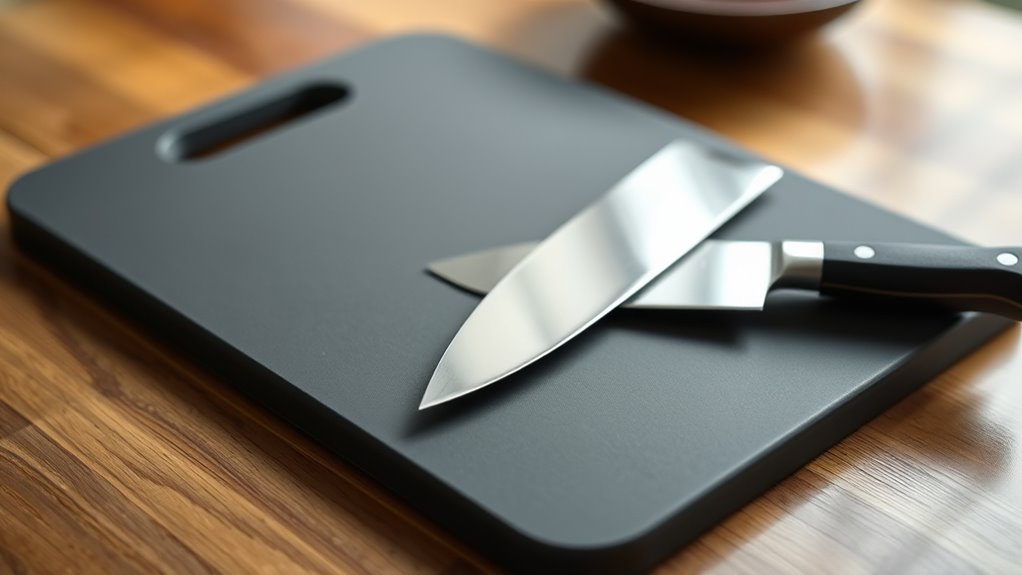
When you use a rubber cutting board, you help protect your knives from dulling quickly because the material offers a softer surface than wood or plastic. This softness reduces the wear on your blades, keeping them sharper longer. Rubber boards also provide a stable cutting surface, which helps prevent slips that could damage your knives or cause accidents.
Using a rubber cutting board helps keep knives sharper longer by providing a softer, slip-resistant surface.
Additionally, rubber’s slight give cushions the blade, lessening the force needed to cut through foods, which benefits both the knife and your hands.
Consider these knife-safety benefits of rubber cutting boards:
- Reduces blade dulling due to softer surface
- Offers excellent grip, minimizing slips
- Cushions blade impact, protecting edges
- Requires less cutting force, preserving sharpness
- Supports safer, more controlled cutting motions
Are Rubber Cutting Boards Hygienic for Food Preparation?
You might wonder if rubber cutting boards are safe when it comes to hygiene. They naturally resist bacteria, but proper cleaning and maintenance are key to keeping them sanitary.
Let’s look at how you can prevent cross-contamination and keep your food prep safe.
Bacterial Resistance Properties
Although rubber cutting boards may seem less common than plastic or wood, they offer impressive bacterial resistance that makes them a hygienic choice for food preparation. Their dense, non-porous surface prevents bacteria from penetrating deeply, reducing contamination risks.
Plus, the natural antimicrobial properties in rubber inhibit bacterial growth, keeping your board safer between uses. When you use rubber cutting boards, you benefit from:
- Reduced bacterial absorption compared to wood
- Less cross-contamination risk due to surface integrity
- Antimicrobial action that slows bacteria proliferation
- Durability that resists deep grooves where bacteria hide
- Compliance with food safety standards for hygiene
Cleaning and Maintenance Tips
Since rubber cutting boards resist bacteria and damage, maintaining them properly guarantees they stay hygienic for food preparation. You should wash your board immediately after use with hot, soapy water to remove food particles and oils. Avoid harsh scrubbers that can damage the surface; instead, use a soft sponge or cloth.
Regularly sanitize your board by wiping it with a solution of one tablespoon of bleach per gallon of water, then rinse thoroughly. Dry it completely before storing to prevent moisture buildup, which encourages bacterial growth. Occasionally, inspect your board for deep cuts or grooves where bacteria can hide.
Replacing your rubber cutting board when it’s excessively worn ensures continued safety. With these simple steps, you’ll keep your rubber cutting board clean, safe, and ready for your next meal prep.
Cross-Contamination Prevention
How can you guarantee your rubber cutting board stays hygienic and prevents cross-contamination? It’s crucial to use your board correctly to keep food safe. Rubber boards are naturally non-porous, which helps resist bacteria, but you still need to be proactive.
Follow these tips to prevent cross-contamination:
- Use separate boards for raw meats and vegetables.
- Wash your board thoroughly with hot, soapy water after each use.
- Sanitize regularly with a bleach solution or food-safe disinfectant.
- Avoid deep grooves by replacing boards when they get heavily scored.
- Dry the board completely before storing to prevent bacterial growth.
How to Clean and Maintain Rubber Cutting Boards Safely
To keep your rubber cutting board safe and durable, you need to clean it properly after every use. Start by rinsing off any food debris with warm water. Then, scrub the board with hot, soapy water using a sponge or brush to remove oils and residues.
Avoid harsh chemicals or abrasive pads, as they can damage the surface. After washing, rinse thoroughly and dry the board completely with a clean towel or let it air dry upright to prevent moisture buildup.
Periodically, you can disinfect the board by wiping it with a solution of one tablespoon of bleach per gallon of water, then rinsing well. Finally, store your rubber cutting board in a dry, ventilated area to maintain its condition and prevent warping or cracking.
Do Rubber Cutting Boards Harbor Bacteria?
Proper cleaning and maintenance reduce the risk of bacteria buildup on rubber cutting boards, but they can still harbor germs if not cared for correctly. Rubber’s slightly porous surface can trap moisture and food particles, creating a breeding ground for bacteria.
To minimize this risk, you should:
- Wash boards promptly after use with hot, soapy water
- Avoid soaking boards, which can cause swelling and cracks
- Regularly sanitize with a vinegar or bleach solution
- Dry boards thoroughly before storing to prevent moisture retention
- Replace boards showing deep grooves or cracks where bacteria hide
Potential Health Risks of Rubber Cutting Boards
You should be aware that some rubber cutting boards may contain chemicals that could affect your health over time. Additionally, if not cleaned properly, these boards can harbor bacteria that might lead to contamination.
Understanding these risks helps you make safer choices in your kitchen.
Chemical Composition Concerns
Although rubber cutting boards are popular for their durability and knife-friendliness, you should be aware of the chemical compounds they may contain. Some rubber boards may include additives or chemicals that could pose health risks over time, especially if the board degrades or is exposed to heat.
Here are some chemical composition concerns to keep in mind:
- Phthalates: Used as plasticizers, they might leach into food.
- Bisphenol A (BPA): Sometimes found in synthetic rubber, linked to hormonal disruption.
- Heavy metals: Trace amounts may be present in colored rubber boards.
- VOCs (Volatile Organic Compounds): Can off-gas, affecting indoor air quality.
- Antimicrobial additives: Some contain chemicals that might cause allergic reactions.
Choosing food-grade, certified rubber boards helps reduce these risks.
Bacterial Growth Risks
Beyond chemical concerns, bacterial growth on rubber cutting boards can pose significant health risks. You might not realize it, but tiny grooves from knife cuts can trap food particles and moisture, creating a perfect environment for bacteria to thrive. If you don’t clean your board thoroughly after each use, harmful pathogens like Salmonella or E. coli can multiply, increasing the risk of foodborne illnesses.
Unlike wooden boards, rubber tends to be less porous, which helps reduce bacterial absorption, but it’s not foolproof. To keep yourself safe, you should wash your rubber cutting boards with hot, soapy water immediately after use and sanitize them regularly. Avoid cross-contamination by using separate boards for raw meats and vegetables.
Staying vigilant about cleaning can help you prevent bacterial dangers effectively.
Picking a Safe Rubber Cutting Board for Your Kitchen
When choosing a rubber cutting board, prioritize non-toxic materials and durability to guarantee safety in your kitchen. Look for boards made from food-grade rubber that won’t leach harmful chemicals. You want a surface that resists deep cuts to prevent bacteria buildup and is easy to clean.
Also, consider the board’s thickness and weight for stability during use.
Here’s what to keep in mind:
- Confirm it’s marked BPA-free and phthalate-free
- Choose a dense rubber that resists scoring
- Opt for a board with non-slip feet or backing
- Pick a size that fits your prep space comfortably
- Select a color that helps you avoid cross-contamination
Following these tips will help you pick a safe, reliable rubber cutting board tailored to your kitchen needs.
When Should You Replace Your Rubber Cutting Board?
Choosing the right rubber cutting board sets the foundation for kitchen safety, but knowing when to replace it keeps your food prep hygienic. You should replace your rubber cutting board once deep grooves or cuts become visible, as these can harbor bacteria despite thorough cleaning.
If your board starts to warp, crack, or lose its firmness, it’s time for a new one to avoid contamination. Also, if you notice persistent stains or odors that don’t go away after washing, replacement is necessary.
Regularly inspect your board for these signs, especially if you use it daily. By replacing your rubber cutting board at the right time, you maintain a safer and cleaner cooking environment, reducing the risk of foodborne illness.
Frequently Asked Questions
Can Rubber Cutting Boards Be Used for Both Hot and Cold Foods?
Yes, you can use rubber cutting boards for both hot and cold foods. They’re heat-resistant and durable, but avoid placing extremely hot pots directly on them to prevent warping or damage.
Clean them thoroughly after use.
Are Rubber Cutting Boards Dishwasher Safe?
You can’t throw rubber cutting boards in the dishwasher like a hot potato—they often warp or degrade.
Instead, wash them by hand with warm, soapy water to keep them in tip-top shape and lasting longer.
Do Rubber Cutting Boards Have a Scent or Odor?
Yes, rubber cutting boards can have a mild scent when new, but it usually fades after washing.
If you notice a strong odor, cleaning it thoroughly or airing it out will help eliminate any lingering smells.
Can Rubber Cutting Boards Stain Easily?
Worried about stains on your rubber cutting board? Don’t be! They’re quite resistant to staining compared to plastic or wood.
Just rinse quickly after use, and you’ll keep it looking fresh without much hassle.
Are Rubber Cutting Boards Environmentally Friendly?
You’ll find rubber cutting boards fairly environmentally friendly since many are made from recycled materials and are durable, reducing waste. However, they aren’t biodegradable like wood, so consider disposal methods to minimize environmental impact.
Their durability means they don’t need to be replaced as often, which helps reduce overall waste. Still, when it’s time to dispose of them, recycling options may be limited compared to natural materials.
Choosing rubber cutting boards made from recycled content is a more sustainable option. Proper disposal or repurposing can further lessen their environmental footprint.
Conclusion
You might think rubber cutting boards are just another kitchen tool, but their safety depends on what you know and how you use them. Are they truly hygienic? Can they protect your knives and your health?
The answer isn’t as simple as you’d expect. Before you decide, consider their durability, cleaning methods, and when to replace them. Proper maintenance is key to ensuring rubber cutting boards remain safe and effective.
The next time you slice or dice, you’ll want to be sure your board is working for you—not against you. Remember, understanding the safety of rubber cutting boards helps you maintain hygiene and protect your kitchen tools.