
What Is a Microplane Grater and How to Use It
A Microplane grater is an essential kitchen tool that allows you to finely zest, grate, or shred ingredients with minimal effort and mess. Known for its razor-sharp blades, it produces finely textured results that traditional graters often can’t match.
This versatile tool is perfect for zesting citrus fruits, grating hard cheeses, spices, and more.
To use a Microplane grater, simply hold it securely while moving your ingredient across the blades. Its design ensures safety and precision, helping you enhance your prep speed.
Using it correctly will make your cooking process more efficient and enjoyable.
Keep reading to discover useful tips, maintenance advice, and creative ways to maximize the benefits of this handy kitchen gadget.
Key Takeaways
- A Microplane grater is a handheld kitchen tool with sharp, fine blades designed for zesting, grating, and shredding ingredients precisely and efficiently.
- It produces delicate, fluffy shreds by slicing food with etched stainless steel blades that stay sharp longer than traditional graters.
- To use safely, hold the grater firmly, keep fingers away from blades, and grate ingredients at a shallow angle with light, steady pressure.
- Ideal for zesting citrus, grating hard cheeses, spices, garlic, ginger, and even chocolate or nuts for enhanced flavor and texture.
- Clean immediately with warm water and a soft brush, dry thoroughly, and store in a dry place to maintain sharpness and durability.
What Is a Microplane Grater and Why Use It?
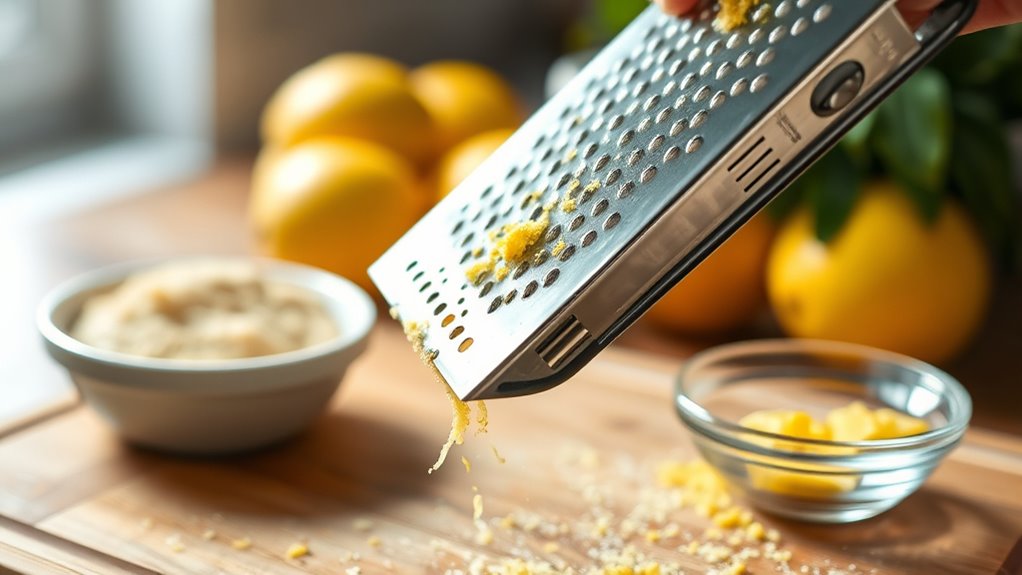
Although it might look simple, a microplane grater is a powerful kitchen tool designed to finely zest, grate, and shred ingredients with ease. When you use one, you’ll notice how effortlessly it turns hard spices, citrus peels, cheese, and even garlic into delicate, flavorful bits that blend perfectly into your dishes.
You’ll appreciate its sharp, precise blades that reduce effort and mess, giving you consistent results every time. Unlike bulky or dull graters, this tool fits comfortably in your hand and offers control, so you can work quickly without slipping.
Whether you’re adding a touch of lemon zest or grating nutmeg, a microplane grater makes your prep work faster and more enjoyable, enhancing your cooking experience immensely.
How a Microplane Grater Works vs. Other Graters

When you compare a microplane grater to other types of graters, you’ll quickly notice how its sharp, fine blades make grating faster and more efficient. Unlike box graters or traditional handheld ones with larger holes, the microplane’s blades slice through food smoothly, producing delicate, fluffy shreds. This design reduces effort and prevents your ingredients from turning mushy.
You’ll also find it easier to control the amount grated since the microplane’s surface is narrower and more precise. In contrast, other graters often require more pressure and can yield uneven results. Whether you’re zesting citrus or grating hard cheese, the microplane’s unique cutting action gives you consistent, finely textured results without much strain on your hands.
What Makes Microplane Graters So Special?

You’ll notice Microplane graters stand out because of their unique blade design that cuts cleanly and quickly. This sharpness means you’ll use less effort while getting finer, more consistent results.
Once you try it, you’ll see why they’re so efficient compared to regular graters.
Unique Blade Design
Since microplane graters feature razor-sharp, etched stainless steel blades, they effortlessly shred ingredients into fine, even pieces without crushing or bruising them. You’ll notice these blades aren’t just ordinary; they’re created through a unique etching process that cuts tiny, precise teeth into the metal. This design means each blade acts like a miniature chisel, slicing cleanly rather than scraping.
When you use a microplane, you get consistent results whether grating zest, cheese, or spices. The blades’ sharp edges stay effective longer since they don’t dull quickly. Plus, they resist rust and corrosion, making maintenance easier.
This innovative blade design truly sets microplane graters apart, giving you a tool that combines durability with exceptional performance every time you use it.
Superior Grating Efficiency
How does a microplane grater deliver such outstanding results with minimal effort? It’s all about the sharp, razor-like teeth that slice through ingredients instead of crushing them. When you use a microplane, you’ll notice how effortlessly it glides over foods like cheese, citrus zest, or garlic, producing fine, consistent shreds.
This efficiency means you spend less time grating and get better texture, enhancing your dish’s flavor and presentation. Plus, the design reduces hand fatigue because you don’t need to press hard or repeatedly scrape. Whether you’re prepping delicate herbs or hard spices, a microplane grater maximizes your control and speed, making it a standout tool in your kitchen arsenal.
You’ll quickly see why it’s favored by both home cooks and professional chefs alike.
Which Ingredients Are Best for a Microplane Grater?
You’ll find a microplane grater works wonders with citrus fruits, perfect for zesting lemons, limes, and oranges. It’s also great for finely grating hard cheeses like Parmesan to add flavor without clumps.
Plus, you can use it to quickly grate spices and aromatics such as garlic, ginger, and nutmeg for fresh, intense flavors.
Ideal Citrus Fruits
Which citrus fruits work best with a Microplane grater? You’ll find that lemons, limes, and oranges are ideal choices. Their thin, flavorful zest grates easily without too much effort.
The zest adds a bright, aromatic punch to dishes and drinks, perfect for enhancing flavors. Grapefruits also work well, especially when you want a slightly bitter zest. Avoid thick-skinned fruits like pomelos since their zest can be tough and bitter.
When zesting citrus, make sure to only grate the colorful outer layer, steering clear of the white pith beneath, which tastes bitter. Using your Microplane grater on these fruits helps you get fine, fluffy zest that blends smoothly into recipes, elevating everything from baked goods to cocktails with fresh citrus flavor.
Hard Cheeses Usage
Although Microplane graters are famous for zesting citrus, they excel at grating hard cheeses too. You’ll find they effortlessly turn Parmesan, Pecorino Romano, and Asiago into fine, fluffy shreds perfect for topping pastas, salads, or soups. Their sharp blades ensure clean grating without crumbling the cheese, making your dishes look and taste better.
Here’s a quick guide to hard cheeses you can grate:
| Cheese | Flavor Profile | Best Uses |
|---|---|---|
| Parmesan | Nutty, salty | Pasta, risotto |
| Pecorino Romano | Sharp, tangy | Salads, sauces |
| Asiago | Mild, slightly sweet | Sandwiches, soups |
Grab your Microplane to add a burst of flavor with these cheeses!
Spices And Aromatics
When you want to release intense flavors quickly, a Microplane grater is perfect for finely grating spices and aromatics. Fresh nutmeg, cinnamon sticks, and whole cloves work wonderfully because the fine, sharp blades break them down, unleashing their essential oils. You can also zest citrus fruits like lemons, limes, and oranges to add bright, fragrant notes to your dishes.
Garlic and ginger grate smoothly too, creating a fine paste that blends easily without the hassle of chopping. Using a Microplane ensures you get uniform, delicate shreds that enhance flavor without overpowering. Just be careful with softer aromatics—they might get mushy.
How Do You Hold a Microplane Grater Safely?
To hold a Microplane grater safely, you’ll want to secure it firmly while keeping your fingers clear of the sharp edges. A steady grip prevents slips and potential cuts, so focus on control and comfort.
Secure your Microplane firmly and keep fingers clear to avoid slips and cuts.
Here’s how to hold it safely:
- Grip the handle firmly: Use your dominant hand to hold the handle tightly, ensuring it doesn’t wobble during use.
- Position your other hand carefully: Hold the food item with your fingertips curled inward, away from the grater’s blades.
- Stabilize the grater: Rest the flat end on a stable surface or over a bowl to avoid sudden movements.
How to Use a Microplane Grater: Step-by-Step Guide
Before you start grating, make sure your Microplane is clean and dry for the best results. Hold the Microplane firmly with one hand, placing your fingers on the handle or frame. Position the food item—like lemon zest or cheese—in your other hand.
Gently rub the food against the grater’s surface in a downward motion, applying light pressure. Move steadily, avoiding excessive force to prevent slipping or injury. Rotate the food as needed to grate evenly and avoid grating your fingers.
Once you’ve grated enough, carefully lift the Microplane away from the food. Tap the grater gently to release any stuck bits. Rinse the Microplane immediately after use to prevent residue buildup and maintain sharpness.
With practice, you’ll find it quick and efficient.
Tips for Getting the Finest Microplane Grater Zest Without Mess
After mastering the basic grating technique, you’ll want to focus on getting the finest zest without creating a mess. Here are three tips to help you achieve that:
- Hold the fruit firmly: Grip your lemon, lime, or orange securely and grate with steady, light pressure to avoid tearing the peel and releasing bitter pith.
- Grate at a shallow angle: Keep the microplane at a slight angle to get thin zest strands, which are easier to incorporate into recipes without clumping.
- Use a clean, dry microplane: Wipe the grater clean between uses to prevent zest buildup, which can cause clumping and mess.
Common Microplane Grater Mistakes (And How to Avoid Them)
Although a Microplane grater is simple to use, it’s easy to make mistakes that can ruin your zest or even cause injury. One common error is pressing too hard, which can damage the grater’s fine blades and result in uneven zest. Instead, apply gentle, consistent pressure.
Another mistake is grating too close to your fingers—always keep your hand steady and watch your fingertips to avoid cuts. Using the wrong angle can also reduce efficiency; hold the grater at a slight angle for best results. Finally, don’t grate overly soft or wet ingredients, as they can clog the blades and make zesting messy.
How to Clean and Maintain Your Microplane Grater
Since you’ll want your Microplane grater to perform well every time, regular cleaning and proper maintenance are essential. After each use, rinse it immediately under warm water to prevent food from drying and sticking. Avoid using abrasive scrubbers that can dull the blades.
Instead, use a soft brush or a toothbrush to gently remove residue. To keep your grater sharp and rust-free, store it in a dry place, preferably with a protective cover.
Here’s how to clean and maintain your Microplane grater:
- Rinse and brush off food particles right after use.
- Wash with warm, soapy water or place in the dishwasher if dishwasher-safe.
- Dry thoroughly and store in a dry, safe spot to prevent damage.
How to Choose the Best Microplane Grater for Your Kitchen
Keeping your Microplane grater clean and well-maintained helps it stay effective, but choosing the right one for your kitchen matters just as much. You want a grater that fits your cooking style and tasks. Consider blade type, handle comfort, and size.
For example, fine blades suit zesting, while coarse blades handle cheese or vegetables.
| Feature | What to Look For |
|---|---|
| Blade Type | Fine, coarse, or extra coarse |
| Handle Comfort | Ergonomic, non-slip grip |
| Size | Compact for storage, or larger for heavy use |
Pick a Microplane that feels good in your hand and matches your common grating needs. This guarantees efficiency and ease every time you use it.
Creative and Unexpected Ways to Use Your Microplane Grater
You probably know your Microplane grater is perfect for zesting lemons and limes, but it can do so much more. Try grating hard spices like nutmeg or even fresh ginger to add fresh flavor to your dishes.
Once you start experimenting, you’ll find plenty of unusual ingredients that benefit from its fine, precise grating.
Zesting Beyond Citrus
Although microplane graters are best known for zesting citrus fruits, they’re incredibly versatile tools that can elevate many other ingredients. You can reveal new flavors and textures by using your microplane in creative ways beyond just citrus.
Here are three unexpected zesting ideas to try:
- Grate fresh ginger or turmeric to add a punch of spice and brightness to your dishes without the fibrous chunks.
- Zest hard cheeses like Parmesan or Pecorino finely over salads, pasta, or soups for an intense flavor boost that melts quickly.
- Grate whole nutmeg directly onto desserts or savory recipes for a fresh, aromatic touch that pre-ground versions can’t match.
Grating Unusual Ingredients
When you want to add unique flavors and textures to your dishes, grating unusual ingredients with your microplane grater opens up exciting culinary possibilities. Try grating fresh ginger or turmeric for vibrant, zesty notes in curries and teas. You can also grate hard spices like nutmeg or cinnamon sticks to infuse warmth into desserts and drinks.
For a surprising twist, grate dried mushrooms or Parmesan rind into soups and sauces for an umami boost. Don’t overlook vegetables like fennel or raw beets, which add crunch and color when finely grated. Even chocolate or toasted nuts work beautifully, enhancing both texture and flavor.
Using your microplane this way elevates everyday meals with minimal effort, turning simple ingredients into standout dishes.
Frequently Asked Questions
Can a Microplane Grater Be Used for Non-Food Items?
Yes, you can use a microplane grater for non-food items like soap or chalk to create fine shavings.
Just be careful, as it’s sharp and might dull faster when used on harder materials.
Are Microplane Graters Dishwasher Safe?
Of course, your microplane grater loves a hot, soapy jacuzzi—just kidding!
It’s best if you hand wash it carefully; dishwashers can dull the blades and turn your grater into a sad, useless kitchen relic.
How Long Does a Microplane Grater Typically Last?
Your Microplane grater typically lasts several years with proper care. If you avoid dishwasher damage and store it safely, you won’t have to replace it often.
Keep it sharp by grating hard foods gently.
Can I Sharpen a Dull Microplane Grater?
You can’t sharpen a dull Microplane grater effectively; its tiny teeth are too delicate.
Instead, you should replace it when it loses sharpness to maintain performance and safety during grating tasks.
Are There Eco-Friendly Microplane Grater Options Available?
You’ll find some eco-friendly microplane graters made from recycled stainless steel or bamboo handles. Like switching to a reusable water bottle, choosing these reduces waste and helps the planet while you zest your favorite citrus fruits.
Conclusion
Now that you know the magic behind a Microplane grater, it’s time to add one to your kitchen arsenal. With its sharp blades and easy handling, it’s like having a culinary wizard at your fingertips.
Remember, the right grip and care keep it working wonders for years. So go ahead—grate, zest, and shred your way to flavor-packed dishes that’ll make every meal feel like a masterpiece.
Using a Microplane grater enhances your cooking experience by delivering finely grated ingredients with ease. Incorporate this essential tool into your kitchen for zesting citrus, grating cheese, and shredding spices effortlessly. Embrace the convenience and precision that a Microplane grater offers to elevate your flavor-packed recipes.