What Is a Grater Used for in the Kitchen?
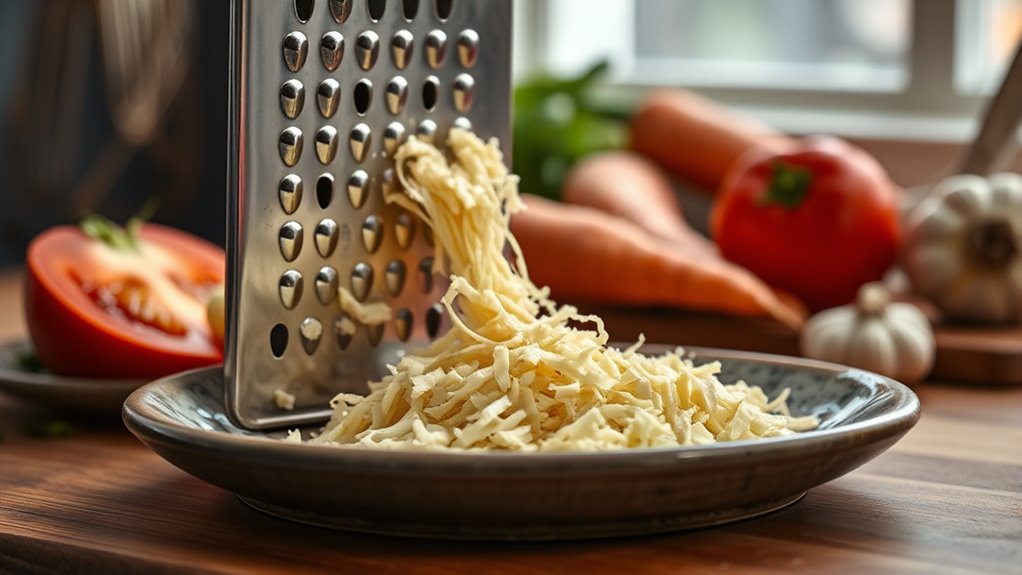
You use a grater in the kitchen to shred, zest, or slice ingredients like cheese, vegetables, citrus, and spices. This versatile tool quickly boosts texture and flavor in your meals, making it an essential kitchen gadget.
Different types of graters, such as box graters or microplane graters, help you achieve the perfect consistency for each ingredient.
Grating spices and nuts can release new flavors, enhancing your dishes in unique ways.
Proper handling of a grater keeps things safe and clean, preventing accidents and messes.
If you want to master grating and explore handy uses both in and out of the kitchen, there’s plenty more to discover.
Key Takeaways
- A grater is used to shred or slice foods like cheese, vegetables, and citrus zest into fine or coarse textures.
- It enhances flavor and texture by breaking down ingredients such as spices, nuts, and fruits for cooking and garnishing.
- Different types of graters, including box graters and microplanes, serve specific purposes like zesting or shredding large quantities.
- Proper use involves steady handling, choosing the right grater for the ingredient, and cleaning immediately to maintain performance.
- Besides food preparation, graters can be used creatively for crafts, sharpening pencils, or shredding soap bars.
What Is a Grater and How Does It Work

How exactly does a grater work in your kitchen? When you hold a grater, you’re using its sharp, perforated surface to shred or slice food items like cheese, vegetables, or zest. As you rub your ingredient against the grater’s holes, tiny pieces break off, creating fine or coarse textures depending on the grater’s design.
You apply pressure and move the food back and forth, letting the blades catch and cut it into smaller bits. This simple mechanical action transforms whole foods into manageable, often more flavorful forms, perfect for cooking or garnishing. You don’t need any electricity—just your effort and the grater’s sharp edges to do the job efficiently.
This tool is all about turning solid ingredients into useful shapes quickly and easily.
Different Types of Graters and Their Uses

You’ll find several types of graters that each serve a unique purpose in the kitchen. A box grater offers multiple grating surfaces, while a Microplane grater excels at finely zesting and shredding.
For quick, effortless grating, a rotary grater is a handy tool to have.
Box Graters Explained
Although box graters may look simple, they offer versatile functions that make them a kitchen essential. You’ll find four sides, each with different-sized grating surfaces: large holes for shredding cheese or vegetables, medium holes for zesting citrus or grating softer foods, small holes for finely grating hard cheeses or garlic, and slicing blades for thin vegetable slices.
When you use a box grater, you get multiple tools in one compact device, saving space and effort. Just hold it steady on a cutting board or bowl and move your ingredient up and down against the desired side. Whether you’re prepping salads, garnishes, or melting cheese, this tool makes your tasks easier and more efficient.
Microplane Grater Benefits
While box graters cover many kitchen tasks, a microplane grater offers a different level of precision and ease for fine grating. You’ll find it perfect for zesting citrus, grating hard cheeses like Parmesan, and finely shredding spices such as nutmeg or ginger. Its sharp, narrow blades reduce effort and produce uniform results quickly.
Plus, it’s easy to clean and store.
Here’s a quick comparison of microplane grater benefits:
| Benefit | Example Use | Why It Matters |
|---|---|---|
| Precision | Citrus zest | Enhances flavor without bitterness |
| Fine texture | Hard cheeses | Melts evenly in dishes |
| Ease of use | Fresh spices | Saves prep time |
| Easy cleaning | Quick rinse | Maintains hygiene |
Rotary Grater Uses
When you want to grate larger quantities quickly and with minimal effort, a rotary grater proves invaluable. You simply place the food inside, turn the handle, and the grater does the hard work for you. This tool is perfect for tasks that require speed and efficiency without compromising texture.
Here are some common uses for a rotary grater:
- Grating hard cheeses like Parmesan or Pecorino for pasta and salads
- Shredding chocolate for desserts and garnishes
- Processing nuts into fine pieces for baking or toppings
- Grating vegetables such as carrots or zucchini for recipes
- Preparing breadcrumbs from stale bread for coatings or fillers
With a rotary grater, you save time and get consistent results every time.
Choosing the Right Grater for Your Kitchen

When picking a grater, consider the types available to match your cooking needs. Look for durable materials that’ll last through regular use. Don’t forget to choose a size and handle design that feels comfortable and easy to grip.
Types Of Kitchen Graters
Because different recipes call for various textures and sizes, choosing the right kitchen grater can make your prep work much easier. Each type serves a specific purpose, helping you get the perfect consistency for your dish.
Here are five common types of kitchen graters you might consider:
- Box Grater: Multi-sided with various grating sizes; versatile for cheese, vegetables, and zest.
- Microplane Grater: Ideal for fine zesting and grating hard spices like nutmeg.
- Flat Grater: Compact and easy to handle; great for quick tasks and small amounts.
- Rotary Grater: Perfect for grating hard cheese effortlessly with a crank handle.
- Rasp Grater: Produces very fine shreds, suitable for garlic or ginger.
Choosing the right grater guarantees you get the texture you need without extra effort.
Material And Durability
Although choosing the right type of grater is important, you also need to take into account the material and durability to guarantee it stands up to regular use. Stainless steel graters are a popular choice because they resist rust and maintain sharp edges longer, making your grating smooth and efficient. Plastic graters might feel lighter but can dull quickly and may crack under pressure.
Avoid cheap metals that bend or corrode easily, as they won’t last and may affect food safety. Investing in a high-quality grater ensures consistent performance and saves you from frequent replacements. When you pick a durable grater, you get reliability and peace of mind during meal prep, letting you grate ingredients effortlessly every time.
Size And Handle Design
Selecting a grater with the right size and handle design can make your kitchen tasks much easier and safer. A grater that’s too large might feel unwieldy, while a tiny one could slow you down. The handle should offer a comfortable, non-slip grip to prevent accidents, especially when you’re grating hard ingredients.
Consider these factors when choosing your grater:
- Size: Match it to your typical cooking volume and storage space.
- Handle Comfort: Look for ergonomic shapes that fit your hand well.
- Material: Handles made from rubber or silicone provide better grip.
- Stability: Some graters have handles that keep them steady during use.
- Portability: Smaller graters are easier to maneuver and clean quickly.
Picking the right size and handle keeps your grating efficient and safe every time.
Ingredients You Can Grate: Cheese, Citrus, Vegetables, and More
When you pick up a grater, you open a world of textures and flavors that can elevate your dishes. You can grate a wide range of ingredients, starting with cheese—think sharp cheddar, creamy mozzarella, or tangy Parmesan. Citrus zest from lemons, limes, and oranges adds a bright, aromatic punch to baked goods and sauces.
Vegetables like carrots, zucchini, and cucumbers become perfect for salads, slaws, or baking when grated finely. You can also grate ginger or garlic to infuse your meals with fresh, intense flavors. Hard spices like nutmeg or cinnamon work well too, adding warmth and depth.
Experimenting with different ingredients lets you customize texture and taste, making your cooking more vibrant and enjoyable.
How to Grate Cheese Perfectly Every Time
To grate cheese perfectly every time, you need the right technique and tools. Start by choosing a grater suitable for your cheese type—fine for hard cheeses, coarse for softer ones. Chill your cheese beforehand; cold cheese grates cleaner and won’t clump.
Hold the grater steady on a cutting board, then move the cheese firmly but gently against the grater. Avoid pressing too hard to prevent slipping or uneven shreds.
- Use a block of cheese rather than pre-shredded for freshness.
- Rotate the cheese to grate evenly.
- Clean the grater immediately after use to avoid residue buildup.
- Use a bowl to catch the grated cheese.
- Consider using a food processor for large amounts.
These tips will help you grate cheese effortlessly and consistently.
Citrus Zesting Techniques With a Grater
When zesting citrus, picking the right grater makes all the difference—you’ll want one that creates fine, flavorful shreds without digging too deep. Keep your fruit firm and dry to get clean, bright zest every time.
With a few simple tips, you’ll add fresh citrus flavor to your dishes in no time.
Choosing The Right Zester
Although zesting citrus might seem straightforward, choosing the right zester can make a big difference in both ease and outcome. You want a tool that fits comfortably in your hand and produces fine, flavorful zest without scraping the bitter pith beneath.
Consider these factors when picking your zester:
- Blade sharpness: guarantees clean, effortless zesting
- Handle grip: provides comfort and control
- Hole size: affects zest thickness and texture
- Material: stainless steel resists rust and lasts long
- Ease of cleaning: dishwasher-safe options save time
Zesting Tips And Tricks
Since zesting requires a delicate touch, you’ll want to hold your grater at a slight angle and gently rub the citrus skin to avoid the bitter white pith underneath. Use light pressure and short strokes to release flavorful, colorful zest without digging too deep.
Rotate the fruit as you grate to get even, thin strips while preventing damage to the peel. If your grater has fine holes, it’s perfect for zesting lemons, limes, or oranges finely for baking or cocktails. After zesting, tap the grater gently to collect all the zest, ensuring none is wasted.
Remember to wash your grater promptly to avoid sticky residue. By following these simple tips, you’ll maximize flavor and keep your zest bright and fresh.
Tips for Grating Vegetables for Salads and Cooking
Grating vegetables can transform your salads and dishes by adding texture and enhancing flavor. When you grate veggies, you break them down into smaller, more manageable pieces that blend beautifully with other ingredients. To get the best results, keep these tips in mind:
Grating vegetables adds texture and flavor, creating smaller pieces that blend perfectly with your dishes.
- Use a firm vegetable to avoid mushy results.
- Grate just before serving to keep freshness and crunch.
- Use a coarse grater for salads and a fine one for cooking.
- Press lightly to avoid bruising the vegetable.
- Keep your fingers safe by using the grater’s handle or a protective glove.
Grating Spices and Nuts to Boost Flavor
Adding finely grated spices and nuts can instantly elevate your dishes by releasing deeper aromas and richer flavors. When you grate whole spices like nutmeg or cinnamon, you activate their essential oils, giving your recipes a fresh, intense taste that pre-ground spices often lack.
Similarly, grating nuts like almonds, walnuts, or hazelnuts adds a delicate texture and boosts the overall flavor profile without overpowering other ingredients. Use the finer side of your grater for spices to achieve a powdery consistency, and the coarser side for nuts if you prefer small, flavorful flakes.
Just make sure to grate slowly and carefully to avoid any injuries. Incorporating these freshly grated ingredients transforms simple meals into vibrant culinary experiences you’ll want to recreate again and again.
Cleaning and Maintaining Your Grater
Although it might seem like a simple kitchen tool, your grater requires proper cleaning and maintenance to stay effective and safe. Food particles can easily get stuck in the blades, causing rust or dullness if not cleaned promptly. To keep your grater in top shape, follow these tips:
- Rinse immediately after use to prevent food from drying on the surface.
- Use a brush or toothbrush to remove stubborn bits from the blades.
- Wash with warm, soapy water, avoiding abrasive sponges that can damage the metal.
- Dry thoroughly to prevent rust, especially if your grater is made of steel.
- Store in a dry place or cover the blades to protect them and prevent accidents.
Regular care guarantees your grater performs well every time you use it.
Creative Grater Uses Beyond Food Prep
When you think beyond the kitchen, you’ll find that a grater can serve many unexpected purposes. For instance, you can use it to distress wood for DIY projects, giving furniture or frames a rustic look. It’s also handy for sharpening pencils when you don’t have a sharpener nearby—just gently grate the wood away.
If you enjoy crafting, a grater can shred soap bars into fine flakes, perfect for homemade detergent or decorative bath items. Plus, it helps you create textured art by scraping crayon or pastel shavings onto paper for unique effects. So, don’t box your grater into just food prep; it’s a versatile tool that can add creativity to your home projects and hobbies.
Common Grater Mistakes to Avoid
If you don’t use your grater correctly, you might end up with unevenly grated food or even risk injury. To get the best results and stay safe, avoid these common mistakes:
- Applying too much pressure, which can cause slipping or uneven grating
- Using a dull grater that makes the process frustrating and less effective
- Grating food that’s too soft, resulting in mushy or clumped shreds
- Ignoring proper hand placement and risking cuts on your fingers
- Not cleaning the grater immediately, allowing food to dry and stick
Frequently Asked Questions
Can a Grater Be Safely Used by Children?
Yes, you can let children use a grater, but only with close supervision. Make sure they understand safety rules, use a kid-friendly grater, and keep their fingers away from the sharp edges to prevent injuries.
Are There Any Health Risks Associated With Using a Grater?
You might think using a grater is harmless, but you can easily cut yourself if you’re not careful. Always keep your fingers away from the blades and use a protective glove to avoid injuries.
How Long Does a Typical Grater Last Before Needing Replacement?
A typical grater lasts several years if you clean and store it properly.
You’ll want to replace it once the blades dull or rust, which usually happens after heavy use over time, affecting performance.
Can a Grater Be Used for Non-Food Items?
Oh, sure, you can grate non-food items—but don’t expect your fingers to thank you! You’ll find it’s perfect for zesting chalk or shredding soap, but maybe stick to food to avoid unexpected pain and ruined graters.
What Materials Are Graters Commonly Made From?
You’ll find graters commonly made from stainless steel for durability and rust resistance, sometimes paired with plastic or wooden handles for grip. These materials help you grate efficiently while ensuring the grater lasts long and stays safe.
Conclusion
Now that you know how versatile a grater is, imagine making fresh lemon zest for your favorite cake without one—it just wouldn’t be the same. Using the right grater not only saves time but also elevates your dishes, whether you’re grating cheese, spices, or veggies.
Keep it sharp and clean, and avoid common mistakes like applying too much pressure. With these tips, you’ll effortlessly boost flavors and creativity in your kitchen every day.
In conclusion, a grater is an essential kitchen tool that enhances the preparation of ingredients like cheese, vegetables, and spices. Proper use and maintenance of your grater will maximize its effectiveness and make cooking more enjoyable.