
Why Do Pressure Cookers Explode?
Pressure cookers explode mainly because steam gets trapped inside when vents or valves are blocked, or if the lid isn’t sealed properly. These issues prevent the safe release of built-up pressure, leading to dangerous situations.
Overfilling the cooker or not adding enough liquid can also cause pressure to rise too quickly, increasing the risk of an explosion.
Poor maintenance, such as ignoring gasket wear or clogged vents, further raises the chances of accidents. Regularly checking and cleaning your pressure cooker’s parts is essential for safe operation.
Understanding these common causes and how to prevent them is key to using your pressure cooker safely and avoiding potential hazards.
Key Takeaways
- Blocked or clogged pressure release valves trap steam, causing dangerous overpressure inside the cooker.
- Overfilling the cooker reduces steam space, increasing pressure and risking valve blockage or lid failure.
- Damaged or worn gaskets fail to seal properly, leading to uncontrolled steam release or pressure buildup.
- Improper use, such as insufficient liquid or premature lid opening, disrupts pressure regulation and causes accidents.
- Poor maintenance and uncleaned safety components allow debris buildup, impairing venting and increasing explosion risk.
How Pressure Cookers Build and Maintain Pressure

Although pressure cookers might seem complicated, they build and maintain pressure through a simple process. When you heat the cooker, the liquid inside turns to steam, increasing the internal pressure. The sealed lid traps this steam, preventing it from escaping, so pressure rises steadily.
As pressure builds, the boiling point of the liquid rises above 100°C, cooking food faster. You’ll notice a pressure regulator or valve that controls the pressure, releasing excess steam to keep it steady and safe. The gasket or rubber seal guarantees no steam leaks around the lid, maintaining pressure.
Main Causes of Pressure Cooker Explosions
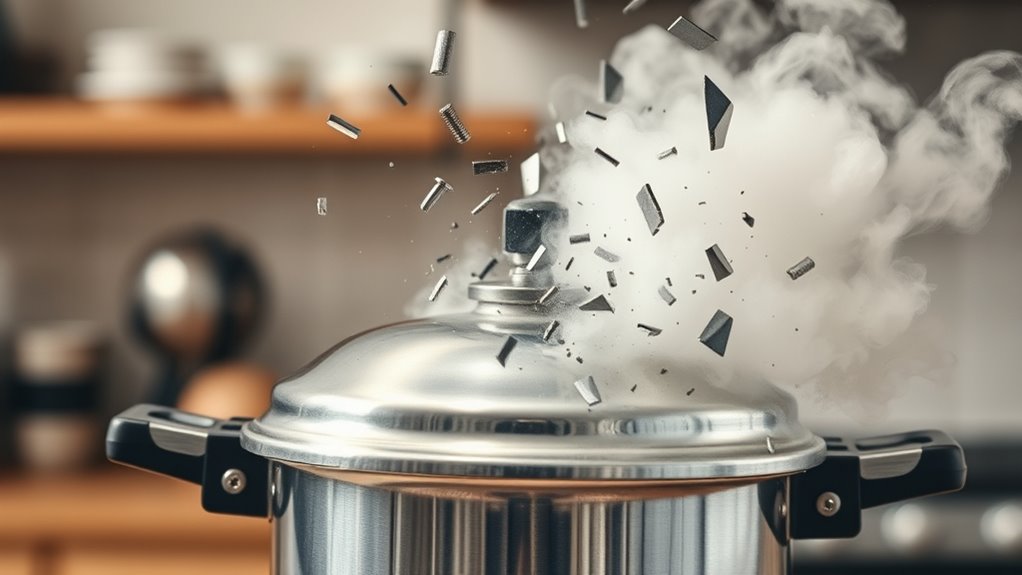
You need to watch out for a blocked pressure release valve, which can trap dangerous steam inside. Overfilling your cooker increases the risk of clogging the valve and causing excess pressure. Also, a faulty gasket can prevent a proper seal, leading to potential explosions.
Blocked Pressure Release Valve
When the pressure release valve gets blocked, it prevents steam from escaping, causing dangerous pressure buildup inside the cooker. You must regularly check and clean this valve to avoid accidents. Food particles, grease, or rust can clog it, making it ineffective.
If the valve is blocked, pressure rises beyond safe limits, risking an explosion.
| Cause | Effect | Prevention |
|---|---|---|
| Food debris buildup | Valve blockage | Clean valve after use |
| Grease accumulation | Steam trapped | Wipe valve thoroughly |
| Rust or corrosion | Valve malfunction | Inspect and replace parts |
Overfilled Cooker Risks
Since pressure cookers rely on steam buildup to cook food efficiently, overfilling one can create dangerous conditions. When you fill the cooker beyond the recommended level, the food and liquid leave little room for steam to accumulate properly. This can cause excessive pressure that the cooker isn’t designed to handle.
Also, overfilling increases the chance of food blocking the pressure release valve, preventing it from releasing excess steam. When pressure builds unchecked, it can lead to an explosion. You should always follow the manufacturer’s guidelines, usually filling the cooker no more than two-thirds full, or half full for foods that expand like beans and grains.
Keeping the right fill level guarantees safe pressure regulation, prevents clogging, and helps your cooker function as intended without risking a dangerous buildup.
Faulty Gasket Issues
Although pressure cookers are designed with multiple safety features, a faulty gasket remains one of the main causes of explosions. The gasket, a rubber or silicone ring, creates an airtight seal between the lid and the pot. If it’s worn out, cracked, or improperly positioned, steam can escape unexpectedly.
This loss of pressure forces your cooker to work harder, increasing the risk of a dangerous buildup or sudden release. You should inspect the gasket regularly for any signs of damage and replace it as needed. Also, make sure it’s clean and properly seated before each use.
Neglecting gasket maintenance can lead to malfunctioning pressure regulation and, ultimately, an explosion. Taking care of the gasket helps keep your cooking safe and efficient.
User Mistakes That Cause Pressure Cooker Explosions

If you don’t follow the manufacturer’s guidelines carefully, you risk causing a pressure cooker explosion. Simple mistakes like overfilling, using the wrong liquid amount, or neglecting to secure the lid properly can lead to dangerous pressure buildup.
You must also avoid forcing the lid open before pressure fully releases. Overheating the cooker without enough liquid can cause the contents to scorch and pressure to spike unexpectedly.
Here’s a quick guide to avoid common user errors:
| Common Mistake | Risk It Causes |
|---|---|
| Overfilling the cooker | Excess pressure buildup |
| Insufficient liquid | Food burns, pressure spikes |
| Improper lid sealing | Steam leaks, pressure loss |
| Opening lid too soon | Sudden steam release injury |
Follow instructions closely to keep cooking safe and avoid explosions.
Blocked Vents and Valves: Why They’re Dangerous
You might not realize it, but blocked vents and valves can cause serious pressure build-up inside your cooker. Food particles or debris often clog these parts, preventing steam from escaping safely.
If you don’t keep them clear, you risk dangerous explosions.
Causes of Vent Blockage
What causes pressure cooker vents to become blocked, and why does it matter? When you cook, tiny food particles or residue can easily clog the vent, stopping steam from escaping. This blockage traps pressure inside, which can lead to dangerous situations.
You need to keep the vent clear to guarantee your cooker works safely.
Common causes of vent blockage include:
- Starchy foods like rice or beans swelling and blocking the vent.
- Residue buildup from sauces or soups hardening inside the vent.
- Improper cleaning, leaving bits of food stuck in the valve or pipe.
Risks of Valve Obstruction
Because valve obstructions prevent steam from escaping, pressure builds up rapidly inside the cooker, creating a serious safety hazard. When the vent or valve gets blocked, the cooker can’t release excess steam, causing pressure to exceed safe limits. You risk the gasket failing or the lid blowing off, both of which can cause severe burns or injuries.
Even if your pressure cooker has safety features, relying on them instead of keeping the valve clear is dangerous. Small food particles or residue can block the valve, so it’s essential you inspect and clean it regularly. Ignoring valve obstructions puts you and others at risk, as the built-up pressure can cause an explosion, damaging your kitchen and causing harm.
Preventing Pressure Build-Up
Although pressure cookers are designed with safety mechanisms, blocked vents and valves can quickly turn them into dangerous devices. You need to keep these pathways clear to prevent pressure build-up that might cause an explosion. Regularly inspect the vent pipe and valves for food debris or mineral deposits that can clog them.
Don’t ignore signs like unusual noises or steam escaping from unexpected places—they signal blockages. Here’s what to watch for:
- A vent clogged with thick sauce or starch, blocking steam release
- A valve stuck due to dried food or grease buildup
- Mineral deposits narrowing the vent passage over time
Why Overfilling Your Pressure Cooker Is Risky
If you overfill your pressure cooker, you increase the chances of food or liquid blocking the safety valves, which can lead to dangerous pressure buildup. Overfilling leaves less space for steam to circulate, putting extra stress on the cooker’s seals and valves. This can cause malfunction or even explosion.
To avoid risks, fill your pressure cooker only up to the recommended level—usually two-thirds full for most foods and half full for liquids or foods that expand.
| Risk Factor | Impact | Prevention Tip |
|---|---|---|
| Blocked Safety Valve | Pressure buildup | Don’t exceed fill line |
| Reduced Steam Space | Malfunction | Leave room for steam |
| Increased Pressure | Potential explosion risk | Follow manufacturer guidelines |
How Poor Maintenance Leads to Explosions
When you neglect regular maintenance on your pressure cooker, you risk dangerous malfunctions that can lead to explosions. Over time, grime, food particles, and rust can clog essential parts, preventing the cooker from releasing pressure properly.
If the safety valve or gasket is damaged or dirty, it won’t seal or vent as intended, causing pressure to build dangerously high. You should regularly inspect and clean these components to keep your cooker safe.
Look out for:
- A worn or cracked gasket that fails to seal tightly
- Blocked steam vents filled with food residue
- Rust or corrosion on metal parts that weaken structural integrity
How Wrong Ingredients Can Cause Pressure Cooker Problems
Maintaining your pressure cooker is essential, but the ingredients you use play a big role in its safe operation too. Certain foods, like thick sauces, starchy items, or foam-producing ingredients such as beans and lentils, can block the pressure release valve or clog the vent pipe. When this happens, pressure builds up dangerously inside the cooker.
You should avoid overfilling it with dense or sticky foods because they can create excessive pressure or cause the gasket to deform. Also, acidic ingredients like tomatoes can corrode seals over time, increasing the risk of leaks or malfunction. By choosing ingredients carefully and preparing them properly—such as soaking beans or thinning thick mixtures—you help keep your pressure cooker functioning safely and reduce the chance of pressure-related problems.
Safety Features That Prevent Pressure Cooker Explosions
Although pressure cookers operate under intense conditions, they come equipped with multiple safety features designed to prevent explosions and keep you safe. These features work together to regulate pressure and release it if it builds too high.
Pressure cookers include safety features that regulate and safely release pressure to prevent accidents.
You’ll find that modern pressure cookers include:
- Pressure Release Valve: Automatically lets out excess steam to avoid dangerous pressure buildup.
- Locking Lid Mechanism: Prevents the lid from opening until the pressure drops to a safe level.
- Gasket Release System: Allows steam to escape around the gasket if the valve fails, acting as a backup safety measure.
Tips for Using Your Pressure Cooker Safely
The safety features built into pressure cookers offer strong protection, but you still need to handle your cooker with care. Always read the manufacturer’s instructions before use, and never exceed the recommended fill level—usually two-thirds full.
Make sure the sealing ring is clean and properly positioned to prevent steam leaks. Release pressure naturally or according to your recipe, avoiding sudden pressure drops that can cause accidents. Regularly check and clean the vent pipe to prevent blockages.
Never force the lid open; wait until the pressure indicator shows it’s safe. Finally, replace worn or damaged parts promptly. By following these simple tips, you’ll keep your pressure cooker operating safely and avoid the risk of explosions.
Frequently Asked Questions
Are Electric and Stovetop Pressure Cookers Equally Safe?
Yes, electric and stovetop pressure cookers are equally safe if you follow the manufacturer’s instructions carefully.
You’ll want to check seals, avoid overfilling, and maintain your cooker regularly to keep everything working smoothly and safely.
Can Pressure Cookers Be Used for Canning Food Safely?
You can use pressure cookers for canning low-acid foods safely if you follow proper guidelines and use a pressure canner specifically designed for that purpose. Always guarantee correct pressure, processing time, and jar sealing.
How Do Pressure Cookers Affect the Nutritional Value of Food?
You’ll preserve more nutrients with pressure cookers because they cook food quickly using high pressure, reducing vitamin loss. They lock in flavors and nutrients better than boiling or steaming, helping your meals stay healthy and tasty.
What Materials Are Pressure Cookers Typically Made From?
Pressure cookers wear stainless steel or aluminum like armor, tough and ready. You’ll find stainless steel for durability and easy cleaning, while aluminum offers quick, even heat.
Both materials keep your meals safe and tasty.
How Long Do Pressure Cookers Usually Last With Regular Use?
You can expect your pressure cooker to last about 5 to 10 years with regular use, depending on the quality and how well you maintain it.
Cleaning and checking seals regularly will help it last longer.
Conclusion
Using a pressure cooker is like steering a powerful ship through turbulent waters—you need control and attention to avoid disaster. By understanding how pressure builds, avoiding common user mistakes, and maintaining your cooker properly, you keep the voyage safe.
Don’t block vents, overfill, or ignore safety features. With care and respect for this kitchen tool, you’ll enjoy its benefits without risking an explosion, steering every meal smoothly and safely.
Proper maintenance and careful use are essential to prevent pressure cooker explosions. Always follow safety guidelines and keep the vents clear to ensure safe cooking. By respecting these precautions, you can confidently use your pressure cooker without worry.