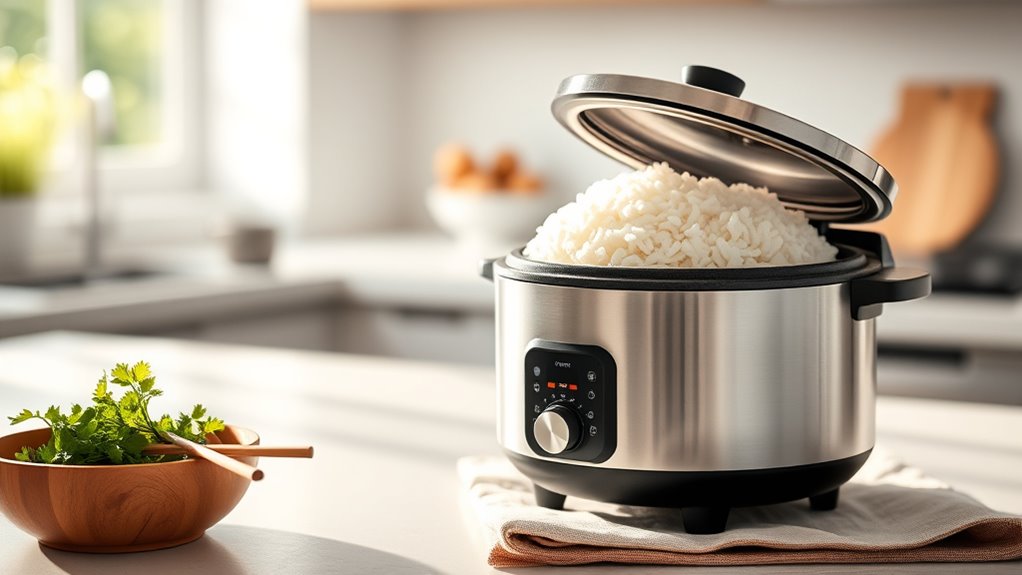
Are Rice Cookers Worth It
A rice cooker is worth it if you frequently prepare rice and want consistent, hassle-free results. This kitchen appliance simplifies cooking by automating the process, ensuring perfectly cooked rice every time. It also conserves energy, which can help reduce utility bills.
Using a rice cooker prevents burnt rice and messy cleanups, making your cooking experience more enjoyable. Additionally, it keeps rice warm without overcooking or drying it out.
While it occupies counter space and is primarily designed for rice-focused meals, it offers great convenience.
If you value effortless meal prep and consistently well-cooked rice, a rice cooker is an ideal choice. Understanding its features and how your cooking habits align with them will help determine if it’s the right fit for your kitchen.
Key Takeaways
- Rice cookers provide consistent, perfectly cooked rice with minimal effort, saving time and reducing cooking errors.
- They offer convenience with automatic cooking and keep-warm features, ideal for frequent rice eaters.
- Efficient energy use and reduced food waste contribute to cost savings over time.
- Limited versatility and counter space requirements may not suit users seeking multi-purpose appliances.
- Best for those prioritizing convenience, consistency, and having space for an additional kitchen device.
Is a Rice Cooker Worth Buying?
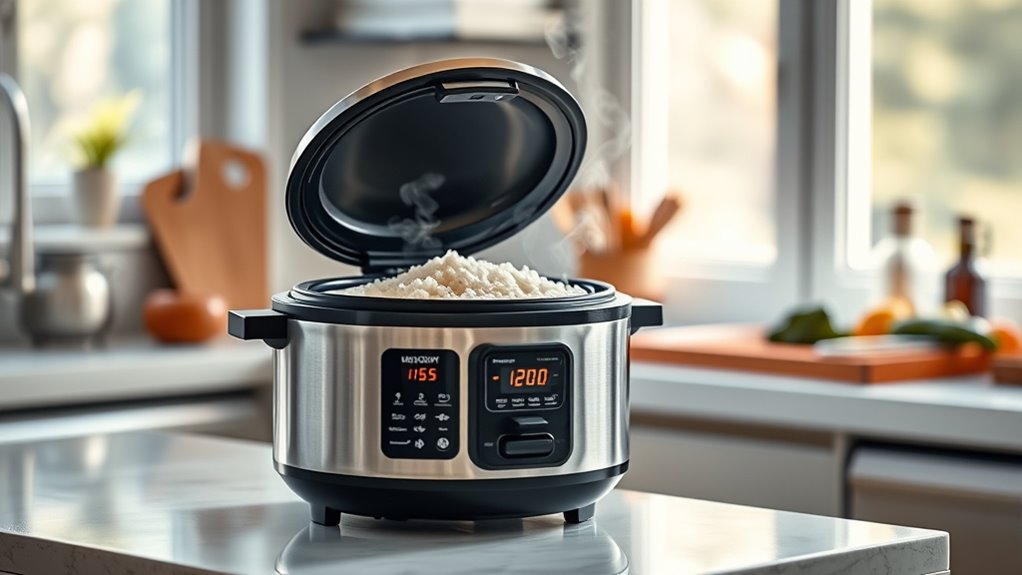
If you cook rice regularly, a rice cooker can save you time and effort while delivering perfect results every time. You won’t need to watch a pot or guess when the rice is done—it automates the process. This means fewer burned grains and less cleanup.
Plus, you can cook different types of rice or even grains with consistent texture. If you often prepare meals in advance, many models have a keep-warm function that maintains the rice at an ideal temperature without overcooking.
Although it’s an extra appliance, the convenience and reliable results justify the purchase for frequent rice eaters. If you value simplicity and consistent quality, a rice cooker is definitely worth buying.
How Does a Rice Cooker Work: And Why It Matters?
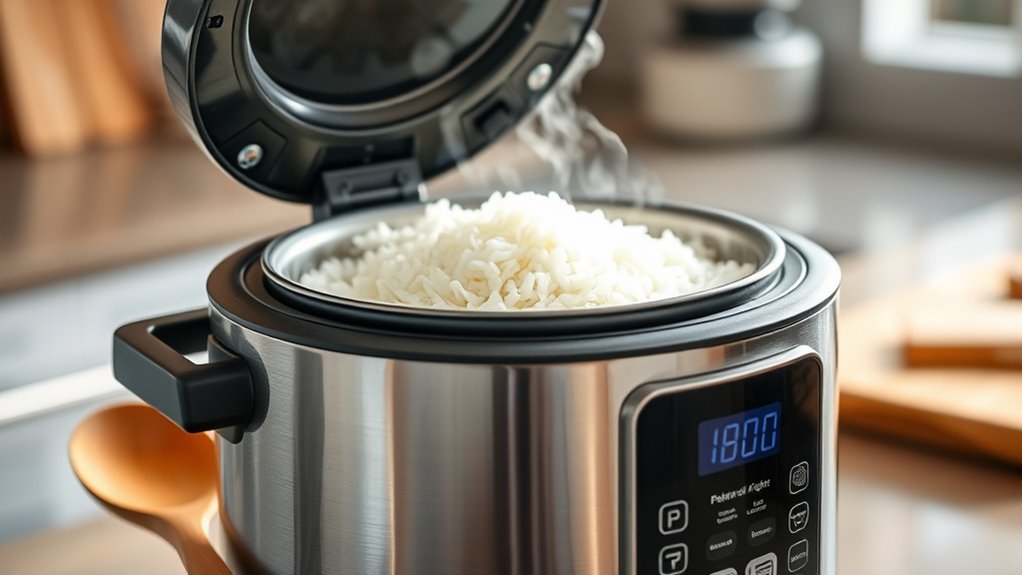
You might wonder how a rice cooker manages to cook rice so perfectly every time. It uses temperature control to switch from cooking to warming, ensuring your rice doesn’t burn.
Plus, the automatic shutoff feature gives you peace of mind while it works.
Basic Cooking Mechanism
Although rice cookers seem simple, their basic cooking mechanism is cleverly designed to make your life easier. You add rice and water into the inner pot, then switch it on. The cooker heats the water to boiling, turning it into steam that cooks the rice evenly.
A built-in thermostat monitors the temperature, so when the water’s absorbed or evaporated, it detects a rise in heat. This signals the cooker to switch off or move to a “keep warm” mode. You don’t need to watch or stir; the rice cooker handles timing and heat distribution for you.
This straightforward process guarantees consistent results every time, freeing you from guesswork and letting you focus on other tasks while your rice cooks perfectly.
Temperature Control Importance
The thermostat’s ability to monitor and adjust temperature plays a key role in how well your rice cooker performs. This control guarantees your rice cooks evenly and avoids burning or undercooking. When the temperature is precisely regulated, the cooker can switch between different cooking phases smoothly, like boiling and steaming.
Here’s why temperature control matters:
- Prevents overheating, protecting rice texture and taste.
- Ensures consistent cooking results every time.
- Saves energy by avoiding unnecessary heating.
- Adapts to different rice types and quantities for ideal results.
Automatic Shutoff Feature
Because rice cookers monitor cooking progress closely, they can automatically shut off once the rice is done, preventing overcooking and saving you time. This feature means you don’t have to constantly watch the pot or worry about burnt rice. Once the water evaporates and the temperature rises past boiling, the cooker’s sensor triggers the shutoff or switches to a keep-warm mode.
This not only preserves the rice’s texture and flavor but also improves safety by reducing the risk of overheating. If you’re busy or multitasking, this automatic shutoff lets you set it and forget it. Investing in a rice cooker with this feature guarantees consistent results and peace of mind, making it a practical addition to your kitchen.
Key Features to Look For in a Rice Cooker
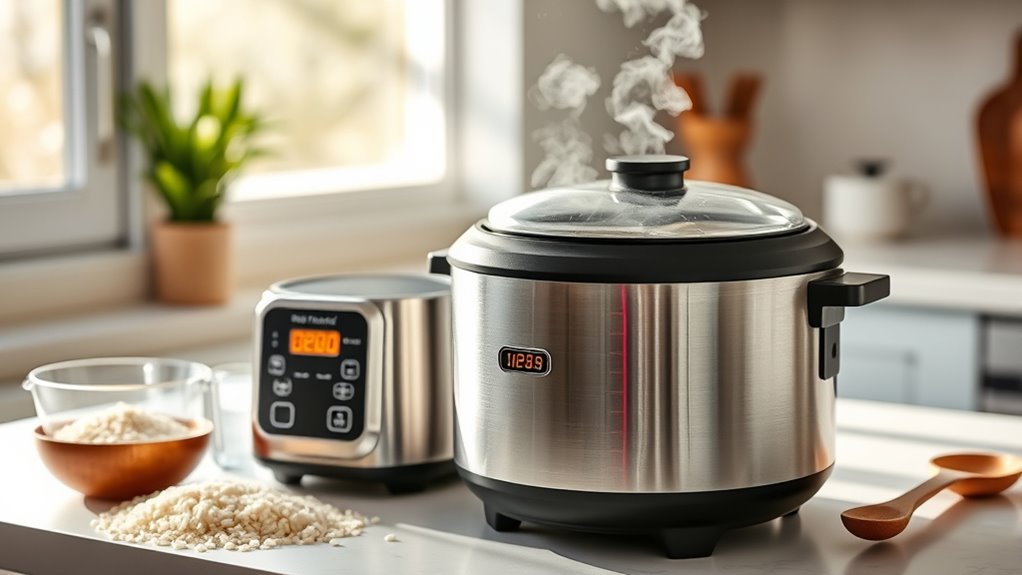
When you shop for a rice cooker, you’ll want to focus on features that match your cooking style and needs. Choosing the right one makes your cooking easier and results tastier.
Here are four key features to evaluate:
- Capacity – Pick a size that fits your household, whether it’s just for you or a large family.
- Cooking Functions – Look for models with multiple settings like brown rice, porridge, or steaming.
- Keep Warm Function – This keeps rice warm without overcooking, so it’s ready when you are.
- Non-Stick Inner Pot – Makes cleaning easier and prevents rice from sticking or burning.
Focusing on these will help you find a rice cooker that suits your kitchen and lifestyle perfectly.
Benefits of Using a Rice Cooker
You’ll save time by letting a rice cooker handle the cooking while you focus on other tasks. It also delivers consistent results, so your rice comes out perfectly every time.
Let’s explore how these benefits make rice cookers a great kitchen tool.
Time-Saving Convenience
How much time could you save by using a rice cooker? Quite a bit, actually. Instead of standing by the stove, you can set it and forget it, freeing you up for other tasks.
Here’s how a rice cooker boosts your efficiency:
- Hands-off cooking: No need to stir or watch the pot.
- Automatic shutoff: It stops cooking when done, so you won’t burn your rice.
- Simultaneous meal prep: While the rice cooks itself, you can chop veggies or prepare proteins.
- Quick start: Many models have fast-cook settings to speed up the process.
Consistent Cooking Results
Because rice cookers regulate temperature and cooking time precisely, you can count on perfectly cooked rice every time without guessing or constant monitoring. This means no more undercooked or burnt rice, saving you frustration and wasted food.
Whether you prefer white, brown, or jasmine rice, your cooker adjusts to deliver consistent texture and flavor. Plus, the keep-warm function maintains ideal serving temperature.
Here’s a quick look at how rice cookers handle different rice types:
| Rice Type | Cooking Time | Texture Outcome |
|---|---|---|
| White Rice | 15-20 mins | Fluffy and soft |
| Brown Rice | 40-50 mins | Chewy and nutty |
| Jasmine | 15-20 mins | Aromatic and tender |
| Sushi Rice | 20-25 mins | Sticky and firm |
Using a rice cooker, you get reliable results every meal.
Drawbacks and Limitations of Rice Cookers
Although rice cookers offer convenience, they come with certain drawbacks that might affect your cooking experience. Understanding these limitations helps you decide if a rice cooker suits your kitchen routine.
- Limited versatility: Many models focus mainly on rice, so you might find them less useful for other cooking tasks.
- Space consumption: Rice cookers can take up significant counter or storage space, which can be a problem in small kitchens.
- Learning curve: Some cookers require trial and error to get the perfect texture, especially with different rice types.
- Energy use: While they’re generally efficient, leaving a rice cooker on ‘keep warm’ mode for hours consumes extra electricity.
Weighing these factors guarantees you choose wisely.
Types of Rice Cookers for Different Kitchen Needs
When selecting a rice cooker, you’ll find various types designed to match different kitchen needs and cooking styles. If you want something simple and affordable, a basic model with one-touch operation works well.
For those who cook rice often and want consistent results, a fuzzy logic cooker adjusts temperature and cooking time automatically. If you like experimenting with grains or making meals beyond rice, a multifunctional cooker with settings for quinoa, porridge, or even steaming veggies suits you best.
Compact models fit small kitchens or dorm rooms, while larger cookers handle family-sized portions. Consider your cooking frequency, kitchen space, and the variety of dishes you want to prepare. Choosing the right type guarantees your rice cooker fits seamlessly into your daily routine.
How Rice Cookers Save Time and Money Compared to Stovetop Cooking
Choosing the right rice cooker not only fits your kitchen needs but also helps you save time and money compared to cooking rice on the stovetop. With a rice cooker, you avoid constantly watching the pot, freeing you to focus on other tasks without worrying about burning or boiling over.
Choosing the right rice cooker saves time and effort by freeing you from constantly watching the pot.
Plus, rice cookers use less energy since they’re designed to cook rice efficiently. You also cut down on wasted rice because the cooker maintains perfect moisture levels, preventing overcooking or undercooking. In conclusion, you save money by reducing the need for disposable foil or paper towels often used to cover pots.
Here’s how rice cookers save you time and money:
- Hands-free cooking lets you multitask.
- Energy-efficient design lowers utility bills.
- Consistent results reduce food waste.
- Eliminates extra kitchen supplies.
How to Decide If a Rice Cooker Fits Your Cooking Style
If you cook rice frequently and want consistent results with minimal effort, a rice cooker could be a great addition to your kitchen. Consider how often you make rice and whether you value convenience over multitasking on the stovetop. If you prefer set-it-and-forget-it cooking, a rice cooker saves you from watching pots or guessing water ratios.
However, if you enjoy experimenting with different grains or recipes requiring more control, you might find a rice cooker limiting. Also, think about your kitchen space—do you have room for another appliance? Finally, factor in your budget and how much you’re willing to invest.
Frequently Asked Questions
Can Rice Cookers Be Used to Cook Grains Other Than Rice?
Yes, you can use rice cookers to cook other grains like quinoa, barley, and oats. They simplify cooking by controlling temperature and timing, so you’ll get perfectly cooked grains without constantly watching the pot.
How Do I Clean and Maintain a Rice Cooker Properly?
You clean your rice cooker by unplugging it, wiping the exterior, and washing the inner pot with warm, soapy water. Avoid immersing the base, dry parts thoroughly, and regularly check the lid and steam vent for buildup.
Are Rice Cookers Safe to Use Around Children?
Yes, you can safely use rice cookers around children if you keep them out of reach and supervise closely. The cooker’s hot surfaces and steam can cause burns, so always be cautious when kids are nearby.
Make sure to place the rice cooker on a stable surface away from the edge. Avoid letting children touch the cooker while it is in use. Supervision is key to preventing accidents.
Can I Cook Multiple Types of Rice in One Pot?
You can cook multiple types of rice in one pot, but they need similar cooking times and water ratios. Otherwise, some rice might overcook or undercook.
Adjust water carefully, and consider rinsing rice beforehand for best results.
Do Rice Cookers Use a Lot of Electricity?
Coincidentally, rice cookers use surprisingly little electricity. You’ll find they run efficiently, often consuming less power than your oven or stove.
Conclusion
Think of a rice cooker as a trusty compass guiding you through the kitchen’s wilderness. It simplifies your journey, saving time and effort while delivering perfectly cooked rice every time. Though it has its limits, this handy tool often proves its worth by making mealtime easier and more consistent.
If you value convenience and reliability, a rice cooker might just be the steady companion your culinary adventure needs. Investing in a rice cooker is worth it for those who want hassle-free cooking and consistently great results. Ultimately, a rice cooker is a valuable addition to any kitchen for convenience, efficiency, and perfect rice every time.