How to Shred Potatoes Without a Grater in 7 Simple Steps
Choose firm, starchy potatoes like Russets for easy shredding without a grater. Wash and optionally peel the potatoes, then chill them to firm up the texture, making them easier to handle. This method ensures you get the best results when shredding potatoes without a grater.
Slice your potato into thin, even 1/8-inch slices, stack the slices, and cut into thin strips.
Next, cross-cut the strips to create shredded pieces using a sharp knife. Alternatively, you can use a food processor or mandoline for quicker results.
Rinse the shredded potato in cold water to remove excess starch, then squeeze out the moisture before cooking.
Keep going to uncover tips for perfect crispy results when shredding potatoes without a grater.
Key Takeaways
- Slice chilled potatoes into thin, even 1/8-inch slices using a sharp knife for easier shredding without a grater.
- Stack the slices and cut into thin strips, then turn and cut across to create shredded pieces.
- Use a vegetable peeler to create thin potato strips as an alternative to shredding.
- Rinse shredded potatoes in cold water to remove excess starch and prevent clumping.
- Squeeze out moisture thoroughly before cooking to ensure crispiness in the final dish.
Pick the Best Potato for Easy Shredding

Although any potato can be shredded, choosing the right variety makes the process much easier. You’ll want to go for starchy potatoes like Russets because their dry texture helps them break down smoothly. Waxy potatoes, like red or new potatoes, tend to be firmer and hold their shape, making shredding tougher.
If you want crispy hash browns or smooth potato pancakes, starchy potatoes give you the best results. Also, pick potatoes that are firm and free from blemishes or green spots to guarantee quality and flavor. Avoid ones that are soft or sprouting, as they won’t shred well and can taste off.
Prep Your Potato by Washing, Peeling, and Chilling

Before you start shredding, make sure to wash your potato thoroughly to remove any dirt or debris. Rinse it under cold running water, scrubbing gently with your hands or a vegetable brush.
Once clean, peel the potato if you prefer a smoother texture; otherwise, you can leave the skin on for extra nutrients and a rustic touch. After peeling, pat the potato dry with a clean towel to remove excess moisture.
Peeling your potato smooths texture, but leaving the skin adds nutrients and rustic charm—always dry it well after.
Then, place the potato in the refrigerator for about 15 to 30 minutes. Chilling firms up the potato, making it easier to handle and shred without it turning mushy.
This simple prep step ensures better texture and control when you start cutting your potato without a grater.
Shred Potatoes Using a Knife: Slice and Cut
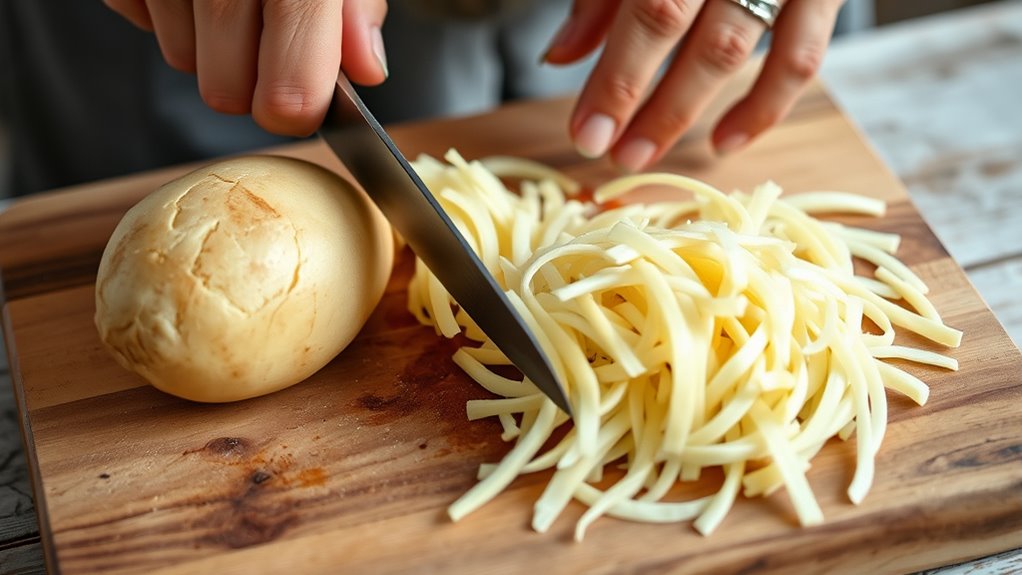
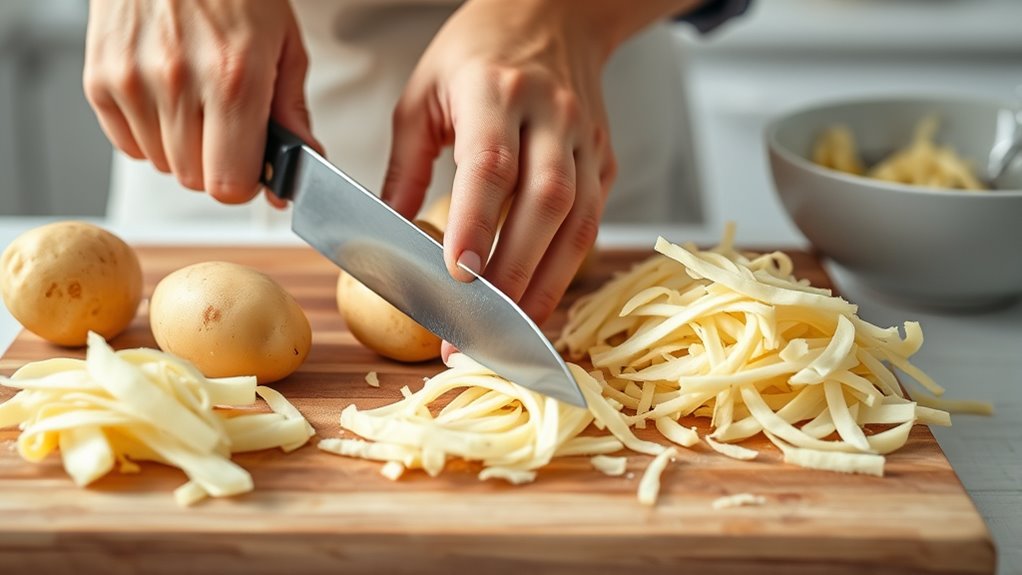
Once your potato is chilled and dry, you can start shredding it using a knife by first slicing it into thin, even slices. Lay the potato flat on a cutting board and hold it steady with your non-dominant hand. Use a sharp knife to carefully cut slices about 1/8 inch thick.
After slicing, stack a few slices and cut them into thin strips. Then, turn those strips and cut across them to create small, shredded pieces. Keep your cuts consistent to guarantee uniform cooking.
Take your time and maintain control of the knife to avoid accidents. This method gives you grated potato texture without needing special tools, perfect for dishes like hash browns or potato pancakes. Remember, a sharp knife makes all the difference.
Use a Food Processor to Shred Potatoes
If slicing and cutting potatoes by hand feels time-consuming, a food processor can speed up the shredding process considerably. First, peel your potatoes and cut them into chunks that fit your processor’s feed tube. Attach the shredding disc or blade, depending on your model, and feed the potato pieces through the chute while the machine runs.
This method produces evenly shredded potatoes quickly and with minimal effort. Remember to pulse gently if your processor doesn’t have a shredding blade to avoid turning the potatoes into mush. After shredding, transfer the potatoes to a clean kitchen towel and squeeze out excess moisture before using them in your recipe.
Using a food processor saves time and gives consistent results every time, making it a great alternative to manual shredding.
Try a Box Grater Substitute or Mandoline to Shred
Though a traditional box grater is the go-to tool for shredding potatoes, you can achieve similar results using substitutes like a mandoline or other flat shredding tools. These alternatives can save time and effort while delivering consistent shreds.
Here’s how you can use them effectively:
- Mandoline Slicer: Set it to a julienne or shredding blade and carefully slide the potato across the surface.
- Vegetable Peeler: Use quick, short strokes to create thin potato strips.
- Knife Technique: Slice the potato thinly, then stack and cut into fine strips.
- Food Processor Blade: Use a shredding disc if you have one available.
Always prioritize safety by using hand guards or gloves to protect your fingers while shredding.
Rinse and Drain Shredded Potatoes to Remove Starch
Once you’ve shredded your potatoes, you’ll want to rinse them thoroughly to wash away excess starch that can make your dish gummy. Using cold water and gently agitating the shreds helps loosen the starch effectively.
After rinsing, drain them well—using a fine mesh sieve or clean towel—to remove as much moisture as possible before cooking.
Importance Of Removing Starch
Because shredded potatoes release a lot of starch, rinsing and draining them is essential to prevent clumping and achieve a crisp texture. When you remove excess starch, you improve your dish in several ways:
- Enhances Crispiness: Less starch means your potatoes won’t stick together, resulting in a crunchier finish.
- Prevents Gummy Texture: Starch can make the potatoes gluey, ruining the lightness you want.
- Improves Cooking Evenness: Without excess starch, heat penetrates evenly, cooking your potatoes uniformly.
- Reduces Browning Issues: Too much starch can cause uneven browning or burning during cooking.
Best Rinsing Techniques
When you rinse shredded potatoes, you wash away the excess starch that causes clumping and sogginess. To do this effectively, place your shredded potatoes in a fine mesh strainer or a large bowl. Run cold water over them while gently tossing or stirring to guarantee all the strands get rinsed.
Avoid using warm water, as it can start cooking the potatoes or make them softer than you want. If you’re rinsing in a bowl, swish the potatoes around with your hands to loosen the starch, then carefully drain the cloudy water. Repeat this process until the water runs mostly clear, indicating that most of the starch is gone.
This simple step helps your potatoes cook more evenly and improves their texture.
Effective Draining Methods
After rinsing your shredded potatoes to remove excess starch, properly draining them prevents unwanted moisture from affecting your dish’s texture.
Here’s how you can effectively drain your shredded potatoes:
- Use a fine mesh strainer: Place the shredded potatoes in it and shake gently to remove excess water.
- Press with a clean towel: Lay the potatoes on a kitchen towel, fold it over, and press firmly to absorb moisture.
- Squeeze by hand: Gather the potatoes in your palm and squeeze tightly over the sink to release water.
- Let them sit: Spread the shredded potatoes on a paper towel-lined plate for a few minutes to air dry.
Following these steps guarantees your potatoes stay crisp and ready for cooking without sogginess.
Tips for Cooking With Shredded Potatoes
Although shredded potatoes are versatile, cooking them properly guarantees they turn out crispy and delicious. To get the best texture, avoid overcrowding the pan, and use medium-high heat with enough oil to crisp each shred.
Season after cooking to keep potatoes from becoming soggy.
| Tip | Reason |
|---|---|
| Pat dry before cooking | Removes moisture for extra crispiness |
| Use a non-stick pan | Prevents sticking and uneven cooking |
| Flip gently | Keeps shape intact without breaking |
| Cook in batches | Ensures even browning and crisp texture |
Following these tips will help you achieve golden, crispy shredded potatoes every time.
Frequently Asked Questions
Can You Shred Sweet Potatoes Without a Grater?
Yes, you can shred sweet potatoes without a grater by using a food processor with a shredding attachment or slicing them thinly with a knife.
Then chop the slices into small strips to mimic shredded texture easily.
How Long Do Shredded Potatoes Last in the Fridge?
Your shredded potatoes will enjoy a brief stay in the fridge, lasting about 1 to 2 days.
To keep them fresh, store them in an airtight container and use them promptly before they lose their charm.
Is It Better to Dry Potatoes Before Cooking?
Yes, you should dry potatoes before cooking. Removing excess moisture helps them crisp up better and prevents sogginess, especially when frying or roasting.
You’ll get a tastier, crunchier result by patting them dry first.
Can Shredded Potatoes Be Frozen for Later Use?
Absolutely, you can freeze shredded potatoes for later use. Just flash-freeze them on a tray first, then store in airtight bags.
This way, you avoid clumping—like a knight preparing his armor for battle.
What Dishes Are Best With Shredded Potatoes?
You’ll love using shredded potatoes in crispy hash browns, potato pancakes, and casseroles. They’re perfect for breakfast skillets or as a crunchy topping on baked dishes.
You can even mix them into soups for extra texture.
Conclusion
Shredding potatoes without a grater is easier than you think! Whether you slice with a knife or use a food processor, you’ll save time and get perfect shreds every time.
Fun fact: Americans consume about 140 pounds of potatoes per person annually—that’s a lot of spuds to shred!
So, mastering these simple shredding methods will make your cooking quicker and more enjoyable, helping you whip up delicious potato dishes with ease.
By learning how to shred potatoes without a grater, you can efficiently prepare your ingredients and enhance your cooking experience. These easy techniques offer a great alternative to traditional grating, making potato shredding simple and hassle-free.